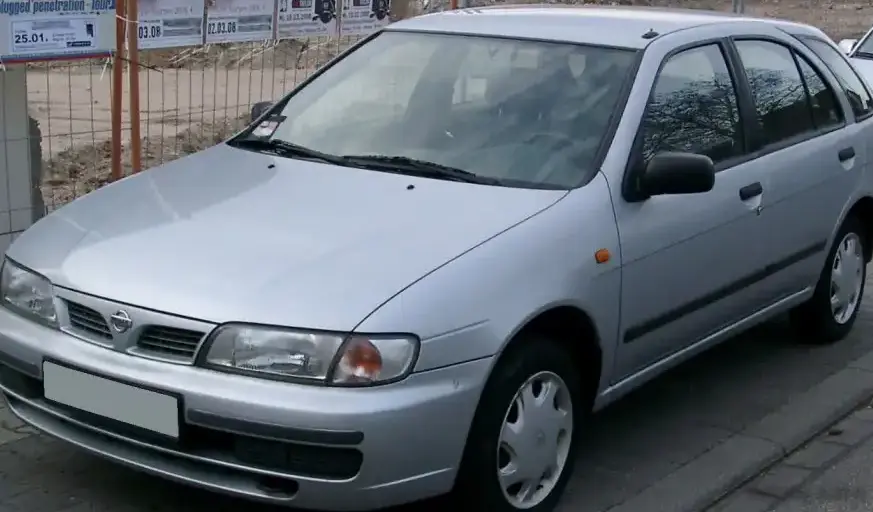
The Nissan Almera I Hatchback (N15) 1.6 SR/SLX with the 90 horsepower engine and automatic transmission was a key offering in Nissan’s European lineup from 1995 to 2000. Positioned as a practical and affordable compact car, the Almera N15 aimed to compete with established rivals like the Ford Escort and Opel/Vauxhall Astra. This particular variant, combining the 1.6-liter engine with a four-speed automatic, represented a balance between usability and cost, targeting buyers who prioritized convenience over outright performance. It was a significant model for Nissan as they sought to increase their market share in the competitive European small family car segment.
Technical Specifications
| Brand | Nissan |
| Model | Almera |
| Generation | Almera I Hatchback (N15) |
| Type | 1.6 SR,SLX (90 Hp) Automatic |
| Start of production | 1995 |
| End of production | 2000 |
| Powertrain Architecture | Internal Combustion engine |
| Body type | Hatchback |
| Seats | 5 |
| Doors | 3 |
| Fuel consumption (combined) | 6.6 l/100 km (35.6 US mpg, 42.8 UK mpg, 15.2 km/l) |
| Fuel Type | Petrol (Gasoline) |
| Acceleration 0 – 100 km/h | 11.1 sec |
| Acceleration 0 – 62 mph | 11.1 sec |
| Acceleration 0 – 60 mph | 10.5 sec |
| Maximum speed | 178 km/h (110.6 mph) |
| Weight-to-power ratio | 14 kg/Hp, 71.3 Hp/tonne |
| Weight-to-torque ratio | 9.3 kg/Nm, 107.7 Nm/tonne |
| Power | 90 Hp @ 6000 rpm |
| Power per litre | 56.4 Hp/l |
| Torque | 136 Nm @ 4000 rpm (100.31 lb.-ft. @ 4000 rpm) |
| Engine layout | Front, Transverse |
| Engine Model/Code | GA16DE |
| Engine displacement | 1597 cm3 (97.45 cu. in.) |
| Number of cylinders | 4 |
| Engine configuration | Inline |
| Cylinder Bore | 76 mm (2.99 in.) |
| Piston Stroke | 88 mm (3.46 in.) |
| Compression ratio | 9.8:1 |
| Number of valves per cylinder | 4 |
| Fuel injection system | Multi-port manifold injection |
| Engine aspiration | Naturally aspirated engine |
| Valvetrain | DOHC |
| Engine oil capacity | 3.2 l (3.38 US qt | 2.82 UK qt) |
| Coolant capacity | 6.4 l (6.76 US qt | 5.63 UK qt) |
| Kerb Weight | 1263 kg (2784.44 lbs.) |
| Max. weight | 1595 kg (3516.37 lbs.) |
| Max load | 332 kg (731.93 lbs.) |
| Trunk (boot) space – minimum | 440 l (15.54 cu. ft.) |
| Fuel tank capacity | 50 l (13.21 US gal | 11 UK gal) |
| Length | 4120 mm (162.2 in.) |
| Width | 1690 mm (66.54 in.) |
| Height | 1395 mm (54.92 in.) |
| Wheelbase | 2535 mm (99.8 in.) |
| Front track | 1470 mm (57.87 in.) |
| Rear track | 1435 mm (56.5 in.) |
| Drivetrain Architecture | Front wheel drive |
| Number of gears | 4 |
| Gearbox type | Automatic transmission |
| Front suspension | Wishbone |
| Rear suspension | Rigid axle suspension |
| Front brakes | Ventilated discs |
| Rear brakes | Drum |
| Assisting systems | ABS (Anti-lock braking system) |
| Steering type | Steering rack and pinion |
| Power steering | Hydraulic Steering |
| Tires size | 175/65 R14 |
| Wheel rims size | 14 |
INTRODUCTION
The Nissan Almera N15, launched in 1995, represented Nissan’s attempt to establish a stronger foothold in the European compact car market. Available as a three-door hatchback, five-door hatchback, and saloon, the N15 series was built on the Nissan B platform. The 1.6 SR/SLX automatic variant was positioned as a mid-range offering, appealing to buyers seeking a comfortable and convenient daily driver. It sat below the more powerful 2.0L models and above the base 1.4L engine options. Production continued until 2000, when it was replaced by the second-generation Almera (N16).
Powertrain & Engine Architecture
At the heart of the Almera 1.6 SR/SLX automatic lay the GA16DE engine, a 1.6-liter inline-four cylinder gasoline engine. This engine featured a double overhead camshaft (DOHC) valvetrain and multi-point fuel injection. The GA16DE was known for its relative simplicity and durability, though it wasn’t a powerhouse. The engine produced 90 horsepower at 6000 rpm and 136 Nm (100.31 lb-ft) of torque at 4000 rpm. Paired with this engine was a four-speed automatic transmission, which, while providing ease of use, wasn’t particularly sophisticated by modern standards. The transmission’s gear ratios were tuned for fuel efficiency and smooth operation rather than sporty acceleration. The GA16DE engine code is a key identifier, and parts availability remains reasonable even today.
Driving Characteristics
The driving experience in the Almera 1.6 automatic was characterized by its smoothness and ease of operation. Acceleration was adequate for everyday driving, but the 11.1-second 0-62 mph time reflects its modest power output. Compared to the five-speed manual version, the automatic suffered a slight performance penalty due to the transmission’s inherent inefficiencies. The four-speed automatic also meant that the engine often operated at higher RPMs during highway cruising, potentially contributing to increased fuel consumption compared to the manual. The steering was light and easy, making it well-suited for urban environments. However, it lacked the precision and feedback desired by more enthusiastic drivers. The suspension provided a comfortable ride, absorbing bumps and imperfections in the road reasonably well.
Equipment & Trim Levels
The SR and SLX trim levels offered a reasonable level of equipment for the price point. Standard features typically included power steering, central locking, electric front windows, and an adjustable steering column. The SLX trim added features such as alloy wheels, a sunroof, and upgraded interior trim. Interior upholstery was typically cloth, with a relatively simple dashboard layout. Optional extras included air conditioning, a radio/cassette player, and metallic paint. The interior, while functional, was not particularly luxurious, focusing on practicality and durability.
Chassis & Braking
The Almera N15 utilized a front-wheel-drive layout with a MacPherson strut front suspension and a rigid axle rear suspension. This setup provided a good balance between ride comfort and handling. The front brakes were ventilated discs, offering adequate stopping power, while the rear brakes were drums, a cost-saving measure common in this class of vehicle. Anti-lock Braking System (ABS) was available, and became increasingly common as standard equipment towards the end of the production run. The chassis was relatively lightweight, contributing to the car’s fuel efficiency and maneuverability.
Market Reception & Comparison
The Nissan Almera N15 1.6 automatic received mixed reviews from automotive critics. It was generally praised for its affordability, practicality, and comfortable ride. However, it was often criticized for its lack of performance and somewhat bland styling. Compared to the more powerful 2.0L Almera variants, the 1.6 automatic offered significantly less performance. However, it was more fuel-efficient and less expensive to purchase. Against competitors like the Ford Escort and Opel/Vauxhall Astra, the Almera offered a competitive package, but often lacked the brand recognition and driving dynamics of its rivals. Fuel economy was a strong point, averaging around 35.6 US mpg in combined driving.
Legacy
The Nissan Almera N15 1.6 automatic has proven to be a relatively reliable vehicle, with many examples still on the road today. The GA16DE engine is known for its durability, and the four-speed automatic transmission, while not particularly advanced, is generally dependable. However, like any older vehicle, regular maintenance is crucial to ensure long-term reliability. Common issues include corrosion, particularly in areas exposed to salt, and wear and tear on suspension components. In the used car market, the Almera N15 1.6 automatic remains an affordable and practical option for those seeking a basic and reliable compact car. Its simplicity and relatively low running costs make it an attractive choice for first-time drivers or those on a tight budget.