Technical Specifications
| Brand | Nissan |
| Model | Almera |
| Generation | Almera I (N15) |
| Type (Engine) | 1.4 (87 Hp) |
| Start of production | 1995 |
| End of production | 2000 |
| Powertrain Architecture | Internal Combustion engine |
| Body type | Sedan |
| Seats | 5 |
| Doors | 4 |
| Fuel consumption (urban) | 9.2 l/100 km (25.6 US mpg) |
| Fuel consumption (extra urban) | 5.8 l/100 km (40.6 US mpg) |
| Fuel Type | Petrol (Gasoline) |
| Acceleration 0 – 100 km/h | 12.6 sec |
| Acceleration 0 – 62 mph | 12.6 sec |
| Acceleration 0 – 60 mph | 12 sec |
| Maximum speed | 172 km/h (106.88 mph) |
| Weight-to-power ratio | 12.3 kg/Hp |
| Weight-to-torque ratio | 9.2 kg/Nm |
| Power | 87 Hp @ 6000 rpm |
| Power per litre | 62.5 Hp/l |
| Torque | 116 Nm @ 4000 rpm (85.56 lb.-ft. @ 4000 rpm) |
| Engine layout | Front, Transverse |
| Engine Model/Code | GA14DE |
| Engine displacement | 1392 cm3 (84.95 cu. in.) |
| Number of cylinders | 4 |
| Engine configuration | Inline |
| Cylinder Bore | 73.6 mm (2.9 in.) |
| Piston Stroke | 81.8 mm (3.22 in.) |
| Compression ratio | 9.5:1 |
| Number of valves per cylinder | 4 |
| Fuel injection system | Multi-port manifold injection |
| Engine aspiration | Naturally aspirated engine |
| Valvetrain | DOHC |
| Engine oil capacity | 3.2 l (3.38 US qt | 2.82 UK qt) |
| Coolant capacity | 5.9 l (6.23 US qt | 5.19 UK qt) |
| Kerb Weight | 1070 kg (2358.95 lbs.) |
| Max. weight | 1545 kg (3406.14 lbs.) |
| Max load | 475 kg (1047.2 lbs.) |
| Trunk (boot) space – minimum | 440 l (15.54 cu. ft.) |
| Fuel tank capacity | 50 l (13.21 US gal | 11 UK gal) |
| Length | 4320 mm (170.08 in.) |
| Width | 1690 mm (66.54 in.) |
| Height | 1395 mm (54.92 in.) |
| Wheelbase | 2535 mm (99.8 in.) |
| Front track | 1480 mm (58.27 in.) |
| Rear (Back) track | 1445 mm (56.89 in.) |
| Drivetrain Architecture | Front wheel drive |
| Number of gears and type of gearbox | 5 gears, manual transmission |
| Front suspension | Wishbone |
| Rear suspension | Rigid axle suspension |
| Front brakes | Ventilated discs |
| Rear brakes | Drum |
| Assisting systems | ABS (Anti-lock braking system) |
| Steering type | Steering rack and pinion |
| Power steering | Hydraulic Steering |
| Tires size | 175/70 R 13 |
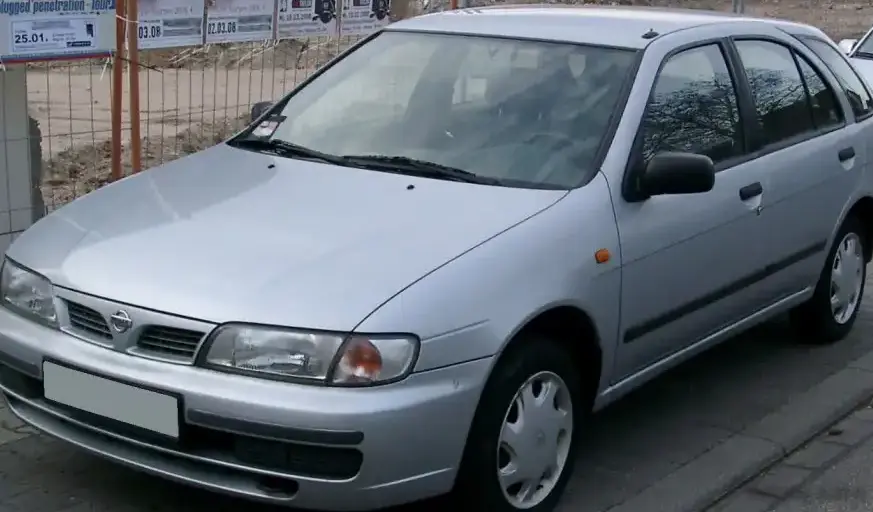
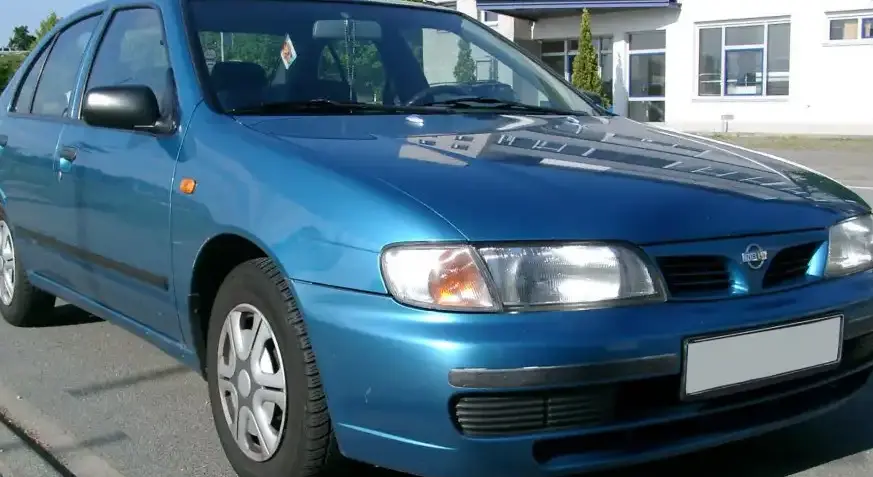
The Nissan Almera I (N15) 1.4, produced between 1995 and 2000, represented Nissan’s entry into the compact sedan market in Europe and several other global markets. Positioned as an affordable and practical family car, the 1.4-liter variant served as the base model within the N15 Almera range. It aimed to provide economical transportation with a focus on reliability and ease of maintenance. The N15 Almera was a significant model for Nissan, representing a move towards more contemporary styling and engineering compared to its predecessors, and was built on the Nissan B platform. This specific 1.4L engine and 5-speed manual transmission combination was designed to appeal to budget-conscious buyers prioritizing fuel efficiency over outright performance.
Powertrain & Engine Architecture
The heart of the Almera I 1.4 was the GA14DE engine, a 1.4-liter inline-four cylinder gasoline engine. This engine was a staple in Nissan’s lineup during the 1990s, known for its simplicity and durability. The GA14DE featured a double overhead camshaft (DOHC) valvetrain with four valves per cylinder, contributing to reasonable power output for its displacement. Fuel delivery was handled by a multi-point fuel injection system, optimizing combustion efficiency. The engine produced 87 horsepower at 6000 rpm and 116 Nm (85.56 lb-ft) of torque at 4000 rpm. The engine’s design prioritized fuel economy and low emissions, making it suitable for the European market. The 5-speed manual transmission was the standard offering for this variant, providing a relatively direct connection between the engine and the front wheels. The transmission was chosen for its cost-effectiveness and reliability, rather than sporty performance.
Driving Characteristics
The Almera 1.4 with the 5-speed manual transmission offered a practical, if not particularly exciting, driving experience. Acceleration from 0 to 60 mph took around 12 seconds, and the top speed was approximately 107 mph. The engine felt somewhat strained at higher speeds, and overtaking required careful planning. The gear ratios were tuned for fuel efficiency, meaning the engine often needed to be revved to maintain momentum. Compared to the higher-spec Almeras equipped with larger engines (like the 1.6 or 1.8), the 1.4 felt noticeably slower. However, the lighter weight of the 1.4 model did contribute to slightly better handling and fuel economy. The steering was light and easy, making it suitable for city driving, but lacked the precision found in more performance-oriented vehicles.
Equipment & Trim Levels
The Almera 1.4 typically came with a basic level of equipment. Standard features included power steering, central locking, and an AM/FM radio. Interior upholstery was typically cloth, and the dashboard featured a simple, functional design. Optional extras included air conditioning, electric windows, and alloy wheels. The trim level for the 1.4 was generally the entry-level specification, aimed at buyers seeking a no-frills, affordable sedan. Higher trim levels, available with the larger engines, offered more luxurious features such as upgraded upholstery, a sunroof, and a more sophisticated audio system.
Chassis & Braking
The Almera I utilized a front-engine, front-wheel-drive layout. The front suspension consisted of wishbones, while the rear suspension employed a rigid axle setup. This configuration provided a comfortable ride, but didn’t offer particularly sporty handling. The braking system featured ventilated discs on the front wheels and drum brakes on the rear. Anti-lock Braking System (ABS) was included as standard, enhancing safety. The relatively lightweight nature of the 1.4 model helped to compensate for the less sophisticated rear drum brakes.
Market Reception & Comparison
The Nissan Almera 1.4 was generally well-received as an affordable and reliable family car. Critics praised its fuel efficiency and practicality, but noted its lack of performance. Compared to rivals like the Ford Focus and Volkswagen Golf, the Almera 1.4 offered a more budget-friendly option, but lacked the refinement and driving dynamics of those competitors. The 1.6 and 1.8 liter Almera models offered significantly better performance, but came at a higher price point. The 1.4 appealed to buyers who prioritized economy and dependability over driving excitement.
Legacy
The GA14DE engine proved to be a durable and long-lasting unit, and many Almera 1.4 models continue to be seen on the roads today. While not known for its high performance, the engine’s simplicity and robust construction contribute to its longevity. The Almera I, particularly the 1.4 variant, remains a relatively affordable used car option, appealing to those seeking a basic, reliable mode of transportation. Parts availability is generally good, and maintenance costs are relatively low. However, potential buyers should be aware of the age-related issues common to vehicles of this era, such as corrosion and wear and tear on suspension components.