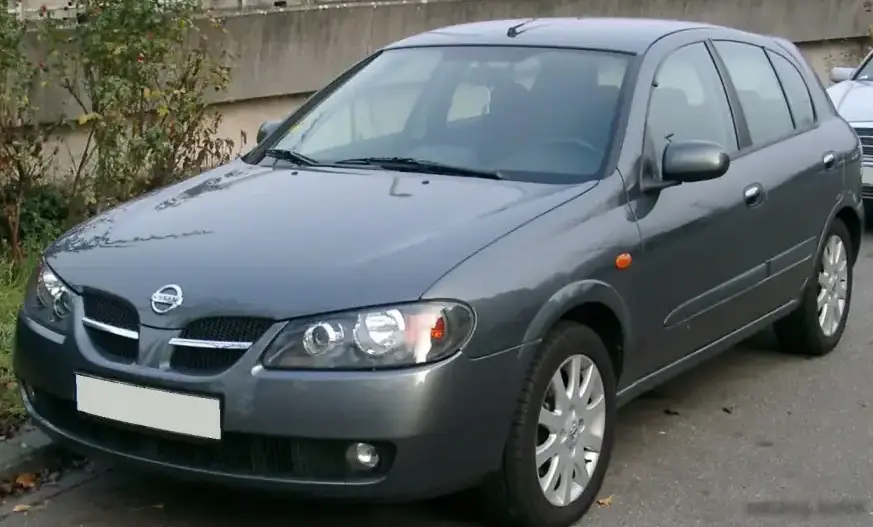
The Nissan Almera II Hatchback, specifically the 2.2 dCi variant produced from 2003 to 2006, represented a significant step forward in Nissan’s compact offerings for the European market. This facelifted version of the N16 series Almera aimed to provide a more refined and efficient option within the competitive C-segment. Positioned as a mid-range offering, the 2.2 dCi model bridged the gap between the lower-powered gasoline engines and the more expensive, higher-specification trims. It was designed to appeal to buyers seeking a balance of performance, fuel economy, and practicality in a five-door hatchback body style, though a three-door version was also available.
Technical Specifications
| Brand | Nissan |
| Model | Almera |
| Generation | Almera II Hatchback (N16, facelift 2003) |
| Type (Engine) | 2.2 dCi (136 Hp) |
| Start of production | 2003 |
| End of production | 2006 |
| Powertrain Architecture | Internal Combustion engine |
| Body type | Hatchback |
| Seats | 5 |
| Doors | 3/5 |
| Fuel consumption (urban) | 7.9 l/100 km (29.8 US mpg, 35.8 UK mpg, 12.7 km/l) |
| Fuel consumption (extra urban) | 4.8 l/100 km (49 US mpg, 58.9 UK mpg, 20.8 km/l) |
| Fuel Type | Diesel |
| Acceleration 0 – 100 km/h | 9.2 sec |
| Acceleration 0 – 62 mph | 9.2 sec |
| Acceleration 0 – 60 mph | 8.7 sec |
| Maximum speed | 200 km/h (124.27 mph) |
| Weight-to-power ratio | 9.1 kg/Hp, 110.1 Hp/tonne |
| Weight-to-torque ratio | 3.9 kg/Nm, 254.3 Nm/tonne |
| Power | 136 Hp @ 4000 rpm |
| Power per litre | 62.3 Hp/l |
| Torque | 314 Nm @ 2000 rpm (231.59 lb.-ft. @ 2000 rpm) |
| Engine layout | Front, Transverse |
| Engine Model/Code | YD22DDTi |
| Engine displacement | 2184 cm3 (133.28 cu. in.) |
| Number of cylinders | 4 |
| Engine configuration | Inline |
| Cylinder Bore | 86 mm (3.39 in.) |
| Piston Stroke | 94 mm (3.7 in.) |
| Compression ratio | 18:1 |
| Number of valves per cylinder | 4 |
| Fuel injection system | Diesel Commonrail |
| Engine aspiration | Turbocharger, Intercooler |
| Valvetrain | DOHC |
| Engine oil capacity | 5.4 l (5.71 US qt | 4.75 UK qt) |
| Coolant | 8.7 l (9.19 US qt | 7.65 UK qt) |
| Kerb Weight | 1235 kg (2722.71 lbs.) |
| Max. weight | 1810 kg (3990.37 lbs.) |
| Max load | 575 kg (1267.66 lbs.) |
| Trunk (boot) space – minimum | 355 l (12.54 cu. ft.) |
| Trunk (boot) space – maximum | 1020 l (36.02 cu. ft.) |
| Fuel tank capacity | 60 l (15.85 US gal | 13.2 UK gal) |
| Length | 4197 mm (165.24 in.) |
| Width | 1706 mm (67.17 in.) |
| Height | 1448 mm (57.01 in.) |
| Wheelbase | 2535 mm (99.8 in.) |
| Front track | 1470 mm (57.87 in.) |
| Rear (Back) track | 1455 mm (57.28 in.) |
| Drivetrain Architecture | The Internal combustion engine (ICE) drives the front wheels of the vehicle. |
| Drive wheel | Front wheel drive |
| Number of gears and type of gearbox | 6 gears, manual transmission |
| Front suspension | Wishbone |
| Rear suspension | Rigid axle suspension |
| Front brakes | Ventilated discs |
| Rear brakes | Disc |
| Assisting systems | ABS (Anti-lock braking system) |
| Steering type | Steering rack and pinion |
| Power steering | Hydraulic Steering |
| Tires size | 185/65 R15 |
| Wheel rims size | 15 |
Powertrain & Engine Architecture
The heart of the Almera 2.2 dCi is the YD22DDTi engine, a 2.2-liter inline-four cylinder diesel. This engine was a product of Nissan’s ongoing development of common-rail direct injection technology. The YD22DDTi utilizes a turbocharger with an intercooler to boost power and torque, delivering 136 horsepower at 4000 rpm and a substantial 314 Nm (231.59 lb-ft) of torque at just 2000 rpm. The engine features a double overhead camshaft (DOHC) valvetrain with four valves per cylinder, optimizing gas flow for improved efficiency and performance. The common-rail fuel injection system, supplied by Bosch, allowed for precise fuel delivery and contributed to reduced emissions. The engine’s robust construction and relatively simple design made it a reliable unit, though preventative maintenance was crucial for longevity. The 6-speed manual transmission was the standard offering, providing a good balance between fuel economy and driver control.
Driving Characteristics
The 2.2 dCi Almera offered a noticeable improvement in performance compared to the smaller gasoline engines available in the lineup. The abundant low-end torque made it a comfortable cruiser, capable of effortless overtaking maneuvers. While not a sports car, the Almera 2.2 dCi provided adequate acceleration, reaching 0-60 mph in approximately 8.7 seconds. The six-speed manual transmission allowed drivers to keep the engine in its optimal power band, maximizing efficiency and responsiveness. The gear ratios were well-chosen for both city driving and highway cruising. Compared to the lower-powered versions, the 2.2 dCi felt more composed and less strained during uphill climbs or when carrying a full load of passengers and luggage. However, it didn’t possess the outright agility or sporty feel of some of its rivals.
Equipment & Trim Levels
The 2.2 dCi trim typically included features such as air conditioning, power windows, central locking, and an integrated stereo system. Higher-specification versions added alloy wheels, a multi-function steering wheel, and upgraded interior trim. Safety features included ABS brakes, front airbags, and seatbelt pretensioners. Optional extras included a sunroof, metallic paint, and a more advanced audio system. The interior was functional and well-built, though the design was somewhat conservative compared to some competitors. Upholstery was typically cloth, with higher trims offering partial leather options.
Chassis & Braking
The Almera II Hatchback utilized a front-wheel-drive layout with a MacPherson strut front suspension and a torsion beam rear suspension. This setup provided a comfortable ride quality, though it wasn’t particularly sporty. The front brakes were ventilated discs, while the rear brakes were solid discs, providing adequate stopping power for the vehicle’s weight and performance. The hydraulic power steering offered a light and easy steering feel, making it easy to maneuver in urban environments. The suspension was tuned for comfort rather than outright handling prowess, prioritizing ride quality over sharp cornering.
Market Reception & Comparison
The Nissan Almera 2.2 dCi was generally well-received by automotive critics as a practical and efficient family hatchback. It was praised for its fuel economy, comfortable ride, and spacious interior. However, some critics noted that the interior design was somewhat dated and that the handling wasn’t as engaging as some of its rivals, such as the Ford Focus or Volkswagen Golf. Compared to the gasoline-powered Almeras, the 2.2 dCi offered significantly better fuel economy and more torque, making it a more appealing option for drivers who covered long distances. It also provided a more competitive alternative to other diesel hatchbacks in its class.
Legacy
The YD22DDTi engine proved to be a relatively reliable unit when properly maintained. Common issues included turbocharger failure and injector problems, but these were often preventable with regular servicing. Today, the Almera 2.2 dCi can be found as an affordable used car, offering a practical and economical transportation option. While it may not be the most exciting car on the road, its combination of fuel efficiency, reliability, and practicality makes it a sensible choice for budget-conscious buyers. The Almera II, and particularly the 2.2 dCi variant, represents a solid, if unspectacular, entry in the crowded C-segment hatchback market.