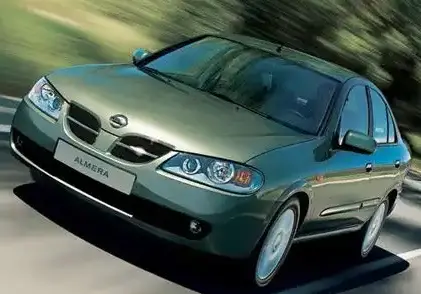
The Nissan Almera II, specifically the N16 series produced from 2003 to 2006, represented Nissan’s entry into the compact sedan market in Europe and several other international markets. The 1.8 16V variant, producing 116 horsepower, was positioned as a mid-range offering, bridging the gap between the base 1.5L engine and the more performance-oriented options available in some regions. This facelifted version of the N16, introduced in 2003, featured styling updates and minor mechanical refinements compared to the original release. It aimed to provide a balance of affordability, practicality, and reasonable performance for family buyers.
Technical Specifications
| Brand | Nissan |
| Model | Almera |
| Generation | Almera II (N16, facelift 2003) |
| Type (Engine) | 1.8 16V (116 Hp) |
| Start of production | 2003 |
| End of production | 2006 |
| Powertrain Architecture | Internal Combustion engine |
| Body type | Sedan |
| Seats | 5 |
| Doors | 4 |
| Fuel consumption (urban) | 10.4 l/100 km (22.6 US mpg, 27.2 UK mpg, 9.6 km/l) |
| Fuel consumption (extra urban) | 6 l/100 km (39.2 US mpg, 47.1 UK mpg, 16.7 km/l) |
| Fuel consumption (combined) | 7.6 l/100 km (30.9 US mpg, 37.2 UK mpg, 13.2 km/l) |
| Fuel Type | Petrol (Gasoline) |
| Acceleration 0 – 100 km/h | 10.8 sec |
| Acceleration 0 – 62 mph | 10.8 sec |
| Acceleration 0 – 60 mph | 10.3 sec |
| Maximum speed | 186 km/h (115.58 mph) |
| Weight-to-power ratio | 9.6 kg/Hp, 104 Hp/tonne |
| Weight-to-torque ratio | 6.8 kg/Nm, 146.2 Nm/tonne |
| Power | 116 Hp @ 5600 rpm |
| Power per litre | 65.6 Hp/l |
| Torque | 163 Nm @ 4000 rpm (120.22 lb.-ft. @ 4000 rpm) |
| Engine layout | Front, Transverse |
| Engine Model/Code | QG18DE |
| Engine displacement | 1769 cm3 (107.95 cu. in.) |
| Number of cylinders | 4 |
| Engine configuration | Inline |
| Cylinder Bore | 80 mm (3.15 in.) |
| Piston Stroke | 88 mm (3.46 in.) |
| Compression ratio | 9.5:1 |
| Number of valves per cylinder | 4 |
| Fuel injection system | Multi-port manifold injection |
| Engine aspiration | Naturally aspirated engine |
| Valvetrain | DOHC |
| Engine oil capacity | 2.9 l (3.06 US qt, 2.55 UK qt) |
| Coolant capacity | 6.6 l (6.97 US qt, 5.81 UK qt) |
| Kerb Weight | 1115 kg (2458.15 lbs.) |
| Max. weight | 1735 kg (3825.02 lbs.) |
| Max load | 620 kg (1366.87 lbs.) |
| Trunk (boot) space – minimum | 393 l (13.88 cu. ft.) |
| Fuel tank capacity | 60 l (15.85 US gal, 13.2 UK gal) |
| Length | 4425 mm (174.21 in.) |
| Width | 1695 mm (66.73 in.) |
| Height | 1445 mm (56.89 in.) |
| Wheelbase | 2535 mm (99.8 in.) |
| Front track | 1470 mm (57.87 in.) |
| Rear (Back) track | 1450 mm (57.09 in.) |
| Ride height (ground clearance) | 165 mm (6.5 in.) |
| Drivetrain Architecture | Front wheel drive |
| Drive wheel | Front wheel drive |
| Number of gears and type of gearbox | 5 gears, manual transmission |
| Front suspension | Spring Strut |
| Rear suspension | Rigid axle suspension |
| Front brakes | Ventilated discs |
| Rear brakes | Drum |
| Assisting systems | ABS (Anti-lock braking system) |
| Steering type | Steering rack and pinion |
| Power steering | Hydraulic Steering |
| Tires size | 185/65 R15 |
| Wheel rims size | 15 |
Powertrain & Engine Architecture
The heart of the Almera 1.8 16V is the QG18DE engine, a 1.8-liter inline-four cylinder powerplant. This engine belongs to Nissan’s QG series, known for its relatively simple design and durability. The ‘DE’ designation indicates a dual overhead camshaft (DOHC) configuration with four valves per cylinder, contributing to improved breathing and power output. Fuel delivery is managed by a multi-port fuel injection system, providing precise fuel metering for optimal combustion. The QG18DE produces 116 horsepower at 5600 rpm and 163 Nm (120.22 lb-ft) of torque at 4000 rpm. The engine’s 9.5:1 compression ratio strikes a balance between efficiency and performance. The transmission paired with this engine was typically a 5-speed manual, although a 4-speed automatic transmission was also available, impacting performance and fuel economy.
Driving Characteristics
The 1.8L engine provided a noticeable step up in performance compared to the base 1.5L Almera. While not a sports car, the 1.8 offered adequate acceleration for everyday driving and highway cruising. The 0-60 mph time of around 10.3 seconds and a top speed of 115.58 mph were respectable for its class. The manual transmission allowed for greater driver control, while the automatic, though convenient, resulted in slightly slower acceleration and increased fuel consumption. The gear ratios were tuned for fuel efficiency and comfortable cruising rather than outright performance. The engine felt reasonably responsive in the mid-range, making overtaking maneuvers manageable. However, it lacked the low-end grunt of larger displacement engines.
Equipment & Trim Levels
The 1.8 16V Almera typically came with a reasonable level of standard equipment. This included power steering, central locking, electric front windows, and an AM/FM radio. Higher trim levels, often denoted by ‘SE’ or ‘S’ designations, added features such as alloy wheels, air conditioning, a CD player, and upgraded interior trim. Interior upholstery was typically cloth, with options for more premium materials on higher-spec models. Safety features included ABS brakes as standard, with airbags available depending on the market and trim level.
Chassis & Braking
The Almera N16 utilized a front-wheel-drive layout with a MacPherson strut suspension in the front and a rigid axle suspension in the rear. This setup provided a comfortable ride, although it wasn’t particularly sporty in handling. The front brakes were ventilated discs, offering good stopping power, while the rear brakes were drums, a cost-saving measure common in this segment. The steering was hydraulic power-assisted, providing light and easy steering feel. The 185/65 R15 tires offered a good balance of grip and ride comfort.
Market Reception & Comparison
The Nissan Almera II 1.8 16V was generally well-received as a practical and affordable family sedan. Critics praised its comfortable ride, spacious interior, and reasonable fuel economy. However, it was often criticized for its somewhat bland styling and uninspiring driving dynamics. Compared to the 1.5L version, the 1.8 offered a significant performance boost, making it a more appealing option for drivers who frequently traveled on highways or carried passengers. Compared to other competitors in the compact sedan segment, such as the Ford Focus and Volkswagen Golf, the Almera offered a competitive price point but lacked the same level of refinement and driving engagement.
Legacy
The QG18DE engine proved to be a reliable and durable unit, and many Almera 1.8 models continue to be on the road today. While not known for exceptional performance, the engine’s simplicity and robust construction contribute to its longevity. The Almera N16, in general, has a reputation for being a relatively trouble-free car, making it a popular choice in the used car market. However, potential buyers should be aware of potential issues such as corrosion and wear and tear on suspension components. The 1.8L variant remains a practical and affordable option for those seeking a reliable and economical compact sedan.