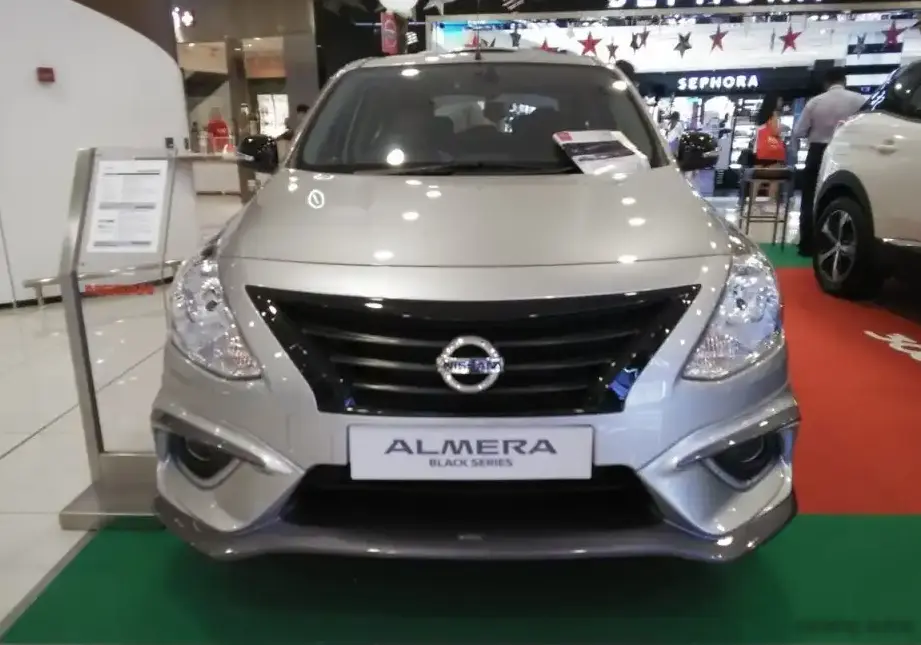
The Nissan Almera III (N17) facelift, specifically the 1.5-liter variant producing 99 horsepower, was a key offering in Nissan’s global compact sedan lineup from 2015 to 2018. Positioned as an entry-level to mid-range trim, this Almera aimed to provide affordable and practical transportation, particularly in markets where fuel efficiency and value were prioritized. The N17 Almera represented Nissan’s attempt to create a globally appealing sedan, with design and engineering tailored to diverse consumer needs. This facelift brought styling updates and minor mechanical refinements to the existing N17 platform, which was initially launched in 2014.
Technical Specifications
| Brand | Nissan |
| Model | Almera |
| Generation | Almera III (N17, facelift 2015) |
| Type (Engine) | 1.5 (99 Hp) |
| Start of production | 2015 |
| End of production | 2018 |
| Powertrain Architecture | Internal Combustion engine |
| Body type | Sedan |
| Seats | 5 |
| Doors | 4 |
| Fuel Type | Petrol (Gasoline) |
| Weight-to-power ratio | 10.5 kg/Hp, 95.4 Hp/tonne |
| Weight-to-torque ratio | 7.7 kg/Nm, 129.1 Nm/tonne |
| Power | 99 Hp @ 6000 rpm |
| Power per litre | 66.1 Hp/l |
| Torque | 134 Nm @ 4000 rpm, 98.83 lb.-ft. @ 4000 rpm |
| Engine Model/Code | HR15DE |
| Engine displacement | 1498 cm3, 91.41 cu. in. |
| Number of cylinders | 4 |
| Engine configuration | Inline |
| Cylinder Bore | 78 mm, 3.07 in. |
| Piston Stroke | 78.4 mm, 3.09 in. |
| Number of valves per cylinder | 4 |
| Fuel injection system | Multi-port manifold injection |
| Engine aspiration | Naturally aspirated engine |
| Valvetrain | DOHC |
| Engine oil capacity | 3 l, 3.17 US qt | 2.64 UK qt |
| Coolant | 5.6 l, 5.92 US qt | 4.93 UK qt |
| Kerb Weight | 1038 kg, 2288.4 lbs |
| Trunk (boot) space – minimum | 490 l, 17.3 cu. ft |
| Fuel tank capacity | 41 l, 10.83 US gal | 9.02 UK gal |
| Length | 4425 mm, 174.21 in |
| Width | 1695 mm, 66.73 in |
| Height | 1505 mm, 59.25 in |
| Wheelbase | 2600 mm, 102.36 in |
| Minimum turning circle (turning diameter) | 10.6 m, 34.78 ft |
| Drivetrain Architecture | The Internal combustion engine (ICE) drives the front wheels of the vehicle. |
| Drive wheel | Front wheel drive |
| Number of gears and type of gearbox | 5 gears, manual transmission |
| Front suspension | Independent, type McPherson with coil spring and anti-roll bar |
| Rear suspension | Torsion |
| Front brakes | Ventilated discs |
| Rear brakes | Drum |
| Assisting systems | ABS (Anti-lock braking system) |
| Power steering | Electric Steering |
| Tires size | 185/65 R15 |
| Wheel rims size | 5.5J x 15 |
Powertrain & Engine Architecture
The heart of this Almera variant is the HR15DE 1.5-liter inline-four cylinder engine. This engine is a member of Nissan’s HR series, known for its relatively simple design and focus on fuel efficiency. The HR15DE utilizes a dual overhead camshaft (DOHC) valvetrain with four valves per cylinder, contributing to improved breathing and power delivery. Fuel delivery is managed by a multi-port fuel injection system, a common setup for engines of this class. The engine’s 99 horsepower output at 6000 rpm and 134 Nm (98.83 lb-ft) of torque at 4000 rpm are modest, but sufficient for everyday driving. The engine is known for its reliability, though it lacks the performance of larger displacement engines offered in the Almera lineup. The HR15DE is a non-interference engine, meaning that even if the timing chain breaks, the valves and pistons are unlikely to collide, reducing the risk of catastrophic engine damage.
Driving Characteristics
The 1.5-liter Almera with a manual transmission delivers a predictable, if not particularly exciting, driving experience. Acceleration is adequate for city driving and highway merging, but it requires downshifting for quicker overtaking maneuvers. The five-speed manual gearbox is generally smooth, though the shift linkage isn’t as precise as found in sportier vehicles. The relatively low torque output means the engine needs to be revved to maintain speed, especially when carrying passengers or cargo. Compared to higher-trim Almeras equipped with larger engines, this variant feels noticeably less powerful. However, its lighter weight contributes to slightly better fuel economy and handling agility. The steering is light and easy, making it well-suited for urban environments, but it lacks the feedback desired by more enthusiastic drivers. Overall, the driving experience is geared towards comfort and efficiency rather than performance.
Equipment & Trim Levels
The 1.5-liter Almera typically served as the base trim level, offering a functional but not overly luxurious interior. Standard features generally included air conditioning, power windows, power steering, and a basic audio system. Interior upholstery was typically cloth, and the dashboard featured a straightforward design with easy-to-use controls. Optional extras, depending on the market, could include alloy wheels, a more advanced audio system with Bluetooth connectivity, and a rear parking sensor. Safety features typically included ABS brakes and driver/passenger airbags. Higher trim levels added features like keyless entry, fog lights, and upgraded interior materials, but the 1.5-liter model prioritized affordability.
Chassis & Braking
The Almera N17 utilizes a front-wheel-drive layout with an independent McPherson strut suspension in the front and a torsion beam suspension in the rear. This suspension setup provides a comfortable ride quality, absorbing bumps and imperfections in the road reasonably well. The front brakes are ventilated discs, offering adequate stopping power, while the rear brakes are drums, a cost-saving measure common in this segment. Electric power steering provides light and easy steering feel, making it convenient for maneuvering in tight spaces. The chassis is designed for comfort and practicality, rather than sporty handling. The torsion beam rear suspension is a simple and cost-effective design, but it doesn’t offer the same level of sophistication as a fully independent rear suspension.
Market Reception & Comparison
The 1.5-liter Almera was generally well-received as an affordable and practical sedan. Critics praised its fuel efficiency and comfortable ride, but noted its lack of performance compared to competitors. Compared to other trims within the Almera lineup, such as those equipped with larger engines, the 1.5-liter variant offered a lower price point but sacrificed performance. Its fuel economy was a strong selling point, making it attractive to budget-conscious buyers. Reliability was also a positive aspect, with the HR15DE engine proving to be durable and relatively maintenance-free. Competitors in the same segment, such as the Toyota Corolla and Honda Civic, often offered more refined driving experiences and higher levels of equipment, but typically came at a higher price point.
Legacy
The Nissan Almera N17 1.5-liter variant remains a common sight on used car markets. The HR15DE engine is known for its longevity, and with proper maintenance, these Almeras can provide reliable transportation for many years. While not a performance standout, its affordability, fuel efficiency, and practicality have ensured its continued popularity among those seeking a no-frills, dependable sedan. Parts availability is generally good, and maintenance costs are relatively low, making it an attractive option for first-time car buyers or those on a tight budget. The N17 Almera, in its various forms, represents Nissan’s attempt to cater to the global demand for efficient and affordable compact sedans. It served as a workhorse for many owners, and its reputation for reliability continues to make it a viable option in the used car market today.