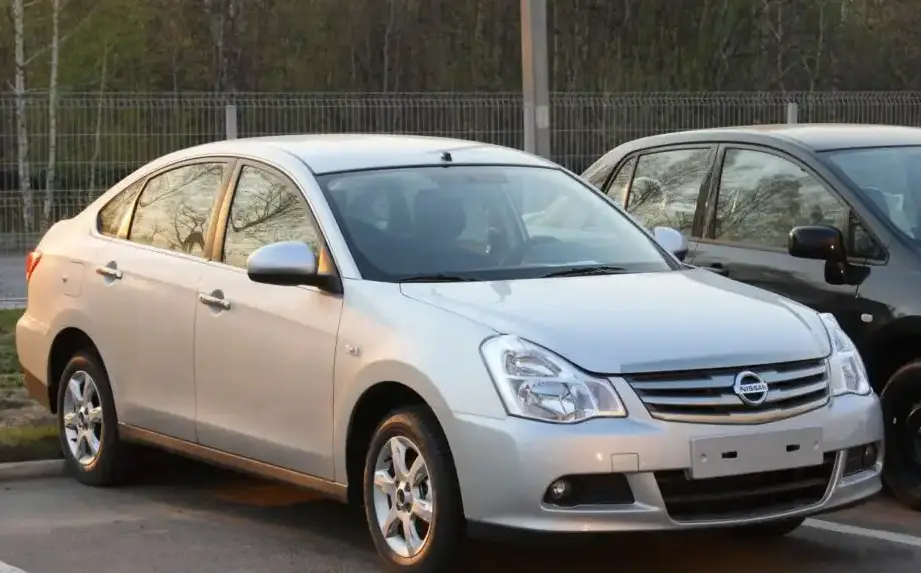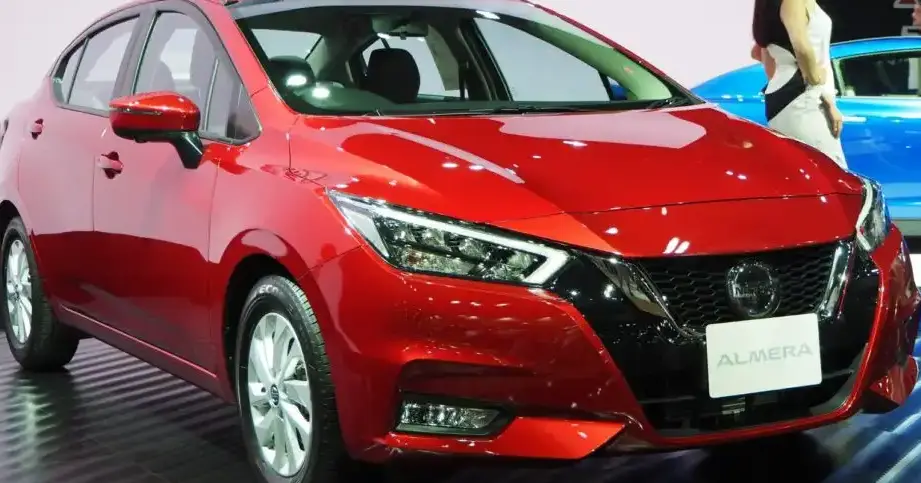
The Nissan Almera IV (N18) 1.0 Turbo, launched in 2019, is a significant evolution of Nissan’s compact sedan, primarily targeted towards the European and Asian automotive markets. This variant, featuring a 1.0-liter turbocharged three-cylinder engine coupled with a continuously variable transmission (CVT), occupies an entry-level to mid-range position within the N18 Almera lineup. It was engineered to strike a balance between fuel efficiency, affordability, and contemporary features, appealing to buyers seeking a practical and economical vehicle for daily use. The N18 generation signified a return to a traditional sedan body style following the previous Almera’s hatchback design, aligning with consumer preferences in its key markets.
Technical Specifications
| Brand | Nissan |
| Model | Almera |
| Generation | Almera IV (N18) |
| Type (Engine) | 1.0 Turbo (100 Hp) CVT |
| Start of production | 2019 |
| Powertrain Architecture | Internal Combustion engine |
| Body type | Sedan |
| Seats | 5 |
| Doors | 4 |
| Fuel consumption (combined) | 4.2 l/100 km (56 US mpg, 67.3 UK mpg, 23.8 km/l) |
| Fuel Type | Petrol (Gasoline) |
| Weight-to-power ratio | 10.7 kg/Hp, 93.9 Hp/tonne |
| Weight-to-torque ratio | 7 kg/Nm, 142.7 Nm/tonne |
| Power | 100 Hp @ 5000 rpm |
| Power per litre | 100.1 Hp/l |
| Torque | 152 Nm @ 2400-4000 rpm (112.11 lb.-ft. @ 2400-4000 rpm) |
| Engine layout | Front, Transverse |
| Engine Model/Code | HRA0DET |
| Engine displacement | 999 cm3 (60.96 cu. in.) |
| Number of cylinders | 3 |
| Engine configuration | Inline |
| Cylinder Bore | 72.2 mm (2.84 in.) |
| Piston Stroke | 81.3 mm (3.2 in.) |
| Compression ratio | 9.5:1 |
| Fuel injection system | Multi-port manifold injection |
| Engine aspiration | Turbocharger, Intercooler |
| Engine oil capacity | 3.6 l (3.8 US qt | 3.17 UK qt) |
| Coolant | 6.14 l (6.49 US qt | 5.4 UK qt) |
| Kerb Weight | 1065-1076 kg (2347.92 – 2372.17 lbs.) |
| Fuel tank capacity | 35 l (9.25 US gal | 7.7 UK gal) |
| Length | 4495 mm (176.97 in.) |
| Width | 1740 mm (68.5 in.) |
| Height | 1460 mm (57.48 in.) |
| Wheelbase | 2620 mm (103.15 in.) |
| Front track | 1525 mm (60.04 in.) |
| Rear track | 1535 mm (60.43 in.) |
| Ride height (ground clearance) | 135 mm (5.31 in.) |
| Minimum turning circle | 10.4 m (34.12 ft.) |
| Drivetrain Architecture | Front wheel drive |
| Number of gears and type of gearbox | automatic transmission XTRONIC CVT |
| Front suspension | Independent type McPherson |
| Rear suspension | Torsion |
| Front brakes | Ventilated discs |
| Rear brakes | Drum |
| Assisting systems | ABS (Anti-lock braking system) |
| Steering type | Steering rack and pinion |
| Power steering | Electric Steering |
| Tires size | 195/65 R15 |
| Wheel rims size | 5.5J x 15 |
Powertrain & Engine Architecture
The Nissan Almera IV 1.0 Turbo’s powertrain centers around the HRA0DET engine, a 999cc inline three-cylinder gasoline engine. This engine employs a single-scroll turbocharger with an intercooler to generate 100 horsepower at 5000 rpm and 152 Nm (112 lb-ft) of torque between 2400 and 4000 rpm. The engine utilizes multi-point fuel injection and features a compression ratio of 9.5:1. The three-cylinder configuration, while promoting fuel efficiency, inherently produces some vibration, which Nissan mitigated through engine mounts and balancing shafts. The engine is exclusively paired with Nissan’s XTRONIC CVT (Continuously Variable Transmission). This CVT is engineered to deliver smooth, stepless gear changes, optimizing fuel economy and drivability. Unlike conventional automatic transmissions with fixed gear ratios, the CVT continuously adjusts the gear ratio to maintain the engine at its most efficient operating point.
Driving Characteristics
The 1.0 Turbo CVT combination provides sufficient performance for typical daily driving scenarios. Acceleration isn’t particularly rapid, with an estimated 0-62 mph (0-100 km/h) time of approximately 12-13 seconds. The CVT contributes to a smooth driving experience, but can sometimes feel less responsive than a traditional automatic or manual transmission, especially during quick acceleration maneuvers. The CVT’s programming prioritizes fuel efficiency, which can result in the engine sustaining higher RPMs during acceleration. Compared to Almera trims equipped with larger engines, the 1.0 Turbo offers a more economical, but less engaging, driving experience. The lower power output is noticeable when carrying multiple passengers or navigating inclines.
Equipment & Trim Levels
The 1.0 Turbo variant generally came with a reasonable array of standard features. These typically included air conditioning, power windows, central locking, a basic audio system with Bluetooth connectivity, and safety features such as ABS, electronic stability control, and multiple airbags. Higher trim levels, often designated as ‘Visia’ or ‘Acenta’, added features like alloy wheels, a touchscreen infotainment system with Apple CarPlay and Android Auto compatibility, rear parking sensors, and cruise control. Interior upholstery was typically cloth, with a functional and durable design. Optional extras included metallic paint finishes, upgraded audio systems, and a panoramic sunroof.
Chassis & Braking
The Almera IV utilizes a front-wheel-drive layout with an independent McPherson strut suspension at the front and a torsion beam setup at the rear. This suspension configuration prioritizes ride comfort and smoothness over sporty handling characteristics. The front brakes are ventilated discs, while the rear brakes are drums. This configuration is common for vehicles in this weight class and price bracket. Electric power steering provides light and effortless steering feel, making it well-suited for urban driving conditions. The relatively lightweight nature of the 1.0 Turbo variant contributes to its fuel efficiency and manageable handling.
Market Reception & Comparison
The Nissan Almera IV 1.0 Turbo was generally well-received as an affordable and fuel-efficient option within the compact sedan segment. Reviewers praised its comfortable ride and spacious interior, but noted its lack of outright performance. Compared to competitors such as the Skoda Octavia, Volkswagen Golf, and Peugeot 308, the Almera offered a more budget-friendly price point, but often lacked the refinement and driving dynamics of its rivals. Fuel economy was a key selling point, with the 1.0 Turbo consistently achieving impressive MPG figures. Reliability reports have been generally positive, with the HRA0DET engine proving to be relatively robust, although CVT transmissions can sometimes require more frequent maintenance.
Legacy
The Nissan Almera IV 1.0 Turbo represents a pragmatic approach to compact sedan design. While not a performance leader, it offered a compelling combination of affordability, fuel efficiency, and practicality. In the used car market, these models are often sought after by buyers looking for a reliable and economical daily driver. The longevity of the HRA0DET engine and the XTRONIC CVT, when properly maintained, contributes to the Almera’s continued appeal. The N18 Almera, and specifically the 1.0 Turbo variant, played a role in Nissan’s efforts to provide a competitive and value-oriented option in the European and Asian compact car segments.