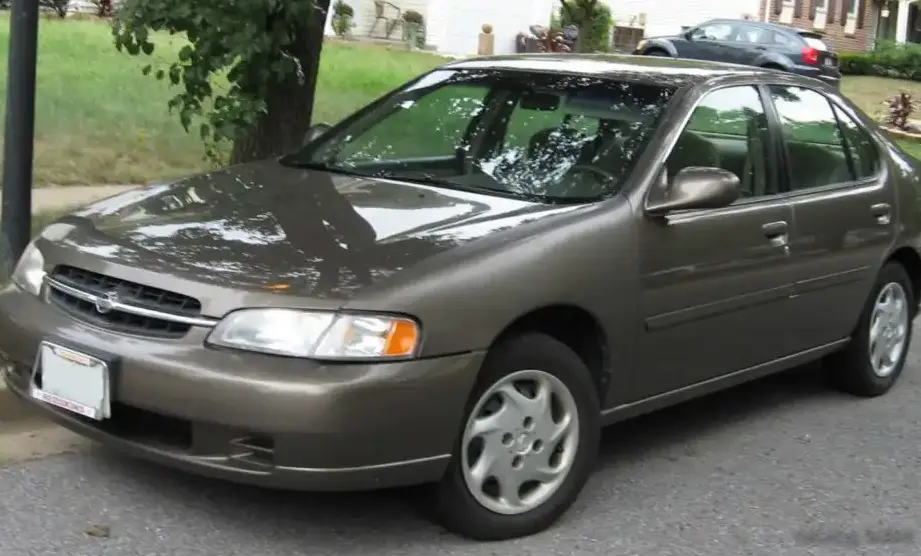
The Nissan Altima II, produced between 1998 and 2002, represented a significant step forward for Nissan’s mid-size sedan offering in the North American market. Building upon the success of the original Altima, the II generation (codenamed D22) aimed to provide a more refined and spacious vehicle appealing to a broader customer base. This particular variant, the 2.4-liter 16-valve engine producing 152 horsepower, occupied a key position in the Altima II lineup, offering a balance between performance and affordability. It served as a step up from the base 2.0-liter engine, while remaining more accessible than the later, more powerful options.
Technical Specifications
| Brand | Nissan |
| Model | Altima |
| Generation | Altima II |
| Type (Engine) | 2.4 16V (152 Hp) |
| Start of production | 1998 |
| End of production | 2002 |
| Powertrain Architecture | Internal Combustion engine |
| Body type | Sedan |
| Seats | 5 |
| Doors | 4 |
| Fuel Type | Petrol (Gasoline) |
| Acceleration 0 – 100 km/h | 8.2 sec |
| Acceleration 0 – 62 mph | 8.2 sec |
| Acceleration 0 – 60 mph | 7.8 sec |
| Maximum speed | 180 km/h (111.85 mph) |
| Weight-to-power ratio | 8.7 kg/Hp, 114.7 Hp/tonne |
| Weight-to-torque ratio | 6.3 kg/Nm, 157.7 Nm/tonne |
| Power | 152 Hp @ 5600 rpm |
| Power per litre | 63.6 Hp/l |
| Torque | 209 Nm @ 4400 rpm (154.15 lb.-ft. @ 4400 rpm) |
| Engine layout | Front, Transverse |
| Engine Model/Code | KA24DE |
| Engine displacement | 2389 cm3 (145.79 cu. in.) |
| Number of cylinders | 4 |
| Engine configuration | Inline |
| Cylinder Bore | 89 mm (3.5 in.) |
| Piston Stroke | 96 mm (3.78 in.) |
| Compression ratio | 9.2:1 |
| Number of valves per cylinder | 4 |
| Fuel injection system | Multi-port manifold injection |
| Engine aspiration | Naturally aspirated engine |
| Valvetrain | DOHC |
| Engine oil capacity | 3.4 l (3.59 US qt | 2.99 UK qt) |
| Coolant | 7 l (7.4 US qt | 6.16 UK qt) |
| Kerb Weight | 1325 kg (2921.12 lbs.) |
| Trunk (boot) space – minimum | 390 l (13.77 cu. ft.) |
| Fuel tank capacity | 60 l (15.85 US gal | 13.2 UK gal) |
| Length | 4660 mm (183.46 in.) |
| Width | 1760 mm (69.29 in.) |
| Height | 1420 mm (55.91 in.) |
| Wheelbase | 2620 mm (103.15 in.) |
| Front track | 1510 mm (59.45 in.) |
| Rear (Back) track | 1500 mm (59.06 in.) |
| Drivetrain Architecture | The Internal combustion engine (ICE) drives the front wheels of the vehicle. |
| Drive wheel | Front wheel drive |
| Number of gears and type of gearbox | 5 gears, manual transmission |
| Front suspension | Spring Strut |
| Rear suspension | Torsion |
| Front brakes | Ventilated discs |
| Rear brakes | Disc |
| Assisting systems | ABS (Anti-lock braking system) |
| Steering type | Steering rack and pinion |
| Power steering | Hydraulic Steering |
| Tires size | 195/65 R15 |
| Wheel rims size | 15 |
Powertrain & Engine Architecture
The heart of this Altima II variant is the KA24DE engine, a 2.4-liter inline-four cylinder powerplant. This engine, a staple in Nissan’s lineup for many years, is known for its durability and relatively simple design. The KA24DE features a cast iron block and an aluminum cylinder head, incorporating a double overhead camshaft (DOHC) valvetrain with four valves per cylinder. This configuration allowed for improved breathing and higher engine speeds compared to older designs. Fuel delivery is managed by a multi-port fuel injection system, providing precise fuel metering for optimal combustion. The engine’s 9.2:1 compression ratio strikes a balance between efficiency and performance. The 152 horsepower and 154 lb-ft of torque were delivered to the front wheels through a five-speed manual transmission, although a four-speed automatic transmission was also available, and is the focus of this article. The automatic transmission, while offering convenience, did slightly impact acceleration and fuel economy compared to the manual counterpart.
Driving Characteristics
The 2.4-liter engine paired with the four-speed automatic transmission provided a comfortable and adequate driving experience for everyday commuting. Acceleration from 0-60 mph took approximately 7.8 seconds, which was competitive for its class at the time. While not a sports car, the Altima II 2.4 offered sufficient power for highway merging and passing maneuvers. The automatic transmission’s gear ratios were tuned for fuel efficiency and smooth operation, rather than outright performance. Compared to the manual transmission version, the automatic felt slightly less responsive, but offered a more relaxed driving experience. Compared to the later 2.5-liter engine introduced in later Altima models, the 2.4-liter offered a more linear power delivery, but lacked the overall punch of the larger displacement engine.
Equipment & Trim Levels
The Altima II 2.4 with the automatic transmission was typically offered in a mid-range trim level. Standard features generally included air conditioning, power windows and locks, a CD player, and cloth upholstery. Higher trim levels added features such as alloy wheels, a sunroof, and upgraded audio systems. Safety features like anti-lock brakes (ABS) were also commonly included. Interior appointments were generally functional and comfortable, with a focus on practicality rather than luxury. The dashboard layout was straightforward and easy to use, with clearly marked controls.
Chassis & Braking
The Altima II utilized a front-wheel-drive layout with a MacPherson strut front suspension and a torsion beam rear suspension. This suspension setup provided a comfortable ride quality, although it wasn’t particularly sporty. The front brakes were ventilated discs, offering good stopping power, while the rear brakes were solid discs. The hydraulic power steering provided light and easy steering effort. The 195/65 R15 tires offered a good balance between ride comfort and handling.
Market Reception & Comparison
The Altima II 2.4 Automatic was generally well-received by automotive critics as a practical and reliable mid-size sedan. It was praised for its spacious interior, comfortable ride, and fuel efficiency. However, some critics noted that the automatic transmission could feel sluggish at times, and that the interior materials weren’t as upscale as some competitors. Compared to other trims in the Altima II lineup, the 2.4 Automatic offered a good value proposition, providing a balance between performance and affordability. It was a popular choice for families and commuters who prioritized practicality and reliability.
Legacy
The KA24DE engine, in general, has earned a reputation for being a durable and long-lasting powerplant. The Altima II 2.4 Automatic, while not a collector’s item, remains a relatively common sight on used car lots today. These vehicles are often sought after for their affordability and reliability. Maintenance is generally straightforward, and parts are readily available. However, as with any older vehicle, potential buyers should be aware of common issues such as oil leaks and worn suspension components. The Altima II 2.4 Automatic represents a solid and dependable choice for those seeking an affordable and practical mid-size sedan.