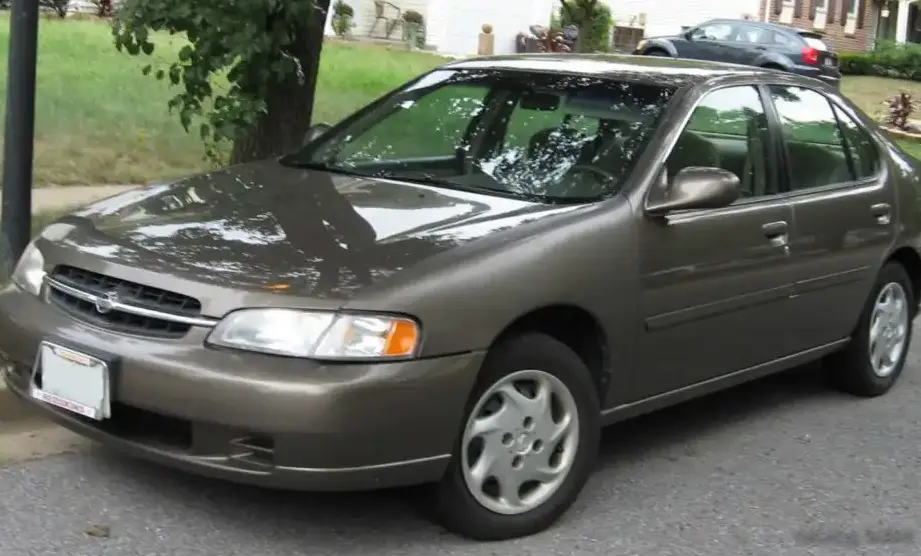
The Nissan Altima III 2.5 i 16V (175 Hp) Automatic, produced between 2002 and 2006, represented a significant step forward for Nissan’s mid-size sedan offering in the North American market. Part of the L31 chassis generation (often referred to as the Altima III), this variant occupied a middle ground in the Altima lineup, offering a balance between affordability, comfort, and reasonable performance. It aimed to appeal to a broad customer base seeking a practical and reliable family sedan. This model was a key player in Nissan’s efforts to gain market share against established competitors like the Honda Accord and Toyota Camry.
Technical Specifications
| Brand | Nissan |
| Model | Altima |
| Generation | Altima III |
| Type (Engine) | 2.5 i 16V (175 Hp) Automatic |
| Start of production | 2002 |
| End of production | 2006 |
| Powertrain Architecture | Internal Combustion engine |
| Body type | Sedan |
| Seats | 5 |
| Doors | 4 |
| Fuel consumption (urban) | 10.7 l/100 km (22 US mpg) |
| Fuel consumption (extra urban) | 8.4 l/100 km (28 US mpg) |
| Fuel Type | Petrol (Gasoline) |
| Maximum speed | 180 km/h (111.85 mph) |
| Weight-to-power ratio | 7.7 kg/Hp |
| Weight-to-torque ratio | 5.5 kg/Nm |
| Power | 175 Hp @ 6000 rpm |
| Power per litre | 70.3 Hp/l |
| Torque | 245 Nm @ 4000 rpm (180.7 lb.-ft. @ 4000 rpm) |
| Engine layout | Front, Transverse |
| Engine Model/Code | QR25DE |
| Engine displacement | 2488 cm3 (151.83 cu. in.) |
| Number of cylinders | 4 |
| Engine configuration | Inline |
| Cylinder Bore | 89 mm (3.5 in.) |
| Piston Stroke | 100 mm (3.94 in.) |
| Compression ratio | 9.5:1 |
| Number of valves per cylinder | 4 |
| Fuel injection system | Multi-port manifold injection |
| Engine aspiration | Naturally aspirated engine |
| Valvetrain | DOHC |
| Engine oil capacity | 4 l (4.23 US qt | 3.52 UK qt) |
| Coolant capacity | 7.6 l (8.03 US qt | 6.69 UK qt) |
| Kerb Weight | 1350 kg (2976.24 lbs.) |
| Trunk (boot) space | 440 l (15.54 cu. ft.) |
| Fuel tank capacity | 76 l (20.08 US gal | 16.72 UK gal) |
| Length | 4860 mm (191.34 in.) |
| Width | 1790 mm (70.47 in.) |
| Height | 1470 mm (57.87 in.) |
| Wheelbase | 2800 mm (110.24 in.) |
| Front track | 1550 mm (61.02 in.) |
| Rear track | 1555 mm (61.22 in.) |
| Drivetrain | Front wheel drive |
| Number of gears | 4 |
| Gearbox type | Automatic transmission |
| Front suspension | Wishbone |
| Rear suspension | Coil spring |
| Front brakes | Ventilated discs |
| Rear brakes | Ventilated discs |
| Assisting systems | ABS (Anti-lock braking system) |
| Steering type | Steering rack and pinion |
| Power steering | Hydraulic Steering |
| Tires size | 205/65 R16 |
| Wheel rims size | 16 |
Powertrain & Engine Architecture
The heart of the Altima III 2.5 i was the QR25DE engine, a 2.5-liter inline-four cylinder powerplant. This engine utilized a cast iron block with an aluminum cylinder head, a common configuration for balancing durability and weight. The QR25DE featured multi-port fuel injection and a double overhead camshaft (DOHC) valvetrain with four valves per cylinder, contributing to its respectable power output. The engine’s design prioritized smooth operation and reliability over outright performance. The four-speed automatic transmission was a Jatco unit, known for its relatively smooth shifts but lacking the efficiency of more modern transmissions. This transmission was tuned for comfort and ease of use, rather than sporty responsiveness.
Driving Characteristics
The 175 horsepower and 180 lb-ft of torque delivered by the QR25DE and four-speed automatic combination resulted in adequate, but not exhilarating, performance. Acceleration from 0 to 60 mph typically took around 9-10 seconds. The automatic transmission’s gear ratios were geared towards fuel efficiency and comfortable cruising, meaning quick downshifts for passing maneuvers weren’t particularly prompt. Compared to the available five-speed manual transmission, the automatic version felt noticeably less engaging. However, for everyday driving and commuting, the automatic provided a relaxed and convenient experience. The power delivery was linear, making it predictable and easy to modulate.
Equipment & Trim Levels
The 2.5 i trim level generally included standard features such as air conditioning, power windows and locks, a CD player, and cloth upholstery. Optional extras included a sunroof, upgraded audio system, and alloy wheels. Higher trim levels, like the 2.5 S, added features like a sport-tuned suspension, upgraded interior trim, and more advanced audio options. The interior design was functional and straightforward, prioritizing usability over luxury. The dashboard layout was clean and easy to navigate, with logically placed controls.
Chassis & Braking
The Altima III utilized a front-wheel-drive layout with an independent front suspension (wishbone) and a multi-link rear suspension. This suspension setup provided a comfortable ride quality, absorbing bumps and imperfections in the road effectively. Braking duties were handled by ventilated disc brakes on all four wheels, supplemented by an Anti-lock Braking System (ABS) for enhanced safety. The steering was hydraulic power-assisted rack and pinion, offering a reasonable level of feedback and precision.
Market Reception & Comparison
The Altima III 2.5 i Automatic was generally well-received by critics as a competent and practical family sedan. It offered a good value proposition, providing a comfortable ride, decent fuel economy (around 22 mpg city / 28 mpg highway), and a reputation for reliability. However, it wasn’t considered a standout performer in its class. Compared to the more powerful 3.5-liter V6 Altima models, the 2.5 i felt underpowered. The 2.5 i also lagged behind the V6 in terms of available features and overall refinement. However, the 2.5 i offered significantly better fuel economy than the V6, making it a more attractive option for budget-conscious buyers.
Legacy
The QR25DE engine proved to be a durable and reliable powerplant, and many Altima III 2.5 i models continue to be on the road today. While not known for any groundbreaking innovations, the Altima III 2.5 i Automatic represents a solid and dependable mid-size sedan from a pivotal era for Nissan. In the used car market, these Altimas are often sought after for their affordability and relatively low maintenance costs. Common issues are typically related to age and mileage, such as worn suspension components and minor electrical glitches, but major engine or transmission failures are relatively rare. The combination of a reliable engine, comfortable ride, and reasonable price point has ensured the Altima III 2.5 i remains a viable option for those seeking a practical and affordable used car.