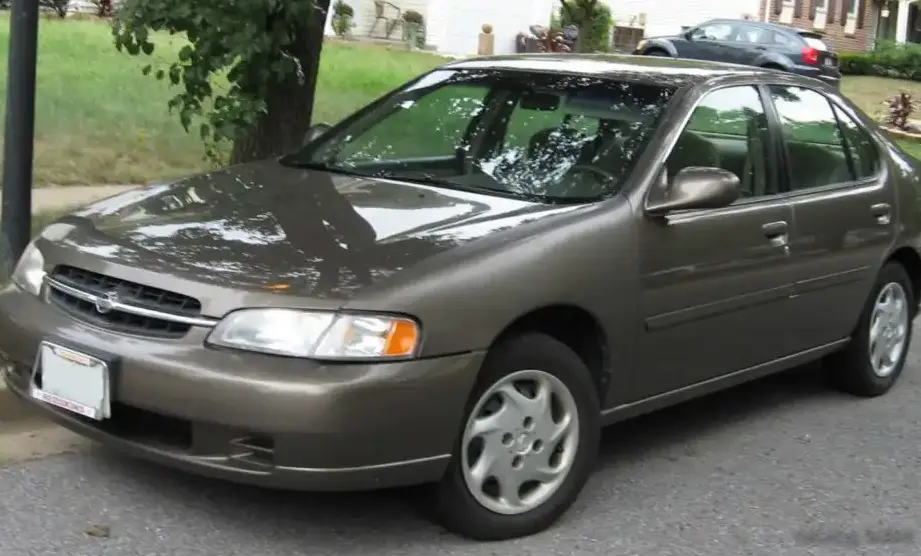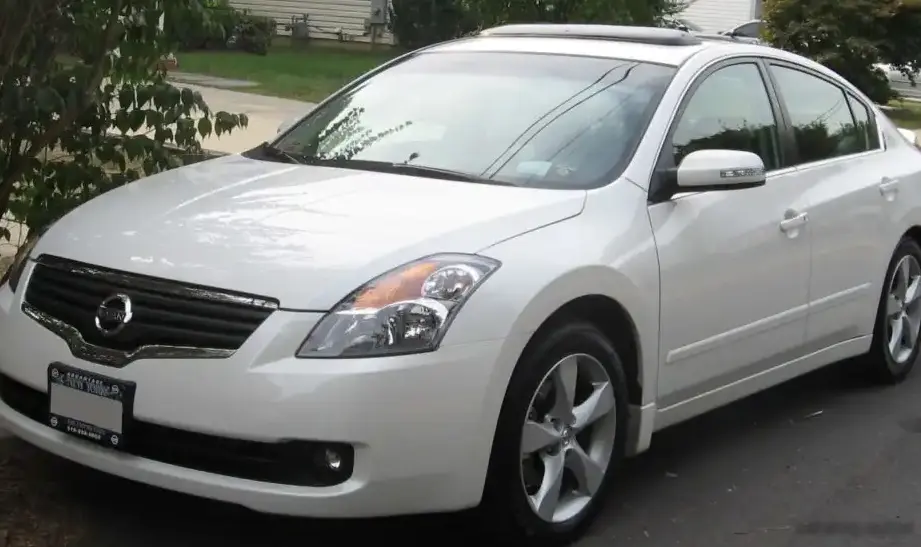
The Nissan Altima III 3.5i V6 24V (248 hp) represents a significant step up in performance and refinement for the Altima line, produced between 2002 and 2006. This variant occupied the top-tier position within the third-generation Altima (L31 chassis), offering a compelling blend of power, comfort, and features aimed at buyers seeking a sporty yet practical mid-size sedan. It was a key model in Nissan’s attempt to establish a stronger presence in the competitive American family sedan market, directly challenging established players like the Honda Accord and Toyota Camry.
Technical Specifications
| Brand | Nissan |
| Model | Altima |
| Generation | Altima III |
| Type (Engine) | 3.5 i V6 24V (248 Hp) |
| Start of production | 2002 |
| End of production | 2006 |
| Powertrain Architecture | Internal Combustion engine |
| Body type | Sedan |
| Seats | 5 |
| Doors | 4 |
| Fuel consumption (urban) | 12.4 l/100 km (19 US mpg) |
| Fuel consumption (extra urban) | 9.1 l/100 km (25.8 US mpg) |
| Fuel Type | Petrol (Gasoline) |
| Acceleration 0 – 100 km/h | 7.1 sec |
| Acceleration 0 – 62 mph | 7.1 sec |
| Acceleration 0 – 60 mph | 6.7 sec |
| Maximum speed | 200 km/h (124.27 mph) |
| Weight-to-power ratio | 5.9 kg/Hp |
| Weight-to-torque ratio | 4.4 kg/Nm |
| Power | 248 Hp @ 5800 rpm |
| Torque | 333 Nm @ 4400 rpm (245.61 lb.-ft. @ 4400 rpm) |
| Engine layout | Front, Transverse |
| Engine Model/Code | VQ35DE |
| Engine displacement | 3498 cm3 (213.46 cu. in.) |
| Number of cylinders | 6 |
| Engine configuration | V-engine |
| Cylinder Bore | 95.5 mm (3.76 in.) |
| Piston Stroke | 81.4 mm (3.2 in.) |
| Compression ratio | 10.3:1 |
| Number of valves per cylinder | 4 |
| Fuel injection system | Multi-port manifold injection |
| Engine aspiration | Naturally aspirated engine |
| Valvetrain | DOHC |
| Engine oil capacity | 4.2 l (4.44 US qt | 3.7 UK qt) |
| Coolant capacity | 8.2 l (8.66 US qt | 7.21 UK qt) |
| Kerb Weight | 1460 kg (3218.75 lbs.) |
| Trunk (boot) space | 440 l (15.54 cu. ft.) |
| Fuel tank capacity | 76 l (20.08 US gal | 16.72 UK gal) |
| Length | 4860 mm (191.34 in.) |
| Width | 1790 mm (70.47 in.) |
| Height | 1470 mm (57.87 in.) |
| Wheelbase | 2800 mm (110.24 in.) |
| Front track | 1550 mm (61.02 in.) |
| Rear track | 1555 mm (61.22 in.) |
| Drivetrain Architecture | Front wheel drive |
| Number of gears | 4 |
| Gearbox type | Automatic transmission |
| Front suspension | Wishbone |
| Rear suspension | Coil spring |
| Front brakes | Ventilated discs |
| Rear brakes | Disc |
| Assisting systems | ABS (Anti-lock braking system) |
| Steering type | Steering rack and pinion |
| Power steering | Hydraulic Steering |
| Tires size | 205/65 R16 |
Powertrain & Engine Architecture
The heart of the Altima 3.5i is the VQ35DE 3.5-liter V6 engine. This engine is a member of Nissan’s highly regarded VQ engine family, known for its smooth operation, reliability, and strong performance. The VQ35DE features a 60-degree V-angle, dual overhead camshafts (DOHC), and four valves per cylinder. It utilizes a multi-port fuel injection system, delivering fuel directly into each intake port. The engine’s output of 248 horsepower and 245 lb-ft of torque provided a substantial performance boost compared to the base 2.5-liter four-cylinder engine. The engine’s transverse mounting and front-wheel-drive configuration were standard for this class of vehicle. Paired with the VQ35DE was a four-speed automatic transmission, chosen for its balance of responsiveness and fuel efficiency. While not as sporty as a manual transmission, the automatic offered smooth shifts and ease of use, appealing to a broader range of drivers.
Driving Characteristics
The 3.5i Altima delivered noticeably quicker acceleration than its four-cylinder counterpart. The 0-60 mph time of around 6.7 seconds was competitive for the segment. The automatic transmission, while generally smooth, could sometimes feel slightly hesitant during quick downshifts. The gear ratios were tuned for a balance between acceleration and highway cruising. The engine provided ample torque throughout the rev range, making everyday driving effortless. Compared to a manual transmission equipped Altima, the automatic sacrificed some driver engagement, but offered a more relaxed driving experience. The weight distribution, typical of a front-wheel-drive sedan, resulted in predictable handling, though not as sharp as some rear-wheel-drive competitors.
Equipment & Trim Levels
The 3.5i Altima typically came well-equipped, positioning it as the premium offering in the lineup. Standard features often included air conditioning, power windows and locks, a CD player, and alloy wheels. Higher trim levels, such as the SL, added features like leather upholstery, a sunroof, upgraded audio systems (often Bose), and automatic climate control. Optional extras included navigation systems and side airbags. Interior materials were generally of good quality, offering a comfortable and refined cabin environment. The dashboard layout was functional and user-friendly, with logically placed controls.
Chassis & Braking
The Altima III utilized an independent front suspension with coil springs and a multi-link rear suspension, providing a comfortable ride and decent handling. The front suspension employed wishbone components, while the rear utilized coil springs. Braking duties were handled by ventilated disc brakes at the front and solid disc brakes at the rear. Anti-lock braking system (ABS) was standard, enhancing safety and control during emergency braking situations. The steering system was a rack-and-pinion setup with hydraulic power assistance, offering responsive and precise steering feel. The 205/65R16 tires provided a good balance of ride comfort and grip.
Market Reception & Comparison
The Altima 3.5i was generally well-received by automotive critics. Reviewers praised its powerful engine, comfortable ride, and spacious interior. However, some criticized the automatic transmission for lacking the responsiveness of a manual. Fuel economy, at 19 mpg city and 25.8 mpg highway, was typical for a V6-powered sedan of its time. Compared to the base 2.5S model, the 3.5i offered a significant performance upgrade, but at a higher price point. Against competitors like the Honda Accord V6 and Toyota Camry V6, the Altima 3.5i offered a compelling value proposition, often undercutting their prices while delivering comparable performance and features.
Legacy
The VQ35DE engine has proven to be remarkably durable and reliable, with many examples exceeding 200,000 miles with proper maintenance. The Altima 3.5i remains a popular choice in the used car market, appreciated for its combination of performance, comfort, and affordability. Common maintenance items include regular oil changes, timing chain inspection (though generally robust), and occasional sensor replacements. The four-speed automatic transmission, while generally reliable, may require servicing or replacement at higher mileage. Overall, the Altima 3.5i represents a well-engineered and enjoyable sedan that continues to provide reliable transportation for many years.