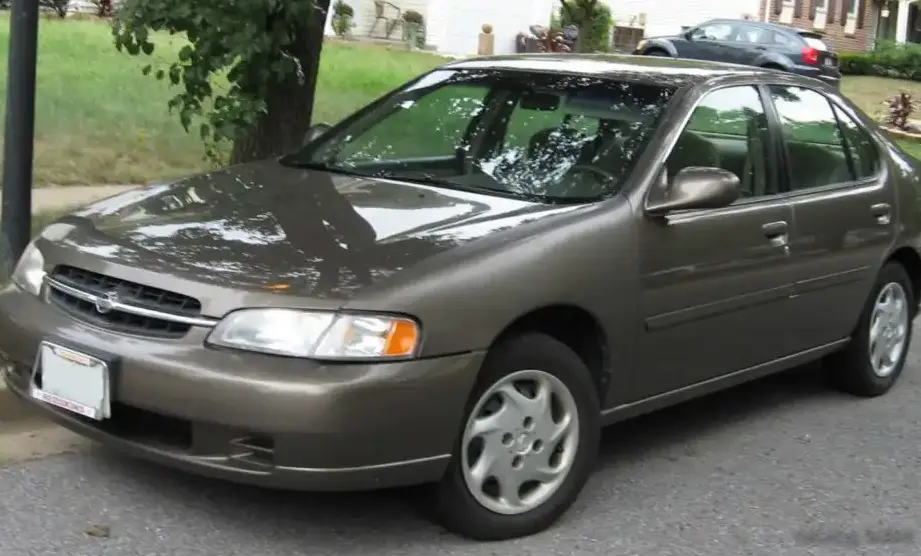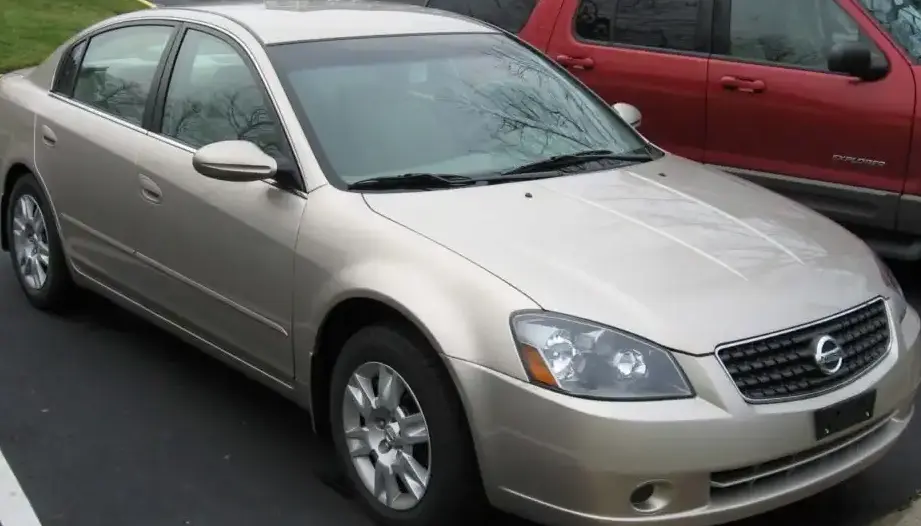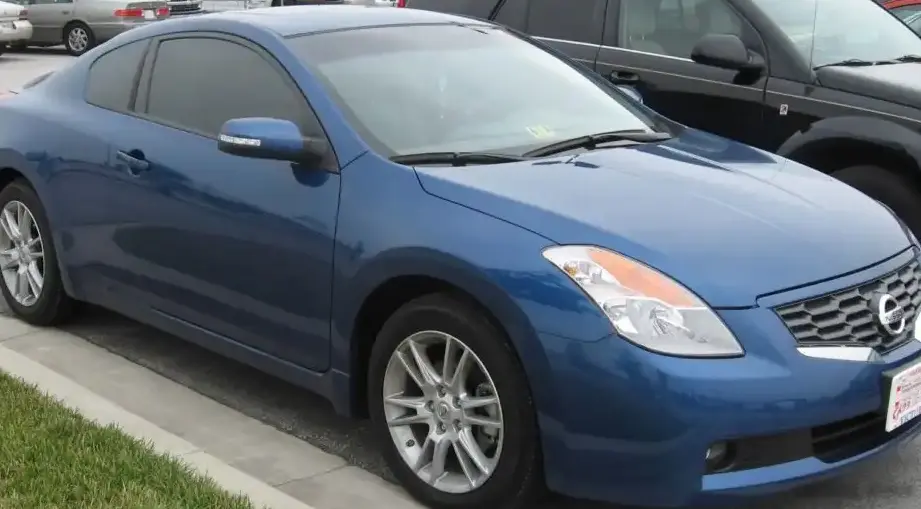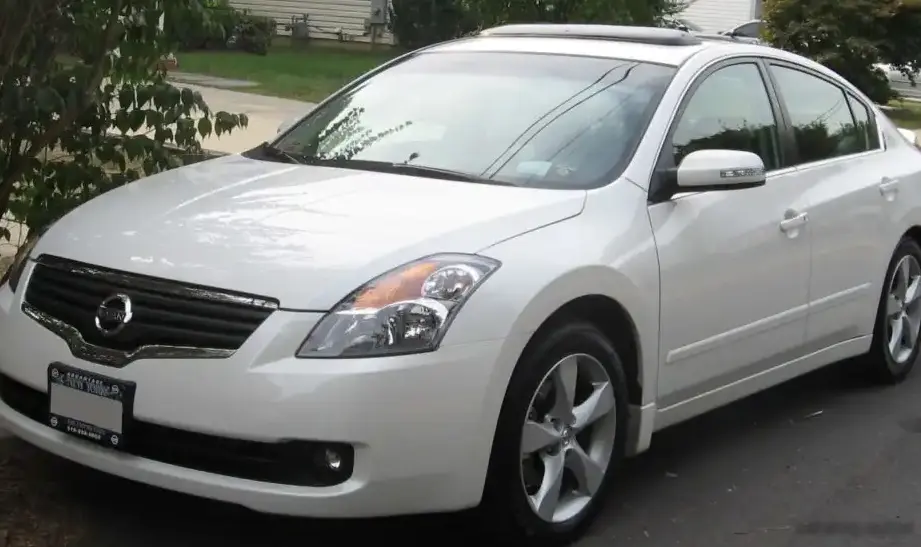
The Nissan Altima IV 2.5, produced from 2007 to 2012, represented a significant step forward for Nissan’s mid-size sedan offering in the North American market. Falling within the D32 generation of the Altima, this variant – equipped with the QR25DE 2.5-liter inline-four engine producing 177 horsepower – served as a mainstay of the lineup, positioned as a balance between affordability and performance. It competed directly with established rivals like the Honda Accord, Toyota Camry, and Ford Fusion. This particular configuration, while available with a six-speed manual transmission, was most commonly found paired with a Continuously Variable Transmission (CVT), a relatively new technology at the time aimed at improving fuel efficiency.
Technical Specifications
| Brand | Nissan |
| Model | Altima |
| Generation | Altima IV |
| Type (Engine) | 2.5 (177 Hp) |
| Start of production | 2007 |
| End of production | 2012 |
| Powertrain Architecture | Internal Combustion engine |
| Body type | Sedan |
| Seats | 5 |
| Doors | 4 |
| Fuel Type | Petrol (Gasoline) |
| Maximum speed | 235 km/h (146.02 mph) |
| Power | 177 Hp @ 6000 rpm |
| Power per litre | 71.1 Hp/l |
| Torque | 244 Nm @ 4000 rpm (179.97 lb.-ft. @ 4000 rpm) |
| Engine layout | Front, Transverse |
| Engine Model/Code | QR25DE |
| Engine displacement | 2488 cm3 (151.83 cu. in.) |
| Number of cylinders | 4 |
| Engine configuration | Inline |
| Cylinder Bore | 89 mm (3.5 in.) |
| Piston Stroke | 100 mm (3.94 in.) |
| Compression ratio | 9.5:1 |
| Number of valves per cylinder | 4 |
| Fuel injection system | Multi-port manifold injection |
| Engine aspiration | Naturally aspirated engine |
| Engine oil capacity | 4.6 l (4.86 US qt | 4.05 UK qt) |
| Coolant | 7.6 l (8.03 US qt | 6.69 UK qt) |
| Max. weight | 1905 kg (4199.81 lbs.) |
| Trunk (boot) space – maximum | 433 l (15.29 cu. ft.) |
| Fuel tank capacity | 76 l (20.08 US gal | 16.72 UK gal) |
| Length | 4821 mm (189.8 in.) |
| Width | 1796 mm (70.71 in.) |
| Height | 1471 mm (57.91 in.) |
| Wheelbase | 2776 mm (109.29 in.) |
| Front track | 1549 mm (60.98 in.) |
| Rear (Back) track | 1549 mm (60.98 in.) |
| Drivetrain Architecture | The Internal combustion engine (ICE) drives the front wheels of the vehicle. |
| Drive wheel | Front wheel drive |
| Number of gears and type of gearbox | 6 gears, manual transmission |
| Front brakes | Ventilated discs |
| Rear brakes | Disc |
| Tires size | 215/55 R17 |
| Wheel rims size | 17 |
Powertrain & Engine Architecture
The heart of the Altima 2.5 was the QR25DE engine, a 2.5-liter inline-four cylinder powerplant. This engine featured a cast iron block with an aluminum cylinder head, incorporating Nissan’s Continuous Valve Timing Control System (CVTCS) for both intake and exhaust valves. This system optimized valve timing based on engine speed and load, improving both performance and fuel efficiency. Fuel delivery was handled by a multi-port fuel injection system. The QR25DE was known for its relatively smooth operation and decent power output for its displacement. The six-speed manual transmission offered a more engaging driving experience, while the optional Xtronic CVT (Nissan’s branded CVT) prioritized fuel economy through its stepless gear ratios. The CVT aimed to keep the engine operating in its most efficient range at all times.
Driving Characteristics
The 177-horsepower Altima 2.5, particularly when equipped with the CVT, offered adequate, but not exhilarating, performance. Acceleration from 0 to 60 mph typically took around 9-10 seconds. The CVT, while improving fuel economy, often resulted in a “rubber band” feel during acceleration, where engine RPM would rise quickly but vehicle speed would lag slightly. The manual transmission version provided a more direct connection between the engine and the wheels, offering quicker response and a more traditional driving experience. Handling was generally considered competent for a mid-size sedan, but not particularly sporty. The suspension was tuned for comfort, prioritizing a smooth ride over sharp handling.
Equipment & Trim Levels
The Altima 2.5 typically came standard with features like air conditioning, power windows and locks, a CD player with auxiliary input, and basic safety equipment such as airbags and anti-lock brakes. Higher trim levels, such as the 2.5 S and 2.5 SL, added features like alloy wheels, a sunroof, upgraded audio systems (often including a six-disc CD changer), and leather upholstery. Optional extras included navigation systems, Bluetooth connectivity, and a premium Bose audio system. The interior design was generally considered functional and well-built for its price point, though not particularly luxurious.
Chassis & Braking
The Altima IV utilized a front-wheel-drive platform with an independent MacPherson strut suspension in the front and a multi-link suspension in the rear. This setup provided a good balance of ride comfort and handling. Braking duties were handled by ventilated disc brakes in the front and solid disc brakes in the rear. Anti-lock brakes (ABS) were standard. The steering was a rack-and-pinion system with hydraulic power assist. The chassis was designed to provide a stable and predictable driving experience, prioritizing safety and comfort over outright performance.
Market Reception & Comparison
The Altima 2.5 was generally well-received by automotive critics as a practical and reliable mid-size sedan. It was praised for its spacious interior, comfortable ride, and good fuel economy, especially with the CVT. However, some critics found the engine to be somewhat underpowered, particularly when compared to some of its rivals. The CVT also drew some criticism for its lack of responsiveness. Compared to the Altima 3.5 (equipped with a V6 engine), the 2.5 offered significantly lower performance but also better fuel economy and a lower price point. The 1.8L engine option available in some markets was even more fuel efficient but offered considerably less power.
Legacy
The QR25DE engine proved to be a durable and reliable powerplant, and many Altima 2.5 models continue to be on the road today. While not known for any groundbreaking innovations, the Altima IV 2.5 represented a solid and dependable choice for buyers seeking a practical and affordable mid-size sedan. The introduction of the CVT, while initially met with some skepticism, helped to pave the way for the widespread adoption of this technology in the automotive industry. On the used car market, these Altimas are often valued for their affordability and relatively low maintenance costs, making them a popular choice for budget-conscious buyers. Common issues reported include occasional CVT failures (though not widespread) and sensor failures as the vehicles age.