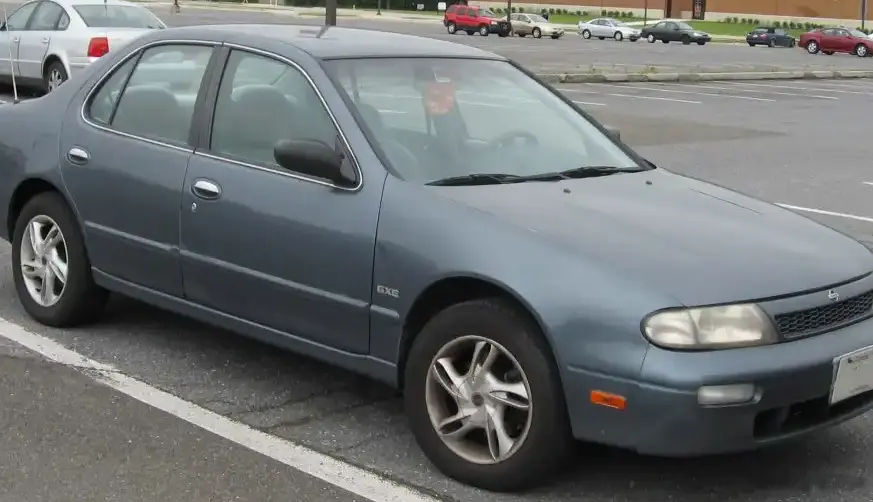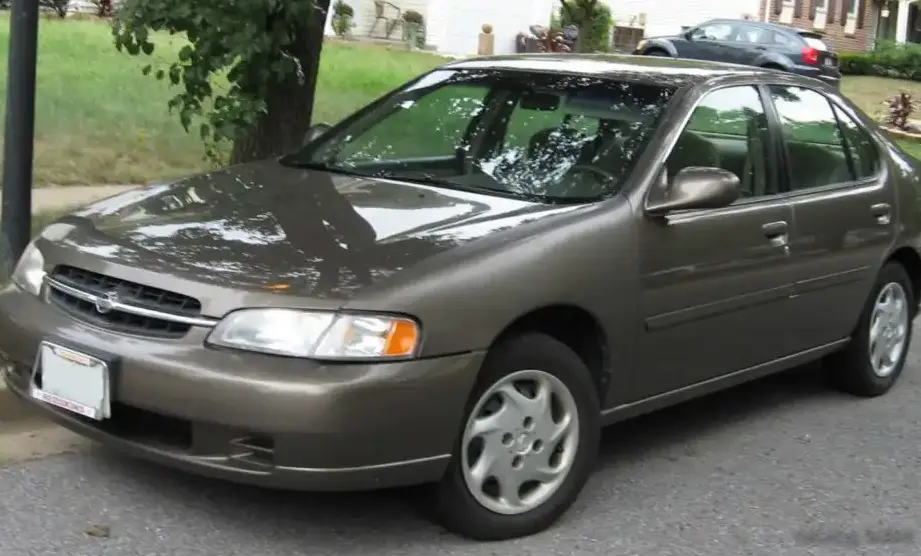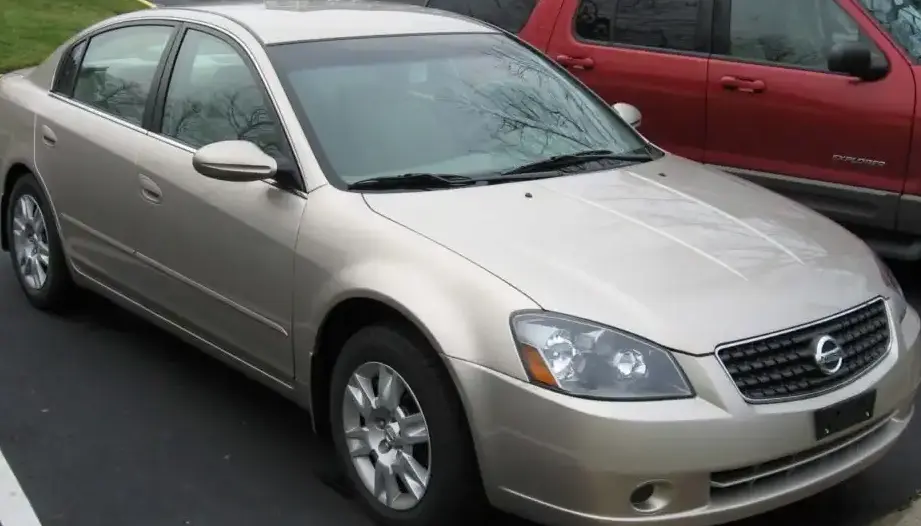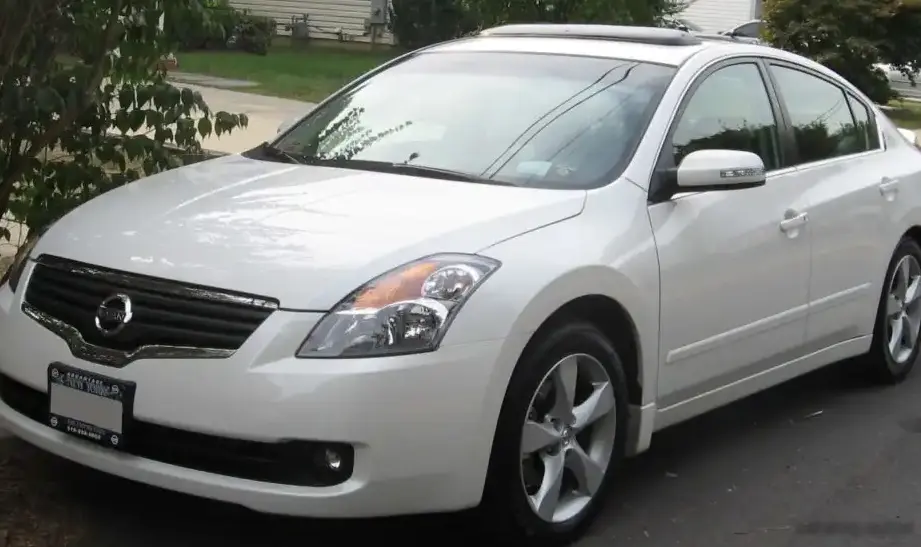
The Nissan Altima V (facelift, 2016-2018) 2.5, equipped with a 182 horsepower engine and a Continuously Variable Transmission (CVT), represented a significant portion of Altima sales during its production run. This variant occupied the mid-range position within the fifth generation Altima (L33) lineup, offering a balance between affordability, fuel efficiency, and acceptable performance for the average commuter. Introduced as part of a mid-cycle refresh, the 2016 Altima received updated styling, enhanced technology, and refinements to the powertrain. It aimed to compete directly with popular family sedans like the Honda Accord, Toyota Camry, and Ford Fusion.
Technical Specifications
| Brand | Nissan |
| Model | Altima |
| Generation | Altima V (facelift 2016) |
| Type (Engine) | 2.5 (182 Hp) CVT |
| Start of production | 2016 |
| End of production | 2018 |
| Powertrain Architecture | Internal Combustion engine |
| Body type | Sedan |
| Seats | 5 |
| Doors | 4 |
| Fuel consumption (urban) | 8.7 l/100 km (27 US mpg) |
| Fuel consumption (extra urban) | 6 l/100 km (39.2 US mpg) |
| Fuel consumption (combined) | 7.6 l/100 km (30.9 US mpg) |
| Fuel Type | Petrol (Gasoline) |
| Weight-to-power ratio | 8 kg/Hp |
| Weight-to-torque ratio | 5.9 kg/Nm |
| Power | 182 Hp @ 6000 rpm |
| Power per litre | 73.2 Hp/l |
| Torque | 245 Nm @ 4000 rpm (180.7 lb.-ft. @ 4000 rpm) |
| Engine layout | Front, Transverse |
| Engine Model/Code | QR25DE |
| Engine displacement | 2488 cm3 (151.83 cu. in.) |
| Number of cylinders | 4 |
| Engine configuration | Inline |
| Cylinder Bore | 89 mm (3.5 in.) |
| Piston Stroke | 100 mm (3.94 in.) |
| Compression ratio | 10.3:1 |
| Number of valves per cylinder | 4 |
| Fuel injection system | Multi-port manifold injection |
| Engine aspiration | Naturally aspirated engine |
| Valvetrain | DOHC |
| Engine oil capacity | 4.6 l (4.86 US qt | 4.05 UK qt) |
| Coolant capacity | 7.9 l (8.35 US qt | 6.95 UK qt) |
| Kerb Weight | 1450 kg (3196.7 lbs.) |
| Max. weight | 1920 kg (4232.88 lbs.) |
| Max load | 470 kg (1036.17 lbs.) |
| Trunk (boot) space | 436 l (15.4 cu. ft.) |
| Fuel tank capacity | 72 l (19.02 US gal | 15.84 UK gal) |
| Length | 4874 mm (191.89 in.) |
| Width | 1829 mm (72.01 in.) |
| Height | 1468-1473 mm (57.8 – 57.99 in.) |
| Wheelbase | 2776 mm (109.29 in.) |
| Front track | 1575-1585 mm (62.01 – 62.4 in.) |
| Rear track | 1575-1585 mm (62.01 – 62.4 in.) |
| Ride height (ground clearance) | 137 mm (5.39 in.) |
| Drivetrain Architecture | Front wheel drive |
| Number of gears and type of gearbox | automatic transmission CVT Xtronic |
| Front suspension | Independent coil spring |
| Rear suspension | Independent multi-link suspension |
| Front brakes | Ventilated discs |
| Rear brakes | Disc |
| Assisting systems | ABS (Anti-lock braking system) |
| Tires size | 215/60 R16; 215/55 R17; 235/45 R18 |
| Wheel rims size | 7.0J x 16; 7.5J x 17; 7.5J x 18 |
Powertrain & Engine Architecture
The heart of the 2016-2018 Nissan Altima 2.5 was the QR25DE 2.5-liter inline-four cylinder engine. This engine, a mainstay in Nissan’s lineup for many years, featured a cast iron block and aluminum cylinder head. It utilized multi-port fuel injection and a double overhead camshaft (DOHC) valvetrain with four valves per cylinder. The QR25DE was known for its relatively smooth operation and decent reliability. The engine produced 182 horsepower at 6000 rpm and 180 lb-ft of torque at 4000 rpm. Paired exclusively with the QR25DE in this trim was Nissan’s Xtronic CVT (Continuously Variable Transmission). This transmission aimed to maximize fuel efficiency by providing an infinite number of gear ratios within its operating range. Unlike traditional automatic transmissions with fixed gears, the CVT simulated gear changes, offering a smooth, albeit sometimes less engaging, driving experience.
Driving Characteristics
The Altima 2.5 CVT delivered adequate, but not exhilarating, performance. Acceleration from 0 to 60 mph typically took around 8.5-9.0 seconds. The CVT, while contributing to fuel economy, often resulted in a “rubber band” feel during acceleration, where engine RPMs would rise quickly but vehicle speed would lag slightly. Compared to the more powerful 3.5-liter V6 option available in higher Altima trims, the 2.5L felt noticeably slower. However, the 2.5L offered a more refined and fuel-efficient driving experience than the earlier 2.5L models without the CVT. The CVT’s programming included simulated shift points to mimic a traditional automatic, which helped to alleviate some of the unusual driving feel. The gear ratios were optimized for fuel efficiency, prioritizing smooth cruising over aggressive acceleration.
Equipment & Trim Levels
The 2.5 trim level of the Altima V (facelift) typically included standard features such as air conditioning, power windows and locks, a rearview camera, Bluetooth connectivity, and a basic audio system. Higher sub-trims like the 2.5 S added features like alloy wheels, a more advanced infotainment system with a larger touchscreen display, and keyless entry. Optional extras included leather upholstery, a sunroof, and a premium sound system. The interior generally featured a straightforward design with durable materials. The dashboard layout was functional and easy to use, although some critics found the interior styling to be somewhat bland compared to competitors.
Chassis & Braking
The Altima 2.5 featured an independent coil spring front suspension and an independent multi-link rear suspension. This setup provided a comfortable ride quality, absorbing bumps and imperfections in the road reasonably well. Front brakes were ventilated discs, while rear brakes were solid discs. Anti-lock braking system (ABS) was standard. The steering was electrically assisted and provided adequate feedback, although it wasn’t particularly sporty. The suspension tuning was geared towards comfort rather than handling prowess. Stabilizer bars were included both front and rear, but their thickness was moderate, reflecting the car’s focus on everyday usability.
Market Reception & Comparison
The 2016-2018 Nissan Altima 2.5 CVT was generally well-received by critics as a practical and fuel-efficient family sedan. However, the CVT transmission was a common point of criticism, with some reviewers noting its lack of responsiveness and unusual driving feel. Fuel economy was a strong point, with the Altima achieving around 31 mpg combined, which was competitive for its class. Compared to the V6-powered Altima, the 2.5L offered significantly better fuel economy but considerably less performance. Reliability was generally good, although some owners reported minor issues with the CVT over the long term.
Legacy
The Nissan Altima 2.5 CVT (2016-2018) remains a common sight on used car lots today. The QR25DE engine has proven to be relatively durable, and with proper maintenance, can provide many years of reliable service. The CVT transmission, however, requires careful attention to fluid changes and maintenance to prevent premature failure. The Altima 2.5 continues to be a popular choice for budget-conscious buyers seeking a comfortable and fuel-efficient mid-size sedan. Its affordability and practicality have ensured its continued presence in the used car market.