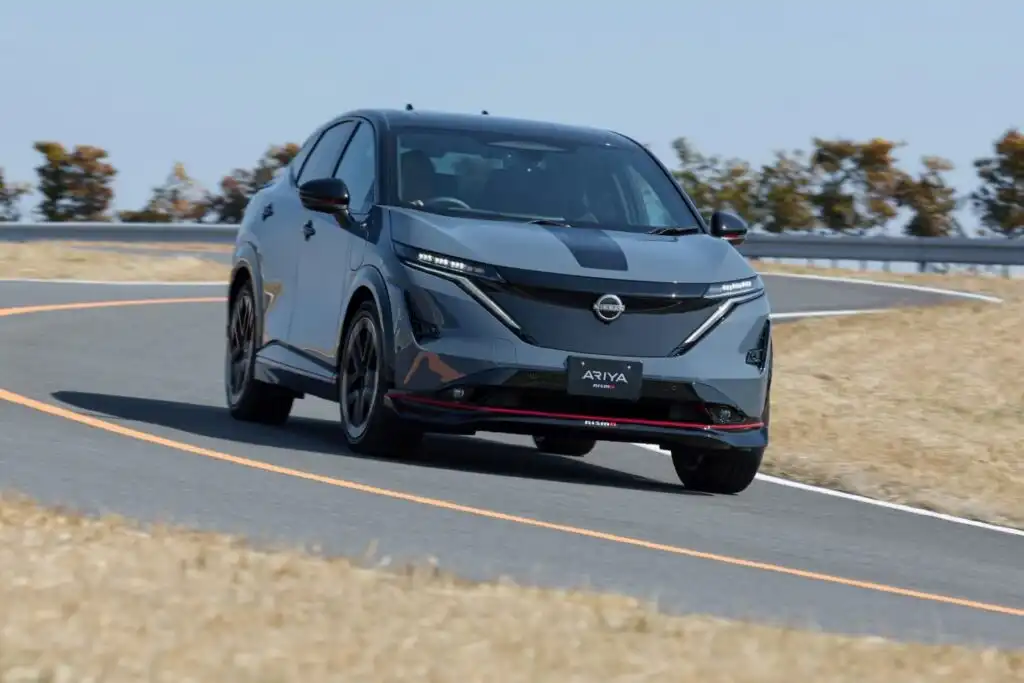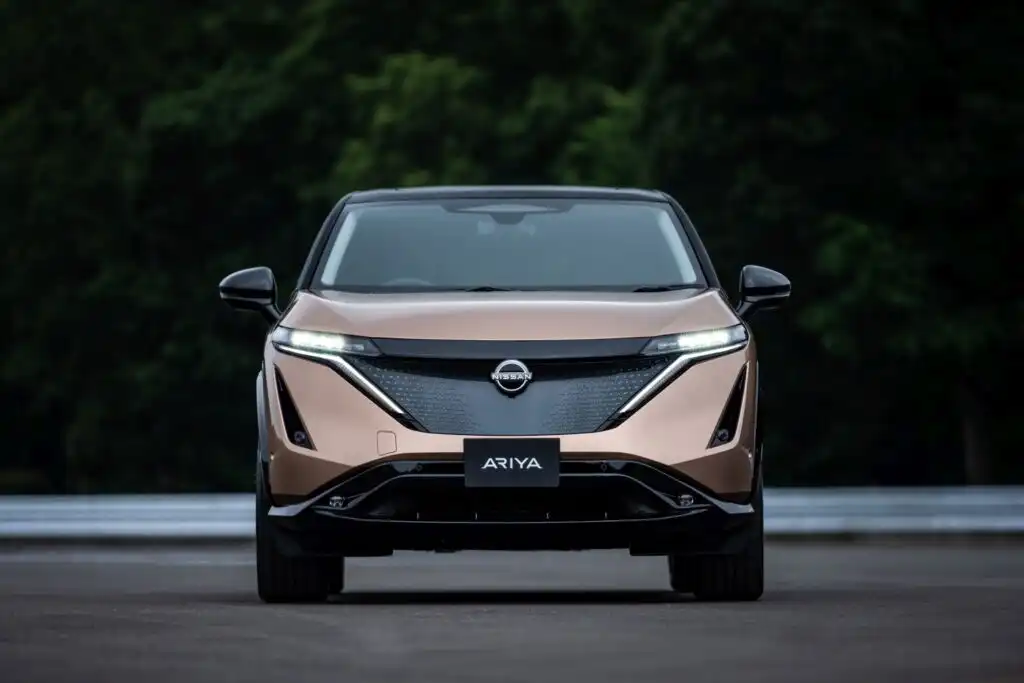
The Nissan Ariya 65 kWh (218 Hp) represents Nissan’s initial foray into a fully electric crossover SUV market, launched in 2021. Positioned as the entry-level variant within the Ariya lineup, it aimed to provide a balance of range, performance, and affordability for consumers transitioning to electric vehicles. The Ariya, built on Nissan’s Alliance CMF-EV platform shared with Renault, signaled a significant shift for the automaker, moving beyond its established hybrid offerings and directly competing with established EV players like Tesla, Hyundai, and Kia. This particular 65 kWh version was primarily targeted towards urban and suburban drivers seeking a practical and efficient daily commuter with the benefits of zero-emission driving.
Technical Specifications
| Brand | Nissan |
| Model | Ariya |
| Generation | Ariya |
| Type (Engine) | 65 kWh (218 Hp) |
| Start of production | 2021 |
| Powertrain Architecture | BEV (Electric Vehicle) |
| Body type | Coupe, SUV |
| Seats | 5 |
| Doors | 5 |
| Fuel Type | Electricity |
| Acceleration 0 – 100 km/h | 7.5 sec |
| Acceleration 0 – 62 mph | 7.5 sec |
| Acceleration 0 – 60 mph | 7.1 sec |
| Maximum speed | 160 km/h (99.42 mph) |
| Gross battery capacity | 65 kWh |
| All-electric range (WLTP) | 359 km (223.07 mi) |
| Electric motor power | 218 Hp |
| Electric motor Torque | 300 Nm (221.27 lb.-ft.) |
| Electric motor location | Front axle, Transverse |
| System power | 218 Hp |
| Trunk (boot) space – minimum | 466-468 l (16.46 – 16.53 cu. ft.) |
| Length | 4595 mm (180.91 in.) |
| Width | 1850 mm (72.83 in.) |
| Height | 1660 mm (65.35 in.) |
| Wheelbase | 2775 mm (109.25 in.) |
| Drivetrain Architecture | One electric motor drives the front wheels. |
| Drive wheel | Front wheel drive |
| Number of gears and type of gearbox | 1 gears, automatic transmission |
| Rear suspension | Independent multi-link suspension |
| Tires size | 235/55 R19; 255/45 R20 |
| Wheel rims size | 19; 20 |
Powertrain & Engine Architecture
The Nissan Ariya 65 kWh utilizes a single electric motor mounted on the front axle, delivering 218 horsepower and 300 Nm (221 lb-ft) of torque. This configuration provides front-wheel drive. The powertrain is powered by a 65 kWh lithium-ion battery pack, composed of 96 cells arranged in 8 modules. The battery utilizes a liquid cooling system to maintain optimal operating temperatures. The Ariya employs a single-speed automatic transmission, typical of most electric vehicles, simplifying the drivetrain and maximizing efficiency. The inverter and other power electronics are integrated into the powertrain for compact packaging and reduced weight. Nissan’s e-Pedal system, allowing for one-pedal driving, is standard, enhancing convenience and regenerative braking efficiency.
Driving Characteristics
The Ariya 65 kWh offers a smooth and refined driving experience. Acceleration from 0-60 mph takes approximately 7.1 seconds, making it competitive within its segment. The single-speed transmission provides seamless power delivery, and the instant torque characteristic of electric motors offers brisk acceleration in urban environments. While not as dynamically focused as some performance-oriented EVs, the Ariya prioritizes comfort and ease of driving. The front-wheel-drive configuration provides adequate traction in most conditions, but can exhibit some torque steer under hard acceleration. The relatively low center of gravity, due to the battery pack being mounted low in the chassis, contributes to stable handling. The e-Pedal system allows for significant deceleration simply by lifting off the accelerator, reducing reliance on the brake pedal and maximizing energy recuperation.
Equipment & Trim Levels
The Ariya 65 kWh typically came standard with features such as Nissan’s Safety Shield 360 suite of driver-assistance technologies, including automatic emergency braking, lane departure warning, and blind-spot monitoring. Interior features included a dual 12.3-inch display screen serving as the instrument cluster and infotainment system, Apple CarPlay and Android Auto compatibility, and a premium audio system. Upholstery was typically cloth or synthetic leather, depending on the package. Optional extras included ProPILOT Assist 2.0, Nissan’s advanced driver-assistance system offering hands-off highway driving capabilities, a panoramic sunroof, and heated and ventilated front seats. Trim levels varied by market, but generally offered increasing levels of luxury and technology.
Chassis & Braking
The Ariya utilizes an independent multi-link suspension system at the rear, providing a comfortable ride and good handling characteristics. The front suspension employs a MacPherson strut design. Steering is electric power-assisted, offering a light and precise feel. Braking duties are handled by ventilated disc brakes on all four wheels. Regenerative braking is integrated into the system, capturing energy during deceleration and returning it to the battery. The Ariya’s chassis is designed to be lightweight and rigid, contributing to its overall efficiency and handling performance. Tire sizes varied depending on the trim level, ranging from 235/55 R19 to 255/45 R20.
Market Reception & Comparison
The Nissan Ariya 65 kWh received generally positive reviews from automotive critics. Praise was given for its stylish design, spacious interior, comfortable ride, and advanced technology. However, some critics noted that its range was slightly less than some competitors, and its acceleration was not as quick as higher-performance EVs. Compared to the Ariya e-4ORCE (dual-motor all-wheel-drive) variants, the 65 kWh model offered a more affordable entry point but sacrificed some performance and all-weather capability. Fuel economy, expressed as MPGe (miles per gallon equivalent), was competitive with other EVs in its class. Reliability reports are still emerging, as the Ariya is a relatively new model, but initial indications suggest good build quality and powertrain durability.
Legacy
The Nissan Ariya 65 kWh represents a pivotal moment for Nissan, marking its serious commitment to the electric vehicle market. While long-term reliability data is still being collected, the Ariya’s advanced powertrain and technology position it as a significant contender in the growing EV segment. The 65 kWh variant, as the entry-level model, played a crucial role in attracting a wider range of customers to the Ariya lineup. As the EV market matures, the Ariya is expected to remain a relevant and competitive option, particularly for buyers seeking a stylish, comfortable, and efficient electric crossover SUV. The Ariya’s success will likely influence Nissan’s future EV development and strategy.