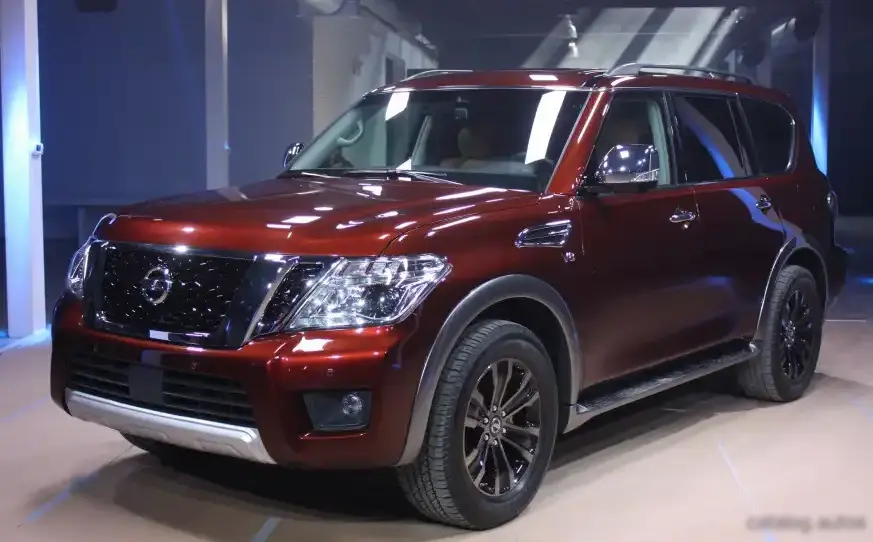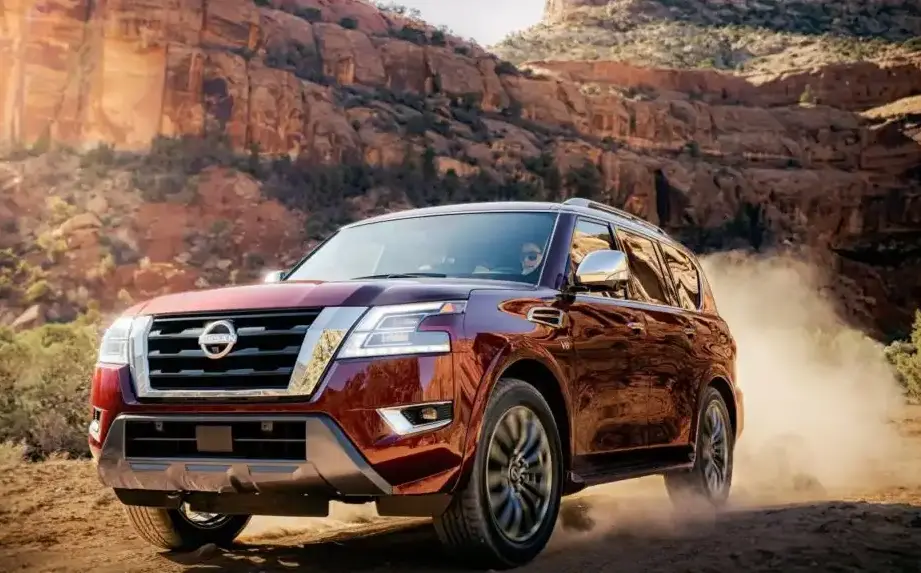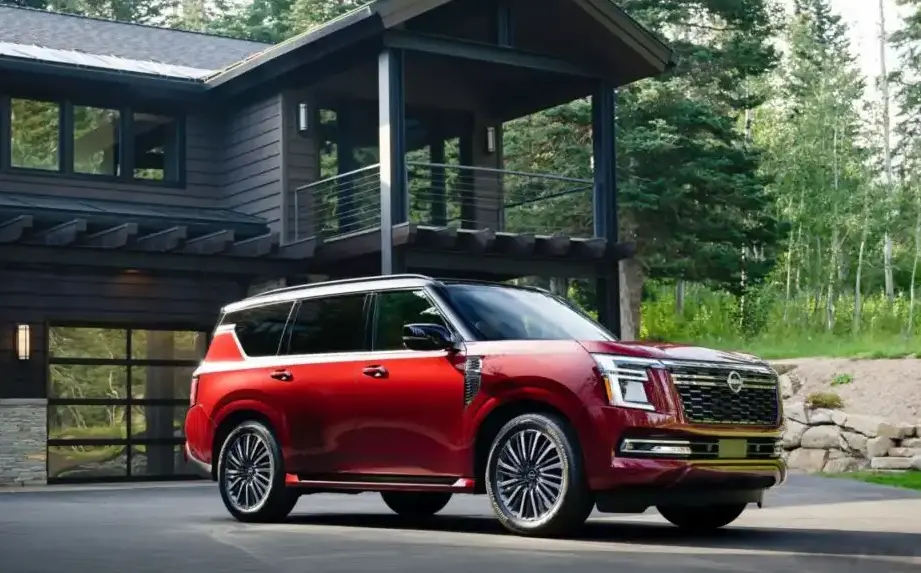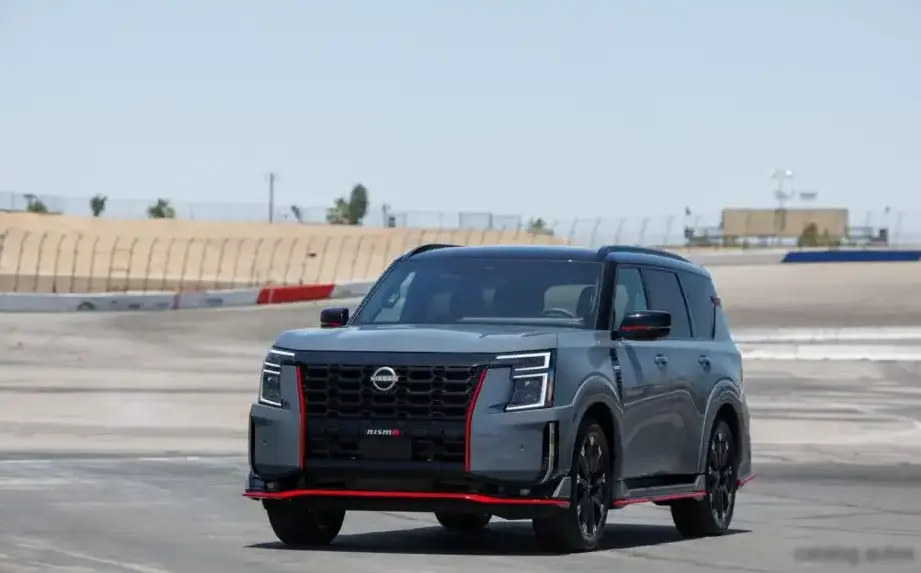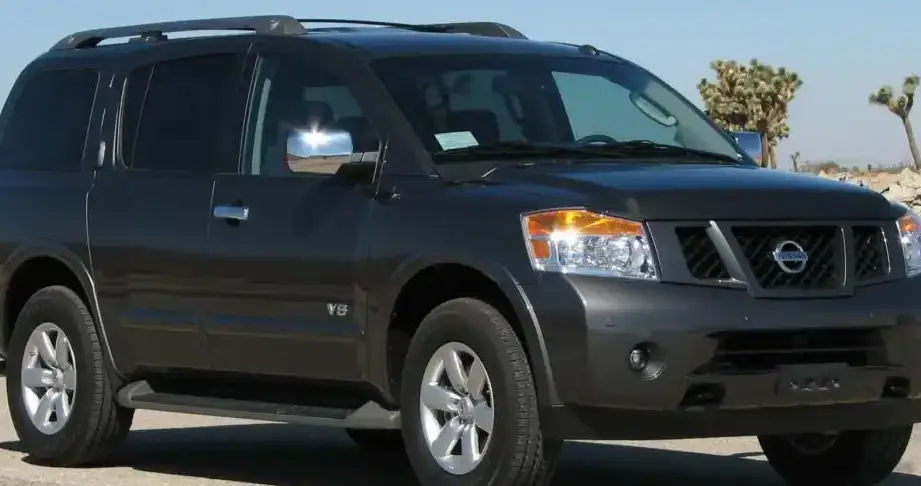
The Nissan Armada, specifically the WA60 series produced from 2007 to 2016, represented Nissan’s entry into the full-size SUV market in North America. This generation, a significant facelift of the original Armada introduced in 2004, aimed to provide a compelling alternative to established American and domestic competitors like the Chevrolet Tahoe and Ford Expedition. The 5.6-liter V8 engine paired with a five-speed automatic transmission was a mainstay of the Armada lineup during this period, offering a balance of power and capability. This configuration positioned itself as a mid-to-upper trim level, appealing to buyers needing substantial towing capacity and passenger space without necessarily opting for the most luxurious features.
Technical Specifications
| Brand | Nissan |
| Model | Armada |
| Generation | Armada I (WA60, facelift 2007) |
| Type (Engine) | 5.6 (317 Hp) Automatic |
| Start of production | 2007 |
| End of production | 2016 |
| Powertrain Architecture | Internal Combustion engine |
| Body type | SUV |
| Seats | 7 |
| Doors | 5 |
| Fuel consumption (urban) | 18.1 l/100 km (13 US mpg, 15.6 UK mpg, 5.5 km/l) |
| Fuel consumption (extra urban) | 12.4 l/100 km (19 US mpg, 22.8 UK mpg, 8.1 km/l) |
| Fuel Type | Petrol (Gasoline) |
| Maximum speed | 185 km/h (114.95 mph) |
| Weight-to-power ratio | 7.4 kg/Hp, 135.5 Hp/tonne |
| Weight-to-torque ratio | 6.1 kg/Nm, 164.5 Nm/tonne |
| Power | 317 Hp @ 4900 rpm |
| Power per litre | 57.1 Hp/l |
| Torque | 385 Nm @ 3600 rpm (283.96 lb.-ft. @ 3600 rpm) |
| Engine layout | Front, Longitudinal |
| Engine Model/Code | VK56DE |
| Engine displacement | 5552 cm3 (338.8 cu. in.) |
| Number of cylinders | 8 |
| Engine configuration | V-engine |
| Cylinder Bore | 98 mm (3.86 in.) |
| Piston Stroke | 92 mm (3.62 in.) |
| Compression ratio | 9.8:1 |
| Number of valves per cylinder | 4 |
| Fuel injection system | Direct injection and Multi-port manifold injection |
| Engine aspiration | Naturally aspirated engine |
| Engine oil capacity | 6.5 l (6.87 US qt | 5.72 UK qt) |
| Coolant | 14.4 l (15.22 US qt | 12.67 UK qt) |
| Kerb Weight | 2340 kg (5158.82 lbs.) |
| Max. weight | 3085 kg (6801.26 lbs.) |
| Max load | 745 kg (1642.44 lbs.) |
| Trunk (boot) space – minimum | 566 l (19.99 cu. ft.) |
| Trunk (boot) space – maximum | 2750 l (97.12 cu. ft.) |
| Fuel tank capacity | 106 l (28 US gal | 23.32 UK gal) |
| Length | 5255 mm (206.89 in.) |
| Width | 2002 mm (78.82 in.) |
| Height | 1913 mm (75.31 in.) |
| Wheelbase | 3130 mm (123.23 in.) |
| Front track | 1715 mm (67.52 in.) |
| Rear (Back) track | 1715 mm (67.52 in.) |
| Drivetrain Architecture | The Internal combustion engine (ICE) drives the rear wheels of the vehicle. |
| Drive wheel | Rear wheel drive |
| Number of gears and type of gearbox | 5 gears, automatic transmission |
| Front brakes | Ventilated discs |
| Rear brakes | Drum |
Powertrain & Engine Architecture
The heart of this Armada variant is the VK56DE 5.6-liter V8 engine. This engine, a member of Nissan’s VQ engine family, is known for its robust construction and relatively smooth operation. It features a 60-degree V-angle, dual overhead camshafts (DOHC) with variable valve timing (VVT) on both intake and exhaust valves, and Nissan’s Direct Injection Gasoline (DIG) technology combined with multi-port fuel injection. This combination aimed to optimize both power and fuel efficiency. The engine produces 317 horsepower at 4900 rpm and 385 lb-ft of torque at 3600 rpm. The five-speed automatic transmission, designated as the 5R110W, is a heavy-duty unit designed to handle the engine’s output and the Armada’s substantial weight. It features electronic controls and a torque converter lock-up clutch to improve fuel economy at cruising speeds.
Driving Characteristics
The 5.6-liter V8 and five-speed automatic combination delivers adequate, though not exhilarating, performance. Acceleration from 0 to 60 mph typically takes around 7.5 to 8.5 seconds. The automatic transmission is tuned for smooth shifts and prioritizes comfort over aggressive downshifting. Compared to the later seven-speed automatic transmissions offered in subsequent Armada generations, the five-speed feels somewhat less responsive. The gear ratios are optimized for towing and highway cruising, but can feel slightly tall for quick acceleration. Compared to a hypothetical manual transmission version (which was not offered in the US market), the automatic sacrifices some driver engagement and responsiveness for ease of use, particularly appealing to the target demographic of family-oriented buyers.
Equipment & Trim Levels
The 5.6-liter automatic Armada typically came standard with features like tri-zone automatic climate control, a Bose audio system, leather upholstery, power-adjustable front seats, and a rear-seat entertainment system. Higher trim levels added features such as heated and cooled front seats, a power liftgate, and navigation system. The exterior styling included chrome accents, alloy wheels, and roof rails. Optional extras included a sunroof, upgraded audio systems, and various accessory packages tailored for towing or off-road use.
Chassis & Braking
The Armada’s chassis is a body-on-frame construction, providing a robust platform for towing and off-road capability. The front suspension utilizes an independent double-wishbone setup, while the rear suspension employs a solid axle with coil springs. The braking system features ventilated discs at the front and drum brakes at the rear. Anti-lock brakes (ABS) are standard. The Armada’s weight and size necessitate a relatively large braking distance, and the rear drum brakes can feel less powerful than the front discs during hard braking. Stabilizer bars are fitted to both the front and rear axles to reduce body roll during cornering.
Market Reception & Comparison
The 2007-2016 Nissan Armada received generally positive reviews, praised for its spacious interior, comfortable ride, and strong towing capacity. However, critics often pointed to its relatively poor fuel economy compared to some competitors, and its handling was considered less refined than some car-based crossover SUVs. Compared to the V6-powered versions of the Chevrolet Tahoe or Ford Expedition, the Armada’s V8 offered more power and torque, but at the expense of fuel efficiency. The Armada’s reliability was generally considered good, though some owners reported issues with the cooling system and the automatic transmission over the long term.
Legacy
The 5.6-liter VK56DE engine and five-speed automatic transmission combination proved to be a durable and reliable powertrain in the Armada. While fuel economy remains a concern by modern standards, the Armada continues to be a popular choice in the used car market, particularly among buyers seeking a capable and spacious SUV for towing or family transportation. Parts availability is generally good, and the engine’s robust construction means that well-maintained examples can accumulate high mileage without major issues. The Armada established Nissan as a serious contender in the full-size SUV segment, paving the way for subsequent generations of the vehicle.