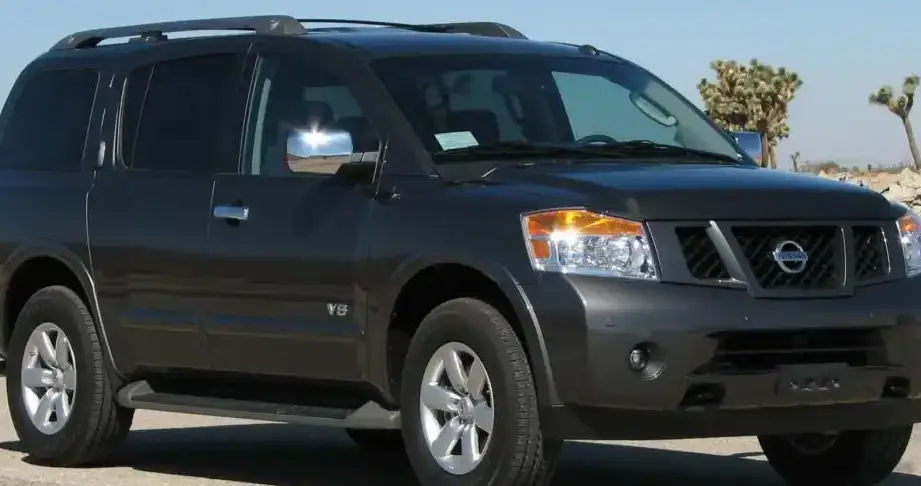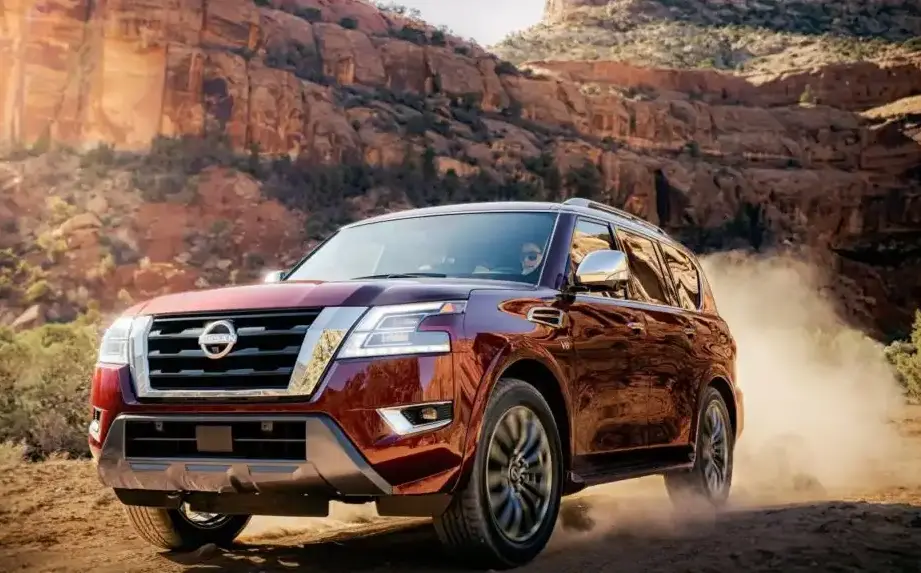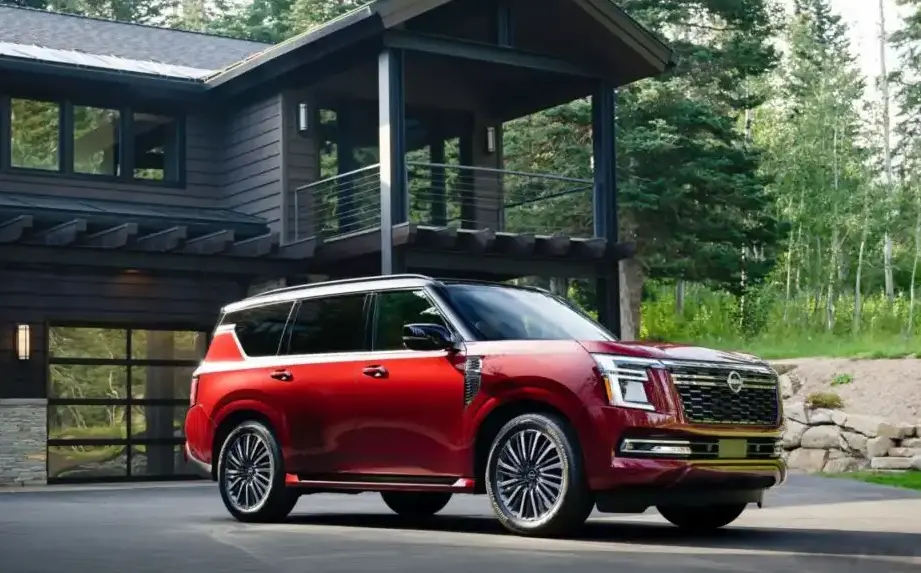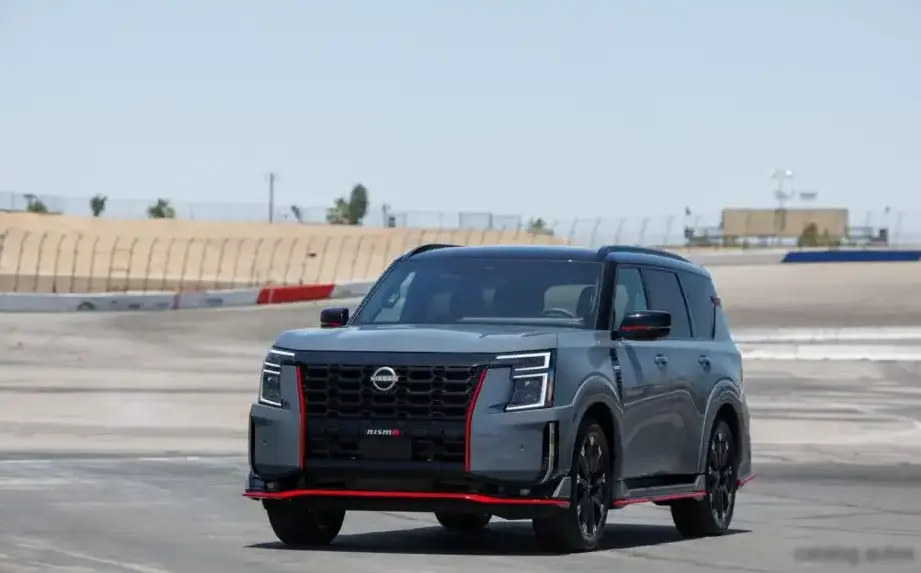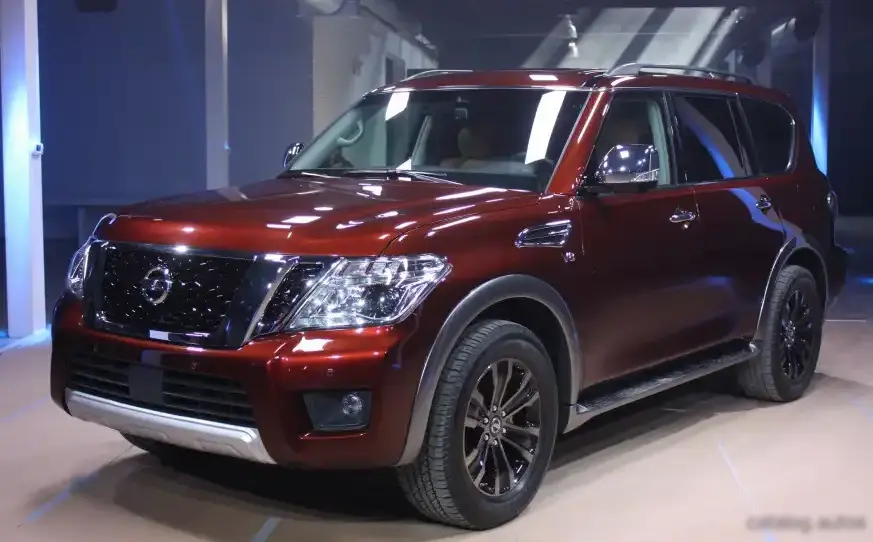
The Nissan Armada II, specifically the 5.6-liter V8 variant paired with a 7-speed automatic transmission, represents a significant offering in the full-size SUV segment. Produced from 2016 to 2020 (model years), this iteration of the Armada (Y62 chassis code) aimed to provide a blend of robust capability, spaciousness, and relative luxury for the North American market. It served as Nissan’s flagship SUV, competing directly with vehicles like the Chevrolet Tahoe, Ford Expedition, and Toyota Sequoia. This particular engine and transmission combination was positioned as the standard, and only, powertrain option throughout its production run, emphasizing a no-compromise approach to power and towing capacity.
Technical Specifications
| Brand | Nissan |
| Model | Armada |
| Generation | Armada II (Y62) |
| Type (Engine) | 5.6 V8 (390 Hp) Automatic |
| Start of production | June, 2016 |
| End of production | December, 2020 |
| Powertrain Architecture | Internal Combustion engine |
| Body type | SUV |
| Seats | 8 |
| Doors | 5 |
| Fuel consumption (urban) | 8.07 l/100 km (29.1 US mpg) |
| Fuel consumption (extra urban) | 5.95 l/100 km (39.5 US mpg) |
| Fuel Type | Petrol (Gasoline) |
| Weight-to-power ratio | 6.5 kg/Hp, 154.2 Hp/tonne |
| Weight-to-torque ratio | 4.6 kg/Nm, 215.5 Nm/tonne |
| Power | 390 Hp @ 5800 rpm |
| Power per litre | 69.6 Hp/l |
| Torque | 545 Nm @ 4000 rpm (401.97 lb.-ft. @ 4000 rpm) |
| Engine layout | Front, Longitudinal |
| Engine Model/Code | VK56VD |
| Engine displacement | 5600 cm3 (341.73 cu. in.) |
| Number of cylinders | 8 |
| Engine configuration | V-engine |
| Number of valves per cylinder | 4 |
| Fuel injection system | Direct injection |
| Engine aspiration | Naturally aspirated engine |
| Valvetrain | DOHC-VVEL |
| Engine oil capacity | 6.5 l (6.87 US qt | 5.72 UK qt) |
| Coolant capacity | 16.3 l (17.22 US qt | 14.34 UK qt) |
| Kerb Weight | 2529 kg (5575.49 lbs) |
| Trunk (boot) space – minimum | 470 l (16.6 cu. ft.) |
| Trunk (boot) space – maximum | 2693 l (95.1 cu. ft.) |
| Fuel tank capacity | 98 l (25.89 US gal | 21.56 UK gal) |
| Length | 5306 mm (208.9 in.) |
| Width | 2029 mm (79.88 in.) |
| Height | 1925 mm (75.79 in.) |
| Wheelbase | 3076 mm (121.1 in.) |
| Front track | 1715 mm (67.52 in.) |
| Rear track | 1725 mm (67.91 in.) |
| Ride height (ground clearance) | 234 mm (9.21 in.) |
| Approach angle | 20.8° |
| Departure angle | 22.1° |
| Drivetrain Architecture | Rear wheel drive |
| Number of gears | 7 |
| Gearbox type | Automatic transmission |
| Front suspension | Double wishbone |
| Rear suspension | Double wishbone |
| Front brakes | Ventilated discs |
| Rear brakes | Ventilated discs |
| Assisting systems | ABS (Anti-lock braking system) |
| Tires size | 265/70 R18; 275/60 R20 |
| Wheel rims size | 8J x 18; 8J x 20 |
Powertrain & Engine Architecture
The heart of the Armada II is the VK56VD 5.6-liter V8 engine. This engine is a naturally aspirated powerplant featuring direct fuel injection and Nissan’s Variable Valve Event and Lift (VVEL) technology. VVEL allows for precise control of valve timing and lift, optimizing engine performance and efficiency across a wide range of operating conditions. The engine produces 390 horsepower at 5800 rpm and 401 lb-ft of torque at 4000 rpm. The 7-speed automatic transmission, sourced from Jatco (a Nissan subsidiary), is designed to handle the engine’s substantial torque output. It features adaptive shift control, adjusting shift points based on driving conditions and driver input. The transmission is geared towards providing smooth and responsive acceleration, particularly when towing.
Driving Characteristics
The Armada II 5.6L Automatic delivers a driving experience focused on comfort and capability. While not a sports SUV, the engine provides ample power for everyday driving and confident highway passing. The 7-speed automatic transmission contributes to a relatively smooth ride, although some drivers have noted occasional hunting for the right gear, especially during moderate acceleration. The Armada’s substantial weight (over 5,500 lbs) is noticeable, but the engine’s torque helps mitigate this. Compared to hypothetical lower-powered versions (which were not offered in the US market), this V8 provides a significantly more effortless driving experience, especially when fully loaded or towing. The rear-wheel-drive configuration contributes to a more traditional SUV feel, although a four-wheel-drive system is available as an option.
Equipment & Trim Levels
The Armada II 5.6L Automatic came standard with a comprehensive list of features, including tri-zone automatic climate control, an 8-inch touchscreen infotainment system with navigation, a rearview camera, and a suite of safety technologies like blind-spot monitoring and rear cross-traffic alert. Higher trim levels, such as the SL and Platinum, added features like leather upholstery, heated and ventilated front seats, a premium Bose audio system, and advanced safety features like adaptive cruise control and lane departure warning. Interior upholstery options typically included cloth on base models and leather on higher trims. Dashboard configurations were consistent across all trims, featuring a straightforward layout with intuitive controls.
Chassis & Braking
The Armada II utilizes a body-on-frame construction, providing a robust and durable platform. The suspension consists of double wishbones at both the front and rear, tuned for a comfortable ride. The rear brakes are ventilated discs, a notable upgrade over the drums found on some competing models. Anti-lock brakes (ABS) are standard, along with electronic brake-force distribution and brake assist. The Armada’s substantial weight necessitates a robust braking system, and the ventilated discs provide adequate stopping power for most driving situations. Stabilizer bars are fitted front and rear to reduce body roll during cornering.
Market Reception & Comparison
Critics generally praised the Armada II for its spacious interior, comfortable ride, and powerful V8 engine. However, its fuel economy was often cited as a drawback, typical for a vehicle of its size and capability. Compared to the Chevrolet Tahoe and Ford Expedition, the Armada offered a more refined interior and a smoother ride, but lacked the same level of aftermarket support and customization options. Against the Toyota Sequoia, the Armada provided a more modern interior and a more engaging driving experience, but the Sequoia was often lauded for its long-term reliability. Fuel economy figures averaged around 15 mpg city and 22 mpg highway, depending on driving conditions.
Legacy
The Nissan Armada II 5.6L Automatic has established a reputation as a reliable and capable SUV in the used car market. The VK56VD engine is known for its durability, although regular maintenance is crucial. Common issues include oil consumption and potential for timing chain wear at higher mileage. The 7-speed automatic transmission is generally reliable, but fluid changes should be performed according to the manufacturer’s recommendations. As of today, well-maintained examples of the Armada II continue to command reasonable prices, appealing to buyers seeking a spacious, powerful, and comfortable full-size SUV.