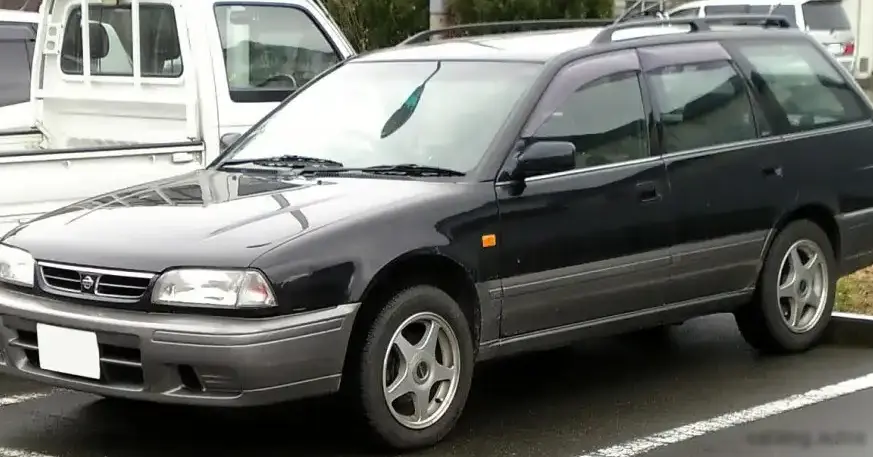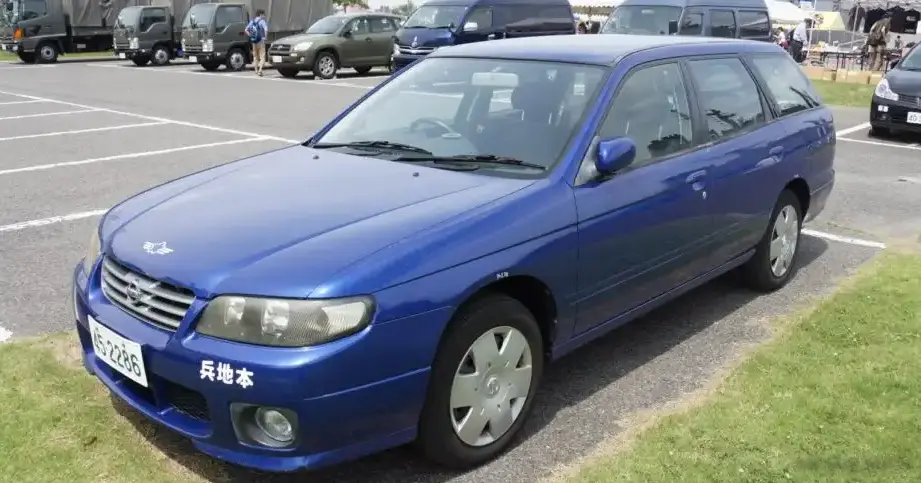
The Nissan Avenir (W11) 2.0d 16V Automatic, produced between 1998 and 2000, represented a practical and fuel-efficient offering within the broader Avenir range. The W11 generation Avenir, a station wagon (estate) body style, was primarily marketed in Japan and select European markets as a family-oriented vehicle emphasizing space and comfort. This particular variant, powered by a 2.0-liter turbocharged diesel engine paired with a four-speed automatic transmission, occupied a mid-range position in the Avenir lineup, offering a balance between performance and economy. It aimed to appeal to buyers seeking a comfortable and capable wagon without the higher costs associated with the gasoline-powered models.
Technical Specifications
| Brand | Nissan |
| Model | Avenir |
| Generation | Avenir (W11) |
| Type (Engine) | 2.0d 16V (91 Hp) Automatic |
| Start of production | 1998 |
| End of production | 2000 |
| Powertrain Architecture | Internal Combustion engine |
| Body type | Station wagon (estate) |
| Seats | 5 |
| Doors | 5 |
| Fuel Type | Diesel |
| Weight-to-power ratio | 15.3 kg/Hp |
| Hp/tonne | 65.5 Hp/tonne |
| Weight-to-torque ratio | 7.8 kg/Nm |
| Nm/tonne | 128.8 Nm/tonne |
| Power | 91 Hp @ 4400 rpm |
| Power per litre | 46.1 Hp/l |
| Torque | 179 Nm @ 4800 rpm (132.02 lb.-ft. @ 4800 rpm) |
| Engine layout | Front, Transverse |
| Engine displacement | 1973 cm3 (120.4 cu. in.) |
| Number of cylinders | 4 |
| Engine configuration | Inline |
| Cylinder Bore | 84.5 mm (3.33 in.) |
| Piston Stroke | 88 mm (3.46 in.) |
| Compression ratio | 22.2:1 |
| Number of valves per cylinder | 4 |
| Fuel injection system | Direct injection |
| Engine aspiration | Turbocharger |
| Kerb Weight | 1390 kg (3064.43 lbs.) |
| Fuel tank capacity | 60 l (15.85 US gal | 13.2 UK gal) |
| Length | 4650 mm (183.07 in.) |
| Width | 1695 mm (66.73 in.) |
| Height | 1490 mm (58.66 in.) |
| Wheelbase | 2620 mm (103.15 in.) |
| Front track | 1475 mm (58.07 in.) |
| Rear track | 1475 mm (58.07 in.) |
| Ride height (ground clearance) | 150 mm (5.91 in.) |
| Drivetrain Architecture | The Internal combustion engine (ICE) drives the front wheels of the vehicle. |
| Drive wheel | Front wheel drive |
| Number of gears and type of gearbox | 4 gears, automatic transmission |
| Front suspension | Coil spring |
| Rear suspension | Coil spring |
| Front brakes | Ventilated discs |
| Rear brakes | Disc |
| Assisting systems | ABS (Anti-lock braking system) |
| Steering type | Steering rack and pinion |
| Power steering | Hydraulic Steering |
| Tires size | 185/65 R15 |
| Wheel rims size | 15 |
Powertrain & Engine Architecture
The heart of the Avenir 2.0d Automatic is the Nissan CD20T engine, a 1973cc inline-four cylinder diesel. This engine utilized a turbocharger and direct injection to produce 91 horsepower at 4400 rpm and 179 Nm (132 lb-ft) of torque at 4800 rpm. The high compression ratio of 22.2:1 was typical for diesel engines of the era, contributing to its fuel efficiency. The engine featured a 16-valve cylinder head, enhancing breathing and contributing to improved power delivery. The four-speed automatic transmission was a conventional hydraulic unit, chosen for its smoothness and ease of use, catering to the target audience who prioritized comfort over sporty driving dynamics. This transmission was not known for its particularly quick shifts, but it provided a relaxed driving experience.
Driving Characteristics
The 2.0d Automatic Avenir offered a comfortable, if not particularly exhilarating, driving experience. The 91 horsepower output, while adequate for everyday driving, meant acceleration was modest. The automatic transmission, with its four gears, prioritized fuel economy over rapid acceleration. The turbocharger helped to mitigate some of the inherent torque deficit of a naturally aspirated diesel, providing a noticeable boost in power during overtaking maneuvers. However, compared to the gasoline-powered Avenir variants, or even the manual diesel versions, this combination felt noticeably slower. The gear ratios were tuned for relaxed cruising, making it well-suited for long highway journeys. The front-wheel-drive configuration provided predictable handling, but lacked the dynamic capabilities of all-wheel-drive systems found on some competitors.
Equipment & Trim Levels
The 2.0d Automatic trim level of the Avenir typically included features such as power windows, central locking, and an AM/FM radio with cassette player. Air conditioning was often standard, or available as an option. Interior upholstery was typically cloth, with a focus on durability and practicality. Higher trim levels offered upgrades such as alloy wheels, a sunroof, and upgraded audio systems. The dashboard layout was functional and straightforward, prioritizing ease of use over stylistic flair. Optional extras included a rear wiper, upgraded seat fabrics, and a more sophisticated audio system.
Chassis & Braking
The Avenir W11 utilized a relatively simple chassis design, featuring coil springs and a stabilizer bar at both the front and rear. The front suspension employed MacPherson struts, while the rear utilized a twist beam setup. This configuration provided a comfortable ride, but wasn’t particularly sporty. Braking duties were handled by ventilated discs at the front and solid discs at the rear. An Anti-lock Braking System (ABS) was standard, enhancing safety and control during emergency braking situations. The steering was rack and pinion, assisted by hydraulic power steering, providing light and easy steering feel.
Market Reception & Comparison
The Nissan Avenir 2.0d Automatic was generally well-received as a practical and economical family wagon. Critics praised its spacious interior, comfortable ride, and fuel efficiency. However, the relatively low power output and somewhat sluggish automatic transmission were points of criticism. Compared to the gasoline-powered Avenir models, the diesel offered significantly better fuel economy but lacked the same level of performance. Against competitors like the Toyota Caldina or Mitsubishi Space Wagon, the Avenir offered a competitive package in terms of space and practicality, but often lagged behind in terms of driving dynamics and perceived refinement.
Legacy
The Nissan Avenir W11 2.0d Automatic, while not a particularly iconic model, remains a reasonably reliable and affordable option in the used car market. The CD20T engine is known for its durability, provided it has been properly maintained. Common issues include turbocharger wear and potential problems with the fuel injection system. The automatic transmission, while generally reliable, can be prone to wear and tear with high mileage. Today, these vehicles are often sought after by those looking for a practical and economical classic wagon, or as a project car for enthusiasts. Parts availability can be a challenge in some markets, but the relatively simple mechanical design makes it a viable option for those with mechanical skills.