
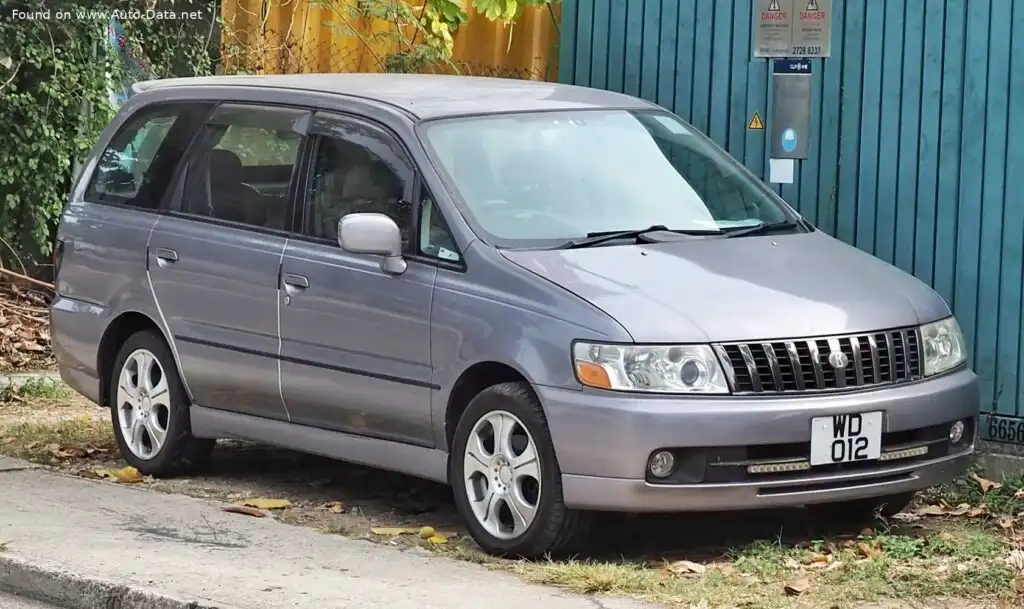
The Nissan Bassara 2.5 TDi 4×4 Automatic, produced between 2000 and 2002, represents a unique offering within Nissan’s lineup during that period. Positioned as a larger, more luxurious minivan primarily for the Japanese domestic market (JDM), the Bassara aimed to provide spacious and comfortable transportation for families. This particular variant, equipped with the 2.5-liter turbocharged diesel engine and a four-speed automatic transmission, was designed to balance fuel efficiency with adequate performance for long-distance travel and the demands of a larger vehicle. It sat as a higher-end trim within the Bassara range, offering all-wheel drive as a key feature for enhanced stability and capability.
Technical Specifications
| Brand | Nissan |
| Model | Bassara |
| Generation | Bassara |
| Type (Engine) | 2.5 TDi (150 Hp) 4×4 Automatic |
| Start of production | 2000 year |
| End of production | 2002 year |
| Powertrain Architecture | Internal Combustion engine |
| Body type | Minivan |
| Seats | 7 |
| Doors | 5 |
| Fuel Type | Diesel |
| Weight-to-power ratio | 11.9 kg/Hp, 83.8 Hp/tonne |
| Weight-to-torque ratio | 6.4 kg/Nm, 155.9 Nm/tonne |
| Power | 150 Hp @ 4000 rpm |
| Power per litre | 60.3 Hp/l |
| Torque | 279 Nm @ 1800 rpm, 205.78 lb.-ft. @ 1800 rpm |
| Engine layout | Front, Transverse |
| Engine displacement | 2488 cm3, 151.83 cu. in. |
| Number of cylinders | 4 |
| Engine configuration | Inline |
| Cylinder Bore | 89 mm, 3.5 in. |
| Piston Stroke | 100 mm, 3.94 in. |
| Compression ratio | 17.5:1 |
| Number of valves per cylinder | 4 |
| Fuel injection system | Diesel Commonrail |
| Engine aspiration | Turbocharger |
| Valvetrain | DOHC |
| Kerb Weight | 1790 kg, 3946.27 lbs |
| Max. weight | 2230 kg, 4916.31 lbs |
| Max load | 440 kg, 970.03 lbs |
| Fuel tank capacity | 60 l, 15.85 US gal | 13.2 UK gal |
| Length | 4795 mm, 188.78 in |
| Width | 1770 mm, 69.69 in |
| Height | 1725 mm, 67.91 in |
| Wheelbase | 2800 mm, 110.24 in |
| Front track | 1535 mm, 60.43 in |
| Rear (Back) track | 1515 mm, 59.65 in |
| Ride height (ground clearance) | 150 mm, 5.91 in |
| Drive wheel | All wheel drive (4×4) |
| Number of gears and type of gearbox | 4 gears, automatic transmission |
| Front suspension | Coil spring |
| Rear suspension | Coil spring |
| Front brakes | Ventilated discs |
| Rear brakes | Drum |
| Assisting systems | ABS (Anti-lock braking system) |
| Steering type | Steering rack and pinion |
| Power steering | Hydraulic Steering |
| Tires size | 215/65 R15 |
| Wheel rims size | 15 |
Powertrain & Engine Architecture
The heart of the Bassara 2.5 TDi is Nissan’s 2.5-liter (2488 cc) inline-four cylinder diesel engine. This engine, often identified by its internal code (specific codes may vary depending on the exact market and year), utilizes a turbocharger and a common rail direct injection system to deliver a respectable 150 horsepower at 4000 rpm and 279 Nm (205.78 lb-ft) of torque at 1800 rpm. The common rail system allowed for precise fuel delivery, contributing to improved combustion efficiency and reduced emissions compared to older diesel technologies. The engine features a double overhead camshaft (DOHC) valvetrain with four valves per cylinder, optimizing airflow for enhanced performance. The four-speed automatic transmission was chosen for its ease of use and suitability for the minivan’s intended purpose – comfortable family transportation. While not offering the sportiness of a manual gearbox, the automatic provided smooth shifts and reduced driver fatigue, particularly in city driving.
Driving Characteristics
The Bassara 2.5 TDi 4×4 Automatic offered a comfortable and capable driving experience. The 150 hp output, while not particularly high by modern standards, was sufficient for moving the relatively heavy minivan (1790 kg / 3946.27 lbs) at highway speeds. The 279 Nm of torque, available from a low 1800 rpm, provided good acceleration from a standstill and made overtaking maneuvers relatively effortless. The four-speed automatic transmission, while adequate, did exhibit some limitations. Gear ratios were spaced relatively wide, which could sometimes result in the engine feeling strained during hard acceleration or when climbing hills. Compared to the gasoline-powered Bassara variants, the diesel offered significantly better fuel economy, making it a practical choice for long journeys. The all-wheel drive system enhanced traction and stability, particularly on slippery surfaces, providing added confidence in adverse weather conditions.
Equipment & Trim Levels
The 2.5 TDi 4×4 Automatic trim level typically included a generous array of standard features. Interior appointments generally included comfortable cloth upholstery, power windows and locks, and air conditioning. Higher-spec versions could be equipped with features such as a sunroof, upgraded audio systems, and woodgrain interior trim. The Bassara’s spacious interior was a key selling point, offering seating for up to seven passengers. The rear seats could be folded or removed to create additional cargo space, enhancing the vehicle’s versatility. Safety features included ABS (Anti-lock Braking System) as standard equipment.
Chassis & Braking
The Bassara utilized a conventional chassis design with coil spring suspension at both the front and rear. The front suspension incorporated a MacPherson strut setup, while the rear employed a multi-link system. This configuration aimed to provide a balance between ride comfort and handling stability. Braking duties were handled by ventilated discs at the front and drum brakes at the rear. While the front discs provided adequate stopping power, the rear drums were a cost-saving measure that limited overall braking performance. The steering system was a rack and pinion setup with hydraulic power assistance, offering precise and responsive steering feel.
Market Reception & Comparison
The Nissan Bassara 2.5 TDi 4×4 Automatic was generally well-received in the Japanese market as a practical and comfortable family vehicle. Critics praised its spacious interior, fuel efficiency, and the added security of all-wheel drive. However, some reviewers noted that the diesel engine was somewhat noisy compared to gasoline alternatives, and the four-speed automatic transmission felt dated. Compared to other minivans in its class, such as the Toyota Estima (Previa) and Honda Odyssey, the Bassara offered a more affordable entry point, particularly for buyers prioritizing fuel economy and all-wheel drive capability. The diesel engine also provided a significant advantage in terms of long-term running costs.
Legacy
The Nissan Bassara, while not a globally recognized model, holds a significant place in the history of Japanese minivans. The 2.5 TDi 4×4 Automatic variant, in particular, is remembered for its robust diesel engine and practical all-wheel drive system. Today, these vehicles are relatively rare outside of Japan, and well-maintained examples are sought after by enthusiasts. The engine, while aging, is known for its durability and relatively simple maintenance requirements. However, finding replacement parts can be challenging. The Bassara’s legacy lies in its ability to provide comfortable and reliable transportation for families, and its unique position as a diesel-powered, all-wheel drive minivan in a market dominated by gasoline-powered alternatives.
