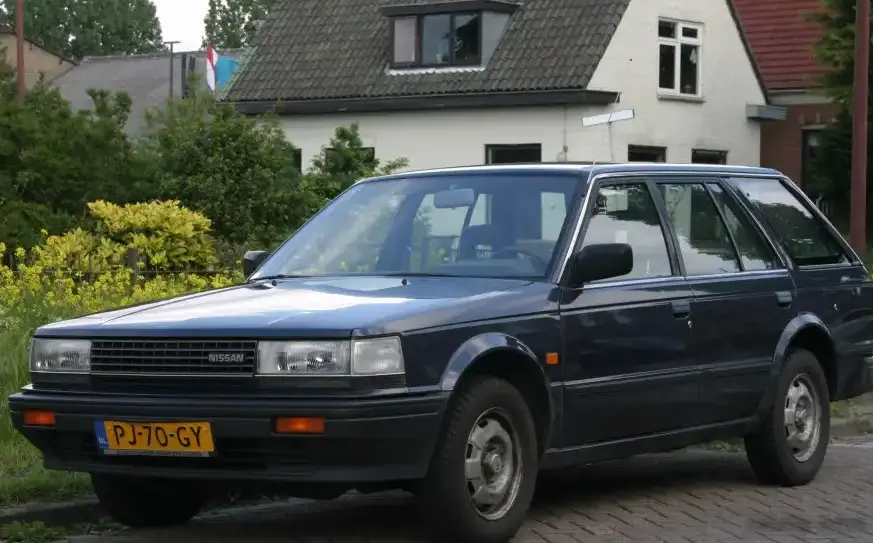
The Nissan Bluebird Station Wagon (WU11) 2.0 D, produced between 1984 and 1988, represented a practical and economical offering within the broader Bluebird range. Part of the WU11 series, which signified the station wagon variant of the Bluebird, this model catered to buyers seeking a spacious and fuel-efficient vehicle for family or commercial use. In a market increasingly focused on practicality, the 2.0 D offered a diesel-powered alternative to the gasoline engines available in the Bluebird lineup. It was primarily sold in Japan, Australia, and select European markets, where diesel station wagons held a significant appeal due to their fuel economy and load-carrying capacity.
Technical Specifications
| Brand | Nissan |
| Model | Bluebird |
| Generation | Bluebird Station Wagon (WU11) |
| Type (Engine) | 2.0 D (58 Hp) |
| Start of Production | 1984 |
| End of Production | 1988 |
| Powertrain Architecture | Internal Combustion Engine |
| Body Type | Station Wagon (Estate) |
| Seats | 5 |
| Doors | 5 |
| Fuel Type | Diesel |
| Power | 58 Hp |
| Engine Aspiration | Naturally Aspirated |
| Drivetrain | Front Wheel Drive |
Powertrain & Engine Architecture
The WU11 2.0 D Bluebird Station Wagon was powered by a 1982cc inline-four cylinder diesel engine. This engine, while not known for its high performance, was designed for durability and fuel efficiency. The engine code is often referenced as CD20, a common diesel engine used in various Nissan commercial vehicles and passenger cars of the era. It featured indirect injection, a common characteristic of diesel engines of the 1980s, utilizing a pre-combustion chamber to improve combustion efficiency and reduce noise. The engine employed a naturally aspirated configuration, meaning it did not utilize a turbocharger or supercharger. This contributed to its relatively low power output of 58 horsepower and a modest torque figure, typically around 88 lb-ft. The engine was paired with a four-speed automatic transmission, a relatively uncommon pairing for diesel engines at the time, which prioritized ease of use over outright performance. The transmission was designed to provide smooth shifts and adequate acceleration for everyday driving conditions.
Driving Characteristics
The driving experience of the WU11 2.0 D was characterized by its practicality and economy rather than sporty performance. The 58 horsepower engine provided adequate power for cruising on highways and navigating city streets, but acceleration was slow, particularly when fully loaded. The four-speed automatic transmission, while convenient, further limited performance, with relatively wide gear ratios prioritizing fuel economy over responsiveness. The front-wheel-drive configuration offered predictable handling, but the suspension, tuned for comfort, resulted in noticeable body roll during cornering. Compared to the gasoline-powered Bluebird variants, the 2.0 D offered significantly better fuel economy, making it an attractive option for high-mileage drivers. However, it lacked the refinement and responsiveness of its gasoline counterparts. The diesel engine also produced more noise and vibration, contributing to a less refined driving experience.
Equipment & Trim Levels
The WU11 2.0 D Bluebird Station Wagon typically came with a fairly basic level of equipment, reflecting its position as a practical and affordable vehicle. Standard features generally included cloth upholstery, a basic AM/FM radio, and manual windows and door locks. Air conditioning was often an optional extra, as were power windows and central locking. The dashboard layout was functional and straightforward, with clearly labeled controls. Interior trim levels varied depending on the market, with some versions offering upgraded cloth upholstery or woodgrain accents. The station wagon body style provided ample cargo space, making it ideal for families or those needing to transport large items. The rear seats could be folded down to further increase cargo capacity. Safety features were limited by the standards of the time, typically including seatbelts and a collapsible steering column.
Chassis & Braking
The WU11 Bluebird Station Wagon utilized a conventional front-wheel-drive chassis with independent front suspension and a solid rear axle. The front suspension employed MacPherson struts, while the rear suspension featured leaf springs. This setup prioritized ride comfort and load-carrying capacity over sporty handling. The braking system consisted of disc brakes on the front wheels and drum brakes on the rear wheels. This configuration was common for vehicles in this price range during the 1980s. Power steering was often an optional extra, while power brakes were typically standard. The chassis was designed to provide a stable and comfortable ride, even when fully loaded with passengers and cargo. Stabilizer bars were typically fitted to the front suspension to reduce body roll during cornering.
Market Reception & Comparison
The Nissan Bluebird Station Wagon 2.0 D received generally positive reviews for its fuel economy, practicality, and durability. Critics praised its spacious interior and ample cargo capacity, making it a suitable vehicle for families and commercial users. However, the engine’s low power output and the transmission’s limited responsiveness were often criticized. Compared to other diesel station wagons of the time, such as the Toyota Corolla Wagon or the Mazda Familia Wagon, the Bluebird offered a competitive level of fuel economy and practicality. However, it often lacked the refinement and features of some of its rivals. The 2.0 D variant was positioned as the entry-level diesel option in the Bluebird lineup, offering a more affordable alternative to the more powerful and better-equipped gasoline models. Its target audience consisted of budget-conscious buyers seeking a reliable and economical vehicle for everyday use.
Legacy
The WU11 Bluebird Station Wagon 2.0 D, while not a particularly glamorous or high-performance vehicle, holds a significant place in automotive history as a practical and reliable workhorse. The CD20 diesel engine proved to be remarkably durable, and many examples remain on the road today, often with high mileage. In the used car market, these vehicles are valued for their simplicity, affordability, and fuel efficiency. However, finding parts can be challenging, as the model is now quite old. The WU11 Bluebird Station Wagon represents a bygone era of automotive design, characterized by its focus on practicality and durability over style and performance. It serves as a reminder of a time when vehicles were built to last and prioritize the needs of everyday drivers.