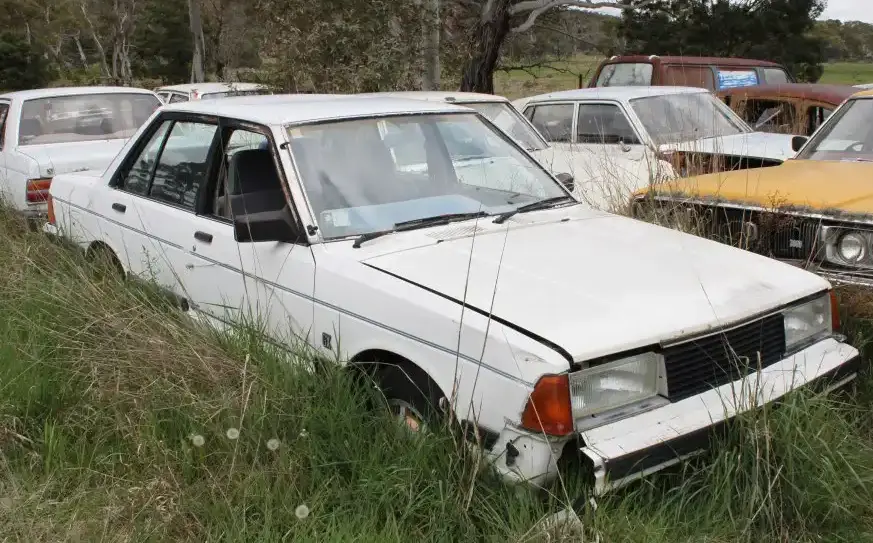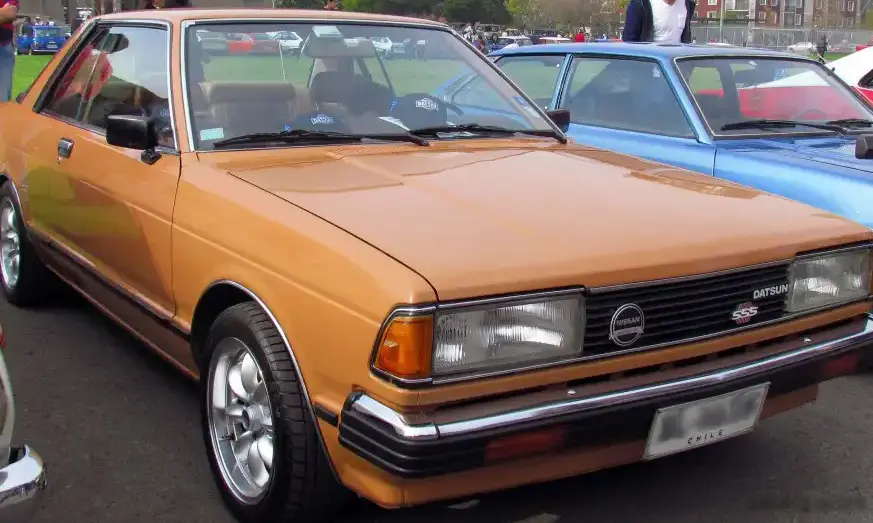
The Nissan Bluebird U11, produced from 1984 to 1986, represented a significant evolution in Nissan’s mid-size sedan offerings. The 2.0i variant, equipped with the CA20S engine producing 105 horsepower, occupied a middle ground within the U11 lineup, positioned above the smaller displacement models and below the more performance-oriented or luxury-trimmed versions. This model was primarily aimed at the Japanese domestic market (JDM) and select export markets, offering a balance of practicality, fuel efficiency, and reasonable performance for the family car segment.
Technical Specifications
| Brand | Nissan |
| Model | Bluebird |
| Generation | Bluebird (U11) |
| Type (Engine) | 2.0i (105 Hp) |
| Start of production | June, 1984 |
| End of production | March, 1986 |
| Powertrain Architecture | Internal Combustion engine |
| Body type | Sedan |
| Seats | 5 |
| Doors | 4 |
| Fuel Type | Petrol (Gasoline) |
| Maximum speed | 175 km/h (108.74 mph) |
| Weight-to-power ratio | 10.4 kg/Hp, 96.3 Hp/tonne |
| Weight-to-torque ratio | 6.7 kg/Nm, 148.6 Nm/tonne |
| Power | 105 Hp @ 5200 rpm |
| Power per litre | 53.2 Hp/l |
| Torque | 162 Nm @ 3600 rpm (119.49 lb.-ft. @ 3600 rpm) |
| Engine layout | Front, Transverse |
| Engine Model/Code | CA20S |
| Engine displacement | 1973 cm3 (120.4 cu. in.) |
| Number of cylinders | 4 |
| Engine configuration | Inline |
| Cylinder Bore | 84.5 mm (3.33 in.) |
| Piston Stroke | 88 mm (3.46 in.) |
| Compression ratio | 9.4:1 |
| Number of valves per cylinder | 2 |
| Fuel injection system | Carburettor |
| Engine aspiration | Naturally aspirated engine |
| Valvetrain | SOHC |
| Engine oil capacity | 3.8 l (4.02 US qt | 3.34 UK qt) |
| Kerb Weight | 1090 kg (2403.04 lbs.) |
| Max. weight | 1675 kg (3692.74 lbs.) |
| Max load | 585 kg (1289.7 lbs.) |
| Trunk (boot) space – minimum | 504 l (17.8 cu. ft.) |
| Fuel tank capacity | 60 l (15.85 US gal | 13.2 UK gal) |
| Max. roof load | 100 kg (220.46 lbs.) |
| Permitted trailer load with brakes (12%) | 1200 kg (2645.55 lbs.) |
| Permitted trailer load without brakes | 545 kg (1201.52 lbs.) |
| Permitted towbar download | 50 kg (110.23 lbs.) |
| Length | 4360 mm (171.65 in.) |
| Width | 1690 mm (66.54 in.) |
| Height | 1400 mm (55.12 in.) |
| Wheelbase | 2550 mm (100.39 in.) |
| Front track | 1460 mm (57.48 in.) |
| Rear (Back) track | 1450 mm (57.09 in.) |
| Minimum turning circle (turning diameter) | 10 m (32.81 ft.) |
| Drivetrain Architecture | The Internal combustion engine (ICE) drives the front wheels of the vehicle. |
| Drive wheel | Front wheel drive |
| Number of gears and type of gearbox | 5 gears, manual transmission |
| Front suspension | Independent, type McPherson with coil spring and anti-roll bar |
| Rear suspension | Several levers and rods |
| Front brakes | Ventilated discs |
| Rear brakes | Disc |
| Steering type | Worm-reduction unit |
| Power steering | Hydraulic Steering |
| Tires size | Front wheel tires: 185/70 R14Rear wheel tires: 185/70 R14 |
| Wheel rims size | Front wheel rims: 5J x 14Rear wheel rims: 5J x 14 |
Powertrain & Engine Architecture
The heart of the Bluebird 2.0i was the CA20S engine, a 1.973-liter inline-four cylinder powerplant. This engine utilized a single overhead camshaft (SOHC) valvetrain with two valves per cylinder. Notably, the CA20S employed a carburetor for fuel delivery, a common practice for the time, but increasingly superseded by fuel injection systems. The carburetor provided adequate fuel atomization for the engine’s output, but offered less precise control compared to modern fuel injection. The engine’s 9.4:1 compression ratio contributed to its 105 horsepower output at 5200 rpm and 162 Nm (119.49 lb-ft) of torque at 3600 rpm. The engine was transversely mounted in the front of the vehicle, driving the front wheels. The U11 Bluebird 2.0i was typically equipped with a 5-speed manual transmission, providing drivers with a reasonable degree of control over the engine’s power band.
Driving Characteristics
The 2.0i variant of the U11 Bluebird offered a comfortable and predictable driving experience. While not a sports sedan, the 105 horsepower engine provided sufficient power for everyday driving and highway cruising. The 5-speed manual transmission allowed drivers to keep the engine in its optimal power range, resulting in acceptable acceleration. Compared to the smaller displacement Bluebird models, the 2.0i offered noticeably improved performance, particularly when fully loaded with passengers or cargo. However, it lacked the more spirited performance of potential turbocharged or higher-displacement options available in other markets. The front-wheel-drive configuration provided good traction in most conditions, but could exhibit some understeer when pushed hard through corners.
Equipment & Trim Levels
The Bluebird 2.0i typically came with a fairly standard level of equipment for a mid-size sedan of its era. Interior features generally included cloth upholstery, a basic instrument cluster, and manually adjustable seats. Power steering was a common feature, enhancing ease of maneuverability. Optional extras could include upgraded audio systems, air conditioning, and power windows. The trim level of the 2.0i often fell in the mid-range of the U11 Bluebird lineup, offering a step up in comfort and performance compared to the base models, but lacking the more luxurious appointments of the top-tier trims.
Chassis & Braking
The U11 Bluebird utilized a McPherson strut independent suspension system at the front, providing a comfortable ride and reasonable handling characteristics. The rear suspension employed a multi-link setup, further contributing to ride quality. Braking duties were handled by ventilated discs at the front and solid discs at the rear, offering adequate stopping power for the vehicle’s weight and performance. The hydraulic power steering system reduced driver effort, particularly at low speeds. Tire size was typically 185/70 R14, providing a good balance of grip and ride comfort.
Market Reception & Comparison
The Nissan Bluebird U11 2.0i was generally well-received in its target markets. Critics praised its comfortable ride, practical interior, and reasonable fuel economy. Compared to its competitors, such as the Toyota Corolla and Honda Accord, the Bluebird offered a competitive package, although it often lacked the brand recognition of its rivals. The 2.0i variant was seen as a good compromise between performance and fuel efficiency, appealing to buyers who wanted a bit more power than the base models without sacrificing economy. The carburetor-equipped engine, while reliable, was often criticized for its less precise fuel delivery compared to fuel-injected engines.
Legacy
The Nissan Bluebird U11 2.0i, while not a particularly rare or collectible vehicle today, remains a fondly remembered example of 1980s Japanese automotive engineering. The CA20S engine is known for its durability and relative simplicity, making it a relatively easy engine to maintain. Used examples are still found today, often exhibiting high mileage but remaining mechanically sound. The U11 Bluebird represents a transitional period in automotive technology, bridging the gap between carburetor-equipped engines and the more advanced fuel-injected systems that would soon become commonplace. Its enduring appeal lies in its blend of practicality, reliability, and understated style.