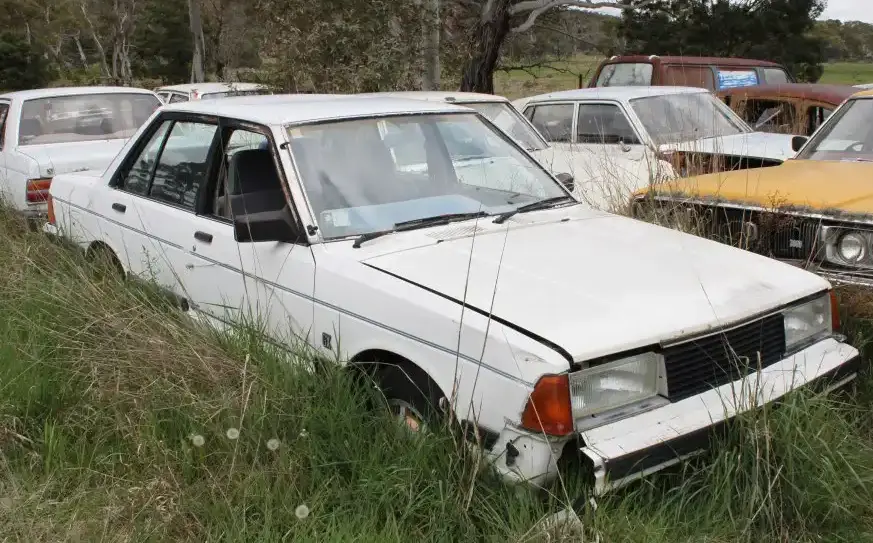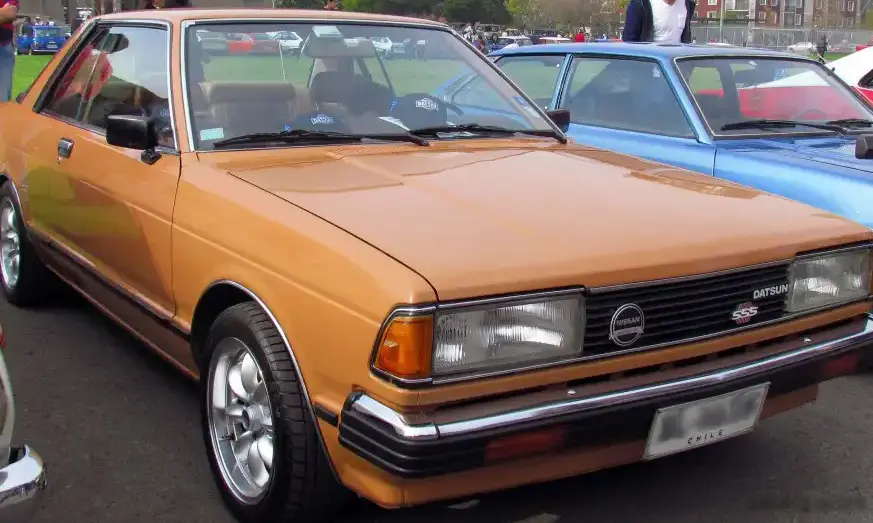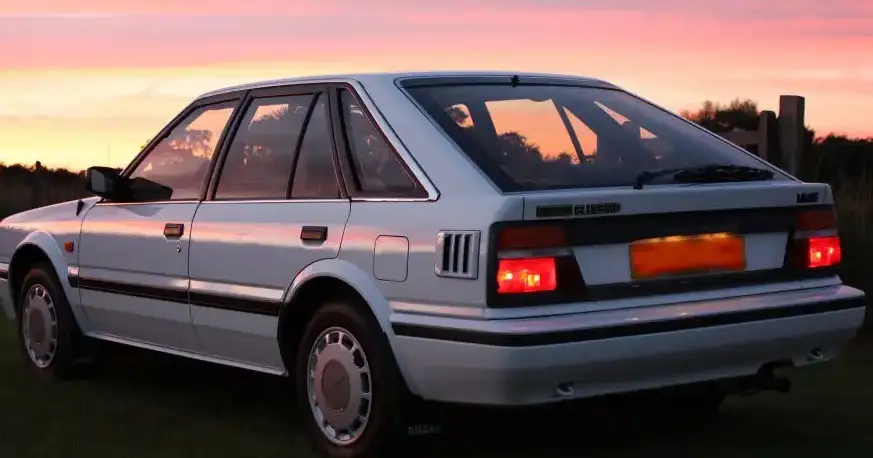
The Nissan Bluebird U13 2.0D Automatic, produced between 1991 and 1995, represented a practical and fuel-efficient offering within the broader Bluebird (U13) generation. Positioned as a mid-range variant, it catered to buyers seeking a comfortable and reliable sedan with the benefits of a diesel engine. The U13 Bluebird was a significant model for Nissan, particularly in markets outside of North America, where it competed with other mainstream sedans like the Toyota Corolla and Honda Accord. This specific 2.0D Automatic configuration aimed to provide a balance between economy and usability, appealing to families and commuters.
Technical Specifications
| Brand | Nissan |
| Model | Bluebird |
| Generation | Bluebird (U13) |
| Type (Engine) | 2.0D (76 Hp) Automatic |
| Start of production | 1991 |
| End of production | 1995 |
| Powertrain Architecture | Internal Combustion engine |
| Body type | Sedan |
| Seats | 5 |
| Doors | 4 |
| Fuel Type | Diesel |
| Weight-to-power ratio | 16.2 kg/Hp, 61.8 Hp/tonne |
| Weight-to-torque ratio | 9.3 kg/Nm, 107.3 Nm/tonne |
| Power | 76 Hp @ 4800 rpm |
| Power per litre | 38.5 Hp/l |
| Torque | 132 Nm @ 2800 rpm (97.36 lb.-ft. @ 2800 rpm) |
| Engine layout | Front, Transverse |
| Engine displacement | 1974 cm3 (120.46 cu. in.) |
| Number of cylinders | 4 |
| Engine configuration | Inline |
| Cylinder Bore | 84.5 mm (3.33 in.) |
| Piston Stroke | 88 mm (3.46 in.) |
| Compression ratio | 22.2:1 |
| Number of valves per cylinder | 2 |
| Fuel injection system | Direct injection |
| Engine aspiration | Naturally aspirated engine |
| Kerb Weight | 1230 kg (2711.69 lbs.) |
| Fuel tank capacity | 60 l (15.85 US gal | 13.2 UK gal) |
| Length | 4585 mm (180.51 in.) |
| Width | 1695 mm (66.73 in.) |
| Height | 1405 mm (55.31 in.) |
| Wheelbase | 2620 mm (103.15 in.) |
| Front track | 1465 mm (57.68 in.) |
| Rear (Back) track | 1455 mm (57.28 in.) |
| Ride height (ground clearance) | 160 mm (6.3 in.) |
| Drivetrain Architecture | The Internal combustion engine (ICE) drives the front wheels of the vehicle. |
| Drive wheel | Front wheel drive |
| Number of gears and type of gearbox | 4 gears, automatic transmission |
| Front brakes | Ventilated discs |
| Rear brakes | Drum |
| Steering type | Steering rack and pinion |
Powertrain & Engine Architecture
The heart of the Bluebird U13 2.0D Automatic was a 1974cc inline-four cylinder diesel engine. While specific engine codes varied by market, it generally utilized a direct injection system, a common feature for diesel engines of the era, to maximize fuel efficiency and power output. The engine featured a relatively low compression ratio of 22.2:1, contributing to its durability. The two valves per cylinder configuration was typical for diesel engines of this displacement and time period. The engine was transversely mounted in the front of the vehicle, driving the front wheels. Paired with this engine was a four-speed automatic transmission, designed to provide smooth and convenient shifting. This transmission wasn’t known for its sportiness, but rather for its reliability and ease of use. The direct injection system, a key component, involved injecting fuel directly into the combustion chamber, enhancing combustion efficiency and reducing emissions compared to indirect injection systems.
Driving Characteristics
The 76 horsepower and 132 Nm (97.36 lb-ft) of torque delivered by the 2.0D engine resulted in modest, but adequate, performance. Acceleration was not a strong point, with a focus on fuel economy and smooth cruising. The automatic transmission, while convenient, further muted the engine’s performance. Compared to the gasoline-powered Bluebird variants, the 2.0D Automatic was noticeably slower, particularly in overtaking situations. However, the diesel engine’s torque characteristics provided reasonable pulling power, making it suitable for carrying passengers and luggage. The gear ratios were optimized for fuel efficiency rather than outright speed, resulting in a relaxed driving experience. Drivers accustomed to manual transmissions or more powerful engines would find the experience somewhat underwhelming. The automatic transmission’s shift points were calibrated for economy, often holding gears longer to maximize fuel savings, which further contributed to the leisurely acceleration.
Equipment & Trim Levels
The 2.0D Automatic trim level typically included features such as power steering, central locking, and a basic audio system. Interior upholstery was generally cloth, with a practical and durable design. Air conditioning was often an optional extra, as were power windows. The dashboard layout was functional and straightforward, prioritizing ease of use over aesthetic flair. Higher trim levels within the U13 Bluebird range offered features like alloy wheels, upgraded audio systems, and more luxurious interior appointments, but the 2.0D Automatic was positioned as a value-oriented option. Depending on the market, options like a sunroof or upgraded seat fabrics could also be specified, though these were less common on the base 2.0D Automatic model.
Chassis & Braking
The Bluebird U13 featured a conventional front-wheel-drive chassis with MacPherson strut suspension at the front and a torsion beam suspension at the rear. The front brakes were ventilated discs, providing adequate stopping power, while the rear brakes were drums, a cost-saving measure common in this class of vehicle. The suspension was tuned for comfort, providing a relatively smooth ride over typical road surfaces. Stabilizer bars were included to reduce body roll during cornering, but the overall handling was geared towards stability and predictability rather than sporty dynamics. The torsion beam rear suspension, while simple and cost-effective, limited the vehicle’s handling capabilities compared to more sophisticated independent rear suspension setups.
Market Reception & Comparison
The Nissan Bluebird U13 2.0D Automatic was generally well-received as a practical and reliable family sedan. Critics praised its fuel efficiency and comfortable ride, but noted its lack of performance compared to gasoline-powered rivals. Compared to other diesel-powered sedans in its class, the Bluebird offered a competitive combination of features and price. The 2.0D Automatic was often seen as a sensible choice for buyers prioritizing economy and dependability over driving excitement. Its fuel economy was a key selling point, particularly in markets where diesel fuel was relatively inexpensive. In many European markets, it directly competed with models like the Ford Sierra and Opel Vectra, offering a similar level of practicality and affordability.
Legacy
The Nissan Bluebird U13 2.0D Automatic has proven to be a durable and long-lasting vehicle. Many examples are still on the road today, testament to the robustness of its diesel engine and overall construction. While not particularly collectible, well-maintained examples are sought after by enthusiasts looking for a reliable and affordable classic car. The engine, while not known for high performance, is generally considered to be relatively trouble-free if properly maintained. The availability of spare parts has diminished over time, but many components are still obtainable. In the used car market, the U13 Bluebird 2.0D Automatic represents a good value for buyers seeking a simple, dependable, and fuel-efficient sedan. Its reputation for reliability has ensured a continued, albeit niche, following among those seeking a practical and economical classic vehicle.