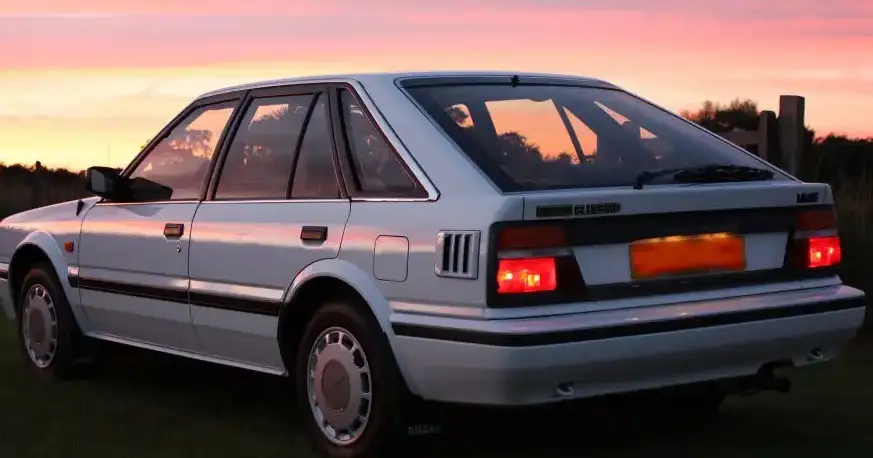
The Nissan Bluebird U13, produced between 1991 and 1996, represented a significant evolution for Nissan’s long-running Bluebird line. This generation, sold primarily in Japan and select export markets, aimed to blend comfort, practicality, and a degree of sporting performance. The 2.0T variant, equipped with a turbocharged four-cylinder engine producing 211 horsepower, was positioned as the performance flagship of the U13 range, offering a more engaging driving experience than the naturally aspirated models. It competed with other Japanese sedans like the Toyota Corona and Honda Accord, offering a compelling package of features and performance for its time.
Technical Specifications
| Brand | Nissan |
| Model | Bluebird |
| Generation | Bluebird (U13) |
| Type (Engine) | 2.0T (211 Hp) |
| Start of production | 1991 |
| End of production | 1996 |
| Powertrain Architecture | Internal Combustion engine |
| Body type | Sedan |
| Seats | 5 |
| Doors | 4 |
| Fuel Type | Petrol (Gasoline) |
| Power | 211 Hp @ 6000 rpm |
| Power per litre | 105.6 Hp/l |
| Torque | 275 Nm @ 4000 rpm |
| Torque (lb-ft) | 202.83 lb.-ft. @ 4000 rpm |
| Engine layout | Front, Transverse |
| Engine displacement | 1998 cm3 |
| Engine displacement (cu. in.) | 121.93 cu. in. |
| Number of cylinders | 4 |
| Engine configuration | Inline |
| Cylinder Bore | 86 mm |
| Cylinder Bore (in.) | 3.39 in. |
| Piston Stroke | 86 mm |
| Piston Stroke (in.) | 3.39 in. |
| Compression ratio | 10:1 |
| Number of valves per cylinder | 4 |
| Fuel injection system | Multi-port manifold injection |
| Engine aspiration | Turbocharger |
| Fuel tank capacity | 60 l |
| Fuel tank capacity (US gal) | 15.85 US gal |
| Fuel tank capacity (UK gal) | 13.2 UK gal |
| Length | 4585 mm |
| Length (in.) | 180.51 in. |
| Width | 1695 mm |
| Width (in.) | 66.73 in. |
| Height | 1405 mm |
| Height (in.) | 55.31 in. |
| Wheelbase | 2620 mm |
| Wheelbase (in.) | 103.15 in. |
| Front track | 1465 mm |
| Front track (in.) | 57.68 in. |
| Rear track | 1455 mm |
| Rear track (in.) | 57.28 in. |
| Ride height (ground clearance) | 160 mm |
| Ride height (ground clearance) (in.) | 6.3 in. |
| Drivetrain Architecture | The Internal combustion engine (ICE) drives the front wheels of the vehicle. |
| Drive wheel | Front wheel drive |
| Number of gears | 5 |
| Type of gearbox | Manual transmission |
| Front brakes | Ventilated discs |
| Rear brakes | Disc |
| Steering type | Steering rack and pinion |
Powertrain & Engine Architecture
The heart of the Bluebird 2.0T was Nissan’s SR20DET engine, a 1998cc, inline-four cylinder powerplant. This engine was a derivative of the SR20DE, but distinguished by the addition of a Garrett turbocharger and an intercooler. The SR20DET featured multi-port fuel injection and a 10:1 compression ratio. The turbocharger significantly boosted power output, delivering 211 hp at 6000 rpm and 275 Nm (202.83 lb-ft) of torque at 4000 rpm. The engine utilized a robust bottom end and strengthened internals to handle the increased stresses of forced induction. The transmission was a five-speed manual, chosen to complement the engine’s performance characteristics. This configuration allowed for quick acceleration and responsive driving.
Driving Characteristics
The 2.0T variant of the U13 Bluebird offered a noticeably more spirited driving experience compared to the lower-spec models. The turbocharger provided a surge of power in the mid-range, making overtaking and highway merging effortless. While not a dedicated sports sedan, the 2.0T handled reasonably well, with decent body control and predictable steering. The five-speed manual transmission allowed drivers to fully exploit the engine’s powerband. The gear ratios were well-matched, providing good acceleration in each gear. Compared to the naturally aspirated 1.8L and 2.0L models, the 2.0T felt significantly faster and more capable. However, the turbo lag was noticeable at lower engine speeds, requiring drivers to downshift to access the power quickly.
Equipment & Trim Levels
The 2.0T trim level typically included a higher level of standard equipment than the base models. Features commonly found in the 2.0T included power windows, power locks, air conditioning, and a decent audio system. Interior upholstery was typically cloth, but leather options were available. The dashboard featured a sporty design with clear instrumentation. Optional extras included a sunroof, alloy wheels, and upgraded audio systems. The overall interior ambiance was comfortable and well-appointed for its time, though not as luxurious as some of its European competitors.
Chassis & Braking
The U13 Bluebird utilized a front-engine, front-wheel-drive layout. The suspension consisted of MacPherson struts at the front and a multi-link setup at the rear. The 2.0T variant often featured a slightly stiffer suspension tuning compared to the base models, improving handling and reducing body roll. Braking duties were handled by ventilated discs at the front and solid discs at the rear. The braking system was adequate for the car’s performance, providing sufficient stopping power in most situations. Anti-lock brakes (ABS) were often available as an option, enhancing safety.
Market Reception & Comparison
The Nissan Bluebird 2.0T was generally well-received by automotive critics in Japan. It was praised for its strong performance, comfortable ride, and well-equipped interior. However, some critics noted the presence of turbo lag and the relatively basic interior compared to some European rivals. In terms of fuel economy, the 2.0T was less efficient than the naturally aspirated models, but still offered reasonable fuel consumption for a turbocharged engine of its era. Compared to the 1.8L and 2.0L Bluebird variants, the 2.0T appealed to drivers who prioritized performance and driving enjoyment. It offered a compelling alternative to other Japanese sedans in the same class.
Legacy
The Nissan Bluebird U13 2.0T has developed a modest following among enthusiasts, particularly in Japan. The SR20DET engine is known for its durability and tunability, making it a popular choice for modifications. While not as iconic as some other Japanese performance cars of the 1990s, the U13 2.0T remains a capable and enjoyable classic sedan. Finding well-maintained examples can be challenging today, but those that remain offer a glimpse into a bygone era of Japanese automotive engineering. The SR20DET engine continues to be a sought-after unit for engine swaps and performance builds, ensuring its legacy lives on.