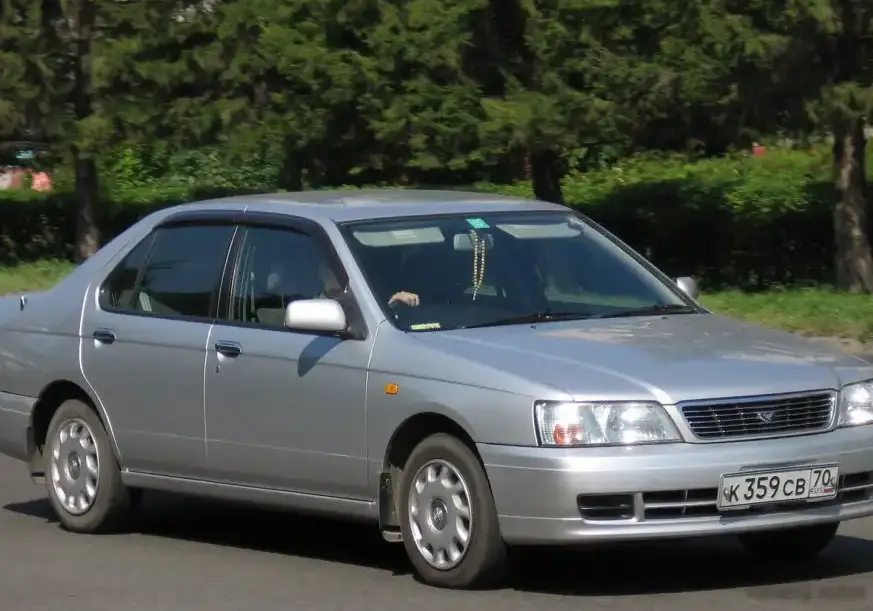
The Nissan Bluebird U14 2.0 SSS 4×4 Automatic, produced between 1996 and 1998, represented a sophisticated offering within Nissan’s Bluebird lineup. Positioned as a near-top trim level, it combined a relatively potent 2.0-liter engine with the convenience of all-wheel drive and an automatic transmission. The U14 generation Bluebird, sold primarily in Japan and select export markets, aimed to provide a comfortable and well-equipped mid-size sedan experience. This particular variant catered to buyers seeking enhanced traction and a more refined driving experience compared to the base models.
Technical Specifications
| Brand | Nissan |
| Model | Bluebird |
| Generation | Bluebird (U14) |
| Type | 2.0 SSS (145 Hp) 4×4 Automatic |
| Start of production | 1996 |
| End of production | 1998 |
| Powertrain Architecture | Internal Combustion engine |
| Body type | Sedan |
| Seats | 5 |
| Doors | 4 |
| Fuel consumption (urban) | 11.1-14.6 l/100 km (21.2 – 16.1 US mpg, 25.4 – 19.3 UK mpg, 9 – 6.8 km/l) |
| Fuel consumption (extra urban) | 7.1-9.4 l/100 km (33.1 – 25 US mpg, 39.8 – 30.1 UK mpg, 14.1 – 10.6 km/l) |
| Fuel consumption (combined) | 10 l/100 km (23.5 US mpg, 28.2 UK mpg, 10 km/l) |
| Fuel Type | Petrol (Gasoline) |
| Acceleration 0 – 100 km/h | 11.1 sec |
| Acceleration 0 – 62 mph | 11.1 sec |
| Acceleration 0 – 60 mph | 10.5 sec |
| Maximum speed | 196 km/h (121.79 mph) |
| Weight-to-power ratio | 9.2 kg/Hp, 108.2 Hp/tonne |
| Weight-to-torque ratio | 7.5 kg/Nm, 132.8 Nm/tonne |
| Power | 145 Hp @ 6400 rpm |
| Power per litre | 72.6 Hp/l |
| Torque | 178 Nm @ 4800 rpm (131.29 lb.-ft. @ 4800 rpm) |
| Engine layout | Front, Transverse |
| Engine displacement | 1998 cm3 (121.93 cu. in.) |
| Number of cylinders | 4 |
| Engine configuration | Inline |
| Cylinder Bore | 86 mm (3.39 in.) |
| Piston Stroke | 86 mm (3.39 in.) |
| Compression ratio | 10:1 |
| Number of valves per cylinder | 4 |
| Fuel injection system | Multi-port manifold injection |
| Engine aspiration | Naturally aspirated engine |
| Valvetrain | DOHC |
| Kerb Weight | 1340 kg (2954.19 lbs.) |
| Fuel tank capacity | 60 l (15.85 US gal | 13.2 UK gal) |
| Length | 4565 mm (179.72 in.) |
| Width | 1695 mm (66.73 in.) |
| Height | 1420 mm (55.91 in.) |
| Wheelbase | 2600 mm (102.36 in.) |
| Front track | 1465 mm (57.68 in.) |
| Rear track | 1450 mm (57.09 in.) |
| Ride height (ground clearance) | 155 mm (6.1 in.) |
| Drag coefficient (Cd) | 0.32 |
| Minimum turning circle | 10.8 m (35.43 ft.) |
| Drive wheel | All wheel drive (4×4) |
| Number of gears | 4 |
| Gearbox type | automatic transmission |
| Front brakes | Ventilated discs |
| Rear brakes | Disc |
| Steering type | Steering rack and pinion |
| Tires size | 195/65 R14 |
| Wheel rims size | 14 |
Introduction
The Nissan Bluebird U14, launched in 1996, continued the Bluebird’s long tradition as a comfortable and reliable family sedan. The U14 series represented a significant update over its predecessor, featuring improved styling, enhanced safety features, and a range of modern engine options. The 2.0 SSS 4×4 Automatic variant occupied a premium position within the range, offering a blend of performance, practicality, and all-weather capability. It was primarily marketed in Japan, where all-wheel drive systems were highly valued, and exported to select markets where a sophisticated, mid-size sedan was in demand.
Powertrain & Engine Architecture
At the heart of the Bluebird 2.0 SSS 4×4 Automatic lay the SR20DE engine, a 1998cc inline-four cylinder powerplant. This engine, a staple of Nissan’s lineup, featured a double overhead camshaft (DOHC) valvetrain and multi-port fuel injection. The SR20DE was known for its smooth operation and reasonable power output. The 4×4 system employed a viscous coupling to distribute torque between the front and rear axles, providing enhanced traction without the complexity of a more advanced system. The automatic transmission was a four-speed unit, designed for smooth and comfortable shifts. While not a performance-oriented transmission, it was well-suited to the engine’s characteristics and the car’s intended role as a comfortable cruiser. The engine code is generally identified as SR20DE.
Driving Characteristics
The 2.0 SSS 4×4 Automatic offered a composed and comfortable driving experience. The 145 horsepower engine provided adequate acceleration, with a 0-60 mph time of around 10.5 seconds. However, it wasn’t a particularly sporty performer. The automatic transmission, while smooth, did detract from the sense of driver involvement. The all-wheel drive system provided noticeable improvements in grip, particularly on slippery surfaces, making it a confident handler in adverse weather conditions. Compared to the manual transmission versions of the 2.0 SSS, the automatic offered less direct control, but greater convenience. Compared to the higher-performance turbocharged variants (if available in certain markets), the 2.0 SSS Automatic lacked the outright speed and responsiveness, but offered better fuel economy and a more relaxed driving experience.
Equipment & Trim Levels
The 2.0 SSS trim level included a generous array of standard features. Interior appointments typically included comfortable cloth upholstery, power windows and locks, and air conditioning. Higher-end options could include a sunroof, upgraded audio system, and woodgrain interior trim. The dashboard layout was functional and well-designed, with easy-to-read gauges and logically placed controls. Safety features included anti-lock brakes (ABS) and, depending on the market, airbags. The SSS designation generally indicated a higher level of equipment and refinement compared to the base Bluebird models.
Chassis & Braking
The Bluebird U14 utilized a conventional front MacPherson strut and rear multi-link suspension setup. This configuration provided a good balance between ride comfort and handling. The 4×4 variant featured slightly stiffer springs and dampers to compensate for the added weight of the all-wheel drive system. Braking duties were handled by ventilated discs at the front and solid discs at the rear. ABS was standard equipment, enhancing braking performance and stability. The steering was a rack-and-pinion system, providing precise and responsive steering feel.
Market Reception & Comparison
The Nissan Bluebird U14 2.0 SSS 4×4 Automatic was generally well-received by automotive critics. It was praised for its comfortable ride, spacious interior, and reliable powertrain. The all-wheel drive system was seen as a significant advantage in regions with inclement weather. However, some critics noted that the automatic transmission detracted from the driving experience and that the engine, while adequate, wasn’t particularly exciting. Compared to competitors like the Toyota Corolla and Honda Accord, the Bluebird offered a compelling combination of features and value. Fuel economy was respectable for its class, averaging around 23.5 US mpg in combined driving.
Legacy
The Nissan Bluebird U14 2.0 SSS 4×4 Automatic has proven to be a durable and reliable vehicle. The SR20DE engine is known for its longevity, and the automatic transmission, while not without its quirks, has generally held up well over time. Today, these cars are relatively rare, particularly in North America. Well-maintained examples are sought after by enthusiasts who appreciate their classic styling and dependable performance. The 4×4 system adds to their appeal, making them a practical choice for those living in areas with challenging weather conditions. Parts availability can be a concern, but many components are still available through Nissan dealerships and aftermarket suppliers.