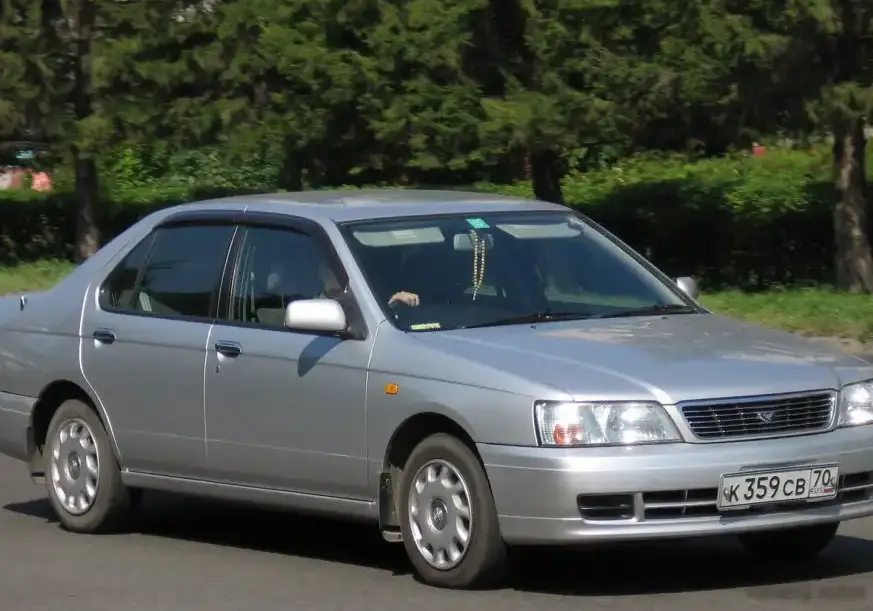
The Nissan Bluebird U14 2.0d, produced between 1996 and 1998, represented a practical and economical offering within the broader Bluebird (U14) generation. Positioned as a diesel-powered variant, it catered to buyers prioritizing fuel efficiency and durability over outright performance. The U14 Bluebird itself was a significant model for Nissan, continuing a lineage of family sedans known for reliability and comfort. This particular 2.0d trim served as an entry-level diesel option, offering a more affordable alternative to the gasoline-powered models and the more powerful diesel variants available in some markets. It primarily targeted fleet buyers and individuals seeking a no-frills, dependable vehicle for daily commuting and long-distance travel.
Technical Specifications
| Brand | Nissan |
| Model | Bluebird |
| Generation | Bluebird (U14) |
| Type (Engine) | 2.0d (76 Hp) |
| Start of production | 1996 |
| End of production | 1998 |
| Powertrain Architecture | Internal Combustion engine |
| Body type | Sedan |
| Seats | 5 |
| Doors | 4 |
| Fuel consumption (urban) | 7.4-9.8 l/100 km (31.8 – 24 US mpg, 38.2 – 28.8 UK mpg, 13.5 – 10.2 km/l) |
| Fuel consumption (extra urban) | 5.4-7.1 l/100 km (43.6 – 33.1 US mpg, 52.3 – 39.8 UK mpg, 18.5 – 14.1 km/l) |
| Fuel consumption (combined) | 7.1 l/100 km (33.1 US mpg, 39.8 UK mpg, 14.1 km/l) |
| Fuel Type | Diesel |
| Acceleration 0 – 100 km/h | 16.2 sec |
| Acceleration 0 – 62 mph | 16.2 sec |
| Acceleration 0 – 60 mph | 15.4 sec |
| Maximum speed | 168 km/h (104.39 mph) |
| Weight-to-power ratio | 16.1 kg/Hp, 62.3 Hp/tonne |
| Weight-to-torque ratio | 9.2 kg/Nm, 108.2 Nm/tonne |
| Power | 76 Hp @ 4800 rpm |
| Power per litre | 38.5 Hp/l |
| Torque | 132 Nm @ 2800 rpm (97.36 lb.-ft. @ 2800 rpm) |
| Engine layout | Front, Transverse |
| Engine Model/Code | CD20 |
| Engine displacement | 1974 cm3 (120.46 cu. in.) |
| Number of cylinders | 4 |
| Engine configuration | Inline |
| Cylinder Bore | 84.5 mm (3.33 in.) |
| Piston Stroke | 88 mm (3.46 in.) |
| Compression ratio | 22.2:1 |
| Number of valves per cylinder | 2 |
| Fuel injection system | Precombustion chamber injection |
| Engine aspiration | Naturally aspirated engine |
| Valvetrain | SOHC |
| Kerb Weight | 1220 kg (2689.64 lbs.) |
| Fuel tank capacity | 60 l (15.85 US gal | 13.2 UK gal) |
| Length | 4565 mm (179.72 in.) |
| Width | 1695 mm (66.73 in.) |
| Height | 1395 mm (54.92 in.) |
| Wheelbase | 2600 mm (102.36 in.) |
| Front track | 1465 mm (57.68 in.) |
| Rear track | 1455 mm (57.28 in.) |
| Ride height (ground clearance) | 140 mm (5.51 in.) |
| Drag coefficient (Cd) | 0.32 |
| Minimum turning circle | 10.4 m (34.12 ft.) |
| Drivetrain Architecture | The Internal combustion engine (ICE) drives the front wheels of the vehicle. |
| Drive wheel | Front wheel drive |
| Number of gears | 5 gears, manual transmission |
| Front brakes | Ventilated discs |
| Rear brakes | Drum |
| Steering type | Steering rack and pinion |
| Tires size | 175/70 R14 |
| Wheel rims size | 14 |
Powertrain & Engine Architecture
The heart of the Bluebird U14 2.0d was the CD20 diesel engine, a 1974cc inline-four cylinder unit. This engine utilized a precombustion chamber injection system, a common technology for diesel engines of the era, designed to improve combustion efficiency and reduce noise. The CD20 featured a single overhead camshaft (SOHC) valvetrain, operating two valves per cylinder. While not a high-performance engine, the CD20 was known for its robustness and relatively simple design, contributing to its longevity. The 76 horsepower output at 4800 rpm and 132 Nm (97.36 lb-ft) of torque at 2800 rpm were modest, but sufficient for comfortable cruising and everyday driving. The engine was transversely mounted in the front of the vehicle, driving the front wheels. The five-speed manual transmission was the standard offering for this variant, providing a reasonable spread of gears for optimizing fuel economy and managing the engine’s torque curve.
Driving Characteristics
The 2.0d variant of the U14 Bluebird offered a decidedly unhurried driving experience. Acceleration was slow, with a 0-60 mph time of around 15.4 seconds. The focus was clearly on fuel efficiency and smooth, predictable power delivery. The manual transmission, while not particularly sporty, allowed drivers to make the most of the available torque. Gear ratios were optimized for economy, meaning the engine often needed to be revved to maintain speed on inclines or during overtaking maneuvers. Compared to the gasoline-powered Bluebirds, the 2.0d lacked the responsiveness and higher top speed. However, it offered significantly better fuel economy, making it a practical choice for high-mileage drivers. Compared to other diesel options available in the Bluebird range (depending on the market), this 76hp version represented the entry-level diesel, prioritizing affordability over performance.
Equipment & Trim Levels
The 2.0d trim of the U14 Bluebird was generally equipped with basic, functional features. Standard equipment typically included power steering, central locking, and cloth upholstery. Air conditioning was often an optional extra. The dashboard layout was straightforward and utilitarian, prioritizing ease of use over aesthetic flair. Interior trim levels were relatively simple, with durable plastics and fabrics used throughout the cabin. Optional extras could include upgraded audio systems, electric windows, and alloy wheels, but these were not commonly specified on the base 2.0d model. The overall emphasis was on providing a comfortable and practical interior without excessive luxury.
Chassis & Braking
The U14 Bluebird 2.0d utilized a conventional front-wheel-drive chassis with MacPherson strut suspension at the front and a torsion beam rear suspension. The suspension setup was tuned for comfort rather than sporty handling. Braking duties were handled by ventilated discs at the front and drum brakes at the rear. This configuration was typical for vehicles in this class and price range during the mid-1990s. The relatively modest weight of the vehicle (1220 kg / 2689.64 lbs) helped to compensate for the less powerful braking system. Stabilizer bars were fitted to both the front and rear axles to reduce body roll during cornering.
Market Reception & Comparison
The Nissan Bluebird U14 2.0d was generally well-received as a practical and economical family sedan. Critics praised its fuel efficiency, reliability, and comfortable ride. However, its lack of performance and somewhat basic interior were often noted. Compared to other vehicles in its class, such as the Toyota Corolla and Honda Civic, the Bluebird offered a competitive combination of features and value. The 2.0d variant specifically appealed to buyers who prioritized fuel economy and low running costs over driving excitement. Its fuel consumption figures of 7.1 l/100 km (33.1 US mpg) were competitive for a diesel vehicle of its size and era.
Legacy
The CD20 diesel engine, found in the Bluebird U14 2.0d, proved to be a durable and reliable powerplant. Many examples of this vehicle are still on the road today, testament to its robust construction. In the used car market, the U14 Bluebird 2.0d is often sought after by buyers looking for an affordable and dependable vehicle. While not a collector’s item, it holds a reputation for being a practical and long-lasting car. Maintenance costs are generally low, and spare parts are readily available. The simplicity of the engine and drivetrain contributes to its continued reliability, making it a viable option for those seeking a budget-friendly and dependable mode of transportation.