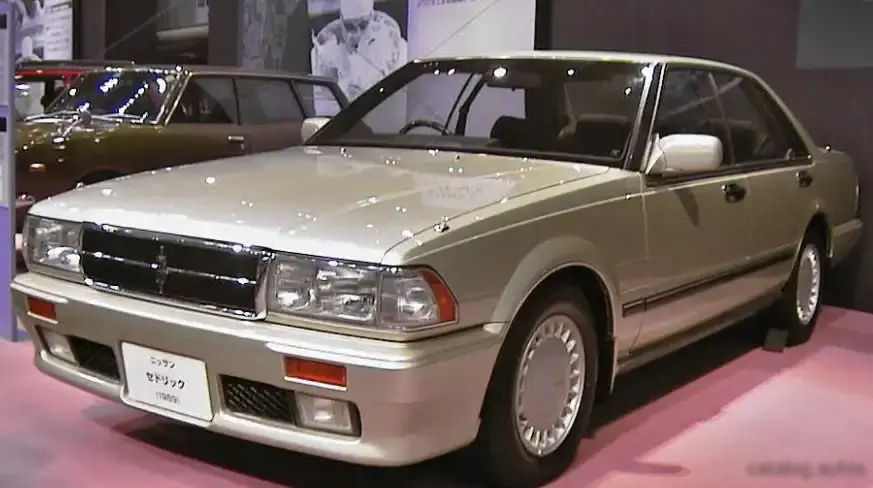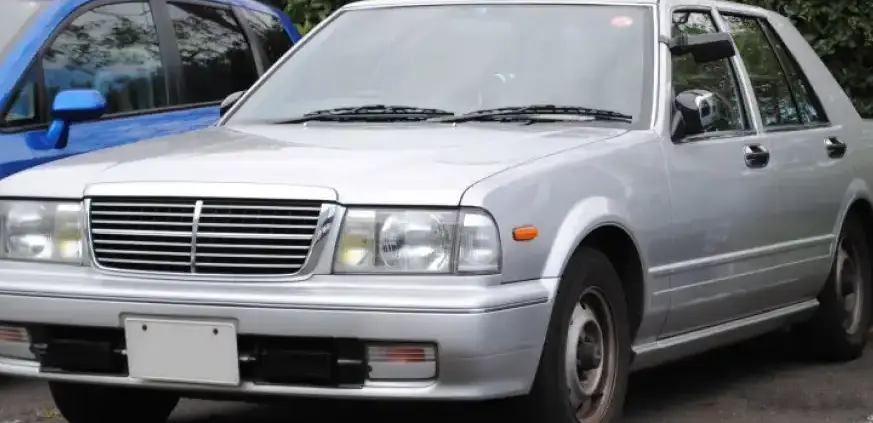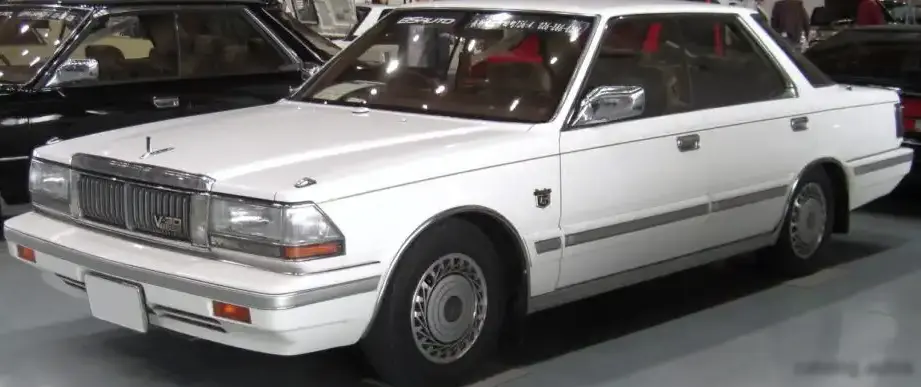
The Nissan Cedric Y30 2.0 V6 Turbo, produced between 1983 and 1987, represented a significant step forward for Nissan’s flagship sedan. Part of the broader Y30 generation (1983-1989), this variant occupied a premium position within the Cedric lineup, offering a blend of luxury, performance, and advanced technology for its time. The Y30 series aimed to compete directly with Toyota’s Crown and other large sedans, and the 2.0 V6 Turbo was positioned as a more sporting alternative to the standard naturally aspirated engines. It was primarily marketed in Japan, where large, comfortable sedans with a degree of performance were highly valued.
Technical Specifications
| Brand | Nissan |
| Model | Cedric |
| Generation | Cedric (Y30) |
| Type (Engine) | 2.0 V6 Turbo (210 Hp) |
| Start of Production | 1983 |
| End of Production | 1987 |
| Powertrain Architecture | Internal Combustion Engine |
| Body Type | Sedan |
| Seats | 4 |
| Doors | 4 |
| Fuel Type | Petrol (Gasoline) |
| Power | 210 Hp |
| Engine Aspiration | Turbocharger |
| Drivetrain | Front Wheel Drive |
| Number of Gears | 4 |
| Gearbox Type | Automatic Transmission |
Powertrain & Engine Architecture
The heart of the Y30 2.0 V6 Turbo was the VG20ET engine. This 1998cc, 60-degree V6 engine featured a single overhead camshaft (SOHC) design per cylinder bank, utilizing two valves per cylinder. The turbocharger, a Garrett unit, significantly boosted power output compared to the naturally aspirated VG20E. Fuel delivery was managed by Nissan’s ECCS (Electronic Concentrated Control System) – an early form of electronic fuel injection. The VG20ET employed a multi-point fuel injection system, improving efficiency and responsiveness. The automatic transmission was a four-speed unit, designed to handle the increased torque produced by the turbocharged engine. While not particularly advanced by modern standards, it provided smooth shifts and contributed to the car’s overall comfortable driving experience. The engine code, VG20ET, is crucial for identifying parts and service information.
Driving Characteristics
The 210 horsepower and 228 lb-ft of torque delivered by the VG20ET provided a noticeable performance upgrade over the standard Cedric models. While not a sports car, the Y30 2.0 V6 Turbo offered brisk acceleration and confident highway cruising. The four-speed automatic transmission, while smooth, wasn’t geared for outright performance; it prioritized comfort and fuel economy. Gear ratios were relatively conservative, resulting in a 0-60 mph time estimated around 8.5-9.5 seconds. Compared to the naturally aspirated VG20E, the turbocharger provided a significant boost in mid-range power, making overtaking maneuvers easier. However, turbo lag was present, a common characteristic of turbochargers of that era. The front-wheel-drive configuration contributed to predictable handling, but also introduced a degree of understeer when pushed hard.
Equipment & Trim Levels
The 2.0 V6 Turbo variant of the Cedric Y30 was typically equipped with a high level of standard features. Interior appointments included plush velour upholstery, power windows, power locks, and an upgraded audio system. Air conditioning was standard, as was power steering. Higher trim levels offered options such as leather upholstery, a sunroof, and more advanced audio systems with features like a graphic equalizer. The dashboard featured woodgrain accents and a comprehensive instrument cluster, including gauges for oil pressure and water temperature. Exterior features typically included alloy wheels, chrome trim, and a more refined appearance compared to the base models. The Cedric Y30 aimed to provide a luxurious and comfortable experience, and the 2.0 V6 Turbo trim enhanced that experience with added performance and features.
Chassis & Braking
The Y30 Cedric utilized a conventional front-engine, front-wheel-drive layout. Suspension consisted of MacPherson struts at the front and a multi-link setup at the rear, providing a comfortable ride quality. Stabilizer bars were fitted to both the front and rear axles to reduce body roll during cornering. Braking was accomplished via disc brakes at the front and drum brakes at the rear. While the front discs provided adequate stopping power, the rear drums were a cost-saving measure and limited overall braking performance. Steering was power-assisted, making maneuvering easy, especially at low speeds. The chassis was designed to prioritize comfort and refinement over sporty handling, reflecting the Cedric’s role as a luxury sedan.
Market Reception & Comparison
The Nissan Cedric Y30 2.0 V6 Turbo was generally well-received in the Japanese market. Critics praised its smooth engine, comfortable ride, and luxurious interior. However, some noted the presence of turbo lag and the somewhat conservative gearing of the automatic transmission. Compared to the naturally aspirated VG20E models, the 2.0 V6 Turbo offered a significant performance advantage, but at a higher price point. It also commanded a premium over the 2.0-liter diesel variants, which prioritized fuel economy. Against competitors like the Toyota Crown, the Cedric Y30 2.0 V6 Turbo offered a compelling combination of features and performance, appealing to buyers who wanted a comfortable and refined sedan with a bit of extra power. Fuel economy was reasonable for the time, averaging around 18-22 mpg in mixed driving conditions.
Legacy
The Nissan Cedric Y30 2.0 V6 Turbo, while not a globally recognized icon, holds a respected position among Japanese car enthusiasts. The VG20ET engine is known for its durability and potential for modification. The Y30 generation Cedric, in general, is appreciated for its classic styling and comfortable ride. Today, finding a well-maintained example can be challenging, as many have been lost to time or modified. However, original examples are becoming increasingly collectible. The powertrain, while aging, is generally reliable if properly maintained. Common issues include turbocharger wear and tear, and potential leaks from the engine’s various seals. The Y30 2.0 V6 Turbo represents a significant chapter in Nissan’s history, showcasing the company’s engineering prowess and commitment to providing a luxurious and refined driving experience.