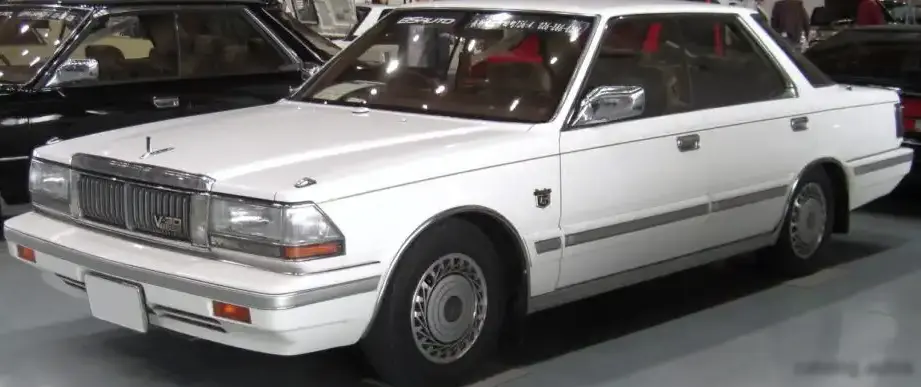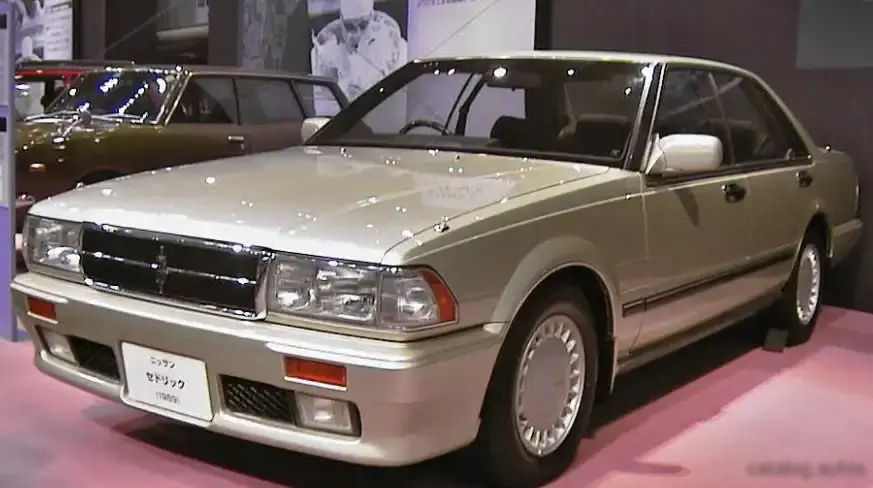
The Nissan Cedric Y33 2.0i V6 Automatic, produced from 1996 to 1997, represents a significant iteration of Nissan’s long-running Cedric lineage. Positioned as a mid-range offering within the Y33 generation (1995-1999), this variant catered to buyers seeking a comfortable, spacious sedan with a refined V6 engine and the convenience of an automatic transmission. The Y33 series, as a whole, aimed to modernize the Cedric’s image, appealing to a more contemporary clientele while retaining the model’s traditional emphasis on luxury and quiet operation. This particular 2.0-liter version was primarily marketed within Japan, where large, comfortable sedans remained highly popular.
Technical Specifications
| Brand | Nissan |
| Model | Cedric |
| Generation | Cedric (Y33) |
| Type (Engine) | 2.0i V6 (125 Hp) Automatic |
| Start of production | 1996 |
| End of production | 1997 |
| Powertrain Architecture | Internal Combustion engine |
| Body type | Sedan |
| Seats | 5 |
| Doors | 4 |
| Fuel consumption (combined) | 9.8 l/100 km |
| Fuel consumption (US mpg) | 24 US mpg |
| Fuel consumption (UK mpg) | 28.8 UK mpg |
| Fuel consumption (km/l) | 10.2 km/l |
| Fuel Type | Petrol (Gasoline) |
| Acceleration 0 – 100 km/h | 13.5 sec |
| Acceleration 0 – 62 mph | 13.5 sec |
| Acceleration 0 – 60 mph | 12.8 sec |
| Maximum speed | 172 km/h (106.88 mph) |
| Weight-to-power ratio | 12.2 kg/Hp |
| Weight-to-torque ratio | 9.1 kg/Nm |
| Power | 125 Hp @ 6000 rpm |
| Power per litre | 62.6 Hp/l |
| Torque | 167 Nm @ 3200 rpm (123.17 lb.-ft. @ 3200 rpm) |
| Engine layout | Front, Longitudinal |
| Engine Model/Code | VG20 |
| Engine displacement | 1998 cm3 (121.93 cu. in.) |
| Number of cylinders | 6 |
| Engine configuration | V-engine |
| Cylinder Bore | 78 mm (3.07 in.) |
| Piston Stroke | 69.7 mm (2.74 in.) |
| Compression ratio | 9.5:1 |
| Number of valves per cylinder | 2 |
| Fuel injection system | Multi-port manifold injection |
| Engine aspiration | Naturally aspirated engine |
| Valvetrain | SOHC |
| Kerb Weight | 1520 kg (3351.03 lbs.) |
| Fuel tank capacity | 80 l (21.13 US gal | 17.6 UK gal) |
| Ride height (ground clearance) | 150 mm (5.91 in.) |
| Drag coefficient (Cd) | 0.37 |
| Minimum turning circle | 11 m (36.09 ft.) |
| Drivetrain Architecture | Rear wheel drive |
| Drive wheel | Rear wheel drive |
| Number of gears | 4 |
| Gearbox type | automatic transmission |
| Front brakes | Ventilated discs |
| Rear brakes | Ventilated discs |
| Tires size | 205/65 R15 |
| Wheel rims size | 15 |
Powertrain & Engine Architecture
The heart of the Y33 2.0i is the VG20E engine, a 1,998 cc (121.93 cubic inches) V6. This engine, part of Nissan’s well-regarded VG series, features a single overhead camshaft (SOHC) valvetrain and multi-port fuel injection. The VG20E produces 125 horsepower at 6,000 rpm and 167 Nm (123.17 lb-ft) of torque at 3,200 rpm. The engine’s longitudinal mounting and rear-wheel-drive configuration were traditional for the Cedric, emphasizing a balanced driving experience. Paired with the VG20E is a four-speed automatic transmission, chosen for its smooth operation and ease of use, aligning with the Cedric’s luxury-oriented character. This transmission wasn’t known for particularly quick shifts, prioritizing comfort over performance.
Driving Characteristics
The 2.0i V6 Automatic Cedric delivers a comfortable and refined driving experience, but it’s not a performance-focused vehicle. Acceleration from 0 to 60 mph takes around 12.8 seconds, and 0-100 km/h is achieved in 13.5 seconds. The automatic transmission, while smooth, contributes to a somewhat leisurely pace. Compared to the more powerful 3.0-liter V6 variants, the 2.0i feels noticeably less responsive, particularly during overtaking maneuvers. However, the engine provides adequate power for everyday driving, and the rear-wheel-drive layout offers a degree of driving engagement. The gear ratios are tuned for fuel efficiency and smooth cruising rather than aggressive acceleration.
Equipment & Trim Levels
The Y33 2.0i Automatic typically came equipped with a respectable level of standard features. These included power windows, power locks, air conditioning, and a basic audio system. Interior upholstery was generally cloth, though leather options were available as upgrades. Dashboard design featured woodgrain accents, contributing to the car’s luxurious ambiance. Optional extras included a sunroof, upgraded audio systems, and power-adjustable seats. The trim level sat in the middle of the Cedric range, offering a balance between affordability and comfort. It was a step up from the base models but lacked some of the more opulent features found in the higher-spec variants.
Chassis & Braking
The Y33 Cedric utilizes a traditional body-on-frame construction, contributing to its robust feel and comfortable ride. The suspension consists of independent front suspension with MacPherson struts and a multi-link rear suspension. Braking duties are handled by ventilated disc brakes on all four wheels, providing adequate stopping power for the vehicle’s weight. Stabilizer bars are fitted to both the front and rear axles to reduce body roll during cornering. The suspension tuning prioritizes ride comfort over sporty handling, resulting in a smooth and compliant ride quality.
Market Reception & Comparison
The Y33 2.0i V6 Automatic was generally well-received in the Japanese market as a comfortable and reliable family sedan. Critics praised its spacious interior, smooth ride, and refined engine. However, some noted its relatively modest performance compared to other vehicles in its class. Fuel economy was considered average for a vehicle of its size and engine displacement, averaging around 9.8 l/100 km (24 US mpg). Compared to the 3.0-liter V6 models, the 2.0i offered a more affordable entry point into the Cedric range, but at the expense of performance. The 2.0i also offered better fuel economy than the larger engine options.
Legacy
The VG20E engine, when properly maintained, is known for its durability and reliability. The four-speed automatic transmission is also generally dependable, though like any automatic, it can be susceptible to wear and tear over time. Today, the Y33 Cedric 2.0i is a relatively uncommon sight, even in Japan. Well-maintained examples are sought after by enthusiasts who appreciate the car’s classic styling and comfortable driving experience. Parts availability can be a challenge, but many components are still obtainable through specialist suppliers. The Y33 Cedric, in all its variants, represents a high point in Japanese luxury sedan design, offering a blend of comfort, refinement, and reliability that continues to appeal to collectors and enthusiasts alike.