
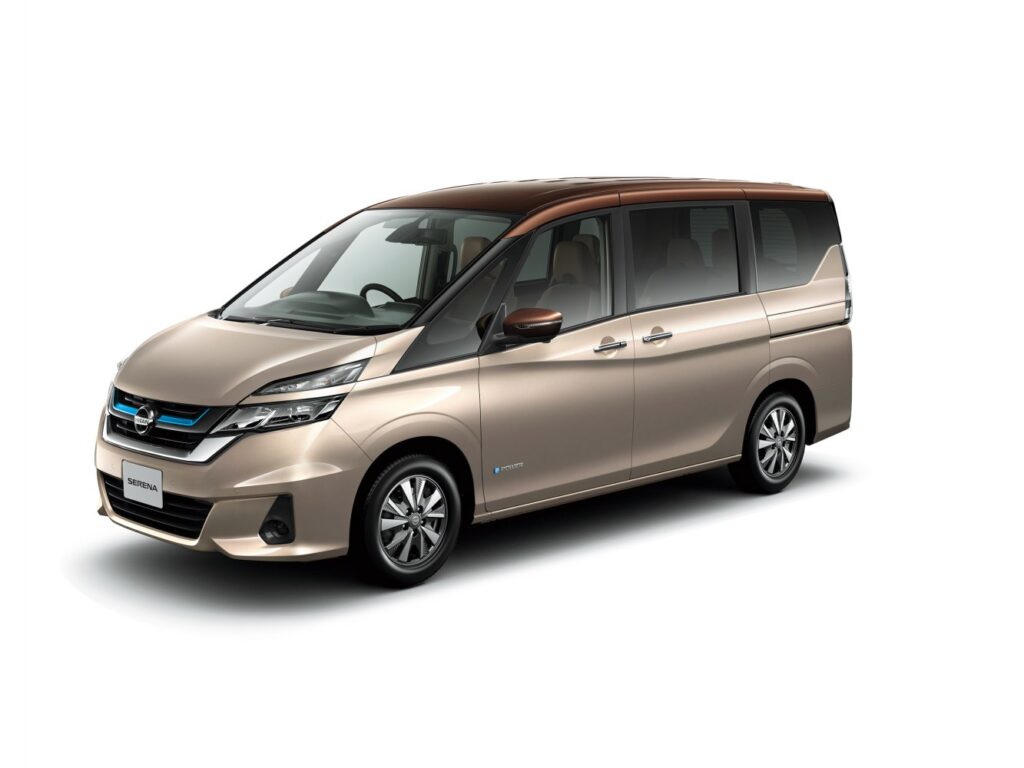
Nissan Serena (C27) Highway Star 2.0 S-Hybrid: A Market-Specific Minivan Masterpiece
The Nissan Serena (C27) represents the fifth generation of Nissan’s highly successful minivan, primarily designed and sold in the Japanese and select Asian markets. Produced from 2016 to 2019, this iteration of the Serena continued its legacy as a practical, family-oriented vehicle, blending spacious interiors with modern technology and improved fuel efficiency. The specific variant under examination, the Highway Star 2.0 (150 Hp) S-Hybrid AWD CVT, exemplifies the model’s focus on a sportier aesthetic combined with an advanced mild-hybrid powertrain and all-weather capability. Unlike many of its counterparts in the North American market, the Serena (C27) was engineered to meet the unique demands of its primary regions, offering compact exterior dimensions for navigating urban environments while maximizing interior volume for up to eight passengers.
Generation C27: Evolving the Family Hauler
Introduced in 2016, the C27 generation of the Nissan Serena built upon the strengths of its predecessors while incorporating significant advancements in design, powertrain, and driver assistance systems. It arrived in a highly competitive segment dominated by other Japanese automakers like Toyota (with its Noah/Voxy) and Honda (with the Stepwgn). Nissan’s strategy for the C27 was to offer a compelling package that balanced practicality with a more engaging driving experience and enhanced comfort for all occupants. The “Highway Star” trim, a long-standing fixture in the Serena lineup, denoted a sportier, more premium appearance with distinct exterior styling cues, appealing to buyers looking for a minivan that stood out from the crowd. Its market positioning as a versatile, efficient, and comfortable family vehicle solidified its strong presence in its target regions, where minivans remain a popular choice for their unparalleled utility.
Engine & Performance: The Nissan Serena (C27) S-Hybrid Powertrain
At the heart of the Nissan Serena (C27) Highway Star 2.0 S-Hybrid AWD CVT lies a sophisticated mild-hybrid electric vehicle (MHEV) powertrain, a testament to Nissan’s commitment to efficiency without compromising on everyday usability. This system, designated as “S-Hybrid” by Nissan, combines a 2.0-liter (1997 cm³, or 121.86 cubic inches) MR20DD inline-four gasoline engine with a compact electric motor. The internal combustion engine itself is a capable unit, featuring direct injection and a DOHC valvetrain, producing a robust 150 horsepower at 6000 rpm and 147.51 lb-ft of torque at 4400 rpm. Its compression ratio of 12.5:1 indicates a focus on thermal efficiency.
The mild-hybrid component enhances this performance and efficiency. An integrated electric motor, though modest in power at 3 horsepower, contributes a significant 35.4 lb-ft of torque. This electric assist primarily functions to reduce the load on the gasoline engine during acceleration, provide smoother auto start/stop operation, and assist in recapturing energy during deceleration. This power-assist hybrid architecture, often referred to as a battery-assisted hybrid vehicle (BAHV), is not designed for extended electric-only driving but rather to optimize the gasoline engine’s operation, leading to improved fuel economy. The combined fuel consumption for this AWD variant is an impressive 37.3 US mpg (6.3 l/100 km) on regular gasoline.
Power is transmitted to the wheels via an automatic Continuously Variable Transmission (CVT). This gearbox is renowned for its smooth, stepless acceleration, contributing to a comfortable ride quality and further aiding fuel efficiency by keeping the engine in its optimal operating range. The Serena Highway Star in this configuration also boasts an All-Wheel Drive (AWD) system. This intelligent drivetrain architecture is designed to permanently drive the front wheels with both the ICE and electric motor, and then, when necessary, engage the rear wheels through an electrically or mechanically controlled clutch. This on-demand AWD capability provides enhanced traction and stability in adverse weather conditions or on slippery surfaces, making it a versatile choice for families in diverse climates. The vehicle’s weight-to-power ratio stands at 11.7 kg/Hp (85.2 Hp/tonne), indicating a balanced performance for its segment.
Design & Features: Practicality Meets Style
The Nissan Serena (C27) Highway Star presents a distinctive blend of practical minivan functionality and a more dynamic aesthetic. As a 5-door minivan designed to accommodate eight passengers, its primary focus is on maximizing interior space and ease of access. The exterior dimensions are thoughtfully proportioned for its target markets, with a length of 187.8 inches (4770 mm), a width of 68.5 inches (1740 mm), and a height of 73.82 inches (1875 mm). Its relatively compact footprint, combined with a tight minimum turning circle of 36.09 feet (11 m), makes it highly maneuverable in congested urban environments.
The “Highway Star” trim elevates the Serena’s visual appeal with a sportier front fascia, unique grille design, side skirts, and rear bumper accents, often complemented by distinctive alloy wheels (15-inch wheels with 195/65 R15 tires in this specification). These design elements give the family hauler a more assertive and premium stance. Practicality is paramount, with large sliding doors on both sides providing effortless entry and exit for passengers, particularly useful in tight parking spaces.
Inside, the Serena (C27) is engineered for maximum versatility. Its 8-seat configuration typically includes flexible seating arrangements, allowing for various passenger and cargo combinations. The cabin is designed to be user-friendly, with ample storage compartments and convenience features tailored for families. While specific interior features vary by trim, the C27 generation typically offered modern infotainment systems, climate control for all rows, and thoughtful touches to enhance passenger comfort on longer journeys.
In terms of chassis and safety, the Serena (C27) utilizes an independent McPherson strut front suspension and an independent multi-link rear suspension, providing a comfortable and stable ride. Braking is handled by ventilated discs at the front and disc brakes at the rear, supported by an Anti-lock Braking System (ABS) for enhanced stopping power and control. The vehicle features electric power steering with a rack and pinion system, offering light and precise handling, which is particularly beneficial for city driving and parking maneuvers. The ground clearance of 5.51 inches (140 mm) is typical for a minivan, balancing ride comfort with sufficient clearance for everyday obstacles.
Technical Specifications: Nissan Serena (C27) Highway Star 2.0 (150 Hp) S-Hybrid AWD CVT
| Category | Specification |
|---|---|
| General Information | |
| Brand | Nissan |
| Model | Serena |
| Generation | Serena (C27) |
| Type (Engine) | Highway Star 2.0 (150 Hp) S-Hybrid AWD CVT |
| Production Start | 2016 |
| Production End | 2019 |
| Powertrain Architecture | MHEV (Mild Hybrid Electric Vehicle, power-assist hybrid, battery-assisted hybrid vehicles, BAHV) |
| Body Type | Minivan |
| Seats | 8 |
| Doors | 5 |
| Performance Specs | |
| Fuel Consumption (Combined) | 6.3 l/100 km (37.3 US mpg, 44.8 UK mpg, 15.9 km/l) |
| Fuel Type | Petrol (Gasoline) |
| Weight-to-Power Ratio | 11.7 kg/Hp (85.2 Hp/tonne) |
| Weight-to-Torque Ratio | 8.8 kg/Nm (113.6 Nm/tonne) |
| Electric Cars and Hybrids Specs | |
| Electric Motor 1 Power | 3 Hp |
| Electric Motor 1 Torque | 48 Nm (35.4 lb.-ft.) |
| Internal Combustion Engine Specs | |
| Power | 150 Hp @ 6000 rpm |
| Power per Liter | 75.1 Hp/l |
| Torque | 200 Nm @ 4400 rpm (147.51 lb.-ft. @ 4400 rpm) |
| Engine Layout | Front, Transverse |
| Engine Model/Code | MR20DD |
| Engine Displacement | 1997 cm³ (2.0 liters, 121.86 cu. in.) |
| Number of Cylinders | 4 |
| Engine Configuration | Inline |
| Cylinder Bore | 84 mm (3.31 in.) |
| Piston Stroke | 90.1 mm (3.55 in.) |
| Compression Ratio | 12.5:1 |
| Valves per Cylinder | 4 |
| Fuel Injection System | Direct injection |
| Valvetrain | DOHC |
| Space, Volume and Weights | |
| Kerb Weight | 1760-1790 kg (3880.14 – 3946.27 lbs.) |
| Max. Weight | 2200-2230 kg (4850.17 – 4916.31 lbs.) |
| Max Load | 440 kg (970.03 lbs.) |
| Fuel Tank Capacity | 55 liters (14.53 US gal, 12.1 UK gal) |
| Dimensions | |
| Length | 4770 mm (187.8 in.) |
| Width | 1740 mm (68.5 in.) |
| Height | 1875 mm (73.82 in.) |
| Wheelbase | 2860 mm (112.6 in.) |
| Front Track | 1485 mm (58.46 in.) |
| Rear Track | 1480 mm (58.27 in.) |
| Ride Height (Ground Clearance) | 140 mm (5.51 in.) |
| Minimum Turning Circle | 11 m (36.09 ft.) |
| Drivetrain, Brakes and Suspension Specs | |
| Drivetrain Architecture | The Internal Combustion Engine (ICE) and the electric motor permanently drive the front wheels of the vehicle, capable of running only in mixed mode, and if necessary through an electrically or mechanically controlled clutch, the rear wheels are driven. |
| Drive Wheel | All-Wheel Drive (4×4) |
| Number of Gears and Type of Gearbox | Automatic transmission CVT |
| Front Suspension | Independent type McPherson |
| Rear Suspension | Independent multi-link suspension |
| Front Brakes | Ventilated discs |
| Rear Brakes | Disc |
| Assisting Systems | ABS (Anti-lock Braking System) |
| Steering Type | Steering rack and pinion |
| Power Steering | Electric Steering |
| Tires Size | 195/65 R15 |
| Wheel Rims Size | 15 inches |
Legacy & Market Impact: The Serena’s Enduring Appeal
The Nissan Serena (C27) Highway Star 2.0 S-Hybrid AWD CVT, like the Serena line as a whole, carved out a significant niche in the Japanese and broader Asian minivan markets. Its legacy is one of consistent evolution, delivering a compelling blend of practicality, efficiency, and comfort that resonated strongly with families. In markets where minivans are not only popular but often considered a staple for family transportation, the Serena has consistently been a top contender.
Its primary competitors included the Toyota Noah and Voxy, as well as the Honda Stepwgn, all of which offered similar propositions in terms of size, seating capacity, and family-oriented features. The Serena differentiated itself through its distinctive styling, particularly the “Highway Star” trim, and its early adoption of mild-hybrid technology to enhance fuel economy in a segment where running costs are a key consideration for buyers. The inclusion of an intelligent AWD system in this particular variant further broadened its appeal, offering peace of mind and enhanced capability in regions that experience diverse weather conditions.
The C27 generation further cemented the Serena’s reputation for reliability and user-friendliness. Its focus on interior flexibility, with features like sliding doors and versatile seating arrangements, made it an incredibly adaptable vehicle for everything from daily commutes to family road trips. While not available in the North American market, the Serena’s success in its intended regions highlights a different set of automotive priorities, where compact dimensions, fuel efficiency, and maximum interior utility within those constraints are highly valued. The S-Hybrid system, though a mild one, represented an important step towards electrification in the minivan segment, foreshadowing the increasing prevalence of hybrid and electric powertrains in family vehicles globally. The Nissan Serena (C27) Highway Star 2.0 S-Hybrid AWD CVT thus stands as a significant model within its market, a testament to Nissan’s ability to cater effectively to specific regional demands.

