The Iconic Nissan Silvia (S13): A JDM Legend
The Nissan Silvia (S13) represents a pivotal moment in Japanese automotive history, embodying the spirit of accessible performance and stylish design that captivated enthusiasts worldwide. Produced from 1988 to 1990 in its initial iteration (with later S13 variants extending production), this particular model, the 1.8T (175 Hp) Automatic, showcased Nissan’s technical prowess and commitment to the rear-wheel-drive sports coupe segment. While not officially imported to the United States under the Silvia nameplate, its chassis found its way to American shores as the Nissan 240SX, albeit with different engine configurations. The S13 Silvia, with its sleek lines, potent turbocharged engine options, and highly tunable chassis, quickly became an icon in its native Japan and a coveted machine in the global JDM (Japanese Domestic Market) scene, particularly for its exceptional balance and drift-friendly dynamics.
Engine & Performance: The Heart of the Nissan Silvia (S13)
At the core of this particular Nissan Silvia (S13) variant lies the revered CA18DET engine. This 1.8-liter (1809 cm3 or 110.39 cu. in.) inline-four powerplant was a marvel of its time, featuring a Dual Overhead Camshaft (DOHC) valvetrain with four valves per cylinder, a configuration that allowed for efficient breathing and higher revving capabilities. What truly set the CA18DET apart was its turbocharger, providing a significant boost in power and torque compared to naturally aspirated alternatives.
The engine produced a robust 175 horsepower at 6400 rpm, translating to an impressive power output of 96.7 horsepower per liter. Torque figures were equally compelling for a car of its size and era, peaking at 226 Nm (or 166.69 lb.-ft.) at a relatively low 4000 rpm. This broad torque band, characteristic of turbocharged engines, contributed to the Silvia’s engaging driving experience, offering strong acceleration from mid-range.
Power was delivered to the rear wheels via a 4-speed automatic transmission. While some purists might prefer a manual gearbox for maximum driver engagement, the automatic option provided a comfortable and accessible driving experience, making the Silvia a capable daily driver in addition to its sporting credentials. The longitudinal engine layout, positioned at the front, contributed to the car’s balanced weight distribution and characteristic rear-wheel-drive handling, crucial for its reputation as a driver’s car. With a curb weight of 2557.36 lbs (1160 kg), the Silvia boasted an excellent weight-to-power ratio of 6.6 kg/Hp (150.9 Hp/tonne) and a weight-to-torque ratio of 5.1 kg/Nm (194.8 Nm/tonne), underscoring its agile performance.
Design & Features: A Timeless Coupe Aesthetic
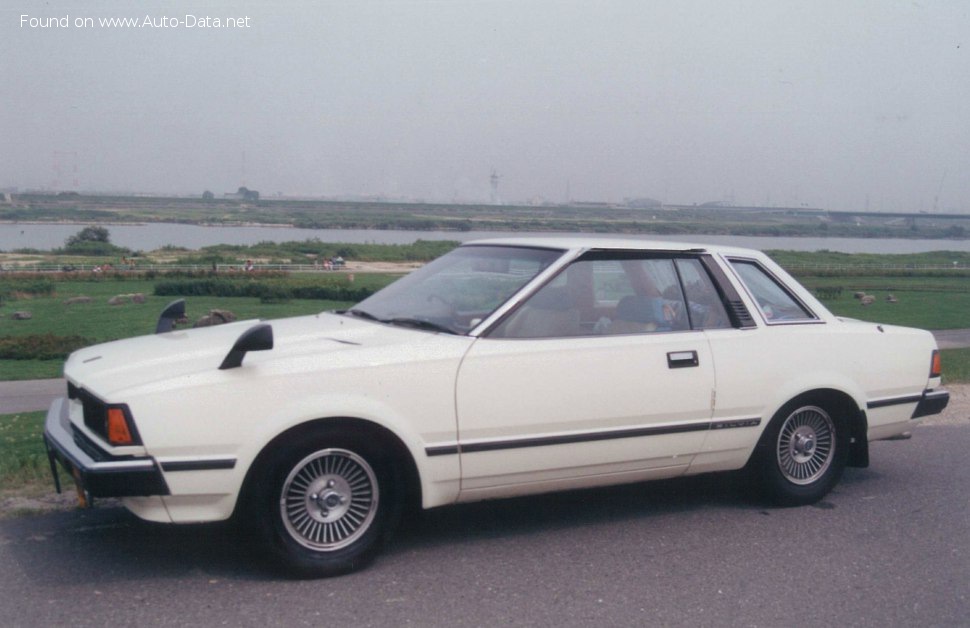
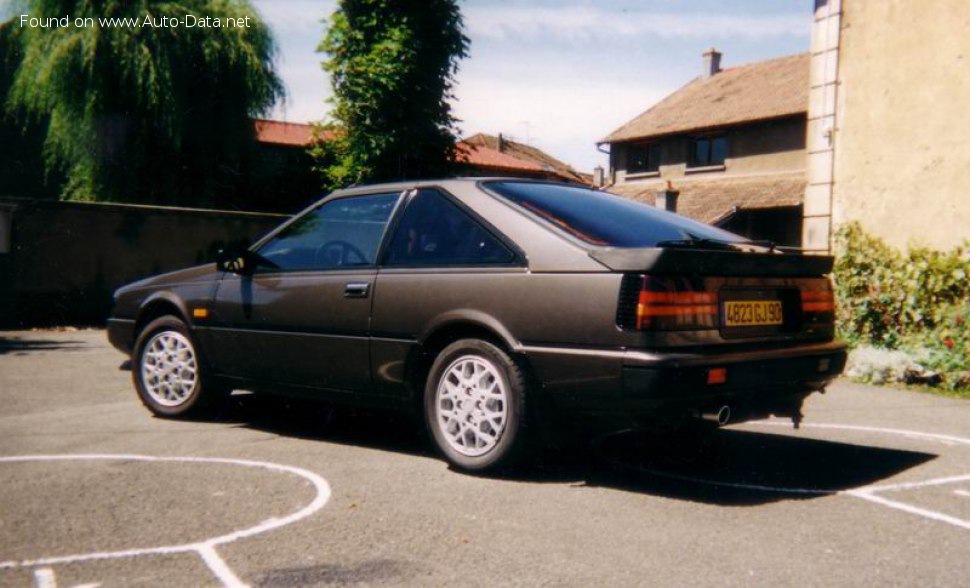
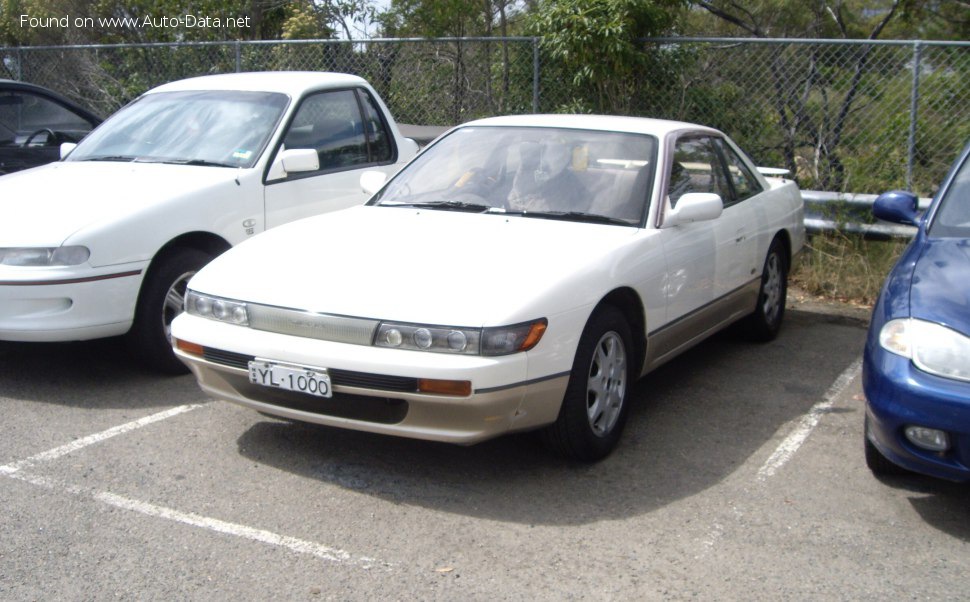
The Nissan Silvia (S13) is instantly recognizable for its iconic design, which blended late-1980s aesthetics with a forward-looking sportiness. Its sleek, low-slung coupe body featured a distinctive “bubble top” greenhouse, lending an airy feel to the cabin and contributing to its aerodynamic profile. This particular generation of the Silvia, prior to its later facelift, was famous for its pop-up headlights, a popular design cue of the era that added to its sporty and somewhat futuristic appeal.
Measuring 175.98 inches (4470 mm) in length, 66.54 inches (1690 mm) in width, and 50.79 inches (1290 mm) in height, the S13 had compact dimensions that made it nimble and easy to maneuver. Its wheelbase of 97.44 inches (2475 mm) provided a stable platform, while the minimum turning circle of 30.84 feet (9.4 m) ensured good urban agility.
Inside, the Silvia (S13) offered seating for four, configured as a 2+2 layout, typical for a compact sports coupe. The interior was driver-focused, with clear instrumentation and ergonomic controls, reflecting Nissan’s emphasis on driving pleasure. For its time, standard features would have included power windows, air conditioning, and a decent audio system, balancing comfort with performance.
Underpinning the S13’s dynamic capabilities was its well-engineered chassis. The front suspension utilized a spring strut design, while the rear featured a dependent multi-link spring setup with telescopic shock absorbers. This combination provided a comfortable ride quality while maintaining excellent handling characteristics. Braking was handled by ventilated discs at the front and solid discs at the rear, offering reliable stopping power. The car rode on 195/60 R15 tires, mounted on 15-inch wheels, a common setup for performance cars of its generation.
Technical Specifications: Nissan Silvia (S13) 1.8T (175 Hp) Automatic
| Category | Specification | Metric / US Equivalent |
|---|---|---|
| General Information | ||
| Brand | Nissan | |
| Model | Silvia | |
| Generation | Silvia (S13) | |
| Engine Type | 1.8T (175 Hp) Automatic | |
| Production Start | 1988 | |
| Production End | 1990 | |
| Powertrain Architecture | Internal Combustion Engine | |
| Body Type | Coupe | |
| Seats | 4 | |
| Doors | 2 | |
| Performance Specs | ||
| Fuel Type | Petrol (Gasoline) | |
| Weight-to-Power Ratio | 6.6 kg/Hp | 150.9 Hp/tonne |
| Weight-to-Torque Ratio | 5.1 kg/Nm | 194.8 Nm/tonne |
| Engine Specs | ||
| Power | 175 Hp @ 6400 rpm | |
| Power per Liter | 96.7 Hp/l | |
| Torque | 226 Nm @ 4000 rpm | 166.69 lb.-ft. @ 4000 rpm |
| Engine Layout | Front, Longitudinal | |
| Engine Model/Code | CA18DET | |
| Engine Displacement | 1809 cm3 | 1.8 Liters / 110.39 cu. in. |
| Number of Cylinders | 4 | |
| Engine Configuration | Inline | |
| Cylinder Bore | 83 mm | 3.27 in. |
| Piston Stroke | 83.6 mm | 3.29 in. |
| Compression Ratio | 9.5:1 | |
| Valves per Cylinder | 4 | |
| Fuel Injection System | Multi-port manifold injection | |
| Engine Aspiration | Turbocharger | |
| Valvetrain | DOHC | |
| Engine Oil Capacity | 3.5 l | 3.7 US qt |
| Coolant Capacity | 7 l | 7.4 US qt |
| Space, Volume & Weights | ||
| Kerb Weight | 1160 kg | 2557.36 lbs. |
| Fuel Tank Capacity | 60 l | 15.85 US gal |
| Dimensions | ||
| Length | 4470 mm | 175.98 in. |
| Width | 1690 mm | 66.54 in. |
| Height | 1290 mm | 50.79 in. |
| Wheelbase | 2475 mm | 97.44 in. |
| Front Track | 1465 mm | 57.68 in. |
| Rear Track | 1460 mm | 57.48 in. |
| Minimum Turning Circle | 9.4 m | 30.84 ft. |
| Drivetrain, Brakes & Suspension | ||
| Drivetrain Architecture | The Internal combustion engine (ICE) drives the rear wheels of the vehicle. | |
| Drive Wheel | Rear Wheel Drive | |
| Gearbox Type | 4-speed automatic transmission | |
| Front Suspension | Spring Strut | |
| Rear Suspension | Dependent, multi-link spring with telescopic shock absorbers | |
| Front Brakes | Ventilated Discs | |
| Rear Brakes | Disc | |
| Tires Size | 195/60 R15 | |
| Wheel Rims Size | 15 inches | |
Legacy & Market Impact: The Enduring Appeal of the Silvia S13
The Nissan Silvia (S13) quickly established itself as a significant player in the Japanese domestic market, inheriting a lineage of popular Nissan sports coupes. Its combination of stylish design, a robust turbocharged engine (in the CA18DET and later SR20DET variants), and a highly capable rear-wheel-drive chassis made it an instant hit among performance enthusiasts. In Japan, it competed with models like the Toyota Celica (in its FWD form, though the Silvia offered a purer RWD sports car experience), Mazda RX-7 (FC generation), and Honda Prelude, carving out its niche as an affordable and highly tunable platform.
While the Silvia (S13) was not sold in the USA, its platform-mate, the Nissan 240SX (S13 chassis), became a cult classic. The 240SX was typically equipped with the naturally aspirated KA24E or KA24DE engines, which, while reliable, lacked the turbocharged punch of the JDM Silvia. This distinction only further elevated the allure of the JDM Silvia, leading to a vibrant import scene and numerous engine swaps in 240SX models to replicate the original Silvia’s performance.
The S13’s legacy is perhaps most profoundly felt in the world of motorsport, particularly in drifting. Its excellent weight distribution, strong engine, and easily modifiable suspension made it a perfect choice for competitive drifting. It became synonymous with the sport, helping to popularize drifting on a global scale. This association cemented its status as a JDM icon, celebrated for its raw driving feel and immense tuning potential.
Even decades after its production, the Nissan Silvia (S13) remains highly sought after by collectors, tuners, and motorsport enthusiasts. Its timeless design, engaging driving dynamics, and cultural significance ensure its place as one of the most beloved Japanese sports cars of its era, a true testament to Nissan’s engineering prowess and vision. The 1.8T Automatic variant, while less focused on pure track performance than its manual counterparts, nonetheless contributed to the Silvia’s broad appeal, offering a blend of comfort and turbocharged excitement that defined a generation of JDM legends.