Introduction: The Nissan Silvia (S13) 2.0T (205 Hp) Automatic – A JDM Legend
The Nissan Silvia (S13) 2.0T (205 Hp) Automatic, produced between 1991 and 1993, represents a pivotal moment in the history of Japanese sports coupes. As a highly coveted model from the S13 generation of the Nissan Silvia, this particular variant, equipped with the potent SR20DET turbocharged engine and an automatic transmission, carved out a significant niche in the Japanese Domestic Market (JDM). While its American counterpart, the 240SX, was largely offered with a less powerful naturally aspirated engine, the JDM Silvia S13 with the SR20DET became an icon, renowned for its sleek styling, advanced chassis, and formidable performance potential. It quickly gained a reputation as a driver’s car, laying the groundwork for its enduring legacy in motorsports, particularly in the burgeoning world of drifting.
The S13 generation marked a significant departure from its predecessors, introducing a more modern, rounded aesthetic and a sophisticated multi-link suspension system that dramatically improved handling dynamics. This combination of style, power, and agility solidified the Silvia’s position as a darling among enthusiasts and tuners, making the 2.0T (205 Hp) Automatic model a fascinating blend of performance and daily drivability for its era.
The Nissan Silvia (S13): A JDM Icon
Introduced in 1989, the S13 generation of the Nissan Silvia immediately captured attention with its “bubble” styling, which replaced the boxy lines of the previous S12. The Silvia S13 was offered in several trims and engine configurations in Japan, with the turbocharged SR20DET engine being the most sought-after for its performance capabilities. Unlike the North American 240SX, which primarily received the naturally aspirated KA24DE engine, the JDM Silvia was a true performance machine. This distinction made the SR20DET-equipped S13 Silvia a legendary vehicle in its home market and a highly desirable import for enthusiasts worldwide.
The S13 chassis was revolutionary for Nissan, featuring a multi-link rear suspension system that provided exceptional grip and handling balance—a significant upgrade over the semi-trailing arm setup found in many competitors. This technological leap, combined with a relatively lightweight body, made the Silvia S13 inherently agile and responsive. The model we’re examining, produced between 1991 and 1993, represents the later phase of the S13’s production, often referred to as the “Kouki” S13, which typically featured the more refined SR20DET engine. While the automatic transmission might seem counter-intuitive for a performance car to some, it offered a smoother, more relaxed driving experience, broadening the car’s appeal to a wider audience in Japan, where automatic transmissions were increasingly popular.
Engine and Performance: The Heart of the Beast
At the core of the Nissan Silvia (S13) 2.0T (205 Hp) Automatic lies the legendary SR20DET engine. This 2.0-liter (1998 cm3 or 121.93 cu. in.) inline-four powerplant is a marvel of engineering for its time. Featuring a Double Overhead Camshaft (DOHC) valvetrain with 16 valves (four per cylinder), it was designed for both efficiency and high output. The “T” in SR20DET signifies its most crucial component: a turbocharger, which, combined with a multi-port manifold injection system, allowed the engine to produce an impressive 205 horsepower at 6000 rpm.
Torque figures were equally compelling, with 202.83 lb.-ft. (275 Nm) available at a relatively low 4000 rpm, ensuring robust acceleration across the rev range. The engine’s “square” design, with an 86 mm (3.39 in.) cylinder bore and an 86 mm (3.39 in.) piston stroke, contributed to its excellent balance and high-revving nature. With a compression ratio of 9:1, the SR20DET offered a strong foundation for performance, further enhanced by its turbocharger, delivering a power output of 102.6 horsepower per liter—a remarkable figure for a production car in the early 1990s.
Despite being paired with a 4-speed automatic transmission, this Silvia variant still offered spirited performance. The automatic gearbox was tuned to handle the engine’s torque, providing smooth shifts and a comfortable driving experience, albeit without the direct engagement of a manual. The car’s relatively light kerb weight of 2579.41 lbs. (1170 kg) contributed to an excellent weight-to-power ratio of 5.7 kg/Hp (175.2 Hp/tonne), allowing for brisk acceleration and agile handling despite the automatic gearbox. The engine’s robust architecture and tunability have made it a favorite among aftermarket enthusiasts, cementing its status as one of Nissan’s most iconic four-cylinder engines.
Design and Features: Form Meets Function
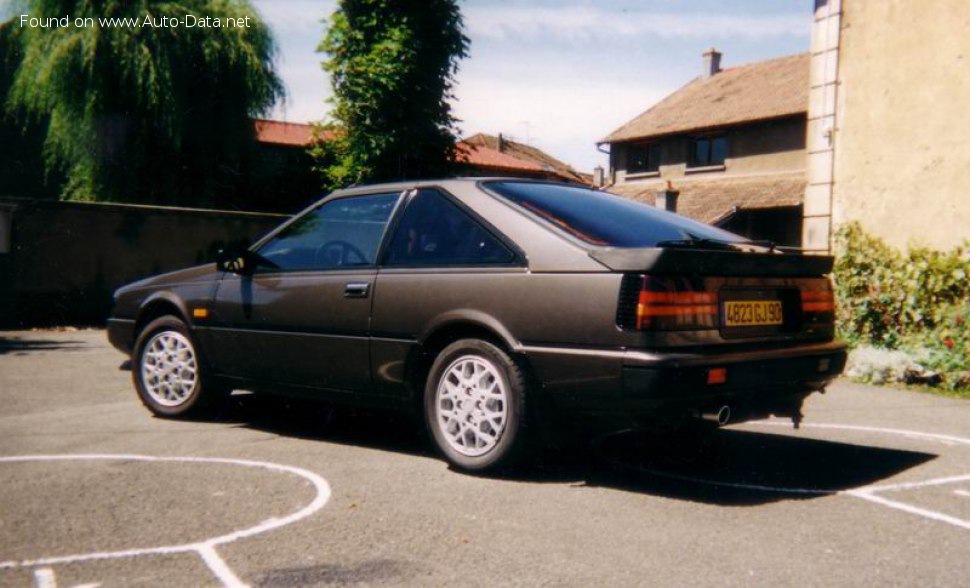
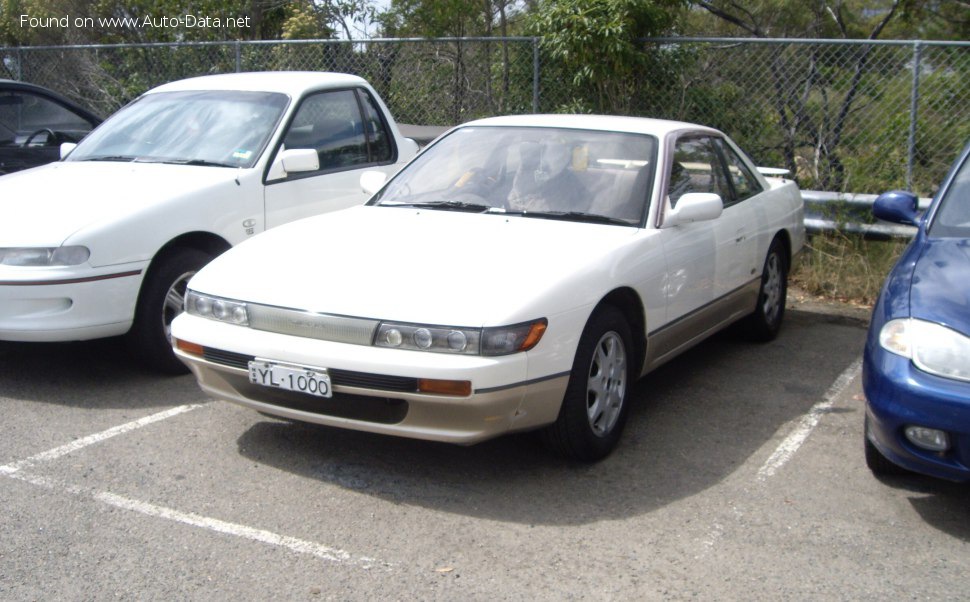
The Nissan Silvia (S13) 2.0T (205 Hp) Automatic embodies the sleek and modern design language that defined Japanese sports coupes of the early 1990s. As a two-door coupe with seating for four, its dimensions—175.98 inches (4470 mm) in length, 66.54 inches (1690 mm) in width, and 50.79 inches (1290 mm) in height—contributed to its compact and agile stance. The low-slung profile and wide track (57.68 inches front, 57.48 inches rear) gave it an aggressive, planted look, further accentuated by its clean lines and aerodynamic silhouette. This specific variant, being a later model S13, typically featured fixed headlights, offering a distinct visual identity compared to the pop-up headlights found on earlier S13 models (and the US 240SX “Zenki”).
Underneath its attractive skin, the S13 featured an advanced chassis for its time. The front suspension utilized a spring strut setup, while the rear employed a sophisticated dependent multi-link spring system with telescopic shock absorbers. This multi-link design was a key factor in the Silvia’s renowned handling characteristics, offering precise control and excellent road feedback. Stopping power was provided by ventilated disc brakes at the front and solid disc brakes at the rear, a competent setup for a car of its performance level. The vehicle rode on 15-inch wheels, shod with 205/60R15 tires, providing a good balance of grip and ride comfort.
Inside, the Silvia’s cockpit was driver-focused, with controls intuitively placed and instrumentation clear and legible. While not extravagant, the interior was functional and comfortable, reflecting the era’s focus on performance and driving engagement. The 15.85 US gallon (60 liter) fuel tank provided a decent cruising range, and the car’s tight turning circle of 30.84 feet (9.4 m) made it surprisingly maneuverable in urban environments. The rear-wheel-drive architecture, coupled with its balanced chassis, was a deliberate design choice that underscored its sporting intentions, making it a joy to drive.
Technical Specifications
| Category | Specification | Value (US Units) |
|---|---|---|
| General Information | ||
| Brand | Nissan | |
| Model | Silvia | |
| Generation | Silvia (S13) | |
| Type (Engine) | 2.0T (205 Hp) Automatic | |
| Start of Production | 1991 year | |
| End of Production | 1993 year | |
| Powertrain Architecture | Internal Combustion engine | |
| Body type | Coupe | |
| Seats | 4 | |
| Doors | 2 | |
| Performance Specs | ||
| Fuel Type | Petrol (Gasoline) | |
| Weight-to-power ratio | 5.7 kg/Hp | 175.2 Hp/tonne |
| Weight-to-torque ratio | 4.3 kg/Nm | 235 Nm/tonne |
| Engine Specs | ||
| Power | 205 Hp @ 6000 rpm. | |
| Power per liter | 102.6 Hp/l | |
| Torque | 275 Nm @ 4000 rpm. | 202.83 lb.-ft. @ 4000 rpm. |
| Engine layout | Front, Longitudinal | |
| Engine Model/Code | SR20DET | |
| Engine displacement | 1998 cm3 | 121.93 cu. in. |
| Number of cylinders | 4 | |
| Engine configuration | Inline | |
| Cylinder Bore | 86 mm | 3.39 in. |
| Piston Stroke | 86 mm | 3.39 in. |
| Compression ratio | 9:1 | |
| Number of valves per cylinder | 4 | |
| Fuel injection system | Multi-port manifold injection | |
| Engine aspiration | Turbocharger | |
| Valvetrain | DOHC | |
| Engine oil capacity | 3.7 l | 3.91 US qt |
| Engine oil specification | Not specified | |
| Space, Volume and Weights | ||
| Kerb Weight | 1170 kg | 2579.41 lbs. |
| Fuel tank capacity | 60 l | 15.85 US gal |
| Dimensions | ||
| Length | 4470 mm | 175.98 in. |
| Width | 1690 mm | 66.54 in. |
| Height | 1290 mm | 50.79 in. |
| Wheelbase | 2475 mm | 97.44 in. |
| Front track | 1465 mm | 57.68 in. |
| Rear (Back) track | 1460 mm | 57.48 in. |
| Minimum turning circle (turning diameter) | 9.4 m | 30.84 ft. |
| Drivetrain, Brakes and Suspension Specs | ||
| Drivetrain Architecture | The Internal combustion engine (ICE) drives the rear wheels of the vehicle. | |
| Drive wheel | Rear wheel drive | |
| Number of gears and type of gearbox | 4 gears, automatic transmission | |
| Front suspension | Spring Strut | |
| Rear suspension | Dependent, multi-link spring with telescopic shock absorbers | |
| Front brakes | Ventilated discs | |
| Rear brakes | Disc | |
| Tires size | 205/60R15 | |
| Wheel rims size | 15 | |
Legacy and Market Impact: A Drifting Legend
The Nissan Silvia (S13) holds an indelible place in automotive history, particularly in the realm of Japanese performance cars. Its combination of a potent turbocharged engine, a sophisticated rear-wheel-drive chassis, and attractive styling made it an instant hit in the JDM. The S13 quickly gained a cult following, not just as a street car but as a dominant force in various forms of motorsport. Its balanced chassis and easily tunable SR20DET engine made it an ideal platform for drifting, a sport that was rapidly gaining popularity in Japan and would soon spread globally. The Silvia S13, alongside its hatchback variant, the 180SX (and the US-market 240SX), became synonymous with the sport, cementing its status as a drifting legend.
In its primary market, the Silvia S13 competed with other popular Japanese sports coupes and performance cars of the era, such as the Toyota Celica, Honda Prelude, Mazda RX-7 (FC3S generation), and even Nissan’s own 300ZX (Z32). However, the Silvia’s accessible price point, robust aftermarket support, and inherent tunability often gave it an edge, especially among younger enthusiasts. Its impact extended beyond racing circuits and mountain passes; the S13 became a staple in popular culture, appearing in numerous video games, anime series, and movies, further solidifying its iconic status.
Today, the Nissan Silvia (S13) 2.0T (205 Hp) Automatic, especially in its SR20DET configuration, is highly sought after by collectors and enthusiasts. Well-preserved, unmolested examples are becoming increasingly rare and valuable, a testament to its enduring appeal and historical significance. Its legacy is not just about raw performance but also about its role in shaping tuner culture and pioneering the global phenomenon of drifting. The S13 Silvia remains a benchmark for compact, rear-wheel-drive sports cars, a testament to Nissan’s engineering prowess and vision during a golden age of Japanese automotive innovation.