The Nissan Silvia (S15): A JDM Icon of Performance and Style
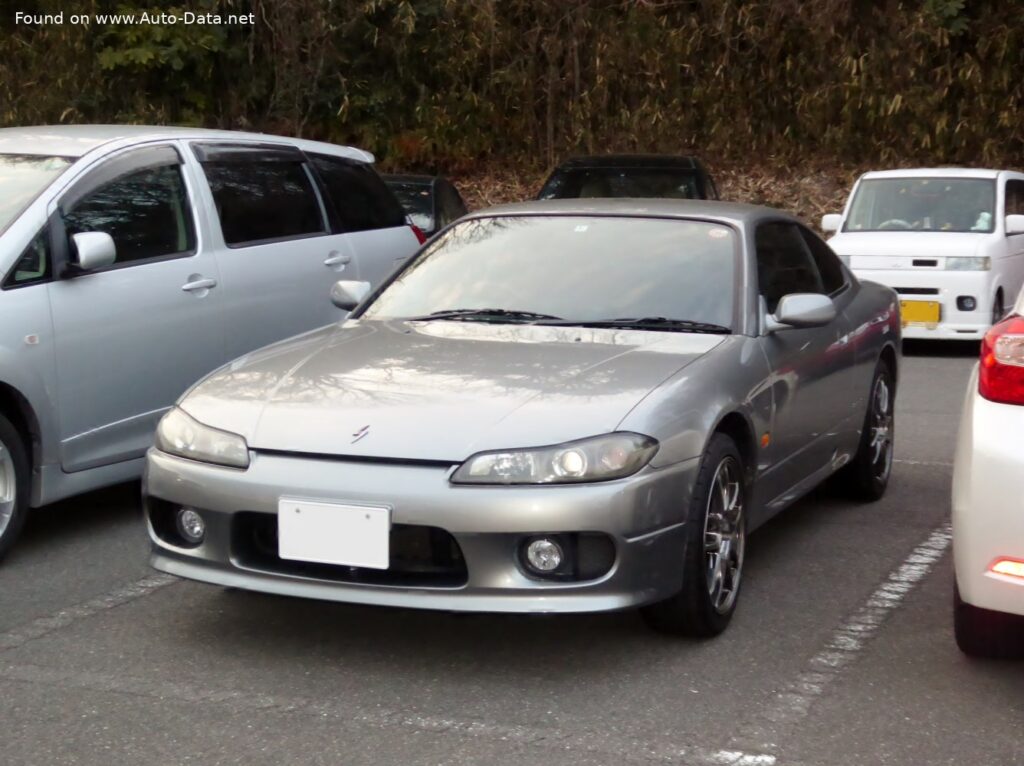
The Nissan Silvia (S15) represents the seventh and final generation of Nissan’s revered Silvia line of sport compact coupes. Produced from 1999 to 2002, the S15 was exclusively offered in its home market of Japan and select other regions, notably Australia and New Zealand, but was never officially imported to the United States. Despite its limited official distribution, the Nissan Silvia (S15) rapidly achieved legendary status among automotive enthusiasts worldwide, particularly within the drifting and tuning communities. It is celebrated for its potent turbocharged engine, balanced rear-wheel-drive chassis, and sharp, aggressive styling, cementing its place as one of the most desirable Japanese Domestic Market (JDM) performance cars of its era.
Engine and Performance of the Nissan Silvia (S15)
At the heart of the high-performance Silvia (S15) variant, specifically the 2.0 i 16V T model, lies the legendary SR20DET engine. This 1,998 cubic centimeter (approximately 2.0-liter) inline-four powertrain is a marvel of engineering, featuring a double overhead camshaft (DOHC) valvetrain and a robust turbocharger. This setup allowed the engine to produce an impressive 250 horsepower at 6400 revolutions per minute, delivering a specific output of 125.1 horsepower per liter. Torque figures were equally compelling, peaking at 202.09 pound-feet (274 Nm) at 4800 rpm, providing a strong, usable powerband for both street driving and track performance.
The SR20DET engine was longitudinally mounted in the front of the vehicle, driving the rear wheels, a classic sports car configuration that contributed significantly to the S15’s dynamic handling characteristics. Power was channeled through a precise 6-speed manual transmission, offering drivers direct control over the engine’s output and enhancing the engaging driving experience. This powertrain architecture, combined with a relatively low curb weight of 2,777.82 pounds (1260 kg), resulted in an excellent weight-to-power ratio of 5 kg per horsepower (or 198.4 horsepower per ton), allowing the Silvia (S15) 2.0 i 16V T to reach a top speed of 146.02 miles per hour (235 km/h).
Despite its performance orientation, the S15 also offered reasonable fuel efficiency for a turbocharged sports car, with an urban consumption rate of approximately 26.7 US miles per gallon (8.8 liters per 100 km). The engine’s robust design, featuring an 8.5:1 compression ratio, multi-port manifold injection, and 4 valves per cylinder, made it a favored platform for aftermarket tuning and modifications, further cementing its appeal among enthusiasts looking to extract even more performance.
Design and Features
The Nissan Silvia (S15) carried forward the elegant, yet aggressive design language that had defined previous Silvia generations, but with a more contemporary and sharper edge. As a two-door coupe, it offered seating for four, though the rear seats were typically snug, characteristic of a 2+2 sports car. Its sleek profile was defined by a length of 175 inches (4445 mm), a width of 66.73 inches (1695 mm), and a low height of 50.59 inches (1285 mm), giving it a squat, purposeful stance.
The S15’s design featured distinctive headlights and a more aerodynamic body kit compared to its predecessor, the S14. Inside, the cabin was driver-focused, with clear instrumentation and supportive seating, reflecting its performance intent. While specific luxury features varied by trim, the core emphasis was on a functional and engaging driving environment. Safety was addressed with an Anti-lock Braking System (ABS) as standard, complementing the powerful braking system which featured ventilated discs at the front and solid discs at the rear.
The chassis was designed for agility and responsiveness. It utilized coil spring suspension both at the front and rear, providing a firm yet compliant ride suitable for spirited driving. A hydraulic power steering system ensured precise control and good feedback to the driver. The car rode on 205/55 R16 tires, offering a good balance of grip and ride comfort. Its tight turning circle of 32.15 feet (9.8 meters) further enhanced its maneuverability in urban environments and on twisty roads.
Technical Specifications: Nissan Silvia (S15) 2.0 i 16V T (250 Hp)
| General Information | |
|---|---|
| Brand | Nissan |
| Model | Silvia |
| Generation | Silvia (S15) |
| Type (Engine) | 2.0 i 16V T (250 Hp) |
| Start of Production | 1999 |
| End of Production | 2002 |
| Powertrain Architecture | Internal Combustion Engine |
| Body Type | Coupe |
| Seats | 4 |
| Doors | 2 |
| Performance Specifications | |
| Fuel Consumption (Urban) | 8.8 l/100 km (26.7 US mpg) |
| Fuel Type | Petrol (Gasoline) |
| Maximum Speed | 235 km/h (146.02 mph) |
| Weight-to-Power Ratio | 5 kg/Hp (198.4 Hp/tonne) |
| Weight-to-Torque Ratio | 4.6 kg/Nm (217.5 Nm/tonne) |
| Engine Specifications | |
| Power | 250 Hp @ 6400 rpm |
| Power per Liter | 125.1 Hp/l |
| Torque | 274 Nm @ 4800 rpm (202.09 lb.-ft. @ 4800 rpm) |
| Engine Layout | Front, Longitudinal |
| Engine Model/Code | SR20DET |
| Engine Displacement | 1998 cm³ (121.93 cu. in.) |
| Number of Cylinders | 4 |
| Engine Configuration | Inline |
| Cylinder Bore | 86 mm (3.39 in.) |
| Piston Stroke | 86 mm (3.39 in.) |
| Compression Ratio | 8.5:1 |
| Number of Valves per Cylinder | 4 |
| Fuel Injection System | Multi-port manifold injection |
| Engine Aspiration | Turbocharger |
| Valvetrain | DOHC |
| Engine Oil Capacity | 3.5 l (3.7 US qt) |
| Engine Oil Specification | Specific engine oil specification was not publicly detailed in standard documentation. |
| Coolant Capacity | 7 l (7.4 US qt) |
| Space, Volume, and Weights | |
| Kerb Weight | 1260 kg (2777.82 lbs) |
| Max. Weight (GVWR) | 1780 kg (3924.23 lbs) |
| Max Load | 520 kg (1146.4 lbs) |
| Trunk (Boot) Space – Minimum | 240 l (8.48 cu. ft.) |
| Fuel Tank Capacity | 65 l (17.17 US gal) |
| Dimensions | |
| Length | 4445 mm (175 in.) |
| Width | 1695 mm (66.73 in.) |
| Height | 1285 mm (50.59 in.) |
| Wheelbase | 2525 mm (99.41 in.) |
| Front Track | 1480 mm (58.27 in.) |
| Rear (Back) Track | 1470 mm (57.87 in.) |
| Minimum Turning Circle | 9.8 m (32.15 ft.) |
| Drivetrain, Brakes, and Suspension | |
| Drivetrain Architecture | Front-engine, Rear-wheel drive |
| Drive Wheel | Rear wheel drive |
| Number of Gears and Type of Gearbox | 6 gears, manual transmission |
| Front Suspension | Coil spring |
| Rear Suspension | Coil spring |
| Front Brakes | Ventilated discs |
| Rear Brakes | Disc |
| Assisting Systems | ABS (Anti-lock braking system) |
| Power Steering | Hydraulic Steering |
| Tires Size | 205/55 R16 |
Legacy and Market Impact of the Nissan Silvia (S15)
The Nissan Silvia (S15) holds a distinctive and revered place in automotive history, particularly within the JDM enthusiast community. As the swan song of the Silvia series, it represented the culmination of decades of development in affordable, rear-wheel-drive sports coupes from Nissan. Its aggressive styling, potent SR20DET engine, and highly tunable chassis made it an instant favorite for tuning, track driving, and especially drifting. The S15 quickly became a dominant force in professional drift series around the world, including D1 Grand Prix in Japan, cementing its reputation as a drift icon.
Despite never being officially sold in the North American market, the S15’s legend grew through video games, anime, and media that showcased its dynamic capabilities. This cultivated a strong desire among American enthusiasts, leading to a vibrant grey market for imported parts and even complete vehicles once they became eligible for import under the 25-year rule. Its rarity in the US further amplified its mystique and desirability.
In its primary markets, the S15 competed with other iconic Japanese sports cars of the era, such as the Honda S2000, Mazda RX-7, and even the larger Toyota Supra, though the Silvia typically occupied a more accessible price point. Its unique blend of performance, style, and customization potential allowed it to carve out its own niche. The discontinuation of the Silvia line after the S15 left a void that Nissan has yet to fully fill with a direct successor, making the S15 a significant marker in the brand’s history.
Today, the Nissan Silvia (S15) remains highly sought after by collectors and enthusiasts globally. Well-maintained examples command premium prices, and its aftermarket support continues to thrive. It is not just a car; it is a cultural phenomenon, a symbol of the golden age of Japanese performance cars, and a testament to Nissan’s engineering prowess in creating an enduring legend.