Nissan Skyline IX (R33) 2.0 i GTS (125 Hp): An In-Depth Look
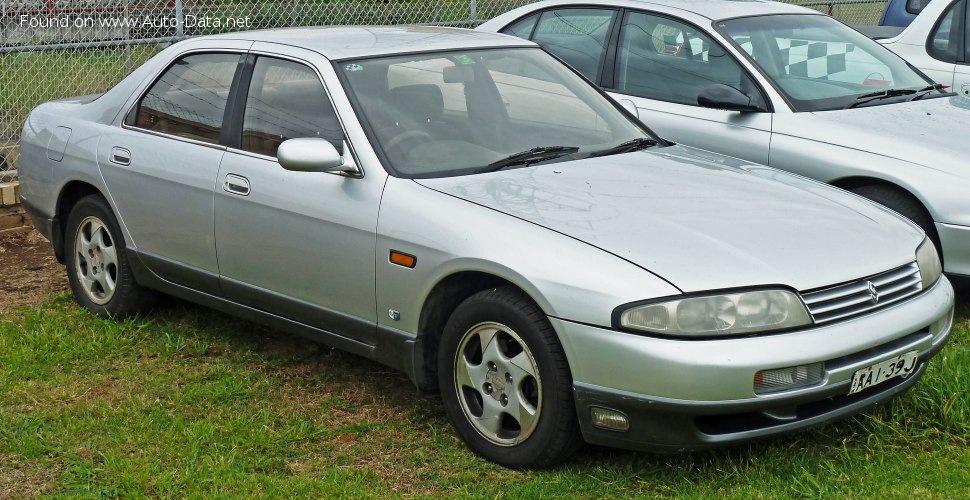
The Nissan Skyline IX (R33) 2.0 i GTS (125 Hp) represents a significant chapter in the storied history of the Nissan Skyline, a nameplate revered by automotive enthusiasts worldwide. Produced between 1995 and 1998, the R33 generation continued the Skyline’s evolution, transitioning from the more angular designs of its predecessors to a smoother, more aerodynamically refined aesthetic. While the R33 generation is perhaps most famously associated with its high-performance GT-R variant, the 2.0 i GTS sedan offered a more accessible and practical interpretation of the Skyline ethos, primarily serving the Japanese domestic market (JDM) as a reliable and comfortable mid-size sedan.
This particular variant, the 2.0 i GTS, was positioned as an entry-level offering within the R33 lineup, providing a balance of performance, fuel efficiency, and the inherent quality associated with the Skyline name. Unlike its more powerful siblings that garnered international acclaim, this sedan focused on daily usability and economical operation, making it a popular choice for Japanese families and commuters. Its architecture featured a conventional internal combustion engine driving the rear wheels, a hallmark of the Skyline series, combined with a five-speed manual transmission, offering an engaging yet unfussy driving experience.
Engine and Performance of the Nissan Skyline IX (R33) 2.0 i GTS (125 Hp)
At the heart of the Nissan Skyline IX (R33) 2.0 i GTS (125 Hp) lies the venerable RB20E engine, a naturally aspirated 2.0-liter (1998 cm3 or 121.93 cu. in.) inline-six cylinder unit. This engine, part of Nissan’s highly regarded RB series, was known for its smoothness and durability. With an overhead camshaft (OHC) valvetrain and a multi-port manifold injection system, it delivered a respectable 125 horsepower at 5600 rpm. The torque output stood at 172 Nm (126.86 lb.-ft.) at 4400 rpm, providing adequate thrust for city driving and highway cruising.
While not a powerhouse compared to the turbocharged RB25DET or RB26DETT engines found in other R33 variants, the RB20E was designed for efficiency and reliability. Its natural aspiration meant a linear power delivery and less mechanical complexity, contributing to lower maintenance costs and better fuel economy. The engine’s layout was front-longitudinal, contributing to the car’s balanced weight distribution and traditional rear-wheel-drive dynamics. The compression ratio of 9.5:1 was typical for naturally aspirated engines of its era, balancing power with the ability to run on regular unleaded gasoline.
Power was channeled to the rear wheels via a five-speed manual transmission, offering drivers direct control over the engine’s output. This combination provided an engaging driving experience, even with the more modest power figures. Fuel economy was a strong suit for this variant, with a combined rating of 7.2 liters per 100 kilometers (approximately 32.7 US mpg), making it an economical choice for its size and cylinder count. The car’s weight-to-power ratio of 10.2 kg/Hp (98.4 Hp/tonne) underscored its role as a capable daily driver rather than a performance machine, yet it retained the inherent chassis balance for which the Skyline was celebrated.
Design and Features
The Nissan Skyline IX (R33) generation marked a departure from the sharper lines of the R32, adopting a more curvaceous and elongated profile. The 2.0 i GTS was offered as a four-door sedan, providing practical seating for five occupants. Its overall length measured 4720 mm (185.83 in.), with a width of 1720 mm (67.72 in.) and a height of 1360 mm (53.54 in.). The wheelbase, at 2720 mm (107.09 in.), contributed to a stable ride and a spacious cabin for its class.
Aesthetically, the R33 sedan featured a somewhat softer, more mature design compared to its coupe counterpart. It maintained the iconic quad circular taillights, a signature element of the Skyline lineage, ensuring its identity was unmistakable even to a casual observer. The interior, while functional and durable, reflected the mid-1990s automotive design trends with a focus on ergonomics and straightforward controls. Standard features for the era included power steering, utilizing a hydraulic rack-and-pinion system for precise feedback. Safety was addressed with the inclusion of an Anti-lock Braking System (ABS), a significant feature for cars in this segment during the mid-90s.
The suspension system comprised a spring strut setup at the front and coil springs at the rear, a configuration designed to offer a comfortable ride while maintaining competent handling characteristics. Braking duties were handled by ventilated discs at the front and solid discs at the rear, providing reliable stopping power. The car rode on 185/70 R14 S tires, emphasizing comfort and efficiency over ultimate grip, aligning with its intended market position.
Technical Specifications
| Category | Specification | Value |
|---|---|---|
| Brand | Nissan | |
| Model | Skyline | |
| Generation | Skyline IX (R33) | |
| Type (Engine) | 2.0 i GTS (125 Hp) | |
| Start of Production | 1995 year | |
| End of Production | 1998 year | |
| Powertrain Architecture | Internal Combustion engine | |
| Body Type | Sedan | |
| Seats | 5 | |
| Doors | 4 | |
| Performance Specs | ||
| Fuel Consumption (Combined) | 7.2 l/100 km (32.7 US mpg) | |
| Fuel Type | Petrol (Gasoline) | |
| Weight-to-Power Ratio | 10.2 kg/Hp (98.4 Hp/tonne) | |
| Weight-to-Torque Ratio | 7.4 kg/Nm (135.4 Nm/tonne) | |
| Engine Specs | ||
| Power | 125 Hp @ 5600 rpm | |
| Power per Liter | 62.6 Hp/l | |
| Torque | 172 Nm @ 4400 rpm (126.86 lb.-ft.) | |
| Engine Layout | Front, Longitudinal | |
| Engine Model/Code | RB20E | |
| Engine Displacement | 1998 cm3 (2.0 liters / 121.93 cu. in.) | |
| Number of Cylinders | 6 | |
| Engine Configuration | Inline | |
| Cylinder Bore | 78 mm (3.07 in.) | |
| Piston Stroke | 69.7 mm (2.74 in.) | |
| Compression Ratio | 9.5:1 | |
| Valves per Cylinder | 2 | |
| Fuel Injection System | Multi-port manifold injection | |
| Engine Aspiration | Naturally aspirated engine | |
| Valvetrain | OHC | |
| Engine Oil Capacity | 4.2 l (4.44 US qt) | |
| Coolant Capacity | 8.5 l (8.98 US qt) | |
| Space, Volume and Weights | ||
| Kerb Weight | 1270 kg (2799.87 lbs.) | |
| Max. Weight | 1545 kg (3406.14 lbs.) | |
| Max Load | 275 kg (606.27 lbs.) | |
| Fuel Tank Capacity | 65 l (17.17 US gal) | |
| Dimensions | ||
| Length | 4720 mm (185.83 in.) | |
| Width | 1720 mm (67.72 in.) | |
| Height | 1360 mm (53.54 in.) | |
| Wheelbase | 2720 mm (107.09 in.) | |
| Front Track | 1480 mm (58.27 in.) | |
| Rear Track | 1470 mm (57.87 in.) | |
| Drivetrain, Brakes and Suspension Specs | ||
| Drivetrain Architecture | Internal combustion engine drives the rear wheels. | |
| Drive Wheel | Rear wheel drive | |
| Number of Gears and Type of Gearbox | 5 gears, manual transmission | |
| Front Suspension | Spring Strut | |
| Rear Suspension | Coil spring | |
| Front Brakes | Ventilated discs | |
| Rear Brakes | Disc | |
| Assisting Systems | ABS (Anti-lock braking system) | |
| Steering Type | Steering rack and pinion | |
| Power Steering | Hydraulic Steering | |
| Tires Size | 185/70 R14 S | |
Legacy and Market Impact
The Nissan Skyline IX (R33) generation, including the 2.0 i GTS sedan, holds a unique place in automotive history. While often overshadowed by the legendary R32 GT-R that preceded it and the R34 GT-R that followed, the R33 was a crucial evolutionary step for the Skyline. The 2.0 i GTS, in particular, exemplified the Skyline’s dual personality: on one hand, a high-performance icon, and on the other, a dependable, well-engineered family sedan.
In its primary market of Japan, the Nissan Skyline IX (R33) 2.0 i GTS (125 Hp) competed against other popular mid-size sedans of the era, such as the Toyota Mark II/Chaser, Honda Accord, and Mazda 626. Its inline-six engine, even in naturally aspirated form, offered a level of refinement and smoothness that many four-cylinder competitors couldn’t match. This, combined with its rear-wheel-drive architecture, gave it a distinct driving feel that resonated with buyers who appreciated traditional automotive engineering.
The R33 sedan’s reputation was built on its reliability, comfortable ride, and the inherent quality of Nissan’s engineering. It was a practical car that also carried the prestige of the Skyline nameplate. While it didn’t achieve the global recognition of the GT-R models, its contribution to the Skyline legacy lies in its role as a solid, everyday vehicle that kept the brand’s core values alive for a broader audience. Its robust RB20E engine and sturdy chassis meant that many of these vehicles served their owners faithfully for decades, a testament to their build quality.
Today, while the performance variants of the R33 command significant collector interest, the 2.0 i GTS sedan remains an accessible piece of JDM history. It offers enthusiasts a chance to experience the R33 generation’s design and engineering without the premium price tag of the GT-R models. Its relative rarity outside of Japan also makes it an interesting import for those seeking a unique and reliable classic Japanese sedan. The 2.0 i GTS sedan, therefore, stands as a quiet but significant contributor to the enduring legend of the Nissan Skyline.