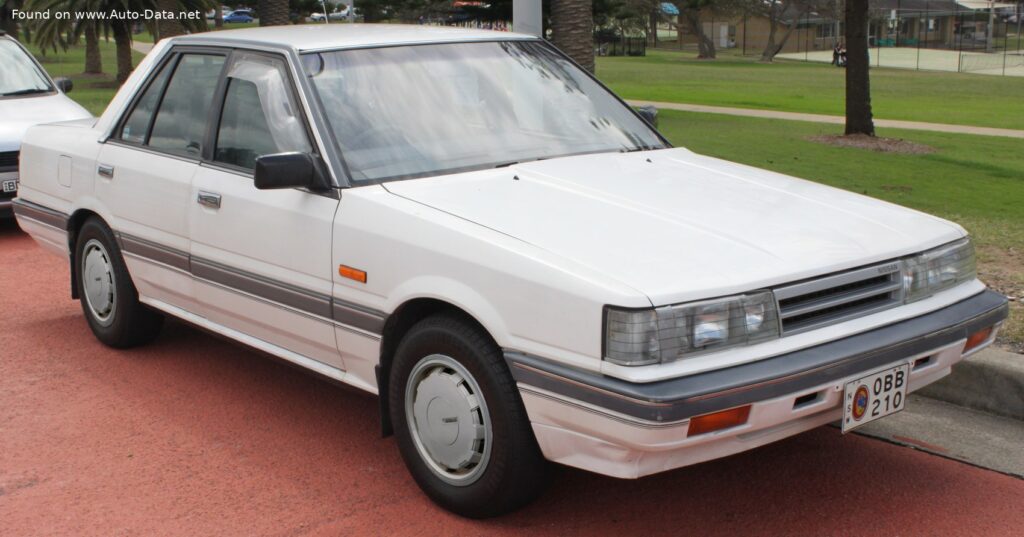
The Nissan Skyline VII (R31): A Bridge to Modern Performance
The Nissan Skyline, a name synonymous with Japanese automotive performance and innovation, has captivated enthusiasts for decades. Among its illustrious lineage, the seventh-generation model, known as the Nissan Skyline VII (R31), holds a unique and often underappreciated position. Produced from 1985 to 1995, the R31 represented a pivotal evolutionary step, moving the Skyline from its more traditional sedan roots towards the high-tech, performance-oriented machines that would define subsequent generations. This article focuses specifically on the Nissan Skyline VII (R31) 2.5 i R6 24V (180 Hp), a variant that offered a compelling blend of luxury, sophisticated engineering, and respectable power for its era.
Primarily aimed at the Japanese Domestic Market (JDM) and select export markets like Australia and South Africa, the R31 was not officially sold in the United States. Consequently, its impact in North America has largely been through enthusiast importation in later years. However, within its primary markets, the R31 was a significant player, available in various body styles including a four-door sedan (the focus of this analysis), a two-door coupe, and a station wagon. It introduced several technological advancements for Nissan, setting the stage for the legendary R32 GT-R that would follow. The 2.5 i R6 24V variant, with its robust inline-six engine, exemplified Nissan’s commitment to delivering a refined yet engaging driving experience in a practical sedan package.
Engine & Performance: The Heart of the Nissan Skyline VII (R31)
At the core of the Nissan Skyline VII (R31) 2.5 i R6 24V (180 Hp) lies a powertrain architecture designed for smooth, reliable power delivery characteristic of Nissan’s engineering prowess. This particular model is equipped with a 2.5-liter (2498 cm3 or 152.44 cu. in.) naturally aspirated inline-six engine. Part of Nissan’s renowned RB-series engine family, this 24-valve unit features a multi-port manifold injection system, ensuring efficient fuel delivery and combustion. With a compression ratio of 10:1, it was engineered to extract maximum power from gasoline fuel.
The engine generates a healthy 180 horsepower at 6000 rpm, a substantial output for a naturally aspirated 2.5-liter engine in the mid-1980s. Torque peaks at 166.69 lb.-ft. (226 Nm) at 5200 rpm, providing ample pulling power across a broad rev range. This power is transmitted to the rear wheels via a precise 5-speed manual transmission, offering a direct and engaging driving experience. The powertrain architecture, with its front, longitudinal engine layout and rear-wheel drive, is a classic configuration favored by enthusiasts for its balanced dynamics and performance potential.
In terms of outright speed, the Nissan Skyline VII (R31) 2.5 i R6 24V could achieve a maximum speed of 133.59 mph (215 km/h), making it a swift performer for its segment. Its weight-to-power ratio of 7.4 kg/Hp (approximately 16.3 lbs/Hp) and weight-to-torque ratio of 5.9 kg/Nm (approximately 13.0 lbs/lb.-ft.) highlight its capability as a sports sedan. Fuel economy, while not its primary focus, was rated at approximately 16.8 US mpg in urban conditions and 26.1 US mpg on the extra-urban cycle, which was competitive for a powerful inline-six sedan of its size and era.
Design & Features: A Blend of Form and Function
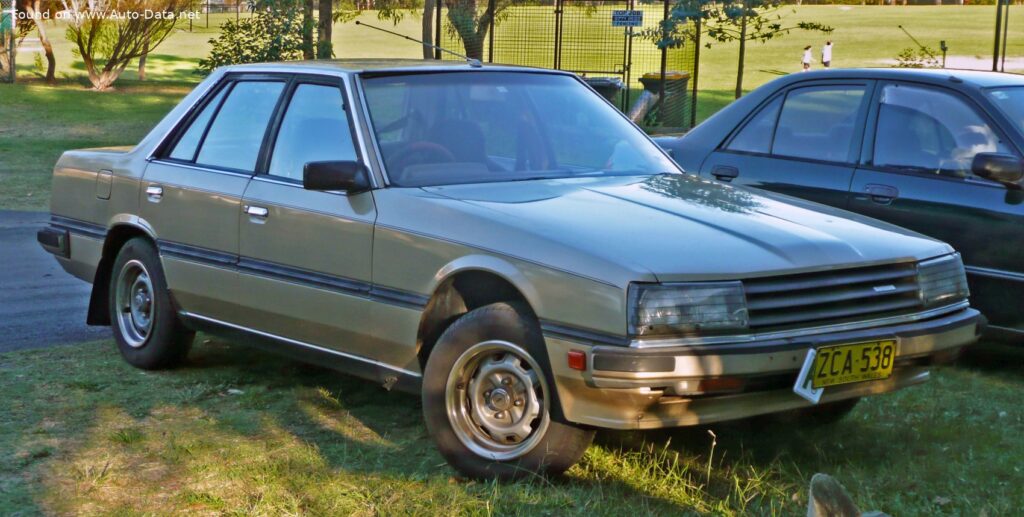
The Nissan Skyline VII (R31) sedan embodies the automotive design language of the mid-to-late 1980s. While retaining some of the angularity of its predecessors, it began to incorporate smoother lines and a more aerodynamic profile, signaling a shift towards modern aesthetics. The sedan body type, with its four doors and five seats, emphasized practicality and comfort, making it a versatile vehicle for daily driving and longer journeys.
Measuring 180.31 inches (4580 mm) in length, 66.73 inches (1695 mm) in width, and 52.76 inches (1340 mm) in height, the R31 sedan had a substantial road presence. Its wheelbase of 102.95 inches (2615 mm) contributed to a stable ride and a spacious cabin. The front and rear tracks, both 57.48 inches (1460 mm), provided a solid stance and contributed to predictable handling. The curb weight of 2954.19 lbs (1340 kg) indicates a sturdy build quality, characteristic of Japanese vehicles from this period.
Beyond its dimensions, the R31 incorporated features that enhanced both safety and driving dynamics. The vehicle was equipped with ventilated disc brakes at the front and disc brakes at the rear, providing strong stopping power. Notably, the inclusion of ABS (Anti-lock Braking System) was a significant safety feature for its time, offering improved control during hard braking. Hydraulic power steering made maneuvering the sedan effortless, while the 205/60 HR15 tires provided a good balance of grip and ride comfort. The 60-liter (15.85 US gallon) fuel tank offered a decent cruising range, fitting its role as a capable grand tourer.
Technical Specifications: Nissan Skyline VII (R31) 2.5 i R6 24V (180 Hp)
| Category | Specification | US Equivalent (where applicable) |
|---|---|---|
| General Information | ||
| Brand | Nissan | |
| Model | Skyline | |
| Generation | Skyline VII (R31) | |
| Engine Type | 2.5 i R6 24V | |
| Production Start | 1985 year | |
| Production End | 1995 year | |
| Powertrain Architecture | Internal Combustion engine | |
| Body type | Sedan | |
| Seats | 5 | |
| Doors | 4 | |
| Performance Specs | ||
| Fuel Consumption (Urban) | 14 l/100 km | 16.8 US mpg |
| Fuel Consumption (Extra Urban) | 9 l/100 km | 26.1 US mpg |
| Fuel Type | Petrol (Gasoline) | |
| Maximum Speed | 215 km/h | 133.59 mph |
| Weight-to-power ratio | 7.4 kg/Hp | 16.31 lbs/Hp |
| Weight-to-torque ratio | 5.9 kg/Nm | 13.01 lbs/lb.-ft. |
| Engine Specs | ||
| Power | 180 Hp @ 6000 rpm | |
| Power per liter | 72.1 Hp/l | |
| Torque | 226 Nm @ 5200 rpm | 166.69 lb.-ft. @ 5200 rpm |
| Engine layout | Front, Longitudinal | |
| Engine displacement | 2498 cm3 | 2.5 Liters / 152.44 cu. in. |
| Number of cylinders | 6 | |
| Engine configuration | Inline | |
| Cylinder Bore | 86 mm | 3.39 in. |
| Piston Stroke | 71.7 mm | 2.82 in. |
| Compression ratio | 10:1 | |
| Number of valves per cylinder | 4 | |
| Fuel injection system | Multi-port manifold injection | |
| Engine aspiration | Naturally aspirated engine | |
| Space, Volume and Weights | ||
| Kerb Weight | 1340 kg | 2954.19 lbs |
| Fuel tank capacity | 60 l | 15.85 US gal |
| Dimensions | ||
| Length | 4580 mm | 180.31 in. |
| Width | 1695 mm | 66.73 in. |
| Height | 1340 mm | 52.76 in. |
| Wheelbase | 2615 mm | 102.95 in. |
| Front track | 1460 mm | 57.48 in. |
| Rear (Back) track | 1460 mm | 57.48 in. |
| Drivetrain, Brakes and Suspension Specs | ||
| Drivetrain Architecture | Internal combustion engine (ICE) drives the rear wheels. | |
| Drive wheel | Rear wheel drive | |
| Number of gears and type of gearbox | 5 gears, manual transmission | |
| Front brakes | Ventilated discs | |
| Rear brakes | Disc | |
| Assisting systems | ABS (Anti-lock braking system) | |
| Power steering | Hydraulic Steering | |
| Tires size | 205/60 HR15 | |
Legacy & Market Impact of the Nissan Skyline VII (R31)
The Nissan Skyline VII (R31), particularly the 2.5 i R6 24V variant, holds a distinct place in automotive history. While often overshadowed by the subsequent R32 generation’s GT-R dominance, the R31 was a crucial model that bridged the gap between the more traditional, boxy Skylines and the high-performance, technologically advanced models that would follow. In its primary markets, especially Japan, it was marketed as a sophisticated and capable grand tourer, offering a blend of comfort, luxury, and engaging driving dynamics.
Competitors in the Japanese market included other mid-size luxury and sports sedans such as the Toyota Mark II (and its Chaser/Cresta siblings) and the Mazda 929 (Luce). The R31 stood out with its legendary RB-series inline-six engine, which even in naturally aspirated form, offered a smooth power delivery and a distinctive engine note that endeared it to enthusiasts. The robust construction and reliability of the R31 also contributed to its strong reputation, ensuring a relatively long service life.
The R31 generation was instrumental in introducing several innovations that would become hallmarks of future Skylines, including the HICAS four-wheel steering system (though not present on all variants, including this specific 2.5L model in the data, its introduction within the R31 generation was significant). Its styling, while perhaps dated by modern standards, represents a period of transition, moving away from overtly sharp edges towards a more rounded, yet still assertive, aesthetic. The availability of a powerful 2.5-liter, 24-valve engine further cemented the R31’s position as a serious contender in the performance sedan segment.
Today, the Nissan Skyline VII (R31) is considered a cult classic, particularly among JDM collectors and tuners. Its robust RB engine platform, even the naturally aspirated versions, provides a solid foundation for modifications. The R31’s understated elegance, combined with its rear-wheel-drive dynamics and manual transmission, offers a purist driving experience that is increasingly rare in modern vehicles. It remains a testament to Nissan’s engineering prowess and its enduring legacy in creating vehicles that are both functional and exhilarating to drive.