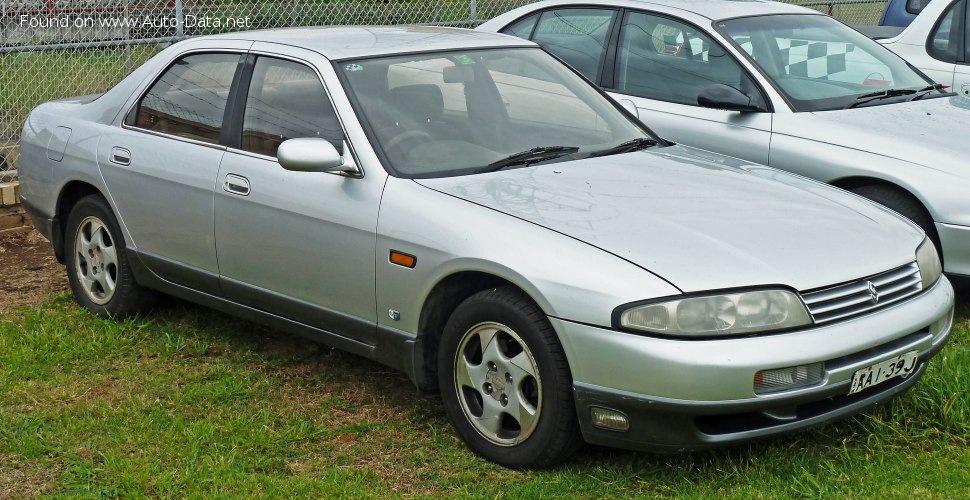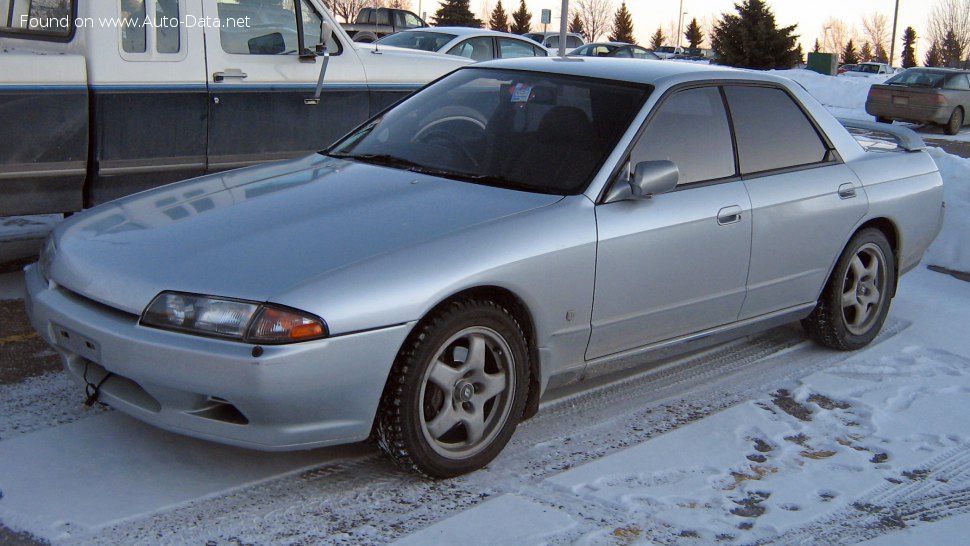
The Nissan Skyline VIII (R32) 2.6 R6 Turbo (220 Hp) 4WD Super HICAS Automatic: A Japanese Performance Sedan Icon
The Nissan Skyline VIII, commonly known by its chassis code R32, represents a pivotal generation in the storied history of the Nissan Skyline. While the R32 generation is most famously associated with the legendary GT-R “Godzilla,” which dominated motorsport and captivated enthusiasts worldwide, the broader Skyline lineup offered a diverse range of models catering to various market segments. Among these was the Nissan Skyline VIII (R32) 2.6 R6 Turbo (220 Hp) 4WD Super HICAS Automatic sedan, a sophisticated and technologically advanced performance sedan produced from November 1991 to June 1993. This particular variant, while not reaching the same legendary status as its twin-turbo, manual transmission GT-R sibling, nevertheless showcased Nissan’s engineering prowess, blending spirited performance with the practicality of a four-door sedan and the cutting-edge all-wheel-drive and four-wheel-steering technologies that defined the R32 era.
Primarily marketed in Japan, where the Skyline nameplate held immense cultural significance, this R32 sedan was designed to appeal to buyers seeking a blend of executive comfort, advanced driving dynamics, and a strong dose of performance. Its role in the Japanese domestic market (JDM) was to offer a high-performance alternative to more traditional luxury sedans, leveraging the motorsport-bred technology of the Skyline family. For international automotive enthusiasts, particularly in the United States, the R32 Skyline, in all its forms, has garnered a cult following, celebrated for its robust engineering, tuning potential, and distinctive styling, becoming a highly sought-after import under various vehicle import regulations.
Engine & Performance of the Nissan Skyline VIII (R32)
At the heart of this particular Nissan Skyline VIII (R32) sedan was a formidable 2.6-liter inline-six engine, designated RB26DE, but crucially, it featured a turbocharger and intercooler, as indicated by its full title. This configuration delivered a robust 220 horsepower at 6800 rpm and 180.7 lb-ft of torque at 5200 rpm. While the engine code RB26DE typically denotes a naturally aspirated unit, the “Turbo” in the model name signifies a factory-fitted or specific market variant that integrated forced induction, providing a significant boost in performance over its naturally aspirated counterparts. This engine was a testament to Nissan’s commitment to the inline-six architecture, renowned for its inherent balance and smooth power delivery, making it an ideal candidate for turbocharging.
Power was efficiently managed by a 5-speed automatic transmission, offering a more relaxed driving experience compared to the manual transmissions often found in its more aggressive GT-R brethren, yet still capable of handling the engine’s output with precision. The powertrain architecture featured a front, longitudinal engine layout, driving all four wheels through a permanent all-wheel-drive system. This AWD system, combined with Nissan’s innovative Super HICAS (High Capacity Actively Controlled Steering) four-wheel steering, provided exceptional grip, stability, and agility, especially when navigating spirited roads or adverse weather conditions. The Super HICAS system dynamically adjusted the rear wheel angle to enhance cornering performance and high-speed stability, a technology considered advanced for its time and a hallmark of Nissan’s performance vehicles.
Performance figures for this sedan were impressive for its class and era. It could reach a maximum speed of 155.34 mph (250 km/h), showcasing its capability as a genuine high-speed cruiser. The weight-to-power ratio stood at 6.7 kg/Hp, or approximately 148.6 Hp per tonne, indicating a well-balanced power delivery relative to its curb weight of 3262.84 lbs (1480 kg). Fuel economy, while not the primary focus of a performance sedan, was rated at an estimated 11.8 US mpg in urban driving and a more respectable 21.4 US mpg on the extra-urban cycle, figures typical for a turbocharged, all-wheel-drive vehicle of its size and power from the early 1990s.
Design & Features
The Nissan Skyline VIII (R32) 2.6 R6 Turbo (220 Hp) 4WD Super HICAS Automatic adopted the sleek and aerodynamic four-door sedan body type that defined the R32 generation. Measuring 180.31 inches (4580 mm) in length, 66.73 inches (1695 mm) in width, and 53.54 inches (1360 mm) in height, the R32 sedan presented a compact yet assertive stance. Its design language was characterized by clean lines, a relatively low roofline, and a purposeful, sporty aesthetic that hinted at its underlying performance capabilities without being overtly aggressive. The four-door configuration provided practical access for five occupants, blending daily usability with its performance aspirations.
Inside, the R32 sedan offered a driver-focused cockpit with clear instrumentation and ergonomic controls. While specific interior amenities would vary by trim, the general design emphasized functionality and comfort. Standard features for a car of its caliber in the early 1990s would have included power windows, air conditioning, and a quality audio system. From a safety perspective, the inclusion of ABS (Anti-lock Braking System) was a significant feature, enhancing braking control and preventing wheel lock-up during emergency stops, a crucial addition for a performance vehicle. The 4-wheel steering (Super HICAS) system not only improved handling but also contributed to overall vehicle stability and driver confidence.
Underpinning the R32’s dynamic performance was a sophisticated suspension system. The front utilized a Spring Strut and Wishbone setup with a transverse stabilizer, while the rear featured a Spring Strut and Double Wishbone arrangement, also with a transverse stabilizer. This independent suspension architecture was finely tuned to deliver a balance of ride comfort and precise handling. Braking power was supplied by ventilated discs at the front, measuring 296 mm, and solid discs at the rear, at 292 mm, providing strong and consistent stopping performance. The vehicle rode on 225/55 R16 tires mounted on 6J x 16-inch wheel rims, a practical yet performance-oriented combination that offered a good balance of grip and ride quality.
Technical Specifications
| Category | Specification |
|---|---|
| Brand | Nissan |
| Model | Skyline |
| Generation | Skyline VIII (R32) |
| Type (Engine) | 2.6 R6 Turbo (220 Hp) 4WD Super HICAS Automatic |
| Production Start | November, 1991 |
| Production End | June, 1993 |
| Powertrain Architecture | Internal Combustion Engine |
| Body Type | Sedan |
| Seats | 5 |
| Doors | 4 |
| Fuel Consumption (Urban) | 11.8 US mpg (20 l/100 km) |
| Fuel Consumption (Extra Urban) | 21.4 US mpg (11 l/100 km) |
| Fuel Type | Petrol (Gasoline) |
| Maximum Speed | 155.34 mph (250 km/h) |
| Weight-to-Power Ratio | 6.7 kg/Hp, 148.6 Hp/tonne |
| Weight-to-Torque Ratio | 6 kg/Nm, 165.5 Nm/tonne |
| Power | 220 Hp @ 6800 rpm |
| Power per Liter | 85.6 Hp/l |
| Torque | 180.7 lb.-ft. (245 Nm) @ 5200 rpm |
| Engine Layout | Front, Longitudinal |
| Engine Model/Code | RB26DE |
| Engine Displacement | 2.6 l (2569 cm3, 156.77 cu. in.) |
| Number of Cylinders | 6 |
| Engine Configuration | Inline |
| Cylinder Bore | 3.39 in. (86 mm) |
| Piston Stroke | 2.9 in. (73.7 mm) |
| Compression Ratio | 10.5:1 |
| Valves per Cylinder | 4 |
| Fuel Injection System | Multi-port manifold injection |
| Engine Aspiration | Turbocharger, Intercooler |
| Valvetrain | DOHC |
| Engine Oil Capacity | 4.76 US qt (4.5 l) |
| Kerb Weight | 3262.84 lbs (1480 kg) |
| Max. Weight | 3869.11 lbs (1755 kg) |
| Max Load | 606.27 lbs (275 kg) |
| Fuel Tank Capacity | 15.85 US gal (60 l) |
| Length | 180.31 in. (4580 mm) |
| Width | 66.73 in. (1695 mm) |
| Height | 53.54 in. (1360 mm) |
| Wheelbase | 102.95 in. (2615 mm) |
| Front Track | 57.68 in. (1465 mm) |
| Rear (Back) Track | 57.68 in. (1465 mm) |
| Ride Height (Ground Clearance) | 5.91 in. (150 mm) |
| Minimum Turning Circle | 34.78 ft. (10.6 m) |
| Drivetrain Architecture | Permanent All-Wheel Drive (4×4) |
| Drive Wheel | All wheel drive (4×4) |
| Gearbox | 5 gears, automatic transmission |
| Front Suspension | Spring Strut, Wishbone, Transverse stabilizer |
| Rear Suspension | Spring Strut, Double wishbone, Transverse stabilizer |
| Front Brakes | Ventilated discs, 296 mm |
| Rear Brakes | Disc, 292 mm |
| Assisting Systems | ABS (Anti-lock braking system), 4-wheel steering (4WS, active rear steering) |
| Steering Type | Steering rack and pinion |
| Power Steering | Hydraulic Steering |
| Tires Size | 225/55 R16 |
| Wheel Rims Size | 6J x 16 |
Legacy & Market Impact of the Nissan Skyline VIII (R32)
The Nissan Skyline VIII (R32) generation holds an indelible place in automotive history, and while the GT-R variant often overshadows its siblings, models like the 2.6 R6 Turbo 4WD Super HICAS Automatic sedan played a crucial role in establishing the R32’s reputation for advanced technology and performance. In its primary Japanese market, this sedan appealed to a discerning clientele who desired the prestige and engineering excellence of a Skyline without necessarily needing the track-focused intensity of the GT-R. It competed effectively against other performance-oriented Japanese sedans of the era, such as the Toyota Mark II/Chaser and certain variants of the Mitsubishi Galant VR-4, offering a distinctive blend of luxury, technology, and driving engagement.
The R32 Skyline, including its sedan variants, was instrumental in showcasing Nissan’s technological leadership in the late 1980s and early 1990s. Features like the Super HICAS four-wheel steering and the sophisticated all-wheel-drive system were cutting-edge, demonstrating Nissan’s commitment to pushing the boundaries of automotive engineering. These technologies, initially developed for motorsport, trickled down into production models, elevating the driving experience across the Skyline range.
Beyond its initial market impact, the Nissan Skyline VIII (R32) has cultivated a significant legacy among car enthusiasts globally. Its distinctive styling, robust chassis, and the legendary RB-series engine platform have made it a favorite for modification and restoration. The R32’s eventual eligibility for import into markets like the United States under the 25-year rule has further solidified its cult status, bringing these once forbidden fruits to a wider audience of collectors and tuners. This particular turbocharged, AWD, and 4WS sedan variant, while less common than the GT-R or the rear-wheel-drive GTS-T, represents a unique piece of Skyline heritage, embodying the era’s blend of executive comfort with accessible performance technology. It stands as a testament to Nissan’s innovative spirit and the enduring appeal of the Skyline nameplate, proving that even outside the shadow of “Godzilla,” the R32 generation offered compelling and technologically advanced vehicles.