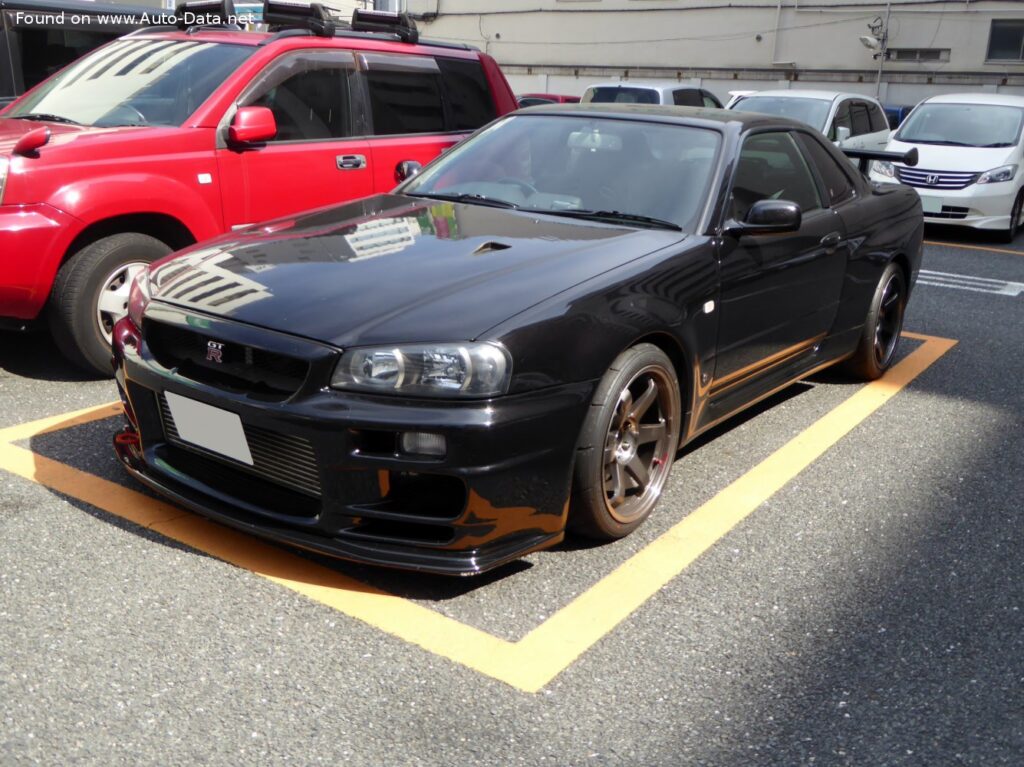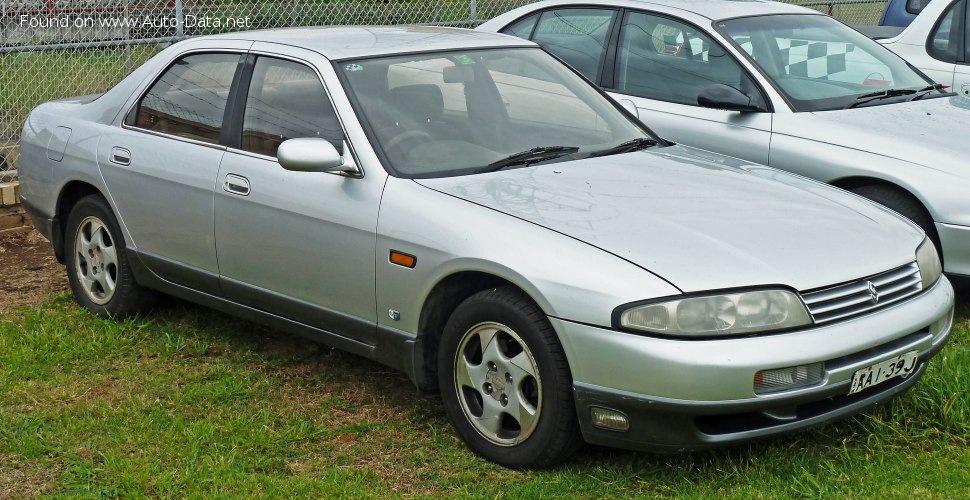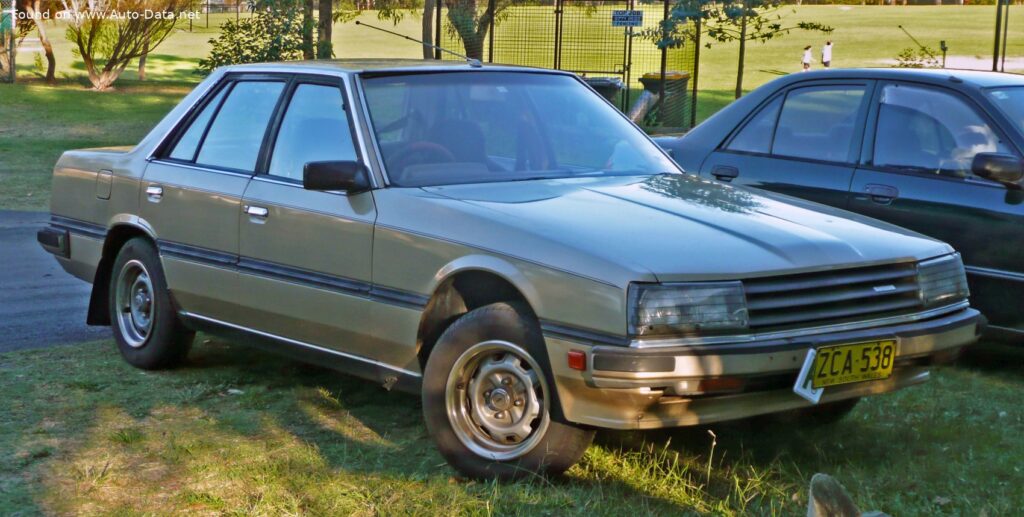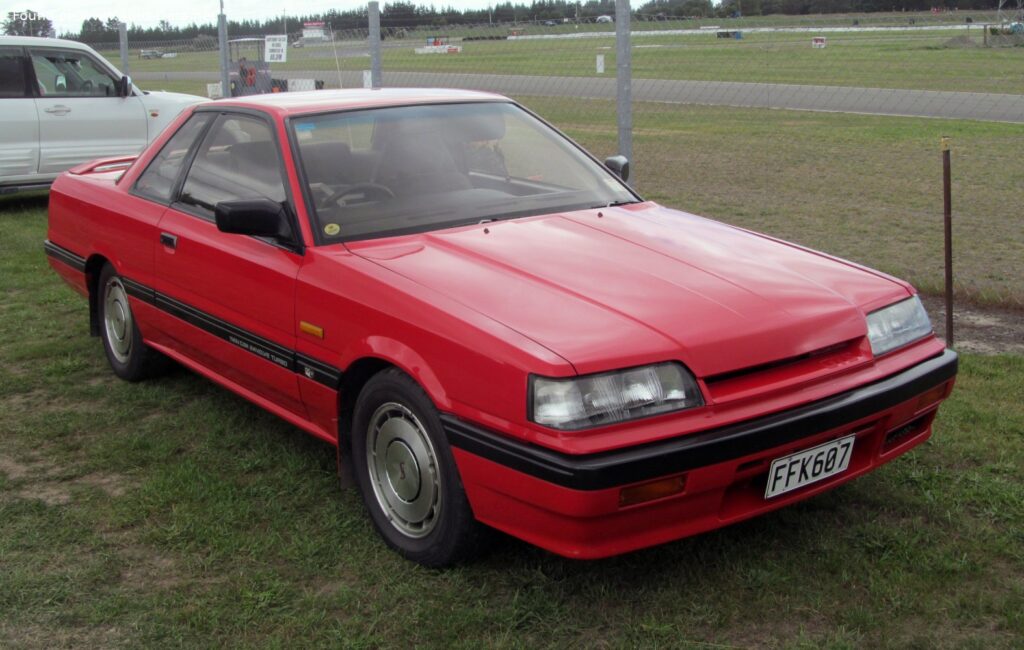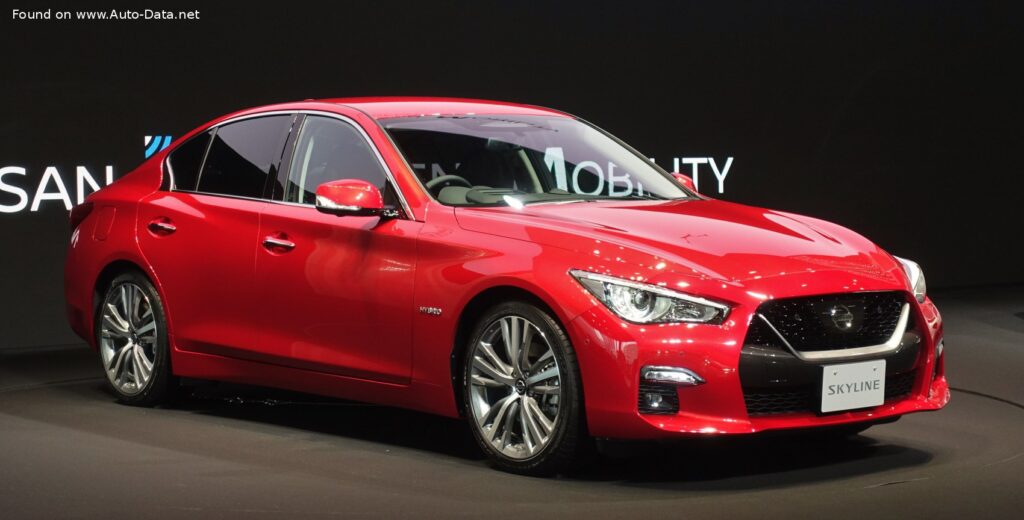
The Nissan Skyline XIII (HV37, facelift 2017) 3.0 V6 (305 Hp) Automatic: A Japanese Domestic Market Icon
The Nissan Skyline holds an almost mythical status in automotive history, particularly within its home market of Japan and among enthusiasts worldwide. The thirteenth generation, known by its chassis code HV37, continued this storied lineage, albeit in a form distinctly different from its performance-oriented GT-R brethren. The focus Keyword, Nissan Skyline XIII (HV37, facelift 2017) 3.0 V6 (305 Hp) Automatic, represents a significant iteration of this luxury sport sedan, produced from December 2017 until 2019. This facelifted model solidified its position as Nissan’s premium offering in the Japanese domestic market, serving as the brand’s sophisticated executive sedan, often paralleling the Infiniti Q50 sold internationally.
Positioned in the competitive mid-size luxury segment, the HV37 Skyline offered a compelling blend of advanced technology, refined performance, and elegant design. While many associate the Skyline name with raw, track-focused machines, the HV37 generation emphasized a more luxurious and comfortable driving experience, catering to discerning buyers seeking a blend of daily usability and spirited performance. The 2017 facelift brought subtle yet impactful updates to its aesthetics and, crucially, its powertrain, ensuring it remained relevant against formidable rivals in its class.
Engine and Performance: The Heart of the Nissan Skyline XIII (HV37, facelift 2017)
At the core of the Nissan Skyline XIII (HV37, facelift 2017) 3.0 V6 (305 Hp) Automatic lies the potent VR30DDTT engine, a testament to Nissan’s engineering prowess. This 3.0-liter V6 engine is a direct-injected, twin-turbocharged unit, delivering a robust 305 horsepower at 6400 rpm. The specific “DDTT” designation signifies its Direct Injection and Twin-Turbo setup, which are key to its impressive output and efficiency. Unlike many naturally aspirated engines, the VR30DDTT offers a broad and accessible torque curve, peaking at 295.02 lb.-ft. (400 Nm) across a wide range from 1600 to 5200 rpm. This characteristic ensures strong, immediate acceleration and effortless highway cruising, making it a highly responsive powertrain for various driving conditions.
The engine’s architecture features a V-engine configuration with six cylinders, each equipped with four valves, totaling 24 valves, operated by a Double Overhead Camshaft (DOHC) valvetrain. Its square bore and stroke measurements of 3.39 inches (86 mm) suggest a design optimized for both power and responsiveness. The compression ratio of 10.3:1 further aids in combustion efficiency. Fuel is delivered precisely via a direct injection system, while twin turbochargers, complemented by an intercooler, ensure dense air charge for maximum power output without excessive lag. This sophisticated setup allows the engine to achieve a power per liter rating of 101.8 Hp/l, showcasing its high specific output for a production V6.
Power is channeled to the rear wheels through a smooth and responsive 7-speed automatic transmission. This drivetrain architecture, with the internal combustion engine driving the rear wheels, is a hallmark of sport sedans, providing balanced handling characteristics and a more engaging driving feel. With a curb weight ranging from 3747.86 to 3814 pounds (1700-1730 kg), the vehicle achieves a weight-to-power ratio of 5.6 kg/Hp, or 179.4 Hp per tonne, indicating a lively performance envelope for its class. The intelligent design of the powertrain ensures that the Nissan Skyline XIII (HV37, facelift 2017) delivers both exhilarating performance and the refined manners expected of a premium sedan.
Design and Features
The 2017 facelift of the Nissan Skyline XIII (HV37) maintained its elegant sedan silhouette while incorporating subtle updates to enhance its contemporary appeal. As a four-door, five-seat sedan, it offers practicality alongside its sporty demeanor. The exterior design is characterized by flowing lines, a prominent grille, and updated lighting signatures that give it a more assertive and modern presence. While the exact design changes for the 2017 facelift are subtle, they typically involve revised bumpers, grille inserts, and updated LED headlamp and taillamp designs, aligning the car with Nissan’s evolving design language.
In terms of dimensions, the HV37 Skyline measures 189.37 inches (4810 mm) in length, 71.65 inches (1820 mm) in width, and 56.69 inches (1440 mm) in height. Its substantial wheelbase of 112.2 inches (2850 mm) contributes significantly to both interior space and ride comfort, providing ample legroom for rear passengers. The wide front and rear tracks (60.24-60.63 inches and 61.42-61.81 inches, respectively) not only give the car a planted stance but also contribute to its stable handling characteristics. A ground clearance of 5.12 inches (130 mm) is typical for a sport sedan, offering a balance between aerodynamic efficiency and practical urban navigation.
The suspension system is designed for a blend of comfort and dynamic control, featuring a double wishbone setup at the front and an independent multi-link suspension at the rear. This sophisticated arrangement helps to isolate road imperfections while maintaining precise wheel control during spirited driving. Braking performance is handled by ventilated discs on both the front and rear axles, ensuring strong and consistent stopping power. An Anti-lock Braking System (ABS) is standard, enhancing safety by preventing wheel lock-up under hard braking. The electric power steering system, with its rack and pinion setup, provides precise feedback and reduces effort at low speeds, contributing to a refined driving experience. The vehicle offers a choice of tire sizes, including 225/55 R17, 225/50 R18, and 245/40 R19, mounted on corresponding wheel rims, allowing for varying levels of grip and ride comfort.
Technical Specifications: Nissan Skyline XIII (HV37, facelift 2017) 3.0 V6 (305 Hp) Automatic
| Category | Specification |
|---|---|
| General Information | |
| Brand | Nissan |
| Model | Skyline |
| Generation | Skyline XIII (HV37, facelift 2017) |
| Type (Engine) | 3.0 V6 (305 Hp) Automatic |
| Start of production | December, 2017 year |
| End of production | 2019 year |
| Powertrain Architecture | Internal Combustion engine |
| Body type | Sedan |
| Seats | 5 |
| Doors | 4 |
| Performance Specs | |
| Fuel Type | Petrol (Gasoline) |
| Weight-to-power ratio | 5.6 kg/Hp, 179.4 Hp/tonne |
| Weight-to-torque ratio | 4.3 kg/Nm, 235.3 Nm/tonne |
| Engine Specs | |
| Power | 305 Hp @ 6400 rpm. |
| Power per liter | 101.8 Hp/l |
| Torque | 400 Nm @ 1600-5200 rpm (295.02 lb.-ft.) |
| Engine Model/Code | VR30DDTT |
| Engine displacement | 2997 cm3 (182.89 cu. in.) |
| Number of cylinders | 6 |
| Engine configuration | V-engine |
| Cylinder Bore | 86 mm (3.39 in.) |
| Piston Stroke | 86 mm (3.39 in.) |
| Compression ratio | 10.3:1 |
| Number of valves per cylinder | 4 |
| Fuel injection system | Direct injection |
| Engine aspiration | Twin-Turbo, Intercooler |
| Valvetrain | DOHC |
| Engine oil capacity | 5.9 l (6.23 US qt) |
| Space, Volume and Weights | |
| Kerb Weight | 1700-1730 kg (3747.86 – 3814 lbs.) |
| Max. weight | 2005 kg (4420.27 lbs.) |
| Max load | 275-305 kg (606.27 – 672.41 lbs.) |
| Fuel tank capacity | 80 l (21.13 US gal) |
| Dimensions | |
| Length | 4810 mm (189.37 in.) |
| Width | 1820 mm (71.65 in.) |
| Height | 1440 mm (56.69 in.) |
| Wheelbase | 2850 mm (112.2 in.) |
| Front track | 1530-1540 mm (60.24 – 60.63 in.) |
| Rear (Back) track | 1560-1570 mm (61.42 – 61.81 in.) |
| Ride height (ground clearance) | 130 mm (5.12 in.) |
| Minimum turning circle (turning diameter) | 11.2 m (36.75 ft.) |
| Drivetrain, Brakes and Suspension Specs | |
| Drivetrain Architecture | The Internal combustion engine (ICE) drives the rear wheels of the vehicle. |
| Drive wheel | Rear wheel drive |
| Number of gears and type of gearbox | 7 gears, automatic transmission |
| Front suspension | Double wishbone |
| Rear suspension | Independent multi-link suspension |
| Front brakes | Ventilated discs |
| Rear brakes | Ventilated discs |
| Assisting systems | ABS (Anti-lock braking system) |
| Steering type | Steering rack and pinion |
| Power steering | Electric Steering |
| Tires size | 225/55 R17; 225/50 R18; 245/40 R19 |
| Wheel rims size | 17; 18; 19 |
Legacy and Market Impact of the Nissan Skyline XIII (HV37, facelift 2017)
The Nissan Skyline’s legacy in Japan is immense, spanning decades and encompassing everything from family sedans to legendary performance coupes. The HV37 generation, and specifically the Nissan Skyline XIII (HV37, facelift 2017) 3.0 V6 (305 Hp) Automatic, played a crucial role in maintaining the Skyline’s relevance in the modern automotive landscape. In its primary market, Japan, this model served as Nissan’s direct competitor to other premium sedans from domestic rivals like the Toyota Crown and Lexus IS, as well as European imports such as the BMW 3 Series and Mercedes-Benz C-Class. It offered a distinctly Japanese take on luxury and performance, characterized by high-tech features, refined powertrains, and a focus on driver engagement.
While the HV37 Skyline is largely known outside Japan as the Infiniti Q50, its identity within Japan as a Nissan Skyline is critical. This allowed Nissan to leverage the iconic Skyline nameplate to market a sophisticated, rear-wheel-drive luxury sedan to a domestic audience that holds the name in high regard. The facelifted 2017 model, with its updated VR30DDTT engine, was particularly important for showcasing Nissan’s commitment to advanced engine technology and delivering a powerful yet efficient driving experience. The twin-turbo V6 engine, in particular, was a significant step forward, offering performance that rivaled many European competitors.
Its market impact was significant within its niche. It appealed to buyers who appreciated the Skyline’s heritage but desired a more contemporary and luxurious vehicle than the older, more performance-focused models. The HV37 was praised for its comfortable ride, spacious interior, and the strong performance offered by the V6 engine. The advanced driver-assistance systems and connectivity features, while not extensively detailed in the provided data, would have been competitive for its era, further enhancing its appeal as a modern executive sedan.
Although its production run for this specific facelifted model was relatively short (2017-2019), it contributed to the ongoing evolution of the Skyline nameplate, demonstrating its adaptability from a pure sports car to a luxury-oriented performance sedan. The HV37 generation solidified the Skyline’s position as a premium offering, a vehicle that, while perhaps not as globally renowned as its GT-R ancestors, remained a respected and desirable car in its home market, upholding the brand’s reputation for innovation and driving pleasure. Its blend of traditional rear-wheel-drive dynamics with modern twin-turbo power ensures its place as a significant chapter in the illustrious history of the Nissan Skyline.