Introduction to the Nissan Stagea (WC34)
The Nissan Stagea, particularly its first generation (WC34) produced from 1996 to 2001, represented a unique and compelling offering in the Japanese domestic market (JDM). Positioned as a high-performance, all-wheel-drive station wagon, the Stagea was designed to blend the practicality of an estate car with the exhilarating driving dynamics typically found in Nissan’s renowned sports sedans and coupes. The specific variant, the Nissan Stagea 2.5 T 4X4 (235 Hp), showcased the pinnacle of this philosophy, combining a potent turbocharged inline-six engine with Nissan’s advanced all-wheel-drive system, offering a distinct alternative to traditional sports sedans of its era. Though never officially sold in North America, the Stagea has garnered a significant enthusiast following globally, revered for its robust engineering and its close mechanical ties to the legendary Nissan Skyline. It offered a compelling blend of utility and sportiness, making it a cult classic among JDM enthusiasts seeking a versatile performance vehicle.
Engine & Performance: The Nissan Stagea 2.5 T 4X4 (235 Hp) Powertrain
Under the hood of the Nissan Stagea 2.5 T 4X4 (235 Hp) lies one of Nissan’s most celebrated engines: the RB25DET. This 2.5-liter (2499 cm3 or 152.5 cu. in.) turbocharged inline-six cylinder engine is a cornerstone of Nissan’s performance heritage, sharing its lineage with the iconic RB26DETT found in the Skyline GT-R. Featuring a DOHC (Dual Overhead Camshaft) valvetrain and multi-port manifold injection, the engine was engineered for both durability and power. It delivered a robust 235 horsepower at 6400 rpm and a substantial 200.62 lb.-ft. of torque at 4800 rpm. This power output, combined with a 9:1 compression ratio and a single turbocharger, provided impressive acceleration and a broad power band, making for a truly engaging driving experience whether on city streets or open highways.
The powertrain architecture featured a front, longitudinal engine layout, optimizing weight distribution and allowing for the integration of Nissan’s advanced all-wheel-drive (4×4) system. Power was channeled through a 4-speed automatic transmission, a common setup for performance-oriented vehicles of its time, balancing spirited driving with everyday usability. This combination allowed the Nissan Stagea 2.5 T 4X4 (235 Hp) to achieve a top speed of 139.81 mph (225 km/h). Its weight-to-power ratio stood at 6.9 kg/Hp (145.1 Hp/tonne), indicating its strong performance credentials for a station wagon of its size and class.
Fuel economy figures, while not the primary focus for a performance wagon, were respectable for its class and era. The urban fuel consumption was rated at approximately 14.7 US mpg, while extra-urban driving yielded around 26.1 US mpg, utilizing regular gasoline (petrol). The 17.96 US gallon fuel tank provided a decent cruising range for longer journeys. The inclusion of ventilated disc brakes at the front and solid disc brakes at the rear, coupled with ABS (Anti-lock Braking System), ensured confident stopping power and enhanced safety for a vehicle of its capabilities, reinforcing its position as a well-rounded performer.
Design & Features of the Nissan Stagea
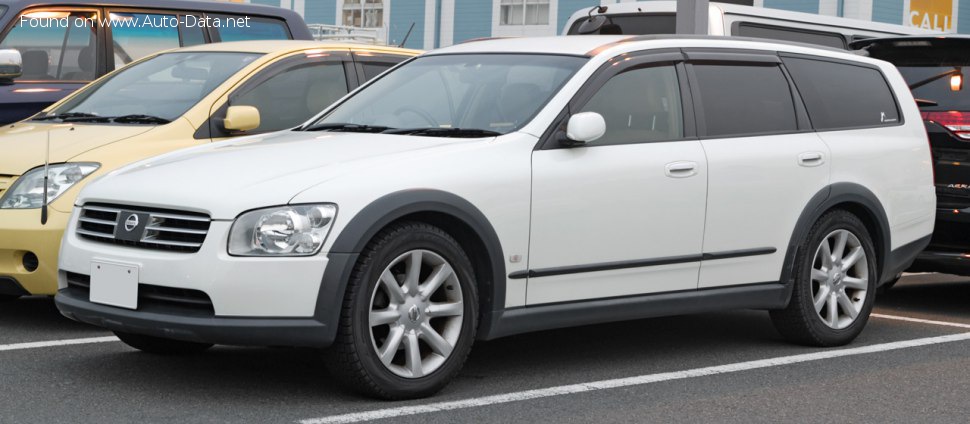
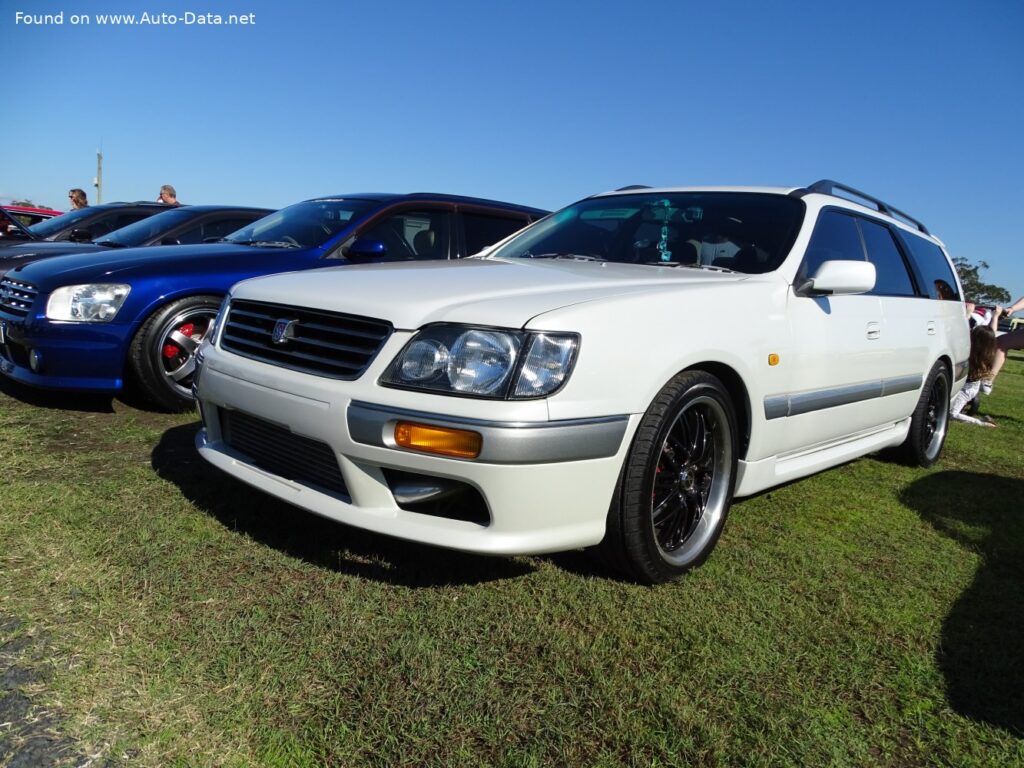
The Nissan Stagea 2.5 T 4X4 (235 Hp) adopted a station wagon (estate) body type, distinguished by its sleek, aggressive styling that defied the typical utilitarian image of a family hauler. Measuring 188.98 inches (4800 mm) in length, 69.09 inches (1755 mm) in width, and 58.66 inches (1490 mm) in height, the Stagea possessed a commanding road presence. Its 107.09-inch (2720 mm) wheelbase contributed to a stable ride and generous interior space, making it practical for both passengers and cargo. The design language shared many cues with its contemporary Nissan Skyline R33 and R34 models, particularly in the front fascia and overall stance, earning it the affectionate nickname “Skyline Wagon” among enthusiasts. This aesthetic blend made it visually appealing to those who appreciated performance styling but required the versatility of a wagon.
The vehicle featured five doors and seating for five occupants, offering practical access and versatility for various lifestyles. The interior was well-appointed, prioritizing driver engagement without sacrificing passenger comfort. The cockpit was driver-focused, featuring clear instrumentation and ergonomically placed controls, typical of Nissan’s performance offerings from that period. Standard features included a rack and pinion steering system with hydraulic power steering, providing direct feedback and ease of maneuverability, crucial for a performance-oriented vehicle. The suspension system utilized coil springs both front and rear, delivering a balanced ride that was firm enough for spirited driving yet compliant enough for daily commuting, absorbing road imperfections effectively.
Safety, while not as advanced as modern vehicles, was addressed with the inclusion of ABS (Anti-lock Braking System), a significant feature for the mid-to-late 1990s, enhancing braking control in emergency situations. The 205/60 R15 tires provided a good balance of grip and ride comfort for its time, contributing to the car’s stable handling characteristics. The overall aesthetic was one of understated performance, a true “sleeper” car capable of surprising many on the road with its blend of practicality and raw power. Its robust construction and thoughtful design made it a reliable and enjoyable vehicle for its target market.
Technical Specifications
| Category | Specification | Value |
|---|---|---|
General Information |
||
| Brand | Nissan | |
| Model | Stagea | |
| Generation | Stagea (WC34) | |
| Type (Engine) | 2.5 T 4X4 (235 Hp) | |
| Start of Production | 1996 year | |
| End of Production | 2001 year | |
| Powertrain Architecture | Internal Combustion engine | |
| Body type | Station wagon (estate) | |
| Seats | 5 | |
| Doors | 5 | |
Performance Specs |
||
| Fuel Consumption (Economy) – Urban | 16 l/100 km | 14.7 US mpg |
| Fuel Consumption (Economy) – Extra Urban | 9 l/100 km | 26.1 US mpg |
| Fuel Type | Petrol (Gasoline) | |
| Maximum Speed | 225 km/h | 139.81 mph |
| Weight-to-Power Ratio | 6.9 kg/Hp | 145.1 Hp/tonne |
| Weight-to-Torque Ratio | 6 kg/Nm | 167.9 Nm/tonne |
Engine Specs |
||
| Power | 235 Hp @ 6400 rpm | |
| Power per Liter | 94 Hp/l | |
| Torque | 272 Nm @ 4800 rpm | 200.62 lb.-ft. @ 4800 rpm |
| Engine Layout | Front, Longitudinal | |
| Engine Displacement | 2499 cm3 | 2.5 liters / 152.5 cu. in. |
| Number of Cylinders | 6 | |
| Engine Configuration | Inline | |
| Cylinder Bore | 86 mm | 3.39 in. |
| Piston Stroke | 71.7 mm | 2.82 in. |
| Compression Ratio | 9:1 | |
| Number of Valves per Cylinder | 4 | |
| Fuel Injection System | Multi-port manifold injection | |
| Engine Aspiration | Turbocharger | |
| Valvetrain | DOHC | |
Space, Volume and Weights |
||
| Kerb Weight | 1620 kg | 3571.49 lbs. |
| Fuel Tank Capacity | 68 l | 17.96 US gal |
Dimensions |
||
| Length | 4800 mm | 188.98 in. |
| Width | 1755 mm | 69.09 in. |
| Height | 1490 mm | 58.66 in. |
| Wheelbase | 2720 mm | 107.09 in. |
| Front Track | 1460 mm | 57.48 in. |
| Rear (Back) Track | 1515 mm | 59.65 in. |
Drivetrain, Brakes and Suspension Specs |
||
| Drive Wheel | All wheel drive (4×4) | |
| Number of Gears and Type of Gearbox | 4 gears, automatic transmission | |
| Front Suspension | Coil spring | |
| Rear Suspension | Coil spring | |
| Front Brakes | Ventilated discs | |
| Rear Brakes | Disc | |
| Assisting Systems | ABS (Anti-lock braking system) | |
| Steering Type | Steering rack and pinion | |
| Power Steering | Hydraulic Steering | |
| Tires Size | 205/60 R15 | |
Legacy & Market Impact
The Nissan Stagea 2.5 T 4X4 (235 Hp) carved out a significant niche within the Japanese domestic market, offering a compelling blend of performance, practicality, and distinctive styling. Its mechanical commonality with the legendary Skyline GT-R, particularly the robust RB series engine, cemented its status as a true performance vehicle, rather than just a utilitarian wagon. This kinship allowed for a vast aftermarket support, enabling owners to further enhance its performance, often transforming them into formidable street and track machines. The Stagea quickly gained a reputation for its tuning potential and its ability to surprise more conventional sports cars.
In its primary market, the Stagea competed with other high-performance wagons like the Subaru Legacy GT-B and the Toyota Caldina GT-T, but it distinguished itself with its rear-biased all-wheel-drive system (often featuring ATTESA E-TS in higher trims, providing dynamic power distribution) and its powerful RB-series engine. The Stagea’s reputation grew beyond Japan, becoming a highly sought-after grey market import