Introduction to the Nissan Sunny (140Y, 150Y) 1.4 (HBL310) (67 Hp)
The Nissan Sunny, a nameplate synonymous with economical and reliable compact transportation for decades, saw one of its most significant iterations in the late 1970s and early 1980s with the B310 generation, often referred to by market-specific designations like 140Y and 150Y. Within this popular series, the Nissan Sunny (140Y, 150Y) 1.4 (HBL310) (67 Hp) sedan stood out as a prime example of Nissan’s commitment to delivering accessible and dependable motoring to a global audience. Produced from 1979 to 1982, this particular variant embodied the era’s automotive design philosophy, blending straightforward engineering with practical application. It represented a crucial period for Nissan as it solidified its reputation for producing durable, fuel-efficient vehicles that could withstand the rigors of diverse international markets. The 1.4-liter engine, while modest by today’s standards, offered sufficient power for daily commuting and contributed significantly to the vehicle’s overall affordability and low running costs, making it a highly attractive option for families and individuals seeking value.
The Nissan Sunny (140Y, 150Y) 1.4 (HBL310) (67 Hp) Generation: A Global Compact Contender
The B310 generation of the Nissan Sunny, which encompassed the 140Y and 150Y models, marked the fourth major iteration of the Sunny nameplate. Launched in 1978, it quickly established itself as a formidable competitor in the burgeoning compact car segment worldwide. While specific engine and trim levels often varied by region, the core philosophy remained consistent: offer a robust, no-nonsense vehicle that prioritizes reliability and cost-effectiveness. The 140Y and 150Y designations typically indicated engine displacement, with the “Y” often signifying a specific market or trim level, particularly common in European and Asian markets. In North America, this generation was sold as the Datsun 210, maintaining a similar ethos but with slight market-specific adjustments in features and styling.
This generation arrived at a time when global demand for fuel-efficient vehicles was intensifying, largely driven by the energy crises of the 1970s. Japanese automakers, including Nissan, were perfectly positioned to meet this demand with their expertise in producing lightweight, economical cars. The B310 Sunny, with its clean lines and practical design, resonated with buyers looking for sensible transportation without unnecessary frills. It was available in a variety of body styles, including sedans, coupes, wagons, and even a commercial van, showcasing its versatility and Nissan’s intent to cater to a broad spectrum of consumer needs. The sedan, particularly the 1.4-liter variant, was often the volume seller, appealing to a wide demographic due to its balanced combination of interior space and compact exterior dimensions.
Engine & Performance: The HBL310 1.4-liter Heart
At the core of the Nissan Sunny (140Y, 150Y) 1.4 (HBL310) (67 Hp) sedan was its 1.4-liter (1397 cc) HBL310 engine. This naturally aspirated petrol (gasoline) unit was engineered for durability and efficiency, characteristics that were highly valued in the late 1970s and early 1980s. Producing a modest 67 horsepower, the engine’s output was perfectly adequate for the vehicle’s intended purpose as an urban commuter and a reliable family car. Its naturally aspirated design meant simpler mechanics, contributing to its renowned reliability and ease of maintenance, a significant selling point in markets where advanced diagnostic tools were not widely available.
The powertrain architecture was a conventional internal combustion engine setup, likely paired with a manual transmission (though not specified in the data, it was standard for economy cars of this era) driving the rear wheels. While 67 horsepower might seem low by contemporary standards, it allowed the lightweight Sunny to achieve respectable fuel economy figures for its time, a crucial factor during periods of fluctuating fuel prices. The engine was designed to be robust and forgiving, capable of enduring long periods of use with minimal fuss. This focus on longevity and low running costs cemented the Sunny’s reputation as a dependable workhorse, a car that owners could rely on day in and day out without excessive financial burden. Its performance was characterized by smooth, predictable power delivery rather than outright speed, perfectly aligning with its practical segment positioning.
Design & Features: Practicality and Simplicity
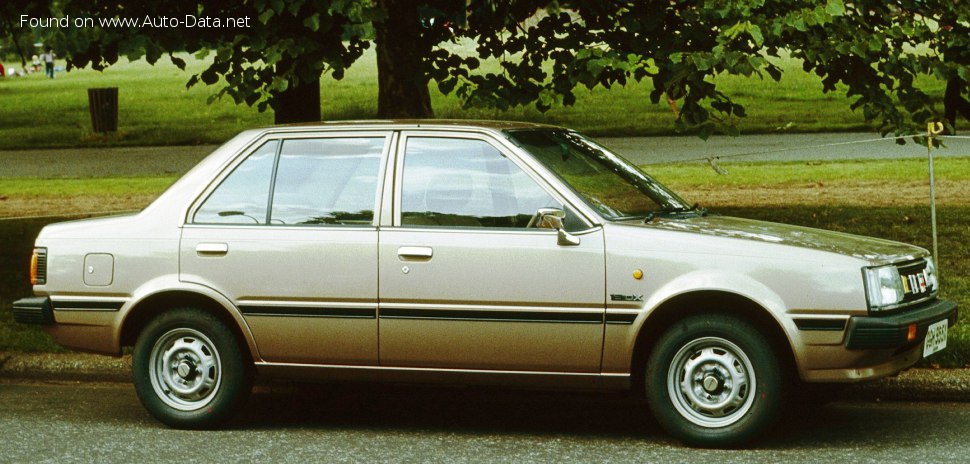
The Nissan Sunny (140Y, 150Y) 1.4 (HBL310) (67 Hp) featured a classic sedan body type, embodying the design trends of late 1970s and early 1980s Japanese automobiles. Its exterior styling was characterized by clean, angular lines and a somewhat boxy profile, maximizing interior space within a compact footprint. The design prioritized functionality over flamboyant aesthetics, resulting in a timeless, unpretentious appearance. Large glass areas ensured good visibility, and the relatively upright greenhouse contributed to a feeling of spaciousness inside the cabin. Chrome accents, common for the period, were sparingly used, typically around windows and bumpers, adding a touch of understated elegance.
Inside, the emphasis was firmly on practicality, durability, and ease of use. The cabin materials, while not luxurious, were chosen for their hard-wearing qualities, capable of withstanding years of daily wear and tear. The dashboard layout was straightforward and ergonomic, with essential controls easily accessible to the driver. Instrumentation was basic but clear, typically including a speedometer, fuel gauge, and temperature gauge, along with various warning lights. Seating was designed for comfort on short to medium journeys, offering decent support. Air conditioning, if available, would have been an optional extra, while a simple AM/FM radio was often standard or a common dealer-installed accessory. Safety features for the era primarily included three-point seatbelts for front occupants, and possibly lap belts for rear passengers, along with a robust steel body structure designed to offer basic occupant protection in a collision. Trunk space was generous for a vehicle of its class, further enhancing its appeal as a practical family car.
Technical Specifications
| Attribute | Value |
|---|---|
| Brand | Nissan |
| Model | Sunny |
| Generation | Sunny (140Y, 150Y) |
| Engine Type (Specific) | 1.4 (HBL310) (67 Hp) |
| Start of Production | 1979 year |
| End of Production | 1982 year |
| Powertrain Architecture | Internal Combustion engine |
| Body Type | Sedan |
| Fuel Type | Petrol (Gasoline) |
| Power | 67 Hp |
| Engine Aspiration | Naturally aspirated engine |
Legacy & Market Impact
The Nissan Sunny (140Y, 150Y) 1.4 (HBL310) (67 Hp) and its brethren from the B310 generation left a significant and lasting legacy, particularly in markets outside of North America where the Sunny nameplate was more prevalent. This generation solidified Nissan’s reputation as a producer of highly reliable, economical, and durable vehicles. Its primary market impact stemmed from its ability to offer dependable personal transportation at an affordable price point, making car ownership accessible to a broader segment of the population in many developing and established markets.
The Sunny’s reputation for mechanical robustness and low running costs made it a popular choice for both private owners and fleet operators. It competed fiercely with other global compacts of the era, such as the Toyota Corolla, Honda Civic, Mazda Familia (323), Ford Escort, and Volkswagen Rabbit (Golf). While its rivals often offered different styling cues or specific performance advantages, the Sunny consistently held its own through sheer dependability and value. Its ease of maintenance, coupled with readily available parts, further enhanced its appeal and longevity, with many examples remaining on the road for decades after their production ceased.
Historically, the B310 Sunny played a crucial role in expanding Nissan’s global footprint. It was a true world car, manufactured and sold in numerous countries, adapting to local tastes and regulations while maintaining its core identity. Its success contributed significantly to the perception of Japanese cars as reliable and efficient, helping to shift global automotive preferences. Even today, the B310 generation is remembered fondly by enthusiasts and former owners for its unpretentious nature and unwavering reliability. It represents a golden age of practical, no-frills motoring, a testament to Nissan’s engineering philosophy of building cars that simply work, day after day. The Nissan Sunny (140Y, 150Y) 1.4 (HBL310) (67 Hp) sedan, therefore, stands as an iconic example of a vehicle that excelled in its mission, leaving an indelible mark on automotive history as a true workhorse of its time.