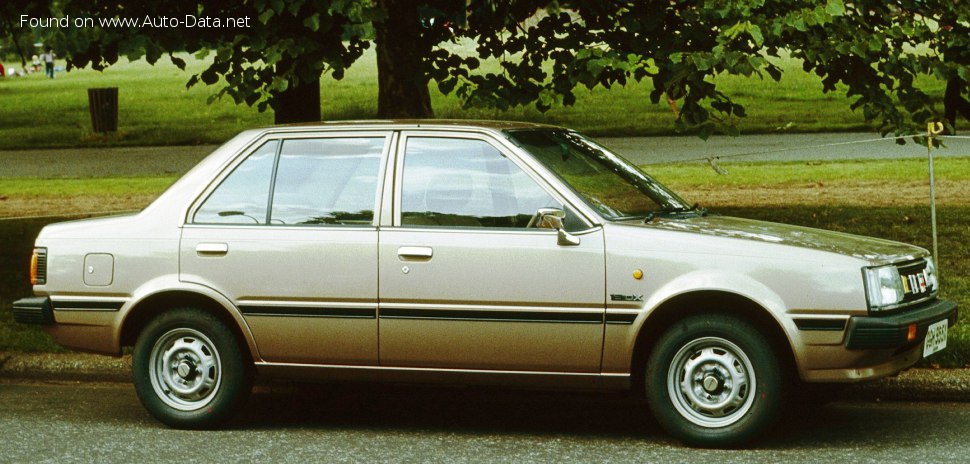
The Nissan Sunny (B15): A Global Compact Workhorse
The Nissan Sunny, a nameplate synonymous with reliable and affordable compact transportation across numerous international markets, saw the introduction of its B15 generation in 1998. This iteration, often referred to as the Nissan Sunny (B15), continued the model’s legacy as a cornerstone of Nissan’s global sedan lineup, particularly excelling in Asian, African, and Middle Eastern markets where dependability and low running costs were paramount. While not widely sold in the United States under the Sunny moniker (the B15 platform was related to the US-market Nissan Sentra, though often with different powertrains and trim levels), the Sunny (B15) represented Nissan’s commitment to providing practical and economical vehicles to a broad international customer base. The 1.3 i 16V variant, with its 90 horsepower engine, served as a popular entry-level offering, providing a balance of sufficient performance for daily commuting and excellent fuel efficiency.
Launched at the cusp of the new millennium, the Sunny (B15) was designed to be a modern yet unpretentious vehicle, embodying the values of durability and functionality that had defined its predecessors. It competed fiercely in the highly contested compact sedan segment, going head-to-head with rivals such as the Toyota Corolla, Honda Civic, and Mitsubishi Lancer in various global markets. Its design prioritized interior space, robust mechanics, and ease of maintenance, making it a favored choice for both private owners and fleet operators alike. The B15 generation carried the torch of the Sunny’s nearly 40-year heritage at the time, adapting contemporary styling cues while retaining the practical essence that made the Sunny a household name in many parts of the world.
Engine & Performance: The Nissan Sunny (B15) 1.3 i 16V Powertrain
At the heart of the Nissan Sunny (B15) 1.3 i 16V model lay a naturally aspirated 1.3-liter (1295 cc) four-cylinder gasoline engine, delivering a respectable 90 horsepower. This powertrain was a testament to Nissan’s engineering philosophy for its entry-level vehicles: robust, efficient, and straightforward. The “16V” designation indicated a modern 16-valve cylinder head design, which allowed for better volumetric efficiency compared to older 8-valve units, translating into smoother power delivery and improved fuel economy. Despite its relatively modest displacement, the 90 HP output was well-suited for the vehicle’s intended purpose and target markets.
The engine, likely a variant of Nissan’s QG series, was renowned for its legendary reliability and low maintenance requirements, attributes highly valued in markets where access to advanced diagnostic equipment or specialized service might be limited. Its naturally aspirated nature meant fewer complex components compared to turbocharged engines, further enhancing its durability and reducing potential points of failure. This focus on simplicity also contributed to lower manufacturing costs, allowing Nissan to offer the Sunny (B15) at a competitive price point.
Performance-wise, the 90 horsepower engine provided adequate acceleration for city driving and comfortable cruising on highways, though it was not designed for spirited driving. Its strength lay in its consistent and predictable power delivery. Paired with a manual transmission (the most common option for this variant), the driver could extract the most from the engine, leveraging its torque band for efficient urban maneuvers or sustained highway speeds. Fuel efficiency was another key selling point, making the 1.3 i 16V an economical choice for families and businesses looking to minimize running costs. This blend of reliability, efficiency, and sufficient performance solidified its position as a practical daily driver across its primary markets.
Design & Features: Practicality and Functionality
The design of the Nissan Sunny (B15) sedan reflected the prevailing automotive aesthetics of the late 1990s and early 2000s, characterized by clean lines and a focus on aerodynamic efficiency without being overly flashy. Its sedan body type was the quintessential choice for families and professionals in its target markets, offering a traditional three-box silhouette that maximized interior and trunk space. The exterior styling was conservative yet contemporary for its era, featuring smooth contours and a cohesive design that projected an image of understated competence.
Inside, the Sunny (B15) prioritized ergonomics and durability. The cabin was designed to be spacious and comfortable for up to five occupants, with materials chosen for their hard-wearing properties and ease of cleaning, a crucial consideration for a car often used in diverse climates and conditions. While the 1.3 i 16V, being an entry-level model, would typically feature fewer luxury amenities, it still provided all the essential conveniences expected of a modern compact car. This included practical storage solutions, clear instrumentation, and intuitive controls for features like air conditioning and audio systems.
Safety features, while perhaps not as extensive as those found in premium or higher-trim models of the time, were commensurate with its class and price point. Depending on the specific market and trim level, the Sunny (B15) could be equipped with features such as dual front airbags, anti-lock braking system (ABS), and seatbelt pretensioners. The robust body structure was engineered to provide a reasonable level of occupant protection in the event of a collision. The overall design philosophy was one of thoughtful practicality, ensuring that the Sunny (B15) not only looked appealing but also served its owners reliably and comfortably for years.
Technical Specifications
| Specification | Detail |
|---|---|
| Brand | Nissan |
| Model | Sunny |
| Generation | Sunny (B15) |
| Type (Engine) | 1.3 i 16V (90 Hp) |
| Start of Production | 1998 year |
| Powertrain Architecture | Internal Combustion Engine |
| Body Type | Sedan |
| Fuel Type | Petrol (Gasoline) |
| Power | 90 Hp |
| Engine Aspiration | Naturally aspirated engine |
| Drivetrain | Internal Combustion Engine |
Legacy & Market Impact: The Enduring Appeal of the Nissan Sunny (B15)
The Nissan Sunny (B15) carved out a significant legacy as a quintessential compact sedan in numerous international markets. Its impact stemmed primarily from its reputation for unwavering reliability, exceptional durability, and low running costs – qualities that resonated deeply with consumers and fleet managers in regions where economic considerations and practicality often outweighed performance or luxury. The 1.3 i 16V variant, in particular, was celebrated for its fuel efficiency and straightforward mechanics, making it an ideal choice for first-time car buyers, small families, and businesses requiring dependable transportation.
In markets across Asia, the Middle East, and parts of Africa, the Sunny (B15) faced stiff competition from segment leaders like the Toyota Corolla, Honda Civic, and Mitsubishi Lancer. While these competitors often offered slightly more varied powertrain options or advanced features in their higher trims, the Sunny (B15) consistently held its own by offering a compelling package of affordability, robust engineering, and a strong dealer network. Its ease of maintenance and the widespread availability of spare parts further cemented its appeal, particularly in regions with less developed automotive service infrastructures. This made the Sunny a common sight on roads from bustling city centers to rural routes, serving diverse roles from family car to taxi.
The historical significance of the Nissan Sunny (B15) lies in its continuation of a long-standing tradition of accessible and dependable motoring. It represented Nissan’s understanding of global market needs, providing a product that was “fit for purpose” rather than over-engineered with unnecessary complexities. Its design, while not revolutionary, was timeless enough to remain relevant for many years post-production, contributing to strong resale values in certain markets. Even today, many B15 generation Sunnys continue to operate reliably, a testament to their inherent build quality and the simple, robust engineering philosophy that guided their creation. The Sunny (B15) remains a prime example of a global workhorse vehicle that successfully met the demands of millions of drivers around the world, reinforcing Nissan’s position as a key player in the international automotive landscape.