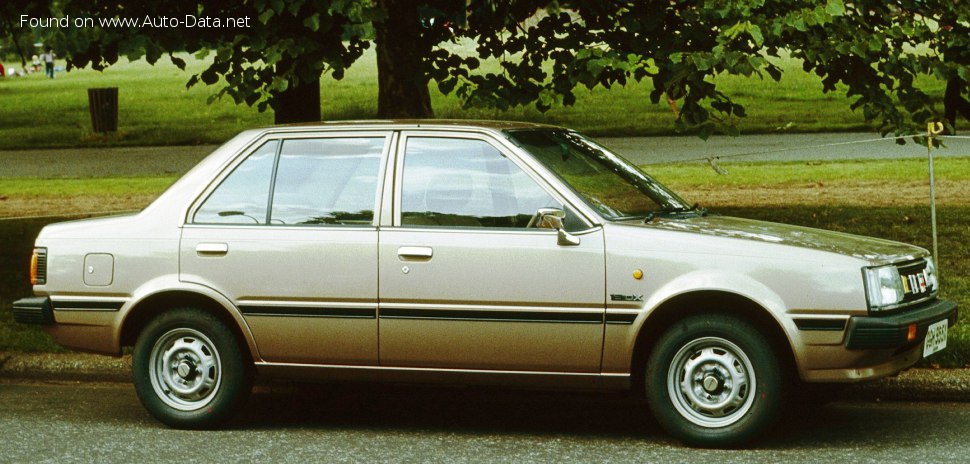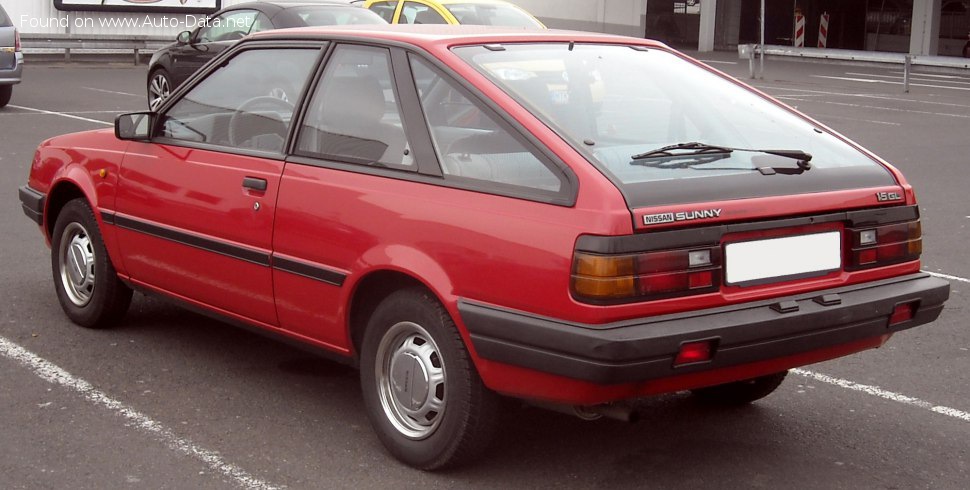
Introduction: The Nissan Sunny I Coupe (B11)
The Nissan Sunny I Coupe (B11), produced from 1982 to 1986, represents a pivotal moment in the history of Nissan’s globally renowned compact car lineage. As part of the seventh generation of the Nissan Sunny, internally designated B11, this particular coupe variant offered a sportier, more distinctive alternative to its sedan and hatchback siblings. The B11 generation marked a significant engineering shift for the Sunny nameplate, transitioning from a traditional rear-wheel-drive (RWD) layout to a more contemporary front-wheel-drive (FWD) architecture. This change was a strategic move by Nissan to align with evolving market demands for improved fuel efficiency, interior packaging, and driving dynamics, a trend that many Japanese manufacturers embraced during the early 1980s.
The Sunny B11, known as the Nissan Sentra in North America, the Tsuru in Mexico, and the Datsun Sunny in some export markets (reflecting Nissan’s brand consolidation at the time), was a truly international vehicle. The I Coupe variant, with its sleek three-door profile and five-seat configuration, aimed to capture the attention of younger buyers or those seeking a more spirited driving experience without sacrificing the practicality and renowned reliability associated with the Sunny badge. Its introduction heralded a new era for Nissan’s compact offerings, emphasizing modern design, efficient powertrains, and a commitment to global market relevance. The 1.5-liter engine, producing 75 horsepower, was a workhorse for the range, offering a balance of economy and adequate performance for daily commuting and light touring.
The Nissan Sunny I Coupe (B11) in Detail
Engine and Performance
At the heart of the Nissan Sunny I Coupe (B11) 1.5 (75 Hp) was a naturally aspirated 1.5-liter gasoline engine, an inline four-cylinder unit designed for efficiency and durability. With an output of 75 horsepower, this engine provided respectable performance for a compact coupe of its era. In the early 1980s, an engine of this displacement and power output was considered standard for the segment, offering a pragmatic balance between daily usability and fuel economy. The “naturally aspirated” designation indicates that the engine relied solely on atmospheric pressure to draw air into its cylinders, a common and reliable design choice that minimized complexity and maintenance requirements compared to turbocharged alternatives.
The adoption of a front-wheel-drive (FWD) powertrain architecture was a defining characteristic of the B11 generation. This move represented a significant departure from previous Sunny models, which had traditionally employed a rear-wheel-drive layout. The FWD system offered several advantages: it allowed for a more compact engine and transmission package, freeing up interior space for passengers and cargo, and generally provided better traction in adverse weather conditions due to the engine’s weight over the drive wheels. For the Sunny Coupe, this meant a more stable and predictable driving experience, appealing to a broader audience. While not a performance powerhouse, the 75-horsepower engine, coupled with the lightweight coupe body and FWD setup, delivered an agile and economical ride, perfectly suited for urban environments and longer commutes alike. Nissan’s reputation for building robust and long-lasting powertrains was further solidified by the reliability of this 1.5-liter unit, which proved to be a steadfast companion for many owners across various global markets.
Design and Features
The design of the Nissan Sunny I Coupe (B11) was a quintessential expression of early 1980s automotive aesthetics, characterized by clean lines, functional forms, and a pragmatic approach to styling. As a 3-door coupe, it presented a sportier silhouette compared to its more utilitarian sedan and wagon counterparts, offering a hint of youthful appeal. The B11 generation, in general, moved away from the more rounded designs of the late 1970s towards a sharper, more angular look that was prevalent across the industry. The Coupe variant featured a slightly raked windshield, a relatively flat roofline that tapered gently towards the rear, and distinctive taillight clusters that integrated seamlessly into the car’s overall width. Its compact dimensions made it nimble in city traffic and easy to park, attributes highly valued in its primary markets.
Inside, the Sunny I Coupe was designed with practicality and user-friendliness in mind. The five-seat configuration, while snug for three adults in the rear, offered versatility for families or groups of friends. Interior materials were durable and hard-wearing, typical of Japanese cars from this era, prioritizing longevity over opulent luxury. Instrumentation was clear and straightforward, with easily readable analog gauges providing essential information to the driver. Features, while basic by today’s standards, were appropriate for the time and market segment. These would have included a manual transmission (automatic likely optional), manual window winders, a simple AM/FM radio, and perhaps optional air conditioning. Safety features were rudimentary, primarily consisting of seatbelts and a sturdy body structure, reflecting the regulatory environment of the early 1980s. The emphasis was on providing reliable, affordable transportation with a touch of personal style, making the Sunny I Coupe a practical yet engaging choice for its target demographic.
Technical Specifications
| Category | Specification |
|---|---|
| Brand | Nissan |
| Model | Sunny |
| Generation | Sunny I Coupe (B11) |
| Type (Engine) | 1.5 (75 Hp) |
| Start of production | 1982 year |
| End of production | 1986 year |
| Powertrain Architecture | Internal Combustion engine |
| Body type | Coupe |
| Seats | 5 |
| Doors | 3 |
| Fuel Type | Petrol (Gasoline) |
| Power | 75 Hp |
| Engine aspiration | Naturally aspirated engine |
| Drivetrain Architecture | The Internal combustion engine (ICE) drives the front wheels of the vehicle. |
| Drive wheel | Front wheel drive |
Legacy and Market Impact
The Nissan Sunny I Coupe (B11) played a crucial role in solidifying Nissan’s position as a formidable global automotive manufacturer during the 1980s. Its introduction, particularly the B11 generation’s switch to front-wheel drive, was a strategic masterstroke that resonated with consumers worldwide. This move was not just a technical upgrade but a philosophical shift, positioning the Sunny as a modern, efficient, and practical choice in the highly competitive compact car segment. The I Coupe variant, while perhaps not the highest volume seller within the Sunny lineup, successfully carved out a niche for itself by offering a sportier aesthetic without compromising on the core values of reliability and economy that the Sunny nameplate embodied.
In its primary markets, which included Japan, Europe, Australia, and parts of Asia and Africa, the Sunny B11 faced stiff competition. Its rivals were numerous and highly capable, including the Toyota Corolla, Honda Civic, Mazda 323, Ford Escort, and Volkswagen Golf. Against these stalwarts, the Sunny B11 distinguished itself through its robust build quality, straightforward engineering, and competitive pricing. Nissan’s commitment to reliability ensured that the Sunny became a trusted choice for countless families and individuals, often serving as a gateway into car ownership for many. The 75-horsepower 1.5-liter engine, while modest, was perfectly suited to the economic realities of the time, offering excellent fuel efficiency and low running costs—factors that were paramount for buyers during the post-oil crisis era.
The historical significance of the Nissan Sunny I Coupe (B11) lies not only in its technical advancements but also in its contribution to Nissan’s global brand image. It demonstrated Nissan’s ability to adapt to changing market trends and deliver products that met diverse consumer needs across different continents. The B11 generation helped establish the foundation for future generations of Nissan’s compact cars, including the highly successful Sentra line in North America. Today, the Sunny I Coupe (B11) is remembered as a testament to 1980s Japanese automotive engineering: a no-nonsense, dependable, and quietly stylish vehicle that delivered on its promise of accessible and efficient personal transportation. Its legacy endures in the countless examples that continue to run reliably in various parts of the world, a true testament to its enduring quality and design.