The Nissan Sunny II Coupe (B12) 1.6 (84 Hp): A Compact Contender from the 1980s
The Nissan Sunny II Coupe (B12) represents a significant chapter in Nissan’s long-standing legacy of producing reliable and economical compact vehicles. Launched in 1986, this particular iteration, equipped with the 1.6-liter (84 Hp) engine, was part of the B12 generation of the Sunny, a nameplate that held immense importance across various global markets. While the “Sunny” badge itself was most prevalent in Asia, Australia, and Europe, the B12 platform was globally recognized, forming the basis for the popular Nissan Sentra in North America. This two-door coupe variant offered a sportier, more personal alternative to its sedan and hatchback siblings, aiming to capture the imagination of buyers seeking a blend of practicality, affordability, and a touch of youthful appeal during the mid-to-late 1980s. Its production run from 1986 to 1988 cemented its place as a classic representation of compact car design and engineering from that era.
Engine and Performance of the Nissan Sunny II Coupe (B12)
At the heart of this particular Nissan Sunny II Coupe (B12) model was a 1.6-liter inline-four gasoline engine, delivering a respectable 84 horsepower. This powertrain architecture, characterized by its internal combustion engine design, was a staple for compact cars of the period. As a naturally aspirated engine, it relied solely on atmospheric pressure to draw air into its cylinders, a common and reliable setup that favored fuel efficiency and straightforward maintenance over forced induction complexity.
The 84 Hp output, while not designed for blistering performance, was more than adequate for the Sunny Coupe’s intended purpose. It provided sufficient power for daily commuting, urban driving, and comfortable highway cruising. In the context of the mid-1980s, an engine of this size and power output was competitive within its segment. It offered a balance of accessible power and economical operation, which were key considerations for compact car buyers. Nissan’s engineering focus during this period was heavily on durability and smooth power delivery, ensuring that the 1.6-liter unit would provide years of trouble-free service. The engine’s design likely incorporated an overhead camshaft (SOHC) configuration, a step up from older pushrod designs, contributing to better fuel economy and more refined operation. Its responsiveness was predictable, making it an easy car to drive for a wide range of consumers.
Design and Features: The B12 Coupe Aesthetic
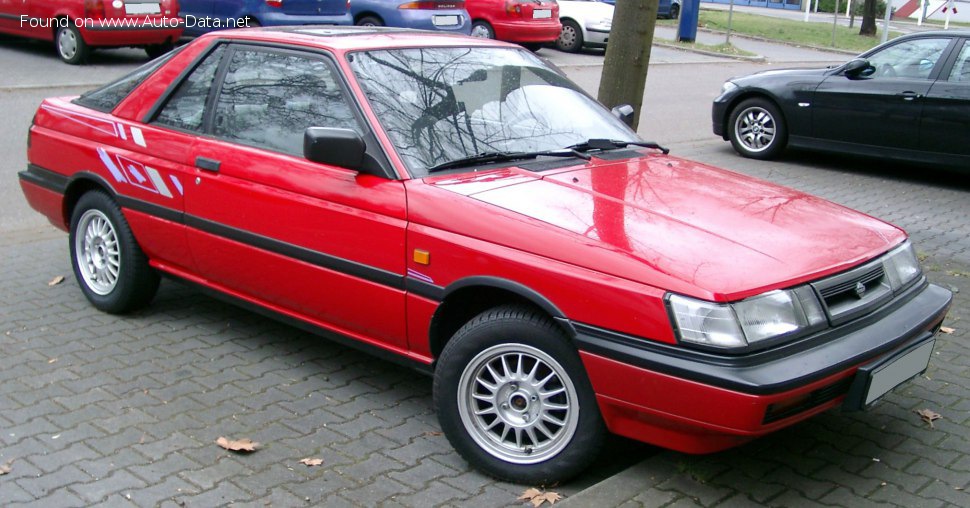
The design of the Nissan Sunny II Coupe (B12) was a clear reflection of the automotive styling trends prevalent in the mid-1980s. Moving away from the sharper, boxier lines of earlier generations, the B12 adopted a more rounded, aerodynamic silhouette, though still retaining a distinct angularity that defined the era. The coupe body type, with its two-door configuration, offered a sportier stance compared to the more utilitarian sedan and wagon variants. This design choice gave the Sunny Coupe a youthful and dynamic character, appealing to buyers who prioritized style and a more personal driving experience.
Key design elements included flush-fitting headlights, a relatively low hood line, and a sloping rear window that integrated smoothly into the trunk lid. The overall aesthetic was clean and unfussy, with minimal ornamentation. Inside, the B12 Sunny Coupe offered a functional and ergonomic cabin. While luxury was not its primary aim, Nissan ensured that the interior was comfortable and well-appointed for its class. Features typical for the era would have included durable cloth upholstery, clear and easy-to-read instrumentation, and a straightforward dashboard layout. Depending on the market and trim level, amenities such as air conditioning, power windows, power door locks, and a cassette stereo system would have been available, enhancing convenience and comfort.
Safety features, though not as advanced as modern vehicles, were standard for the time, including three-point seatbelts for front occupants and basic passive safety structures. The emphasis was on reliable mechanicals and a solid build quality, contributing to a sense of security and longevity that Japanese manufacturers were becoming renowned for. The coupe’s relatively compact footprint also made it maneuverable in urban environments, a significant advantage in many of its primary markets.
Technical Specifications: Nissan Sunny II Coupe (B12) 1.6 (84 Hp)
| Category | Specification |
|---|---|
| General Information | |
| Brand | Nissan |
| Model | Sunny |
| Generation | Sunny II Coupe (B12) |
| Type (Engine) | 1.6 (84 Hp) |
| Start of production | 1986 year |
| End of production | 1988 year |
| Powertrain Architecture | Internal Combustion engine |
| Body type | Coupe |
| Performance Specs | |
| Fuel Type | Petrol (Gasoline) |
| Engine specs | |
| Power | 84 Hp |
| Engine aspiration | Naturally aspirated engine |
Legacy and Market Impact of the Nissan Sunny II Coupe (B12)
The Nissan Sunny II Coupe (B12), and indeed the entire B12 generation, left a notable mark on the global automotive landscape. Its primary markets, particularly in Japan, Europe, and parts of Asia, saw the Sunny as a cornerstone of Nissan’s compact car offerings. In North America, its counterpart, the Nissan Sentra, achieved considerable sales success, solidifying Nissan’s reputation for building reliable, economical, and practical vehicles. The coupe variant, while not the highest volume seller, played an important role in broadening the appeal of the Sunny/Sentra line, offering a sportier image that resonated with a specific demographic.
Competitors for the Sunny Coupe varied by region but typically included models like the Honda Civic CRX, Toyota Corolla Coupe (AE86 generation), Mazda 323 Coupe, and the Volkswagen Golf/Jetta Coupe. Against these rivals, the Sunny Coupe often distinguished itself through its competitive pricing, solid build quality, and Nissan’s growing reputation for mechanical durability. While perhaps not as overtly sporty as some of its competitors, it offered a balanced package that appealed to a wide range of buyers.
Historically, the B12 generation is remembered for its transitionary styling and its embodiment of the reliability and efficiency that became synonymous with Japanese automakers in the 1980s. It was a no-frills, honest car that delivered on its promises. Its legacy is one of quiet competence and widespread accessibility. Even today, examples of the Sunny B12, in its various body styles, can still be found on roads worldwide, a testament to its robust engineering. For enthusiasts of 1980s Japanese compacts, the Sunny II Coupe represents an accessible classic, embodying the era’s design language and driving dynamics before the advent of more complex electronics and safety mandates transformed the automotive industry. It contributed significantly to Nissan’s global market share and reinforced the brand’s image as a producer of dependable, value-oriented vehicles.