The Nissan Sunny II GA15DE (B12): A Global Compact Workhorse (1988-1991)
The Nissan Sunny, known by various names such as Sentra in North America or Pulsar in other markets, has been a cornerstone of Nissan’s global compact car strategy for decades. The B12 generation, produced from 1985 to 1990, represented a significant evolution for the model line, embracing more contemporary styling and mechanical refinements while retaining its core values of reliability, economy, and practicality. This article focuses specifically on the Nissan Sunny II GA15DE (B12) 1.6 i 12V (90 Hp), a variant that played a crucial role in markets outside of North America, particularly in Asia and parts of Europe, during its production run from 1988 to 1991. While not directly sold as a “Sunny” in the United States during this specific iteration, its underlying platform and engineering principles were shared with the Nissan Sentra of the era, showcasing Nissan’s global engineering prowess.
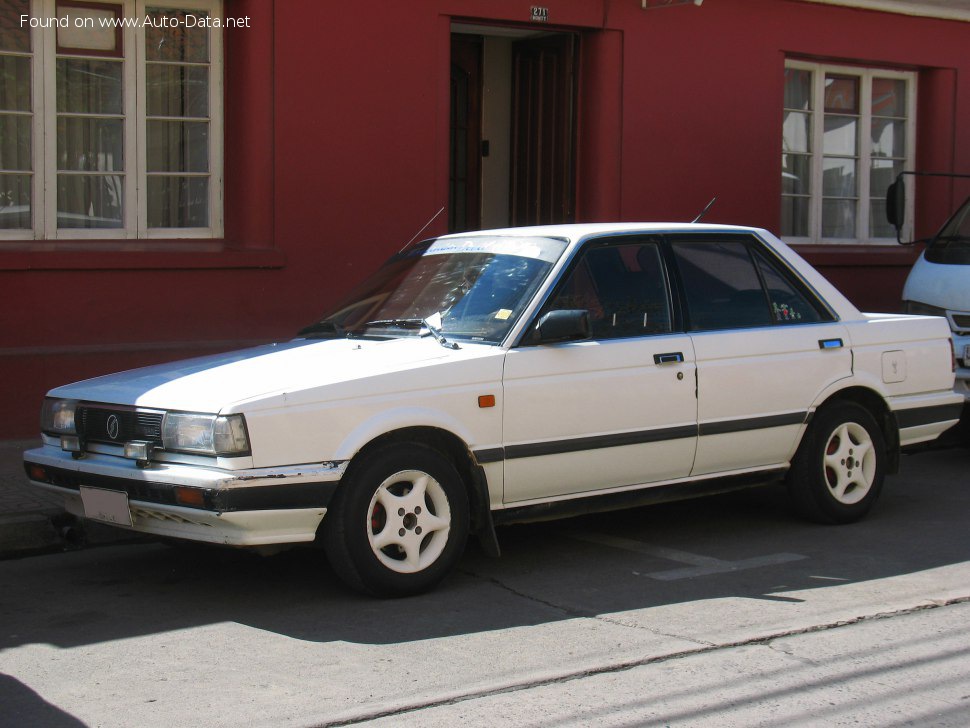
The B12 generation marked a shift towards a more rounded, yet still distinctly angular, design compared to its predecessor, the B11. It was offered in a multitude of body styles, including sedans, coupes, hatchbacks, and even a wagon, catering to diverse consumer needs across different regions. The 1.6 i 12V (90 Hp) sedan variant, with its four doors and five-seat configuration, was a quintessential family and commuter vehicle, embodying the practical and no-nonsense approach that made the Sunny nameplate so successful worldwide. It was an accessible and dependable choice for buyers seeking economical transport without sacrificing essential comfort or utility.
Engine and Performance: The GA15DE Powerplant
At the heart of this particular Nissan Sunny II GA15DE (B12) model was the GA15DE engine, a 1.5-liter (though often rounded up or referred to as a 1.6-liter class engine in some contexts due to its positioning), 12-valve inline-four gasoline unit. The “GA” series of engines from Nissan was renowned for its robust construction, efficiency, and longevity, traits that were highly valued in the compact car segment. In this specific configuration, the engine produced a respectable 90 horsepower (Hp).
What’s particularly notable for its time is the “12V” designation, indicating a three-valve-per-cylinder setup (two intake, one exhaust). While less common than the eventual four-valve-per-cylinder standard, this design offered a good balance of low-end torque and high-revving capability for a compact engine of the late 1980s. The engine was naturally aspirated, meaning it relied solely on atmospheric pressure to draw air into the cylinders, a common and reliable design choice that avoided the complexity and cost of turbocharging.
Power delivery was managed through a carbureted fuel injection system. While modern vehicles universally employ electronic fuel injection for precision and efficiency, carburetion was still prevalent in many markets during this period. A carbureted system, while simpler mechanically, provided a reliable and straightforward method for mixing fuel and air, contributing to the engine’s overall ease of maintenance and repair. The powertrain architecture was front-wheel drive, with the internal combustion engine driving the front wheels. This layout was a standard for compact cars, offering advantages in packaging efficiency, interior space, and traction in adverse conditions, making the Sunny a practical choice for everyday driving. The 90 Hp output, coupled with its relatively light curb weight, ensured adequate performance for city driving and comfortable cruising on highways, perfectly aligning with its role as an economical and reliable family sedan.
Design and Features: Practicality Meets Late 80s Aesthetics
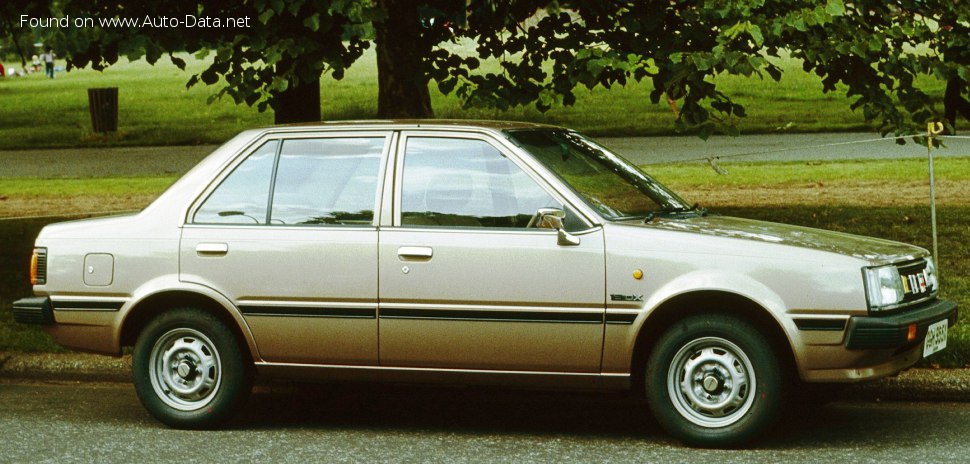
The design of the Nissan Sunny II (B12) sedan was a product of its era, characterized by a functional and somewhat boxy aesthetic that prioritized interior volume and visibility. While not overtly flashy, its clean lines and straightforward proportions contributed to a timeless, unpretentious appearance. The four-door sedan body type emphasized practicality, offering easy access for passengers and a dedicated trunk for luggage, making it an ideal choice for families or individuals needing reliable transportation.
Inside, the B12 Sunny was designed with durability and ergonomics in mind. The five-seat configuration provided ample space for its class, with comfortable seating for four adults and a fifth for shorter journeys. Materials used in the cabin were typically hard-wearing plastics and robust fabric upholstery, built to withstand years of daily use. While luxury features were sparse compared to today’s vehicles, the Sunny offered essential amenities for comfort and convenience, which might have included a basic AM/FM radio, manual windows, and potentially optional air conditioning depending on the market and trim level. The dashboard layout was intuitive, with clear analog gauges and easily accessible controls, reflecting the car’s focus on user-friendliness.
Safety features, by late 1980s standards, were primarily passive. Seatbelts were standard for all occupants, and the body structure was engineered to provide a degree of crash protection, though advanced safety systems like airbags or anti-lock brakes were still rare or non-existent in this segment at the time. The car’s compact dimensions and good all-around visibility made it easy to maneuver in urban environments, further enhancing its appeal as a practical daily driver. The overall design ethos was one of sensible engineering and cost-effectiveness, delivering a reliable package without unnecessary frills.
Technical Specifications: Nissan Sunny II GA15DE (B12) 1.6 i 12V (90 Hp) Sedan (1988-1991)
| Category | Specification |
|---|---|
| Brand | Nissan |
| Model | Sunny |
| Generation | Sunny II GA15DE (B12) |
| Engine Type | 1.6 i 12V (90 Hp) |
| Start of Production | 1988 year |
| End of Production | 1991 year |
| Powertrain Architecture | Internal Combustion engine |
| Body Type | Sedan |
| Seats | 5 |
| Doors | 4 |
| Fuel Type | Petrol (Gasoline) |
| Power | 90 Hp |
| Fuel Injection System | Carburettor |
| Engine Aspiration | Naturally aspirated engine |
| Drivetrain Architecture | The Internal combustion engine (ICE) drives the front wheels of the vehicle. |
| Drive Wheel | Front wheel drive |
Legacy and Market Impact
The Nissan Sunny, particularly the B12 generation and its variants like the Nissan Sunny II GA15DE (B12) 1.6 i 12V (90 Hp) sedan, cemented Nissan’s reputation as a purveyor of dependable and economical compact cars. In its primary markets across Asia, Africa, and parts of Europe, the Sunny was often the benchmark for reliability and low running costs. It competed fiercely with contemporaries such as the Toyota Corolla, Honda Civic, and Mazda Familia (323), often distinguishing itself through its robust build quality and a slightly more conventional, yet equally appealing, design language.
The B12 Sunny’s impact was significant. It provided accessible personal transportation for millions, serving as a first car for many families and a reliable workhorse for small businesses. Its simple mechanicals, including the GA15DE engine with its carbureted fuel system, meant that maintenance was straightforward and parts were readily available, even in less developed markets. This ease of service contributed greatly to its enduring popularity and longevity, with many examples remaining on the roads for decades after their production ceased.
The 90 Hp GA15DE variant, in particular, offered a sweet spot in terms of performance and fuel economy, making it an attractive proposition for a wide demographic. It wasn’t designed to be a performance car, but rather a steadfast companion for daily commutes and family errands. Its front-wheel-drive layout and sensible suspension tuning provided a comfortable and predictable ride, suitable for diverse road conditions.
Today, the Nissan Sunny B12 is often regarded as a classic example of late 1980s Japanese automotive engineering: practical, efficient, and built to last. While it may not command the same collector’s attention as some sports cars of its era, its historical significance as a global best-seller and a testament to Nissan’s commitment to everyday mobility is undeniable. It represents an era when simplicity, reliability, and affordability were paramount, and the Sunny delivered on all counts, leaving a lasting legacy as a truly global compact car icon. Its impact continues to be felt in its successor models and in the countless memories it created for owners around the world.