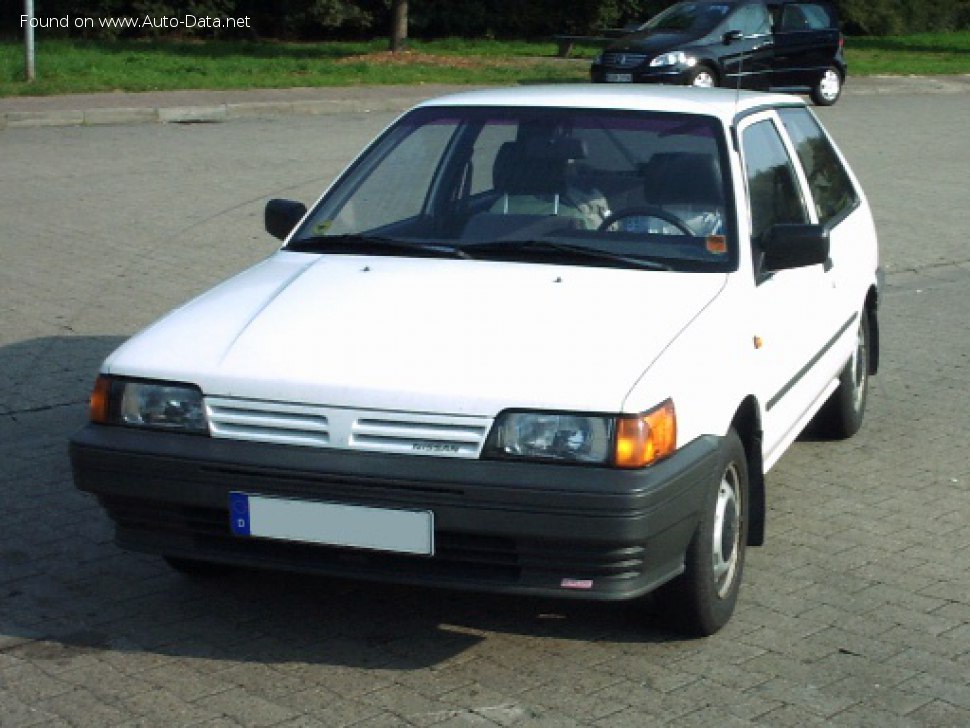
The Nissan Sunny II Hatchback (N13): A Global Compact Contender
The Nissan Sunny, a nameplate synonymous with reliability and accessible motoring across various global markets, introduced its N13 generation in 1986. Among its diverse body styles, the Nissan Sunny II Hatchback (N13) carved out a significant niche, particularly in European and Asian markets, offering a practical and economical solution for everyday transportation. While its North American counterpart was known as the Sentra, the Sunny name carried a distinct identity and market positioning in other regions. This second-generation Hatchback, produced from 1986 to 1990, represented Nissan’s commitment to the burgeoning compact segment, blending Japanese engineering prowess with an understanding of global consumer needs for efficiency, durability, and a comfortable ride.
Positioned as a straightforward, dependable compact car, the Sunny II Hatchback appealed to a broad demographic, from first-time car buyers to small families and commuters. It entered a highly competitive arena, vying for market share against formidable rivals such as the Toyota Corolla, Honda Civic, Volkswagen Golf, and Ford Escort. The N13 generation built upon the Sunny’s established reputation, introducing modern design cues and refined mechanicals that kept it relevant in the late 1980s automotive landscape. This particular iteration, featuring the 1.6 i (73 Hp) engine, was a common sight, embodying the sensible choice for those prioritizing fuel economy and low running costs over outright performance.
Engine and Powertrain Dynamics of the Nissan Sunny II Hatchback (N13)
At the heart of the Nissan Sunny II Hatchback (N13), specifically the 1.6 i variant, was a robust and proven internal combustion engine. This 1.6-liter unit, designed for efficiency and longevity, delivered a modest but entirely adequate 73 horsepower (Hp). In an era before widespread turbocharging in compact cars, this engine was a naturally aspirated design, meaning it relied solely on atmospheric pressure to draw air into its cylinders. This characteristic contributed to its predictable power delivery, ease of maintenance, and renowned reliability, making it a workhorse for daily driving.
The 73 Hp output, while not designed for thrilling acceleration, was well-suited for the car’s intended purpose. It provided sufficient power for urban commuting, comfortable highway cruising at reasonable speeds, and navigating suburban environments without feeling strained. The engine’s naturally aspirated nature also meant a linear throttle response, which, combined with what was typically a manual transmission (though automatic options were often available in the N13 range), offered a direct and engaging driving experience for its class. Fuel economy was a significant selling point, as gasoline prices were a constant consideration for buyers in this segment. Nissan engineered this powertrain to be exceptionally frugal, contributing to lower running costs and reinforcing the Sunny’s image as an economical choice. The overall powertrain architecture was optimized for front-wheel drive, a common and effective layout for compact cars of the period, providing good traction and efficient packaging.
Design Philosophy and Features
The design of the Nissan Sunny II Hatchback (N13) reflected the evolving automotive aesthetics of the late 1980s. While retaining some of the angularity prevalent in early 80s designs, the N13 began to incorporate softer lines and a more aerodynamic profile, moving away from the purely boxy shapes of its predecessors. The hatchback body style was a cornerstone of its practicality. It offered a versatile cargo area accessible via a large rear liftgate, making it ideal for carrying groceries, luggage, or even larger items with the rear seats folded down. This flexibility was a key differentiator in the compact segment, appealing to buyers who needed more utility than a traditional sedan could offer.
Inside, the N13 Sunny Hatchback prioritized functionality and ergonomics. The cabin was designed to be straightforward and user-friendly, with controls logically placed and easily accessible. While luxury features were sparse in this class, Nissan ensured a comfortable and durable interior. Standard features would typically include cloth upholstery, a basic heating and ventilation system, and a radio. Depending on the market and trim level, options such as power steering, air conditioning, and power windows might have been available, enhancing driver comfort. Safety features, by 1980s standards, included three-point seatbelts for front occupants and basic crumple zones designed to absorb impact energy. The overall design language emphasized durability and ease of repair, contributing to the car’s long-term ownership appeal and reputation for being a reliable daily driver.
Technical Specifications
| Specification | Detail |
|---|---|
| Brand | Nissan |
| Model | Sunny |
| Generation | Sunny II Hatchback (N13) |
| Engine Type | 1.6 i |
| Power Output | 73 Hp |
| Engine Aspiration | Naturally aspirated engine |
| Fuel Type | Petrol (Gasoline) |
| Powertrain Architecture | Internal Combustion engine |
| Body Type | Hatchback |
| Start of Production | 1986 |
| End of Production | 1990 |
Legacy and Market Impact
The Nissan Sunny II Hatchback (N13), particularly with its 1.6 i (73 Hp) engine, left a lasting legacy as a quintessential compact car of its era. Its primary market impact was characterized by its unwavering reputation for reliability, fuel efficiency, and low maintenance costs. In a segment where dependability was paramount, the Sunny consistently delivered, earning the trust of countless drivers globally. This reputation translated into strong sales figures in markets like Europe, Asia, and Australia, where it served as a workhorse for families, young professionals, and businesses alike.
Competitors in its region were numerous and fierce, including the aforementioned Toyota Corolla (E90), Honda Civic (EF), Volkswagen Golf (Mk2), Ford Escort (Mk4), and Opel Kadett (E). The Sunny distinguished itself through a combination of competitive pricing, robust build quality, and a comprehensive dealer network. While it might not have offered the same level of driving dynamism as some European rivals or the technological flash of some of its Japanese counterparts, its strength lay in its consistent, no-nonsense performance and exceptional longevity. Many N13 Sunnys continued to operate reliably well into the 21st century, a testament to Nissan’s engineering and manufacturing quality during this period.
Historically, the N13 generation, including the Hatchback, played a crucial role in solidifying Nissan’s position as a major global automotive player. It demonstrated the company’s ability to produce globally competitive compact cars that could adapt to diverse market demands. The Sunny nameplate itself became a byword for sensible, economical transportation, reinforcing Nissan’s brand identity. As the automotive industry progressed into the 1990s, the design philosophies and technological advancements seen in the N13 laid groundwork for future generations, gradually leading to more aerodynamic shapes, enhanced safety features, and increasingly sophisticated powertrains. Today, the Nissan Sunny II Hatchback (N13) is remembered as a sturdy, unassuming vehicle that faithfully served its owners and contributed significantly to the automotive landscape of the late 20th century, epitomizing the era’s focus on practical and affordable mobility.