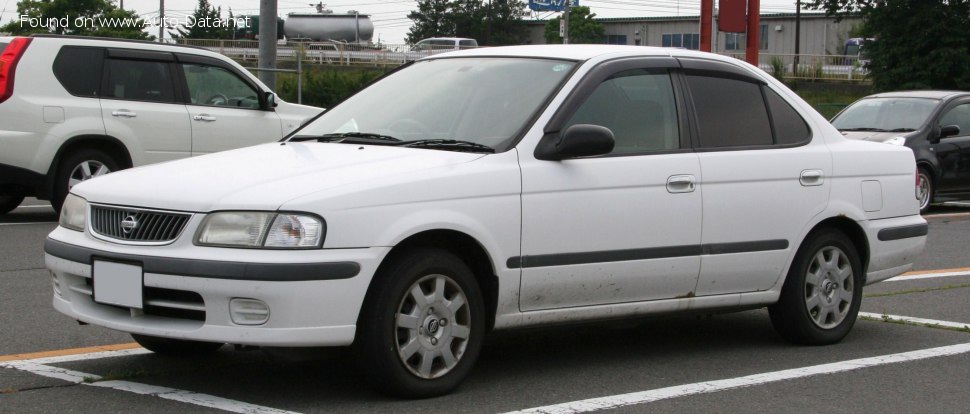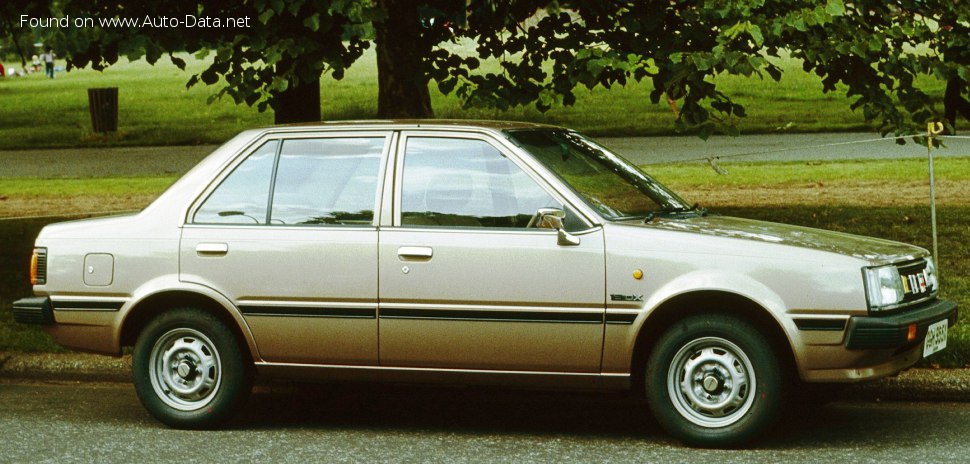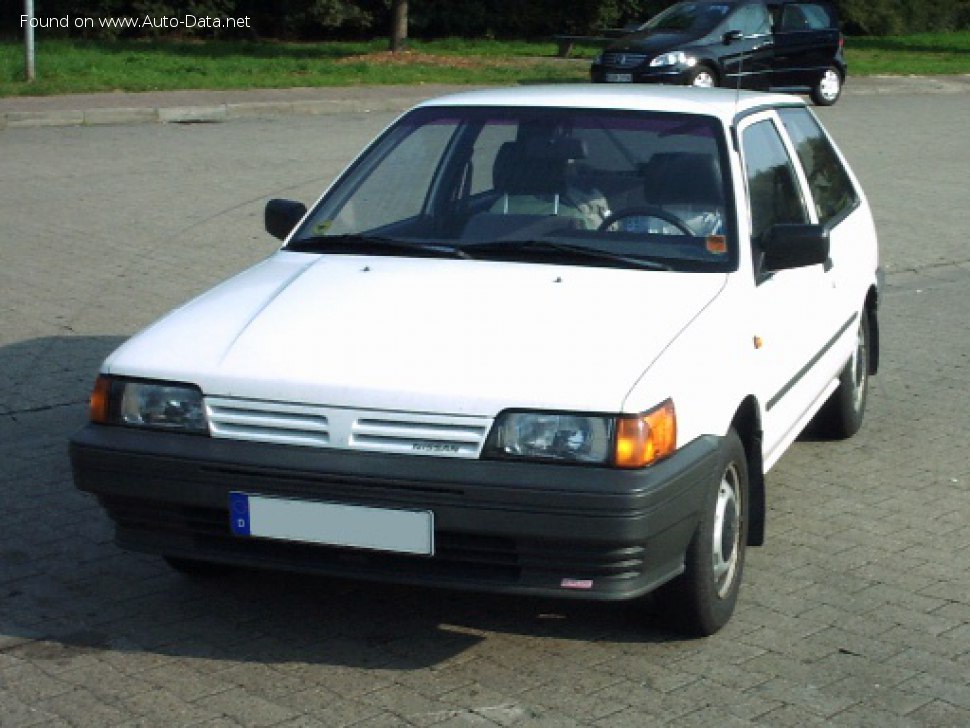
Introduction to the Nissan Sunny II Hatchback (N13)
The Nissan Sunny, a nameplate with a venerable history stretching back to the 1960s, has long represented Nissan’s commitment to producing reliable, economical, and practical compact vehicles for a global audience. The Nissan Sunny II Hatchback (N13) generation, produced from 1986 to 1991, continued this tradition, serving as a crucial offering in the highly competitive C-segment (compact car segment) across various international markets, particularly in Europe and Asia. While not widely sold in the United States under the “Sunny” moniker – where its platform derivatives might have appeared as the Nissan Sentra – the N13 generation was a cornerstone of Nissan’s global strategy, embodying the brand’s reputation for durability and value.
This particular variant, the Nissan Sunny II Hatchback (N13) 1.7 D (54 Hp), represents the diesel-powered, five-door hatchback configuration, designed to cater to consumers prioritizing fuel efficiency and low running costs. Its launch in the mid-1980s placed it squarely against formidable European and Japanese competitors, where its blend of robust engineering, practical design, and economical diesel powertrain aimed to carve out a significant market share. The N13 generation built upon its predecessors’ success by offering improved aerodynamics, enhanced interior space, and a more refined driving experience, all while maintaining the straightforward dependability that Sunny owners had come to expect.
Engine and Performance of the Nissan Sunny II Hatchback (N13) 1.7 D
Powertrain Overview
At the heart of the Nissan Sunny II Hatchback (N13) 1.7 D lies the CD17 engine, a naturally aspirated inline-four diesel unit. With an engine displacement of 1.7 liters (1700 cm³ or 103.74 cu. in.), this powerplant was engineered for endurance and fuel economy rather than outright speed. It delivered a modest 54 horsepower at a low 2500 revolutions per minute, indicative of its long-stroke design and emphasis on low-end torque. The peak torque figure stood at 88.51 lb.-ft. (120 Nm), available at a relatively low RPM, which contributed to its tractable nature in urban driving and its ability to maintain cruising speeds efficiently.
The engine’s layout was front-transverse, driving the front wheels through a standard 5-speed manual transmission. This conventional front-wheel-drive architecture was a hallmark of compact cars of the era, chosen for its efficiency in packaging, improved traction, and reduced manufacturing complexity. With two valves per cylinder and a naturally aspirated design, the CD17 was a straightforward and robust engine, known for its reliability and ease of maintenance – critical attributes for a vehicle intended for daily commuting and utility. Its modest power output resulted in a power-to-liter ratio of 31.8 horsepower per liter, which, while not impressive by modern standards, was typical for non-turbocharged diesel engines of the mid-to-late 1980s. The engine oil capacity was 4.1 liters (4.33 US quarts).
Performance Characteristics
Given its focus on economy, the performance metrics of the Nissan Sunny II Hatchback (N13) 1.7 D reflect its practical orientation. The vehicle accelerated from 0 to 60 mph in a leisurely 17.6 seconds, with a 0-100 km/h time of 18.5 seconds. Its top speed was rated at 90.1 mph (145 km/h). These figures clearly indicate that the 1.7 D variant was not designed for spirited driving but rather for dependable, economical transportation.
Where the 1.7 D truly shone was in its fuel efficiency. The combined fuel consumption was an impressive 47 US mpg (5 liters per 100 km), with extra-urban driving yielding up to 52.3 US mpg (4.5 liters per 100 km) and urban consumption at 39.2 US mpg (6 liters per 100 km). These fuel economy figures were highly competitive for its time and made the Sunny 1.7 D an attractive proposition for buyers seeking to minimize running costs, especially in markets with high fuel prices. The vehicle’s kerb weight of 2314.85 pounds (1050 kg) contributed to its respectable weight-to-power ratio of 19.4 kg per horsepower, or 51.4 horsepower per tonne, further underscoring its efficiency-first design philosophy.
Design and Features
Exterior and Interior Design
The Nissan Sunny II Hatchback (N13) adopted a contemporary, aerodynamic design for its era, moving away from the boxier shapes of earlier generations. Its five-door hatchback body style offered a practical and versatile package, ideal for families and individuals needing flexible cargo space. The exterior featured clean lines, flush-fitting headlights, and a subtly sloped hood and windshield, all contributing to improved aerodynamic efficiency, which was a growing focus in automotive design during the 1980s. The standard tire size was 175/70 R13, mounted on 13-inch wheel rims, providing a balance of comfort and reasonable grip for a compact car.
Inside, the N13 Sunny was characterized by its functional and straightforward layout. With seating for five occupants, the cabin was designed for practicality and ease of use. While perhaps not luxurious, the materials were durable, and the controls were intuitively placed. The hatchback configuration meant a generously sized and easily accessible cargo area, further enhanced by folding rear seats, a feature that significantly boosted its utility for hauling groceries, luggage, or other items. The N13 also benefited from improvements in interior packaging, offering better head and legroom compared to its predecessors, making it a comfortable option for longer journeys despite its compact dimensions.
Chassis and Safety Features
The N13 generation featured a robust chassis designed to provide a stable and predictable ride. The front suspension utilized an independent McPherson strut setup, a common and effective design for front-wheel-drive vehicles, offering a good balance of handling and ride comfort. More notably, the rear suspension employed a double wishbone design. This was a sophisticated choice for a compact car of its time, as many competitors still relied on simpler, less refined torsion beam or semi-independent rear axles. The double wishbone setup contributed to better handling dynamics, improved ride quality, and enhanced stability, especially when cornering or carrying a load.
Braking duties were handled by disc brakes at the front and drum brakes at the rear, a standard configuration for many compact cars of the period, offering adequate stopping power for the vehicle’s performance capabilities. Steering was managed by a rack and pinion system, providing direct and responsive feedback to the driver. While advanced safety features like airbags or anti-lock braking systems (ABS) were not standard on mainstream compacts like the Sunny in the mid-80s, the N13’s fundamental structural integrity and predictable handling characteristics were its primary safety attributes. The fuel tank capacity was 11.1 US gallons (42 liters), providing a decent range given its excellent fuel economy.
Technical Specifications
| Category | Specification |
|---|---|
| General Information | |
| Brand | Nissan |
| Model | Sunny II Hatchback (N13) |
| Type (Engine) | 1.7 D (54 Hp) |
| Start of Production | 1986 year |
| End of Production | 1991 year |
| Powertrain Architecture | Internal Combustion engine |
| Body Type | Hatchback |
| Seats | 5 |
| Doors | 5 |
| Performance Specs | |
| Fuel Consumption (Economy) – Urban | 39.2 US mpg (6 l/100 km) |
| Fuel Consumption (Economy) – Extra Urban | 52.3 US mpg (4.5 l/100 km) |
| Fuel Consumption (Economy) – Combined | 47 US mpg (5 l/100 km) |
| Fuel Type | Diesel |
| Acceleration 0 – 60 mph | 17.6 sec |
| Acceleration 0 – 100 km/h | 18.5 sec |
| Maximum Speed | 90.1 mph (145 km/h) |
| Weight-to-Power Ratio | 19.4 kg/Hp, 51.4 Hp/tonne |
| Weight-to-Torque Ratio | 8.8 kg/Nm, 114.3 Nm/tonne |
| Engine Specs | |
| Power | 54 Hp @ 2500 rpm |
| Power per liter | 31.8 Hp/l |
| Torque | 88.51 lb.-ft. (120 Nm) |
| Engine Layout | Front, Transverse |
| Engine Model/Code | CD17 |
| Engine Displacement | 1.7 liters (1700 cm³, 103.74 cu. in.) |
| Number of Cylinders | 4 |
| Engine Configuration | Inline |
| Cylinder Bore | 3.15 in. (80 mm) |
| Number of Valves per Cylinder | 2 |
| Engine Aspiration | Naturally aspirated engine |
| Engine Oil Capacity | 4.1 liters (4.33 US qt) |
| Space, Volume and Weights | |
| Kerb Weight | 2314.85 lbs (1050 kg) |
| Fuel Tank Capacity | 11.1 US gal (42 liters) |
| Drivetrain, Brakes and Suspension Specs | |
| Drivetrain Architecture | Front-wheel drive, Internal Combustion engine |
| Drive Wheel | Front wheel drive |
| Number of Gears and Type of Gearbox | 5 gears, manual transmission |
| Front Suspension | Independent type McPherson |
| Rear Suspension | Double wishbone |
| Front Brakes | Disc |
| Rear Brakes | Drum |
| Steering Type | Steering rack and pinion |
| Tires Size | 175/70 R13 |
| Wheel Rims Size | 13 inches |
Legacy and Market Impact
The Nissan Sunny II Hatchback (N13) 1.7 D (54 Hp), despite its humble specifications by today’s standards, played a significant role in Nissan’s global strategy during the late 1980s. In markets where it was sold, particularly in Europe and parts of Asia, it was perceived as a highly reliable, economical, and practical compact car. Its diesel variant was especially valued for its outstanding fuel economy, which was a major draw for budget-conscious consumers and fleet operators.
The N13 Sunny competed in a fiercely contested segment against established rivals such as the Volkswagen Golf, Opel Kadett (Vauxhall Astra in the UK), Ford Escort, Honda Civic, and Toyota Corolla. While it might not have matched some European rivals in terms of perceived driving dynamics or interior flair, its strengths lay in its bulletproof reliability, low running costs, and straightforward usability. Nissan’s reputation for building durable vehicles was further solidified by models like the N13 Sunny, making it a popular choice for those seeking a dependable daily driver.
The inclusion of a double wishbone rear suspension, a relatively sophisticated setup for a compact car of its era, showcased Nissan’s engineering commitment to providing a competent and comfortable ride, setting it apart from some competitors that opted for simpler and cheaper rear suspension designs. This engineering detail contributed to the N13’s stable road manners and enhanced passenger comfort, adding a layer of refinement that might not have been immediately apparent from its power figures.
The Nissan Sunny II Hatchback (N13) 1.7 D’s legacy is that of a workhorse – an unpretentious yet highly effective vehicle that consistently delivered on its promise of economical and reliable transportation. It helped cement Nissan’s position as a serious contender in the global compact car market, paving the way for future generations of Nissan’s C-segment offerings. Even decades later, many N13s could still be found on the roads in various parts of the world, a testament to their inherent durability and the robust engineering that went into their construction. Its impact, therefore, was not in breaking new ground in performance or luxury, but in consistently providing accessible, no-nonsense mobility for millions of drivers worldwide.