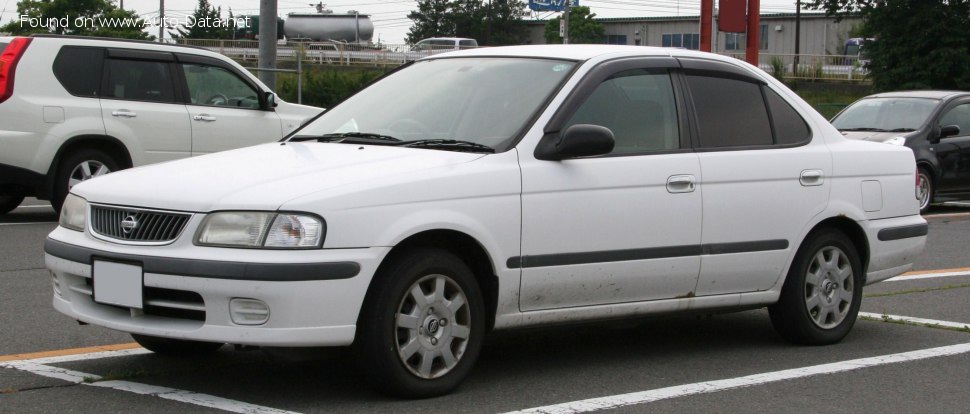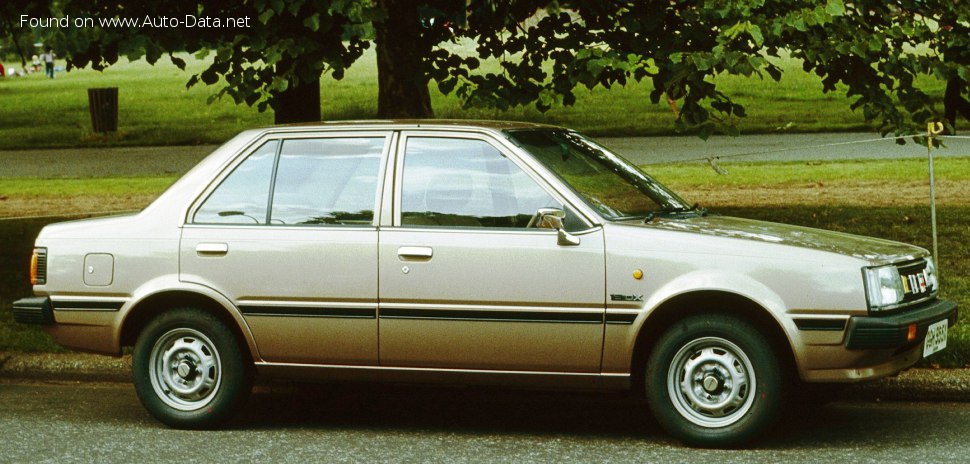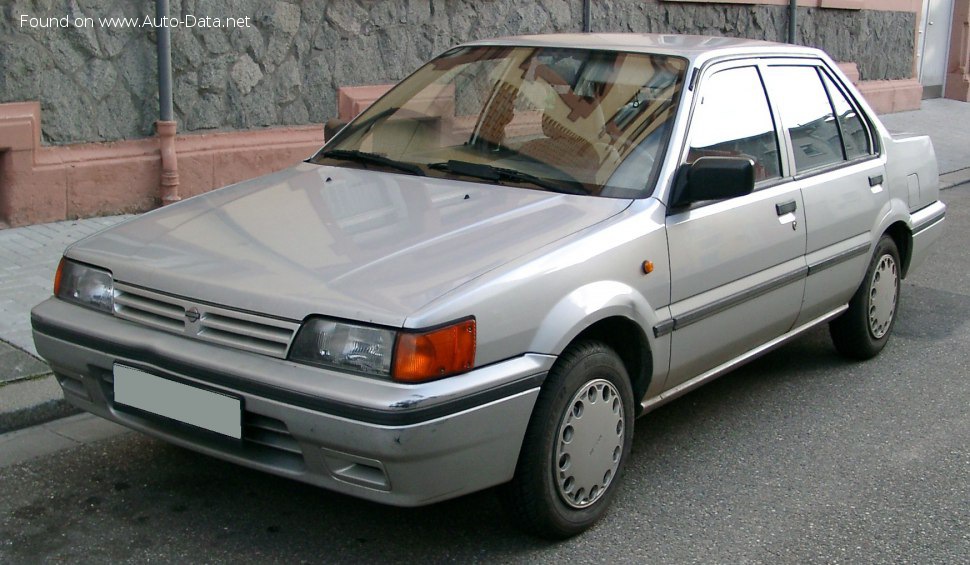
Introduction to the Nissan Sunny II (N13) 1.5 (71 Hp)
The Nissan Sunny II (N13) 1.5 (71 Hp) represents a significant chapter in the history of compact automobiles, particularly during the mid-to-late 1980s. Unveiled in 1986, this generation of the Nissan Sunny, known internally as the N13, continued the model’s long-standing tradition of offering reliable, economical, and practical transportation to a global audience. While recognized as the Sunny in most international markets, including Europe, Asia, and Australia, this platform was familiar to American consumers under the Nissan Sentra badge, showcasing Nissan’s strategy of adapting model names for regional market appeal.
The N13 generation, produced from 1986 to 1988 for this specific variant, marked an evolution in design and engineering for the Sunny line. It moved away from some of the squarer aesthetics of its predecessors, incorporating smoother lines and a more aerodynamic profile that was becoming standard for the era. The 1.5-liter variant, with its 71 horsepower engine, was positioned as a workhorse model, emphasizing fuel efficiency and durability over outright performance. It served as a critical competitor in the fiercely contested compact segment, appealing to buyers seeking an affordable and dependable daily driver.
Engineering and Performance of the Nissan Sunny II (N13)
Powertrain and Dynamics of the Nissan Sunny II (N13)
At the heart of the Nissan Sunny II (N13) 1.5 (71 Hp) sedan was a naturally aspirated 1.5-liter internal combustion gasoline engine. This powerplant was engineered with a primary focus on reliability and fuel economy, characteristics that were paramount for compact cars in the 1980s. Delivering a respectable 71 horsepower, the engine provided adequate motivation for the vehicle’s size and intended purpose. While not a performance leader, its output was more than sufficient for daily commuting, city driving, and moderate highway travel.
Nissan’s engineering philosophy for the Sunny N13 emphasized efficiency and longevity. The naturally aspirated design, common for the era, contributed to its straightforward maintenance and robust nature. This engine was part of a lineage of Nissan powerplants renowned for their smooth operation and durability, often exceeding expectations in terms of mileage and operational lifespan with proper care. The power delivery was linear and predictable, making the Sunny an easy car to drive for a wide range of drivers.
Although specific torque figures are not provided in the data, a 1.5-liter engine of this period typically produced around 80-90 lb-ft of torque, delivered at relatively low RPMs to enhance drivability in urban environments. This setup would have been paired with a manual transmission as standard, with an automatic option likely available, channeling power to the front wheels. The shift to a front-wheel-drive (FWD) architecture for the N13 generation was a crucial aspect, offering improved interior packaging, better traction in adverse weather conditions, and enhanced fuel efficiency compared to previous rear-wheel-drive models. This FWD layout became a benchmark for compact cars globally, and the Sunny N13 effectively utilized its advantages.
Design and Features
Aesthetics and Practicality of the Nissan Sunny II (N13) Sedan
The Nissan Sunny II (N13) was offered in a traditional sedan body type, a configuration that remained immensely popular across its target markets. Its design language was a clear evolution from its N12 predecessor, adopting a more contemporary look for the latter half of the 1980s. While still retaining a somewhat boxy silhouette characteristic of the era, the N13 incorporated softer edges, a slightly raked windshield, and flush-mounted headlights, all contributing to a more aerodynamic and modern appearance than earlier models. This design ethos aimed for a balance between functional practicality and understated style.
On the exterior, the sedan’s lines were clean and unadorned, reflecting its role as an honest, no-frills mode of transport. The focus was on utility and ease of manufacturing, resulting in a design that was both practical and timeless in its simplicity. Large glass areas ensured excellent visibility, a key safety and convenience feature for drivers.
Inside, the N13 Sunny sedan prioritized functionality and durability. The cabin was designed to be spacious for a compact car, offering comfortable seating for four adults, or five for shorter journeys. Materials used for the upholstery and dashboard plastics were chosen for their hard-wearing properties, capable of withstanding years of daily use. Controls were logically laid out and easy to operate, with a clear instrument cluster providing essential driving information. Standard features for the 1.5 (71 Hp) model would have been relatively basic, often including manual windows, a basic AM/FM radio, and perhaps an analog clock. Air conditioning, power steering, and a cassette player were typically optional extras, depending on the specific market and trim level.
Safety features, while rudimentary by today’s standards, were typical for a compact car of the mid-1980s. Three-point seatbelts for front occupants and lap belts for rear passengers were standard. The car’s unibody construction provided a degree of passive safety, designed to absorb impact forces. Anti-lock braking systems (ABS) and airbags were still luxury features, rarely seen in this segment at the time. Instead, the Sunny relied on its predictable handling and driver visibility to prevent accidents.
Technical Specifications: Nissan Sunny II (N13) 1.5 (71 Hp) Sedan
| Category | Specification |
|---|---|
| General Information | |
| Brand | Nissan |
| Model | Sunny |
| Generation | Sunny II (N13) |
| Type (Engine) | 1.5 (71 Hp) |
| Start of Production | 1986 year |
| End of Production | 1988 year |
| Powertrain Architecture | Internal Combustion engine |
| Body type | Sedan |
| Performance Specs | |
| Fuel Type | Petrol (Gasoline) |
| Power | 71 Hp |
| Engine Aspiration | Naturally aspirated engine |
| Engine Displacement | Approximately 1.5 Liters (inferred from model name) |
| Drivetrain | Front-Wheel Drive (common for N13 generation, not specified in data) |
| Transmission | Not specified (typically manual standard, automatic optional) |
| Torque | Not specified |
| 0-60 mph Acceleration | Not specified |
| Top Speed | Not specified |
| Fuel Economy | Not specified |
Legacy and Market Impact
The Nissan Sunny II (N13) 1.5 (71 Hp) sedan played a crucial role in cementing Nissan’s reputation as a manufacturer of dependable and economical compact cars across the globe. Its production run from 1986 to 1988 for this specific variant placed it squarely in a period of intense competition within the compact segment, where reliability, fuel efficiency, and affordability were key determinants of success.
In its primary markets outside of North America, the Sunny N13 faced stiff competition from Japanese rivals such as the Toyota Corolla (E80/E90 generations), Honda Civic (third/fourth generations), and Mazda 323 (BF generation). European competitors included models like the Volkswagen Golf, Opel Kadett (Vauxhall Astra), and Ford Escort. The Sunny consistently held its own, often praised for its robust build quality, comfortable ride, and low running costs. Its reputation for mechanical reliability was particularly strong, making it a popular choice for families and fleet operators seeking a no-fuss vehicle.
The N13 generation, including the 1.5-liter variant, contributed significantly to Nissan’s global sales volumes. It was a car that embodied the practical needs of the average consumer, offering a spacious interior for its class, a decent-sized trunk, and straightforward mechanics that were easy to service. This made it a favorite in emerging markets and for budget-conscious buyers in developed economies. The vehicle’s enduring quality meant that many examples remained on the road for well over a decade, further enhancing its legacy of durability.
The Sunny N13’s impact extended beyond just sales figures; it helped shape the perception of Japanese compact cars as highly engineered, efficient, and long-lasting alternatives to their European and American counterparts. It demonstrated Nissan’s capability to produce vehicles that met diverse global demands, from the bustling streets of Tokyo to the highways of Europe and the varying terrains of developing nations. While later generations of the Sunny and Sentra would continue to evolve with new technologies and designs, the N13 stands as a testament to a period when simplicity, reliability, and value were the driving forces behind compact car development. Its legacy is one of unwavering dependability, making it a fondly remembered classic in the annals of automotive history.