The Nissan Sunny II (N13): A Global Compact Standard-Bearer
The Nissan Sunny II, internally designated as the N13 generation, represents a pivotal chapter in the history of compact automobiles. Produced from 1986 to 1988, this iteration of the venerable Sunny nameplate continued Nissan’s tradition of offering reliable, economical, and practical transportation to a global audience. While known as the Sunny in most international markets, this specific generation was sold in the United States as the Nissan Sentra, establishing a strong foothold for Nissan in the highly competitive compact car segment. The N13 Sunny, particularly in its 1.6-liter, 84 horsepower sedan configuration, epitomized the Japanese automotive philosophy of the mid-1980s: delivering maximum utility and dependability with sensible engineering and accessible pricing.
Designed to cater to families and individual commuters alike, the Nissan Sunny II (N13) was a workhorse that prioritized efficiency and longevity. It competed fiercely against rivals such as the Toyota Corolla, Honda Civic, and Mitsubishi Lancer, contributing significantly to the reputation for quality and value that Japanese manufacturers were rapidly building worldwide. Its straightforward mechanicals and functional design made it a popular choice in numerous markets, from Europe and Asia to Australia and the Americas, albeit under different nomenclature. The 1.6-liter engine variant, the focus of this expert analysis, offered a balanced blend of performance and fuel economy, making it an ideal daily driver for the era.
Engine and Performance: The Heart of the Nissan Sunny II (N13)
At the core of the Nissan Sunny II (N13) 1.6 (84 Hp) sedan was a robust and well-proven internal combustion engine designed for durability and efficiency. This particular model was equipped with a naturally aspirated 1.6-liter gasoline (petrol) engine, delivering a respectable 84 horsepower. In the context of the mid-1980s compact car market, 84 horsepower from a 1.6-liter four-cylinder engine was quite competitive, offering adequate power for daily commuting, highway cruising, and light family duties without excessive fuel consumption.
The engine’s naturally aspirated design meant a linear and predictable power delivery, free from the complexities and potential lag associated with turbocharging, which was less common in this segment at the time. This simplicity contributed significantly to the engine’s legendary reliability and ease of maintenance – key selling points for budget-conscious consumers. Paired typically with either a five-speed manual transmission or an optional automatic, the powertrain was engineered for smooth operation and longevity. While not a performance powerhouse, the 1.6-liter unit provided sufficient torque for city driving and merging onto highways, ensuring a confident and comfortable driving experience for its intended audience. Its design emphasized low-end torque for urban maneuverability and decent highway economy, making it a versatile performer across various driving conditions.
Powertrain Architecture and Fuel Efficiency
The powertrain architecture of the Nissan Sunny II (N13) was conventional for its class, featuring a front-engine, front-wheel-drive layout. This configuration was increasingly becoming the standard for compact cars due to its inherent advantages in packaging efficiency, interior space, and driving dynamics, especially in adverse weather conditions. The front-wheel-drive system allowed for a flat floor in the rear passenger compartment, enhancing comfort for occupants and contributing to the car’s overall practicality.
Fuel efficiency was a primary consideration in the design of the 1.6-liter engine. Nissan employed technologies of the era to optimize combustion and minimize friction, ensuring that the 84 horsepower output was achieved with reasonable fuel consumption. For a gasoline-powered vehicle of its time, the N13 Sunny 1.6 offered competitive mileage, making it an economical choice for families and commuters looking to minimize running costs. This focus on efficiency, combined with its renowned reliability, solidified the Sunny’s reputation as a smart and sensible purchase.
Design and Features: Form Follows Function
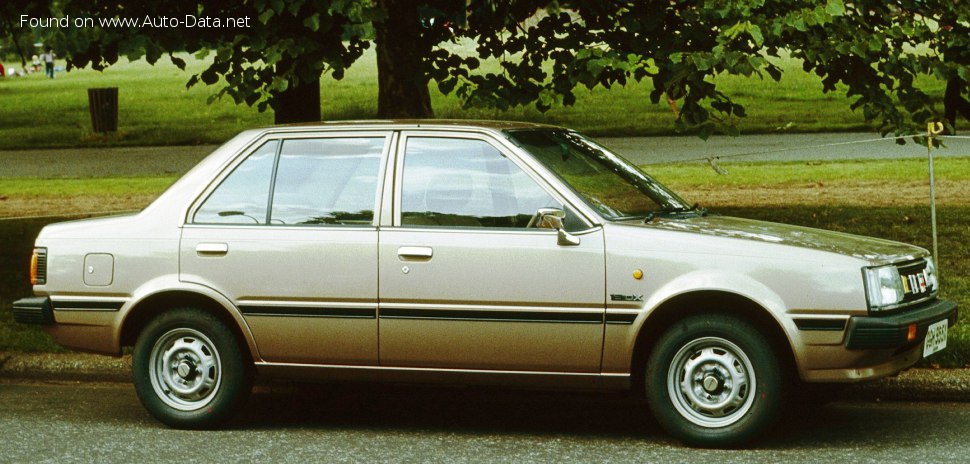
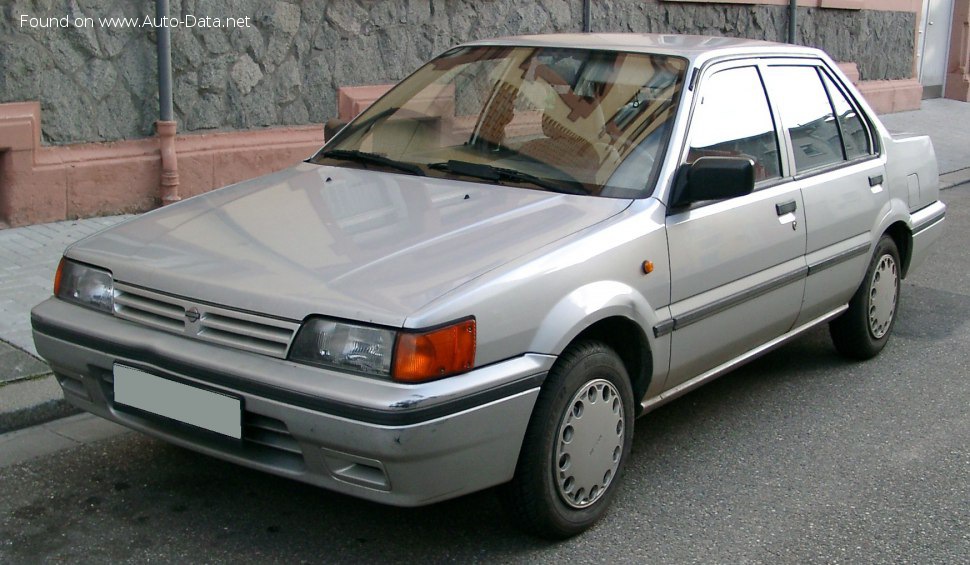
The Nissan Sunny II (N13) sedan embodied the functional design principles prevalent in the mid-1980s. Its body type was a classic four-door sedan, characterized by clean lines, a relatively boxy silhouette, and a practical approach to aerodynamics. While not groundbreaking in its styling, the N13 offered a timeless and inoffensive aesthetic that appealed to a broad demographic. The exterior design prioritized visibility, ease of repair, and interior space, reflecting its role as a dependable family and commuter vehicle.
Inside, the N13 Sunny sedan was a testament to practicality and durability. The cabin was designed to be spacious for its class, comfortably accommodating four adults, with adequate legroom and headroom. Materials used for the interior trim and upholstery were chosen for their hard-wearing nature, capable of withstanding years of daily use. Dashboard layouts were straightforward and intuitive, with clearly legible instrumentation and easily accessible controls. Features, while modest by today’s standards, were appropriate for the segment and era. Depending on the market and trim level, these could include amenities such as a basic AM/FM radio, manual or optional power windows, air conditioning (often an optional extra), and durable cloth upholstery.
Safety features for the N13 generation were rudimentary compared to modern vehicles, typical of the mid-1980s. These generally included three-point seatbelts for front occupants and lap belts for rear passengers, along with a robust steel unibody construction. Nissan engineered the N13 to meet the safety standards of its various target markets, focusing on passive safety through structural integrity. The design ethos was clearly centered on delivering a no-nonsense, reliable, and comfortable package that served its purpose without unnecessary frills, a philosophy that resonated strongly with consumers globally.
Technical Specifications: Nissan Sunny II (N13) 1.6 (84 Hp) Sedan
| Category | Specification |
|---|---|
| General Information | |
| Brand | Nissan |
| Model | Sunny |
| Generation | Sunny II (N13) |
| Type (Engine) | 1.6 (84 Hp) |
| Start of production | 1986 year |
| End of production | 1988 year |
| Powertrain Architecture | Internal Combustion engine |
| Body type | Sedan |
| Performance Specs | |
| Fuel Type | Petrol (Gasoline) |
| Power | 84 Hp |
| Engine aspiration | Naturally aspirated engine |
Legacy and Market Impact of the Nissan Sunny II (N13)
The Nissan Sunny II (N13) carved out a significant legacy for itself, not just as a successful model in its own right, but as a critical component of Nissan’s global strategy in the 1980s. Its reputation for unwavering reliability, low running costs, and practical design made it a perennial favorite in many markets. This generation of the Sunny, and its Sentra counterpart in North America, played a crucial role in solidifying Nissan’s image as a manufacturer of dependable and value-driven vehicles.
In its primary markets, the N13 Sunny faced stiff competition from other Japanese and European compacts. Key rivals included the Toyota Corolla (E80/E90 generations), Honda Civic (third/fourth generations), Mitsubishi Lancer, Mazda 323, and various offerings from European manufacturers like the Opel Kadett/Vauxhall Astra and Ford Escort. Against these formidable competitors, the Sunny distinguished itself with its robust build quality and a no-nonsense approach to motoring. It wasn’t the sportiest or the most luxurious, but it consistently delivered on its promise of reliable transportation.
The N13 generation, with its diverse body styles (including hatchbacks and wagons not covered by this specific data but part of the N13 family), demonstrated Nissan’s commitment to offering a comprehensive range within the compact segment. The sedan, in particular, was a strong seller due to its universal appeal as a family car. Its mechanical simplicity meant that maintenance was straightforward and parts were generally affordable and readily available, further enhancing its appeal in regions where access to specialized service might be limited.
Historically, the Nissan Sunny II (N13) contributed to the broader narrative of Japanese automotive dominance in the compact car sector during the latter half of the 20th century. It showcased how Japanese manufacturers could consistently produce vehicles that offered superior reliability and value compared to many of their Western counterparts. This era was crucial for establishing the brand loyalty that Nissan enjoys to this day. While the Sunny nameplate eventually faded from some markets, replaced by models like the Sentra or Almera, the N13 generation remains a testament to a time when automotive engineering prioritized durability and practicality above all else, leaving an indelible mark on automotive history as a truly global workhorse.