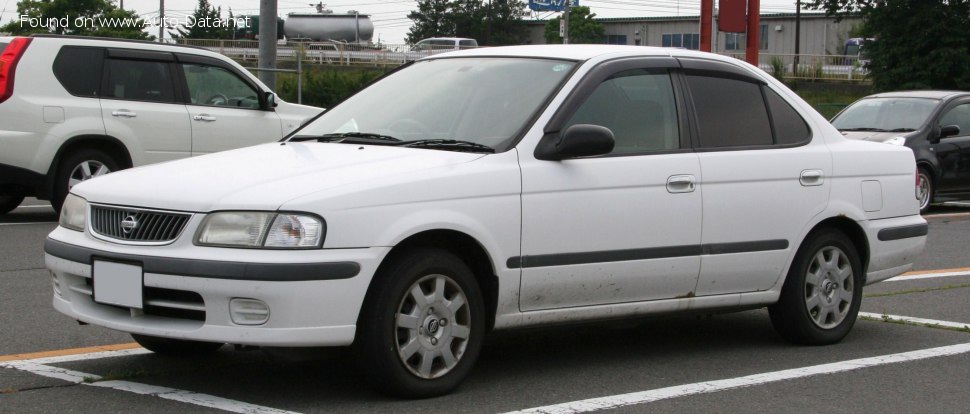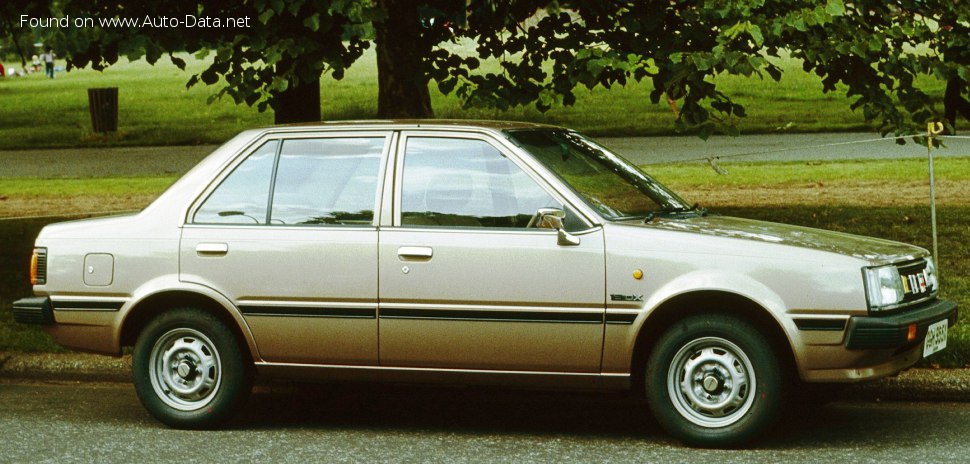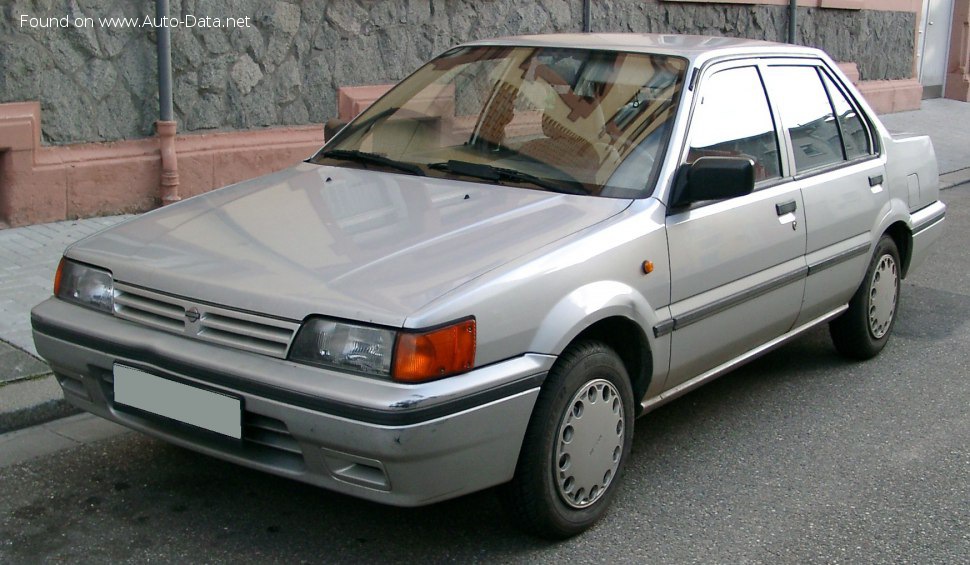
The Nissan Sunny II (N13): A Global Compact Workhorse (1986-1990)
The Nissan Sunny II, internally designated N13, represents the fifth generation of Nissan’s long-running and globally ubiquitous compact car series. Produced from 1986 to 1990, the Sunny N13 continued the model’s tradition of offering reliable, economical, and practical transportation for a diverse international clientele. While known as the Sentra in North America, the Nissan Sunny II (N13) nameplate held significant recognition across Europe, Asia, Australia, and many other markets, establishing itself as a quintessential family sedan and a stalwart in the competitive compact segment. This particular variant, the 1.6 i (73 Hp) sedan, was a common sight, embodying the no-frills, dependable motoring philosophy that defined many vehicles of its era.
The N13 generation marked a period of refinement rather than radical reinvention for the Sunny. Nissan focused on improving aerodynamics, interior comfort, and overall build quality, aiming to enhance its appeal against fierce competitors from Toyota (Corolla), Honda (Civic), and various European manufacturers. The 1.6-liter gasoline engine, while not a powerhouse, was engineered for longevity and fuel efficiency, making it an attractive option for budget-conscious buyers and families seeking a reliable daily driver. The sedan body style offered practical four-door access and a sensible trunk capacity, cementing its role as a versatile vehicle capable of handling both urban commutes and longer journeys with reasonable comfort.
Engine & Performance: The Practical Heart of the Nissan Sunny II (N13)
At the core of the Nissan Sunny II (N13) 1.6 i (73 Hp) sedan was a robust and dependable powertrain designed for efficiency and durability. This variant featured a 1.6-liter, naturally aspirated gasoline engine, producing a modest but entirely adequate 73 horsepower. In the context of the late 1980s, particularly for a compact sedan aimed at the mass market, this power output was typical and well-suited for its intended purpose. The engine was engineered for smooth operation and excellent fuel economy, priorities that often outweighed outright speed in this segment.
The naturally aspirated design meant a straightforward and less complex engine architecture, contributing to its renowned reliability and lower maintenance costs—factors highly valued by owners. While acceleration figures were not blistering, the 1.6-liter unit provided sufficient torque for city driving and comfortable cruising on highways, especially when paired with Nissan’s typically well-sorted manual or automatic transmissions (though specific transmission details for this variant are not provided, these were common options). The focus was on delivering consistent, predictable performance that wouldn’t strain the engine, ensuring a long service life. This particular engine configuration highlighted Nissan’s commitment to producing cars that were easy to own and operate, a characteristic that significantly contributed to the Sunny’s enduring popularity across various international markets.
Design & Features: Form Follows Function for the Nissan Sunny II (N13)
The design philosophy of the Nissan Sunny II (N13) was firmly rooted in practicality and understated functionality, reflecting the prevailing trends in compact car design during the late 1980s. The sedan body type, as featured in this 1.6 i (73 Hp) variant, presented a conventional three-box silhouette that prioritized interior space and trunk capacity. Its lines were clean and relatively uncluttered, moving away from some of the sharper, angular designs of the early 80s towards a slightly more aerodynamic and rounded aesthetic, though still distinctly a product of its time.
Key design elements included large glass areas, providing good outward visibility—a crucial safety and convenience feature. The front fascia typically featured rectangular or slightly rounded headlights integrated with a simple grille, projecting a sensible and approachable demeanor. Inside, the cabin was designed for ergonomic simplicity. Controls were logically placed and easy to operate, with durable materials chosen to withstand years of daily use. While luxurious amenities were not its primary focus, the N13 Sunny offered comfortable seating for four adults, with a fifth passenger being possible for shorter trips. Standard features for the era would have included basic heating and ventilation systems, a simple radio, and manual window winders, though power windows and air conditioning might have been optional extras depending on the market and trim level. Safety features, typical for the late 1980s, included three-point seatbelts for front occupants and lap belts for rear passengers, along with a robust body structure designed to offer reasonable crash protection for its class.
Technical Specifications: Nissan Sunny II (N13) 1.6 i (73 Hp)
| Attribute | Specification |
|---|---|
| Brand | Nissan |
| Model | Sunny |
| Generation | Sunny II (N13) |
| Type (Engine) | 1.6 i (73 Hp) |
| Start of production | 1986 year |
| End of production | 1990 year |
| Powertrain Architecture | Internal Combustion engine |
| Body type | Sedan |
| Fuel Type | Petrol (Gasoline) |
| Power | 73 Hp |
| Engine aspiration | Naturally aspirated engine |
Legacy & Market Impact of the Nissan Sunny II (N13)
The Nissan Sunny II (N13) holds a significant place in automotive history, particularly in the compact car segment. Its legacy is primarily built upon its reputation for unwavering reliability, affordability, and practical design. In many markets outside North America, where it was sold as the Nissan Sunny, it became a household name, synonymous with dependable family transport and economical ownership. Its robust build quality and straightforward mechanicals meant lower running costs and a longer lifespan, making it a popular choice for first-time car buyers, small families, and even fleet operators.
In its primary markets, the Sunny N13 faced stiff competition from a host of well-established rivals. Key competitors included the Toyota Corolla (E90 generation), which also emphasized reliability and practicality, the Honda Civic (third and fourth generations), known for its efficient engines and often sportier handling, and the Mazda 323/Familia, another strong contender in the compact space. In Europe, it also contended with local favorites like the Volkswagen Jetta (Mk2), Opel Kadett (Astra), and Ford Escort, all vying for market share with similar propositions of economy and versatility. Despite this crowded field, the Sunny N13 managed to carve out a substantial niche, particularly appealing to buyers who valued proven engineering over cutting-edge innovation.
The historical significance of the N13 lies in its contribution to Nissan’s global footprint and its role in solidifying the brand’s image as a producer of durable, no-nonsense vehicles. While it may not be remembered for groundbreaking technology or revolutionary design, its impact was more fundamental: it provided reliable mobility for millions of people worldwide. The 1.6 i (73 Hp) sedan variant, in particular, exemplified the core values of the N13 generation. It was a car that simply worked, day in and day out, asking for little and delivering consistently. Many examples of the Sunny N13 continued to serve their owners well into the 21st century, a testament to its inherent quality and the sound engineering principles applied by Nissan during its development. Its enduring presence on the roads of numerous countries long after its production ceased speaks volumes about its success and lasting legacy as a true global workhorse.