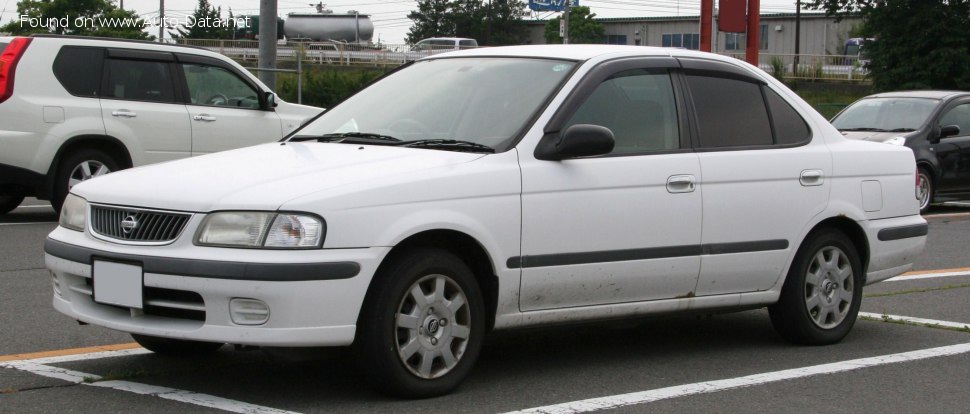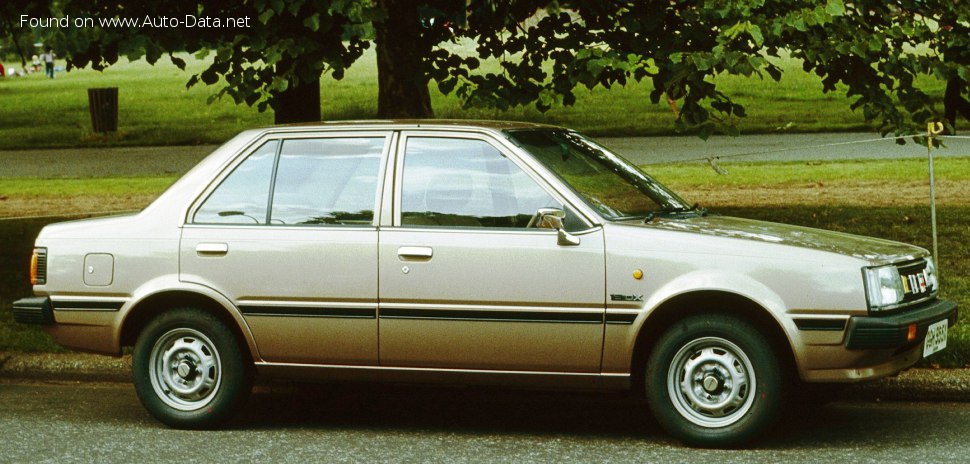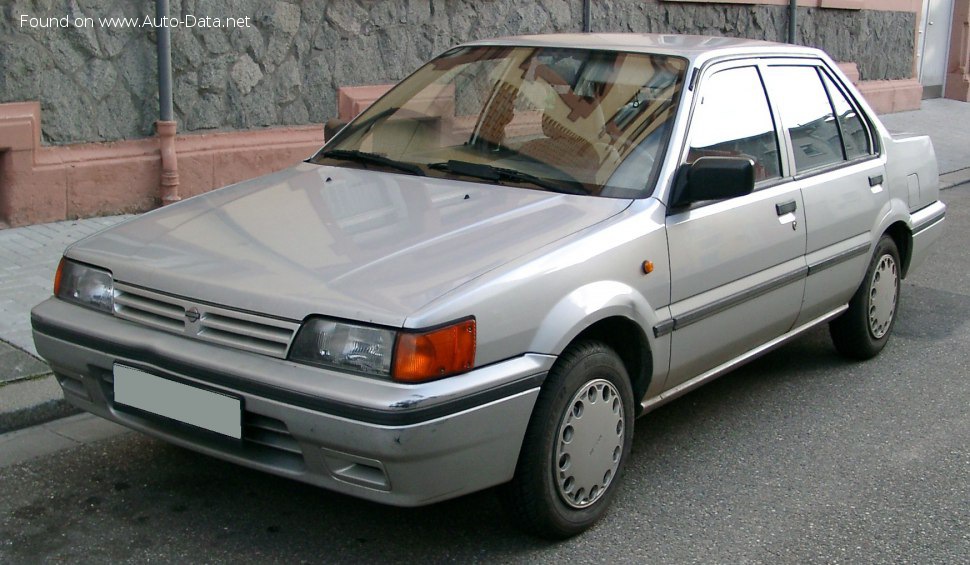
The Nissan Sunny II (N13) 1.7 D: An Economical Workhorse of the Late 1980s
The Nissan Sunny, a nameplate synonymous with reliable and economical transportation across various global markets, saw its second iteration, the N13 generation, introduced in 1986. Among its diverse powertrain offerings, the Nissan Sunny II (N13) 1.7 D (54 Hp) sedan emerged as a particularly significant model, especially in regions prioritizing fuel efficiency and durability. Produced from 1986 to 1989, this variant represented Nissan’s commitment to providing practical, no-frills motoring for families and businesses alike. While the Sunny nameplate enjoyed considerable success in North America as the Sentra, the specific 1.7-liter diesel variant was predominantly aimed at European, Asian, and other international markets where diesel engines in compact cars were a popular and sensible choice due to lower fuel costs and superior mileage compared to gasoline counterparts.
The N13 generation of the Sunny was a pivotal model, building on the reputation established by its predecessors. It was designed to be a straightforward, dependable vehicle capable of withstanding the rigors of daily use, whether as a family car or a fleet vehicle. The 1.7 D variant, in particular, underscored this philosophy, offering a balance of low running costs and a robust, if not exhilarating, driving experience. This article delves into the technical aspects, design philosophy, and market impact of this unassuming yet vital component of Nissan’s late 1980s lineup.
Engine and Performance: The Heart of the Nissan Sunny II (N13) 1.7 D
At the core of the Nissan Sunny II (N13) 1.7 D (54 Hp) was a robust 1.7-liter, naturally aspirated diesel engine. This internal combustion engine was engineered for longevity and efficiency rather than outright speed. With a modest output of 54 horsepower, the powertrain architecture was distinctly utilitarian, designed to deliver consistent, dependable performance for everyday driving. In an era before common rail injection and turbocharging became ubiquitous in compact diesels, this engine relied on proven, simpler technology, contributing to its reputation for reliability and ease of maintenance.
The 54 horsepower might seem low by modern standards, but in the context of the late 1980s and its intended markets, it was perfectly adequate. This engine was not designed for rapid acceleration or high-speed cruising, but rather for navigating urban environments, rural roads, and long-distance travel where fuel economy was paramount. The naturally aspirated design meant a smoother, more linear power delivery, albeit with a characteristic diesel clatter and a more leisurely pace compared to its gasoline siblings. Its torque characteristics, while not explicitly provided in the data, would have been sufficient for pulling away from stops and maintaining momentum, especially when mated to a well-geared manual transmission, which was the standard for such an application.
Fuel type was, of course, diesel, capitalizing on the cost advantages and better fuel consumption often associated with this fuel in European and Asian markets. The focus on efficiency made the Nissan Sunny II (N13) 1.7 D an attractive proposition for buyers looking to minimize running costs, making it a popular choice for budget-conscious families and fleet operators. The engine’s simplicity also translated into fewer potential points of failure, reinforcing its image as a durable workhorse that could reliably rack up high mileage.
Design and Features: Practicality in a Sedan Form
The N13 generation of the Nissan Sunny, including the Nissan Sunny II (N13) 1.7 D, adopted a design language typical of the late 1980s: functional, clean, and unpretentious. The body type was a conventional sedan, offering a practical three-box configuration with a separate trunk for cargo. This design maximized interior space and luggage capacity, making it a suitable family car. The exterior styling was characterized by angular lines, large glass areas for good visibility, and a relatively compact footprint, making it easy to maneuver and park in congested urban settings.
Inside, the N13 Sunny prioritized ergonomics and durability. The cabin would have featured hard-wearing materials designed to withstand years of use. While luxury appointments were minimal in this entry-level diesel variant, the focus was on providing a comfortable and functional environment for occupants. Expect features such as clear analog instrumentation, straightforward climate controls, and perhaps a basic radio. Seating would have been designed for comfort on longer journeys, with adequate head and legroom for its class.
Safety features for a vehicle of this era were rudimentary by today’s standards. The N13 Sunny would have included standard three-point seatbelts for front and possibly rear outboard passengers. The body structure would have incorporated basic crumple zones, a significant advancement for its time, designed to absorb impact energy in a collision. Anti-lock brakes (ABS) and airbags were still luxury options or not yet available in this segment during the N13’s production run. Instead, Nissan focused on engineering a structurally sound vehicle that offered predictable handling and reliable braking, which were considered core safety attributes for mass-market vehicles of the period. The overall design ethos was one of sensible engineering, delivering a reliable and practical package without unnecessary frills.
Technical Specifications
| Attribute | Specification |
|---|---|
| Brand | Nissan |
| Model | Sunny |
| Generation | Sunny II (N13) |
| Engine Type | 1.7 D |
| Power | 54 Hp |
| Production Start | 1986 year |
| Production End | 1989 year |
| Powertrain Architecture | Internal Combustion engine |
| Body Type | Sedan |
| Fuel Type | Diesel |
| Engine Aspiration | Naturally aspirated engine |
Legacy and Market Impact
The Nissan Sunny II (N13) 1.7 D (54 Hp), along with its N13 siblings, played a crucial role in cementing the Sunny’s reputation as a global compact car leader. While this specific diesel variant was not sold in the United States (where the Sentra nameplate, with gasoline engines, was prevalent), it carved out a significant niche in markets like Europe, parts of Asia, and Africa. In these regions, the combination of a compact sedan body, Nissan’s renowned reliability, and the exceptional fuel economy of the 1.7-liter diesel engine made it a compelling choice.
Its primary competitors in these markets included other European and Japanese compact diesel sedans and hatchbacks of the era, such as the Volkswagen Golf Diesel, Opel Kadett Diesel, Ford Escort Diesel, and Toyota Corolla Diesel. Against these rivals, the Sunny N13 1.7 D stood out for its straightforward engineering and a robust build quality that often translated into lower long-term ownership costs. It wasn’t the most exciting car to drive, nor was it the most technologically advanced, but its unwavering dependability and miserly fuel consumption made it a favorite among those who valued practicality above all else.
The historical significance of the N13 Sunny 1.7 D lies in its embodiment of the “workhorse” vehicle. It was a car that simply got the job done, day in and day out, with minimal fuss. Its impact was felt in countless households and businesses that relied on its economical operation. It contributed to Nissan’s strong market presence in many international territories and helped establish a perception of the brand as a manufacturer of durable and cost-effective vehicles. Even decades later, many examples of the N13 Sunny can still be found on the roads in various parts of the world, a testament to its enduring quality and the robust design of its 1.7-liter diesel engine. This unassuming sedan, while perhaps overlooked in the annals of automotive performance, truly represents a segment of motoring focused on accessibility, efficiency, and unwavering reliability.