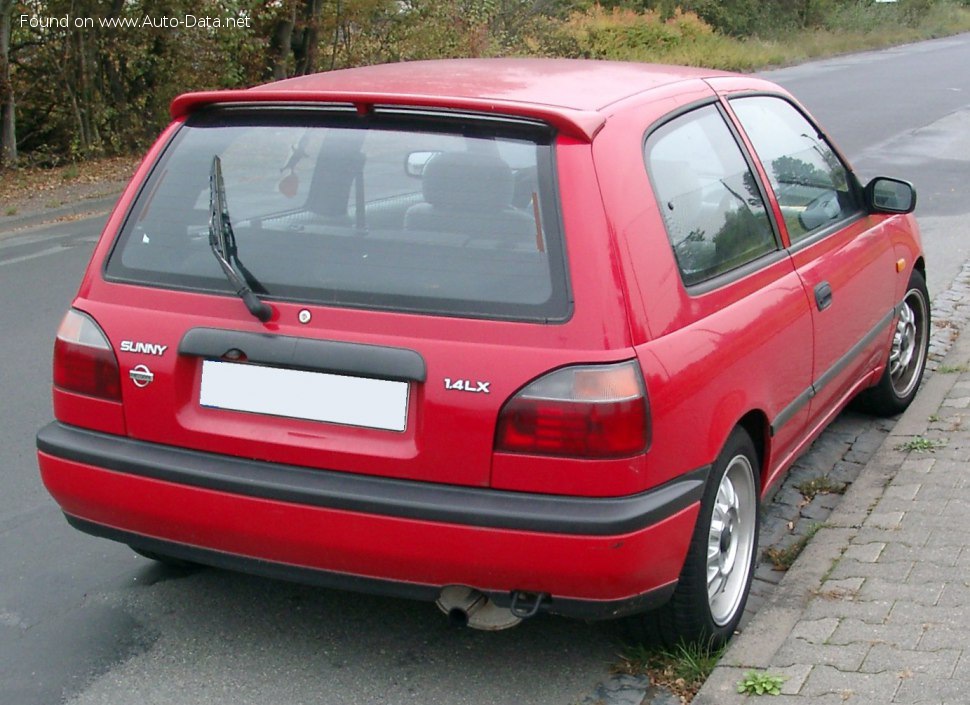
The Nissan Sunny III Hatch (N14) 3 doors 1.6 16V (90 Hp): A Global Compact Workhorse
The Nissan Sunny III Hatch (N14) 3 doors 1.6 16V (90 Hp) represents a significant chapter in Nissan’s long-standing tradition of producing reliable, economical, and practical compact vehicles for the global market. Produced from 1990 to 1992, this particular variant of the N14 generation, a three-door hatchback powered by a 1.6-liter 16-valve engine, carved out a niche for itself as an accessible and dependable daily driver in numerous markets, particularly across Europe and Asia. While the Sunny nameplate was often known as the Sentra in North America, the N14 hatchback, especially in its three-door configuration, was more commonly encountered in overseas markets where its compact dimensions and versatile cargo capacity made it a popular choice among urban dwellers and budget-conscious families alike. It competed in the fiercely contested C-segment, offering a blend of Japanese engineering prowess and everyday utility.
Engine & Performance of the Nissan Sunny III Hatch (N14) 3 doors
At the heart of the Nissan Sunny III Hatch (N14) 3 doors 1.6 16V (90 Hp) lies the renowned GA16DE engine. This inline four-cylinder, naturally aspirated gasoline engine featured a Double Overhead Camshaft (DOHC) valvetrain with 16 valves, a relatively advanced setup for a compact car engine of its era. With an engine displacement of 1597 cm³ (97.45 cubic inches), it delivered a respectable 90 horsepower at 6000 rpm, translating to a power-per-liter output of 56.4 horsepower per liter. Torque was rated at 136 Nm (100.31 lb.-ft.) at 4000 rpm, providing a good balance of low-end grunt for city driving and sufficient power for highway cruising. The engine utilized a multi-port manifold injection system, ensuring efficient fuel delivery and combustion.
Mated to a 5-speed manual transmission, the powertrain architecture of this Nissan Sunny variant was a conventional front-engine, front-wheel-drive layout, a configuration favored for its packaging efficiency and cost-effectiveness in compact cars. This setup allowed the 1038 kg (2288.4 lbs.) hatchback to accelerate from 0 to 60 mph in a competitive 10.2 seconds (calculated). Its maximum speed was approximately 111.85 mph (180 km/h), making it capable of holding its own on most highways. Fuel efficiency was a strong point for the Sunny N14, with a combined consumption rate of 6.9 liters per 100 km, which translates to an impressive 34.1 US miles per gallon. This combination of reliable performance and economical operation underscored the Sunny’s appeal as a sensible and affordable vehicle.
Design & Features: The Practicality of the Nissan Sunny III Hatch (N14) 3 doors
The design of the Nissan Sunny III Hatch (N14) 3 doors reflects the pragmatic automotive aesthetics of the early 1990s. Its three-door hatchback body style offered a sporty yet functional appearance, appealing to younger buyers or those prioritizing cargo versatility. With an overall length of 156.5 inches (3975 mm), a width of 66.54 inches (1690 mm), and a height of 54.92 inches (1395 mm), the N14 Hatch was a true compact, easy to maneuver and park in congested urban environments. The wheelbase measured 95.67 inches (2430 mm), contributing to a stable ride quality for its class.
Despite its compact exterior, the interior of the Sunny N14 was designed to maximize utility. It offered seating for five occupants, although the rear seats in a three-door configuration were best suited for occasional use or children. The trunk space was practical for its segment, offering a minimum of 9.89 cubic feet (280 liters) and expanding to a generous 34.96 cubic feet (990 liters) with the rear seats folded down, making it surprisingly versatile for hauling groceries, luggage, or even larger items. The N14 featured a straightforward suspension setup, with wishbones at the front and spring struts at the rear, providing a comfortable and predictable ride. Braking was handled by ventilated discs at the front and drums at the rear, with the added safety benefit of an Anti-lock Braking System (ABS) available as an assisting system. The hydraulic power steering system, a rack and pinion type, offered light and responsive steering, enhancing the driving experience in city traffic. Standard tire size was 175/65 R14, balancing grip with ride comfort and fuel efficiency.
Technical Specifications
| Category | Specification |
|---|---|
| General Information | |
| Brand | Nissan |
| Model | Sunny |
| Generation | Sunny III Hatch (N14) 3 doors |
| Type (Engine) | 1.6 16V (90 Hp) |
| Start of Production | 1990 year |
| End of Production | 1992 year |
| Powertrain Architecture | Internal Combustion engine |
| Body type | Hatchback |
| Seats | 5 |
| Doors | 3 |
| Performance Specs | |
| Fuel consumption (economy) – combined | 6.9 l/100 km (34.1 US mpg) |
| Fuel Type | Petrol (Gasoline) |
| Acceleration 0 – 60 mph | 10.2 sec |
| Maximum speed | 111.85 mph (180 km/h) |
| Weight-to-power ratio | 11.5 kg/Hp (86.7 Hp/tonne) |
| Weight-to-torque ratio | 7.6 kg/Nm (131 Nm/tonne) |
| Engine Specs | |
| Power | 90 Hp @ 6000 rpm |
| Power per liter | 56.4 Hp/l |
| Torque | 100.31 lb.-ft. (136 Nm) @ 4000 rpm |
| Engine layout | Front, Transverse |
| Engine Model/Code | GA16DE |
| Engine displacement | 1.6 l (1597 cm³, 97.45 cu. in.) |
| Number of cylinders | 4 |
| Engine configuration | Inline |
| Cylinder Bore | 2.99 in. (76 mm) |
| Piston Stroke | 3.46 in. (88 mm) |
| Compression ratio | 9.8:1 |
| Number of valves per cylinder | 4 |
| Fuel injection system | Multi-port manifold injection |
| Engine aspiration | Naturally aspirated engine |
| Valvetrain | DOHC |
| Engine oil capacity | 3.38 US qt (3.2 l) |
| Coolant | 6.02 US qt (5.7 l) |
| Space, Volume and Weights | |
| Kerb Weight | 2288.4 lbs. (1038 kg) |
| Max. weight | 3406.14 lbs. (1545 kg) |
| Max load | 1117.74 lbs. (507 kg) |
| Trunk (boot) space – minimum | 9.89 cu. ft. (280 l) |
| Trunk (boot) space – maximum | 34.96 cu. ft. (990 l) |
| Fuel tank capacity | 13.21 US gal (50 l) |
| Dimensions | |
| Length | 156.5 in. (3975 mm) |
| Width | 66.54 in. (1690 mm) |
| Height | 54.92 in. (1395 mm) |
| Wheelbase | 95.67 in. (2430 mm) |
| Front track | 56.5 in. (1435 mm) |
| Rear (Back) track | 55.91 in. (1420 mm) |
| Drivetrain, Brakes and Suspension Specs | |
| Drivetrain Architecture | Front wheel drive (Internal Combustion engine drives the front wheels) |
| Drive wheel | Front wheel drive |
| Number of gears and type of gearbox | 5 gears, manual transmission |
| Front suspension | Wishbone |
| Rear suspension | Spring Strut |
| Front brakes | Ventilated discs |
| Rear brakes | Drum |
| Assisting systems | ABS (Anti-lock braking system) |
| Steering type | Steering rack and pinion |
| Power steering | Hydraulic Steering |
| Tires size | 175/65 R14 |
Legacy & Market Impact of the Nissan Sunny III Hatch (N14) 3 doors
The Nissan Sunny III Hatch (N14) 3 doors, particularly with its 1.6-liter engine, solidified Nissan’s reputation for producing reliable and cost-effective compact cars during the early 1990s. While not a performance icon, its enduring appeal lay in its bulletproof mechanicals, low running costs, and practical design. In key markets outside of North America, where it competed against mainstays like the Volkswagen Golf, Ford Escort, Toyota Corolla, and Honda Civic, the Sunny N14 offered a compelling alternative. It might not have had the same panache as a Golf or the dynamic edge of a Civic, but it consistently delivered on its promise of dependable transportation.
The N14 generation, including this specific hatchback variant, contributed significantly to Nissan’s global sales volume, especially in European and Asian markets where compact hatchbacks were, and still are, highly popular. Its robust GA16DE engine, known for its longevity and ease of maintenance, became a hallmark of reliability for Nissan during this period. The car’s straightforward engineering made it a favorite among mechanics and owners who appreciated its lack of overly complex systems. Its historical significance lies in its role as a workhorse that kept millions moving efficiently and affordably. Even decades later, many N14 Sunnys can still be found on the roads worldwide, a testament to their inherent durability and the quality of Nissan’s engineering from that era. The Nissan Sunny III Hatch (N14) 3 doors 1.6 16V (90 Hp) stands as a reminder of a time when automotive design prioritized function and reliability, embodying the spirit of a truly global compact car.