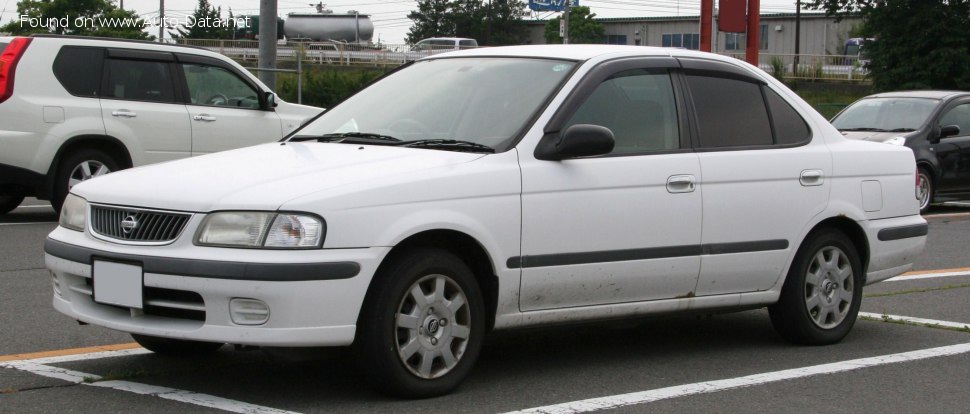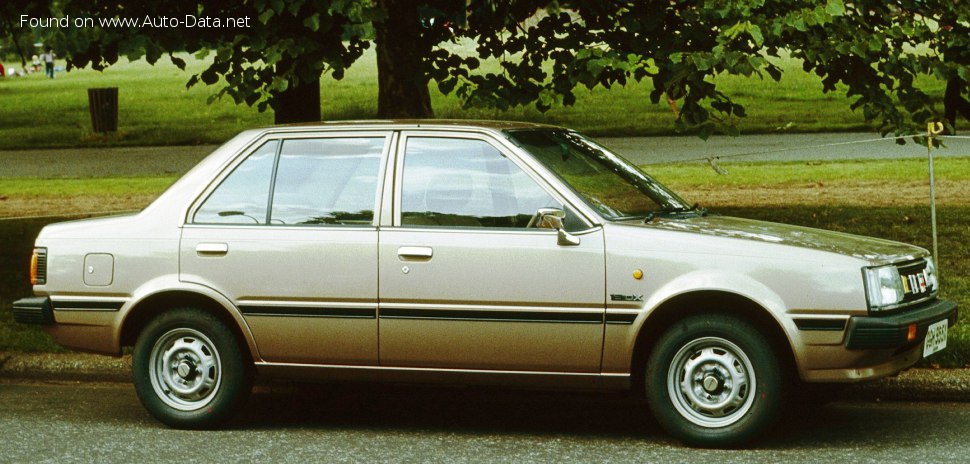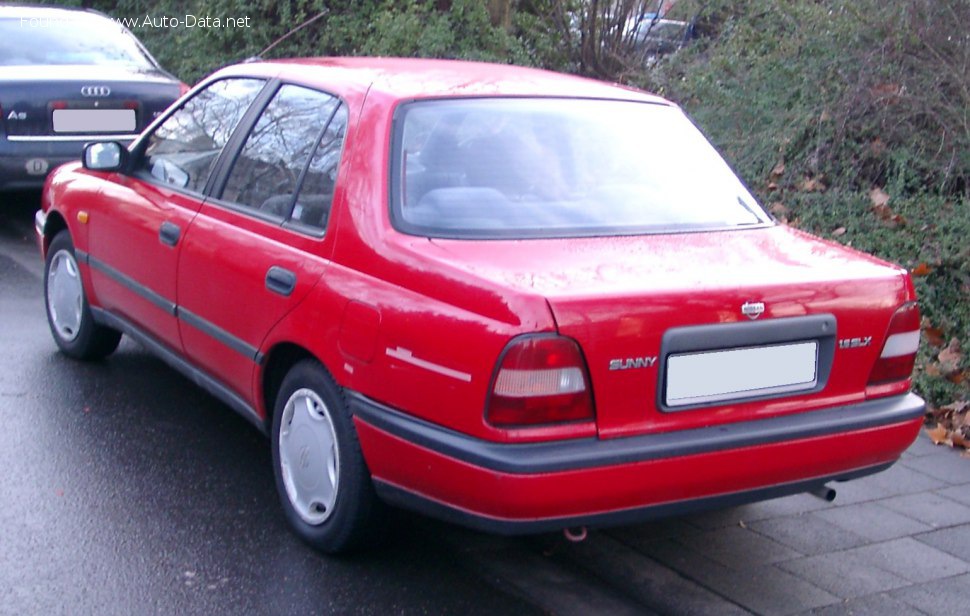
Introduction to the Nissan Sunny III (N14)
The Nissan Sunny, a nameplate synonymous with reliable, economical, and practical transportation for decades, saw its third major global iteration with the N14 generation, produced from 1990 to 1994. Known as the Nissan Sunny III (N14) in many international markets and notably as the Nissan Sentra in North America, this compact car continued Nissan’s tradition of offering a dependable daily driver. The N14 series represented a significant evolution from its predecessors, embracing more contemporary styling, improved aerodynamics, and a focus on enhanced driving dynamics and passenger comfort.
During its production run, the Nissan Sunny III (N14) was available in various body styles, including sedans, hatchbacks, and wagons, catering to a diverse global customer base. The specific model under review, the 1.6 16V (110 Hp) sedan, was a popular choice, striking a commendable balance between fuel efficiency and spirited performance for its class. Positioned within the highly competitive compact segment, the Sunny N14 aimed to provide an affordable yet refined motoring experience, leveraging Nissan’s reputation for build quality and mechanical robustness. Its design cues and engineering principles reflected the automotive trends of the early 1990s, emphasizing practicality without sacrificing modern amenities or a pleasant driving experience.
Engine and Performance of the Nissan Sunny III (N14)
Powertrain Overview
At the heart of the Nissan Sunny III (N14) 1.6 16V (110 Hp) model lay a robust and well-engineered internal combustion engine designed for efficiency and durability. This naturally aspirated, inline four-cylinder petrol (gasoline) engine featured a front, transverse layout, typical for front-wheel-drive compact cars of its era. With an engine displacement of 1596 cm³ (approximately 1.6 liters or 97.39 cubic inches), it was a common and well-proven powerplant in Nissan’s lineup.
A key highlight of this engine was its advanced valvetrain for the time: a Double Overhead Camshaft (DOHC) configuration with 16 valves, meaning four valves per cylinder. This setup significantly improved engine breathing compared to older 8-valve or single overhead camshaft designs, allowing for better airflow into and out of the cylinders, which translated directly into improved power output and efficiency. Fuel delivery was managed by a multi-port manifold injection system, a sophisticated method that provided precise fuel metering to each cylinder, optimizing combustion and reducing emissions compared to older carburetor systems.
Performance Characteristics
The 1.6-liter DOHC engine generated a respectable 110 horsepower at 6000 rpm. This power output, coupled with a torque figure of 147 Nm (108.42 lb.-ft.) at 4000 rpm, provided the Nissan Sunny III (N14) with lively performance for its segment. The power-per-liter ratio stood at 68.9 Hp/l, indicating efficient power extraction from its displacement.
The powertrain architecture directed power to the front wheels via a 5-speed manual transmission. This combination offered drivers a direct and engaging driving experience, allowing for optimal control over the engine’s power band. With a curb weight of 1030 kg (2270.76 lbs), the Sunny III (N14) boasted a weight-to-power ratio of 9.4 kg/Hp (or 106.8 Hp per tonne) and a weight-to-torque ratio of 7 kg/Nm (or 142.7 Nm per tonne). These figures underscore the car’s agile nature and capable acceleration for a compact sedan of the early 1990s, making it suitable for both city commuting and longer highway journeys. Its compression ratio of 9.5:1 was also standard for naturally aspirated gasoline engines of that period, balancing performance with fuel economy.
Design and Features
Exterior and Interior Design
The Nissan Sunny III (N14) sedan embodied the design philosophy of the early 1990s: clean lines, functional aesthetics, and a focus on practicality. Its four-door sedan body type offered a traditional and widely accepted silhouette, emphasizing passenger comfort and cargo capacity. The exterior dimensions were compact yet substantial enough to provide a comfortable interior for five occupants. With a length of 4230 mm (166.54 inches), a width of 1690 mm (66.54 inches), and a height of 1395 mm (54.92 inches), the N14 Sunny was easy to maneuver in urban environments while maintaining a stable presence on the road. The wheelbase of 2430 mm (95.67 inches) was optimized for both ride comfort and interior space.
Inside, the Sunny N14 offered a no-nonsense, ergonomically sound cabin. The five-seat configuration provided adequate room for adults, and the materials, while not luxurious, were durable and well-fitted, reflecting Nissan’s commitment to reliability. Practicality was a strong suit, exemplified by a generous trunk (boot) space of 440 liters (15.54 cubic feet), making it highly capable for family errands or road trips. The fuel tank capacity of 50 liters (13.21 US gallons) ensured a decent range between fill-ups.
Chassis, Safety, and Convenience Features
Underneath its unassuming exterior, the Nissan Sunny III (N14) featured a conventional yet competent chassis setup. The front suspension utilized a wishbone design, known for providing good ride comfort and handling stability. The rear suspension employed a spring strut system, a cost-effective and space-efficient solution common in compact cars. Braking power was provided by ventilated discs at the front, offering superior heat dissipation and stopping performance, complemented by drum brakes at the rear.
A significant safety feature for its class and era was the inclusion of ABS (Anti-lock Braking System). In the early 1990s, ABS was still a premium option or reserved for higher-end vehicles, making its presence in the Sunny N14 a testament to Nissan’s focus on progressive safety. Steering was managed by a rack and pinion system, assisted by hydraulic power steering, providing a comfortable and responsive feel to the driver. The car rode on 175/70 R13 tires, a common size for compact cars of the period, balancing grip with ride comfort and affordability. The front and rear tracks of 1445 mm (56.89 inches) and 1430 mm (56.3 inches) respectively contributed to the car’s stable road manners.
Technical Specifications: Nissan Sunny III (N14) 1.6 16V (110 Hp)
| Category | Specification |
|---|---|
| General Information | |
| Brand | Nissan |
| Model | Sunny |
| Generation | Sunny III (N14) |
| Type (Engine) | 1.6 16V (110 Hp) |
| Start of Production | 1990 year |
| End of Production | 1994 year |
| Powertrain Architecture | Internal Combustion Engine |
| Body Type | Sedan |
| Seats | 5 |
| Doors | 4 |
| Performance Specs | |
| Fuel Type | Petrol (Gasoline) |
| Power | 110 Hp @ 6000 rpm |
| Power per Liter | 68.9 Hp/l |
| Torque | 147 Nm @ 4000 rpm (108.42 lb.-ft. @ 4000 rpm) |
| Weight-to-Power Ratio | 9.4 kg/Hp (106.8 Hp/tonne) |
| Weight-to-Torque Ratio | 7 kg/Nm (142.7 Nm/tonne) |
| Engine Specs | |
| Engine Layout | Front, Transverse |
| Engine Displacement | 1596 cm³ (1.6 l / 97.39 cu. in.) |
| Number of Cylinders | 4 |
| Engine Configuration | Inline |
| Cylinder Bore | 76 mm (2.99 in) |
| Piston Stroke | 88 mm (3.46 in) |
| Compression Ratio | 9.5:1 |
| Number of Valves per Cylinder | 4 |
| Fuel Injection System | Multi-port manifold injection |
| Engine Aspiration | Naturally aspirated engine |
| Valvetrain | DOHC |
| Space, Volume and Weights | |
| Kerb Weight | 1030 kg (2270.76 lbs) |
| Trunk (boot) space – minimum | 440 l (15.54 cu. ft.) |
| Fuel Tank Capacity | 50 l (13.21 US gal | 11 UK gal) |
| Dimensions | |
| Length | 4230 mm (166.54 in) |
| Width | 1690 mm (66.54 in) |
| Height | 1395 mm (54.92 in) |
| Wheelbase | 2430 mm (95.67 in) |
| Front Track | 1445 mm (56.89 in) |
| Rear (Back) Track | 1430 mm (56.3 in) |
| Drivetrain, Brakes and Suspension Specs | |
| Drivetrain Architecture | Internal Combustion Engine (ICE) drives the front wheels. |
| Drive Wheel | Front-wheel drive |
| Number of Gears and Type of Gearbox | 5 gears, manual transmission |
| Front Suspension | Wishbone |
| Rear Suspension | Spring Strut |
| Front Brakes | Ventilated discs |
| Rear Brakes | Drum |
| Assisting Systems | ABS (Anti-lock braking system) |
| Steering Type | Steering rack and pinion |
| Power Steering | Hydraulic Steering |
| Tires Size | 175/70 R13 |
Legacy and Market Impact
Global Positioning and Competitors
The Nissan Sunny III (N14) played a crucial role in Nissan’s global strategy during the early 1990s. While known as the Sunny in Europe, Asia, and other markets, it was sold as the Nissan Sentra in North America, where it competed fiercely in the compact car segment. Its primary competitors varied slightly by region but generally included formidable rivals such as the Honda Civic, Toyota Corolla, Mazda 323 (Protegé in North America), Ford Escort, and Volkswagen Jetta/Golf. In this highly contested arena, the Sunny N14 carved out its niche by offering a compelling package of reliability, fuel efficiency, and a surprisingly engaging driving experience, especially with the 1.6-liter DOHC engine.
Its global presence under different nameplates highlighted Nissan’s adaptability to regional market demands while leveraging a common, robust platform. The N14 generation helped solidify Nissan’s reputation as a manufacturer of dependable and value-oriented vehicles, particularly important during a period of increasing competition from other Japanese and European automakers. The inclusion of features like multi-port fuel injection and optional ABS demonstrated Nissan’s commitment to offering modern technology even in its more accessible models.
Enduring Reputation
The Nissan Sunny III (N14), particularly the 1.6 16V variant, is remembered for its mechanical longevity and low running costs. These attributes made it a popular choice for families, first-time car buyers, and those seeking reliable transportation without unnecessary frills. Its robust engine, combined with a well-sorted chassis, delivered a driving experience that was both comfortable and competent. The manual transmission was praised for its smooth shifts and durability, further contributing to the car’s reputation for being a solid, no-nonsense vehicle.
Even decades later, many Sunny N14s continue to operate in various parts of the world, a testament to their inherent quality and design. While it may not possess the iconic status of some sports cars or luxury vehicles, the Nissan Sunny III (N14) holds a significant place in automotive history as a workhorse that reliably served millions. It represents an era when compact cars were becoming increasingly sophisticated, offering a blend of performance, safety, and practicality that set the stage for the modern compact segment. Its legacy is one of unwavering dependability and a quiet, consistent contribution to Nissan’s global success.