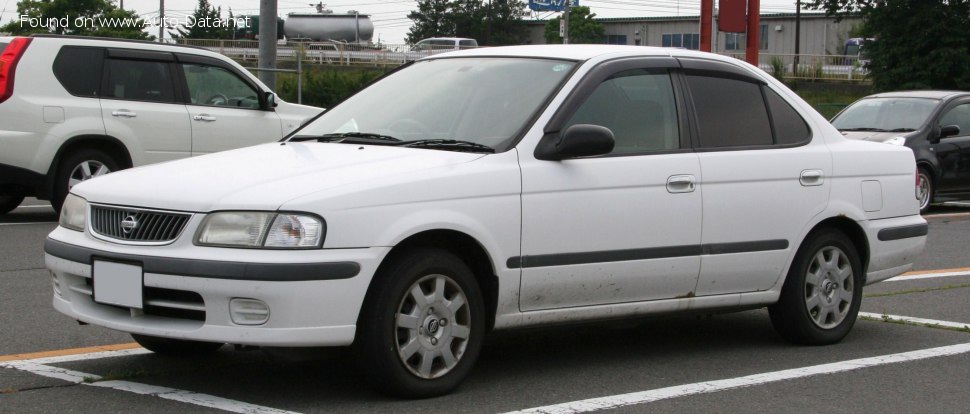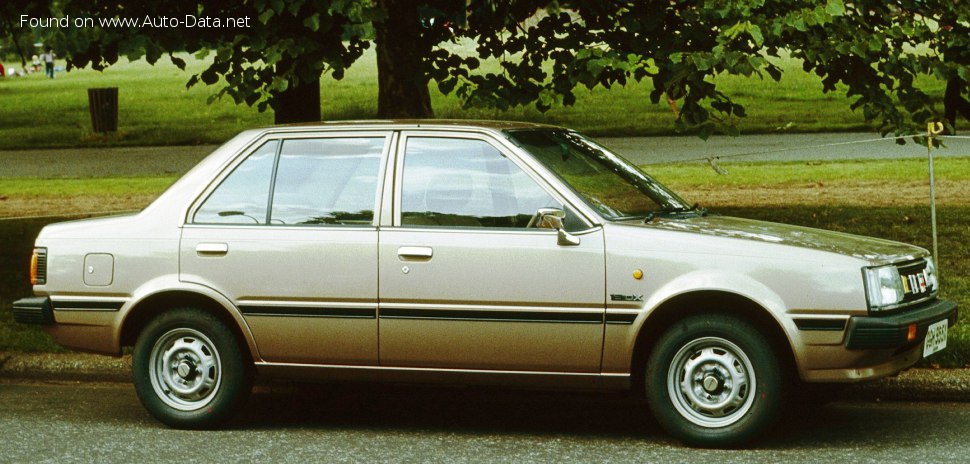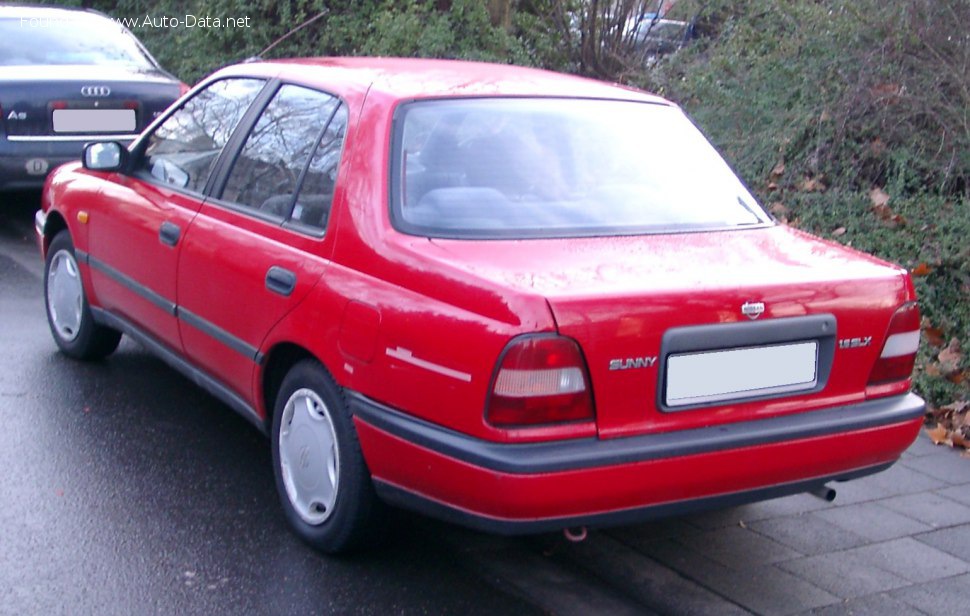
The Nissan Sunny III (N14): A Global Compact Contender
The Nissan Sunny III (N14) represents a significant chapter in Nissan’s history of producing reliable and economical compact cars for global markets. Introduced in 1992 and continuing production until 1995, this generation of the Sunny, often marketed under various names like Pulsar in some regions, served as a workhorse in Europe, Asia, and other international markets. While the N14 platform had variants that reached North America as the Nissan Sentra, the specific Nissan Sunny III (N14) sedan, particularly the 1.6 i 16V (90 Hp) model, was primarily a staple in areas where affordability, fuel efficiency, and Japanese reliability were paramount. This article delves into the technical prowess and market standing of this practical four-door sedan, a testament to Nissan’s engineering philosophy in the early 1990s.
The N14 generation succeeded the N13 Sunny, bringing a more rounded and contemporary design language to the compact segment. It was conceived as a versatile platform, capable of underpinning various body styles, but the sedan variant remained central to its appeal as a family car and commuter vehicle. The 1.6 i 16V (90 Hp) model, with its balanced performance and impressive fuel economy, stood out as a particularly popular choice, offering a compelling blend of everyday usability and cost-effective ownership.
Engineering and Performance of the Nissan Sunny III (N14) 1.6 i 16V
Powertrain and Dynamics of the Nissan Sunny III (N14)
At the heart of the Nissan Sunny III (N14) 1.6 i 16V lies the venerable GA16DE engine, a 1.6-liter (1597 cm³ or 97.45 cu. in.) inline-four powerplant. This naturally aspirated engine featured a Double Overhead Camshaft (DOHC) valvetrain with four valves per cylinder, a relatively advanced setup for a mass-market compact car of its era, promoting better breathing and efficiency. With a compression ratio of 9.8:1, the engine produced a respectable 90 horsepower at 6000 rpm and 100.31 lb.-ft. of torque at 4000 rpm. Power per liter stood at 56.4 HP/L, indicating a well-tuned and efficient design for its displacement.
Fuel delivery was managed by a multi-port manifold injection system, ensuring precise fuel metering and contributing to both performance and fuel economy. The engine was mounted transversely in the front, driving the front wheels, a common and efficient powertrain architecture for compact cars that maximizes interior space and simplifies manufacturing. This front-wheel-drive setup, paired with a smooth-shifting 5-speed manual transmission, offered a direct and engaging driving experience, typical of Japanese compacts of the period.
In terms of performance, the Nissan Sunny III (N14) 1.6 i 16V was capable of accelerating from 0 to 60 mph in a brisk 10.2 seconds (0-100 km/h in 10.7 seconds), reaching a maximum speed of 111.85 mph (180 km/h). These figures were competitive within its segment, offering sufficient power for both city driving and highway cruising. Fuel efficiency was a key selling point, with a combined fuel economy rating of 33.1 US mpg (7.1 l/100 km), making it an economical choice for daily use. The vehicle’s weight-to-power ratio of 11.7 kg/Hp (85.6 Hp/tonne) further underscored its efficient power utilization.
Design and Practicality
The design of the Nissan Sunny III (N14) sedan was characterized by its understated simplicity and functional elegance. Its four-door, five-seat configuration made it a highly practical vehicle for families or individuals needing ample passenger and cargo space. With an overall length of 166.54 inches (4230 mm), a width of 66.54 inches (1690 mm), and a height of 54.92 inches (1395 mm), the Sunny N14 was well-proportioned for urban environments while still offering a comfortable ride on longer journeys. The wheelbase measured 95.67 inches (2430 mm), contributing to a stable ride and reasonable interior room.
The N14 generation featured a more aerodynamic profile compared to its predecessor, with smoother lines and flush-fitting components that contributed to both aesthetics and fuel efficiency. The curb weight of 2319.26 lbs (1052 kg) was relatively light, further aiding its agility and economy. The trunk offered a generous 15.54 cu. ft. (440 liters) of cargo space, which was commendable for its class and enhanced its utility as a family vehicle.
Underneath, the Nissan Sunny III (N14) utilized a conventional but effective suspension setup: wishbone at the front and spring strut at the rear. This configuration provided a comfortable ride quality and predictable handling characteristics. Braking duties were handled by ventilated discs at the front and drum brakes at the rear, a standard arrangement for compact cars of the era. A significant safety feature for the time was the availability of ABS (Anti-lock Braking System), enhancing stopping performance and vehicle control under emergency braking conditions. Steering was a hydraulic rack and pinion system, offering direct feedback to the driver. The vehicle rode on 175/65 R14 tires, a common size that balanced grip, comfort, and affordability.
Technical Specifications for the Nissan Sunny III (N14) 1.6 i 16V (90 Hp)
| Category | Specification | US Equivalent (where applicable) |
|---|---|---|
| General Information | ||
| Brand | Nissan | |
| Model | Sunny | |
| Generation | Sunny III (N14) | |
| Type (Engine) | 1.6 i 16V (90 Hp) | |
| Start of Production | 1992 year | |
| End of Production | 1995 year | |
| Powertrain Architecture | Internal Combustion engine | |
| Body type | Sedan | |
| Seats | 5 | |
| Doors | 4 | |
| Performance Specs | ||
| Fuel consumption (economy) – combined | 7.1 l/100 km | 33.1 US mpg |
| Fuel Type | Petrol (Gasoline) | |
| Acceleration 0 – 100 km/h | 10.7 sec | |
| Acceleration 0 – 62 mph | 10.7 sec | |
| Acceleration 0 – 60 mph (Calculated) | 10.2 sec | |
| Maximum speed | 180 km/h | 111.85 mph |
| Weight-to-power ratio | 11.7 kg/Hp, 85.6 Hp/tonne | |
| Weight-to-torque ratio | 7.7 kg/Nm, 129.3 Nm/tonne | |
| Engine Specs | ||
| Power | 90 Hp @ 6000 rpm. | |
| Power per liter | 56.4 Hp/l | |
| Torque | 136 Nm @ 4000 rpm. | 100.31 lb.-ft. @ 4000 rpm. |
| Engine layout | Front, Transverse | |
| Engine Model/Code | GA16DE | |
| Engine displacement | 1597 cm³ | 97.45 cu. in. |
| Number of cylinders | 4 | |
| Engine configuration | Inline | |
| Cylinder Bore | 76 mm | 2.99 in. |
| Piston Stroke | 88 mm | 3.46 in. |
| Compression ratio | 9.8:1 | |
| Number of valves per cylinder | 4 | |
| Fuel injection system | Multi-port manifold injection | |
| Engine aspiration | Naturally aspirated engine | |
| Valvetrain | DOHC | |
| Engine oil capacity | 3.2 l | 3.38 US qt |
| Engine oil specification | Not specified in data provided | |
| Coolant | 5.7 l | 6.02 US qt |
| Space, Volume and Weights | ||
| Kerb Weight | 1052 kg | 2319.26 lbs. |
| Max. weight | 1545 kg | 3406.14 lbs. |
| Max load | 493 kg | 1086.88 lbs. |
| Trunk (boot) space – minimum | 440 l | 15.54 cu. ft. |
| Fuel tank capacity | 50 l | 13.21 US gal |
| Dimensions | ||
| Length | 4230 mm | 166.54 in. |
| Width | 1690 mm | 66.54 in. |
| Height | 1395 mm | 54.92 in. |
| Wheelbase | 2430 mm | 95.67 in. |
| Front track | 1435 mm | 56.5 in. |
| Rear (Back) track | 1420 mm | 55.91 in. |
| Drivetrain, Brakes and Suspension Specs | ||
| Drivetrain Architecture | The Internal combustion engine (ICE) drives the front wheels of the vehicle. | |
| Drive wheel | Front wheel drive | |
| Number of gears and type of gearbox | 5 gears, manual transmission | |
| Front suspension | Wishbone | |
| Rear suspension | Spring Strut | |
| Front brakes | Ventilated discs | |
| Rear brakes | Drum | |
| Assisting systems | ABS (Anti-lock braking system) | |
| Steering type | Steering rack and pinion | |
| Power steering | Hydraulic Steering | |
| Tires size | 175/65 R14 | |
Legacy and Market Impact
The Nissan Sunny III (N14), particularly the 1.6 i 16V sedan, carved out a strong reputation for itself as a highly dependable and economical compact car in its primary markets. Its robust engineering, coupled with Nissan’s emphasis on quality and durability, meant that these vehicles often outlasted many of their contemporaries. In regions like Europe and various parts of Asia, where it competed against perennial rivals such as the Toyota Corolla, Honda Civic, Mazda 323, and the European Volkswagen Golf/Jetta, the Sunny N14 offered a compelling alternative that prioritized practicality and low running costs over overt styling or high-performance aspirations.
While the N14 platform did form the basis for some variants of the Nissan Sentra sold in North America, the specific Sunny III (N14) sedan with its GA16DE engine was not the primary Sentra model offered in the U.S. during this period. Instead, its impact was felt more strongly in markets where consumers valued a no-nonsense, reliable mode of transportation. It was often the choice for first-time car buyers, small families, or fleet operators due to its excellent fuel economy, simple maintenance, and reputation for trouble-free ownership.
The N14 generation contributed significantly to Nissan’s global sales volumes and reinforced its image as a manufacturer of durable and accessible vehicles. Its unpretentious design and focus on core automotive competencies—reliability, efficiency, and practicality—ensured its widespread acceptance. Even decades after its production ceased, many examples of the Nissan Sunny III (N14) can still be found on roads worldwide, a testament to its enduring build quality and the foresight of its engineering. It stands as a classic example of the Japanese compact car’s golden era, embodying the values that made these vehicles so successful internationally.