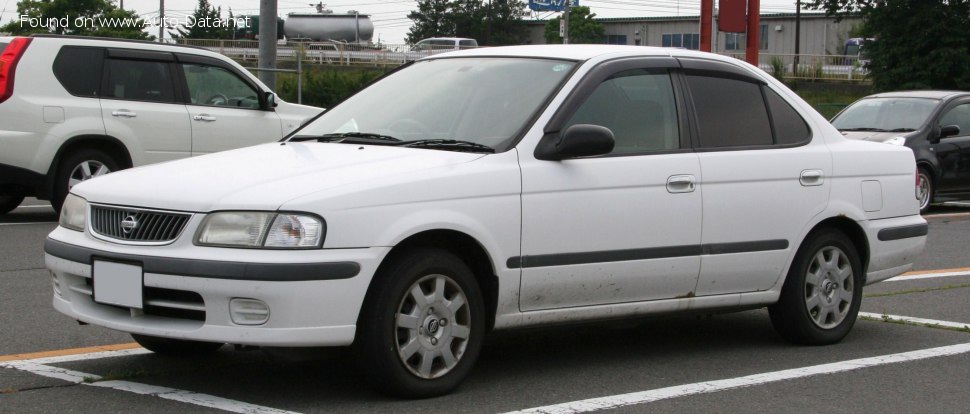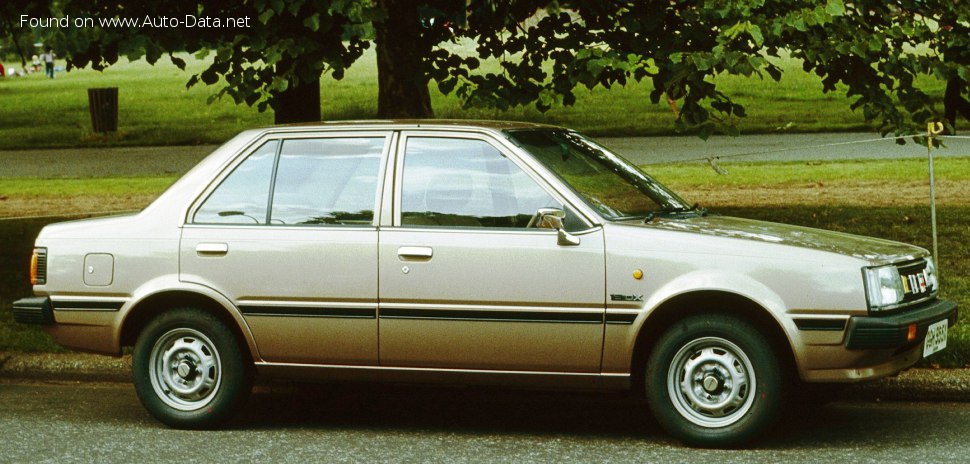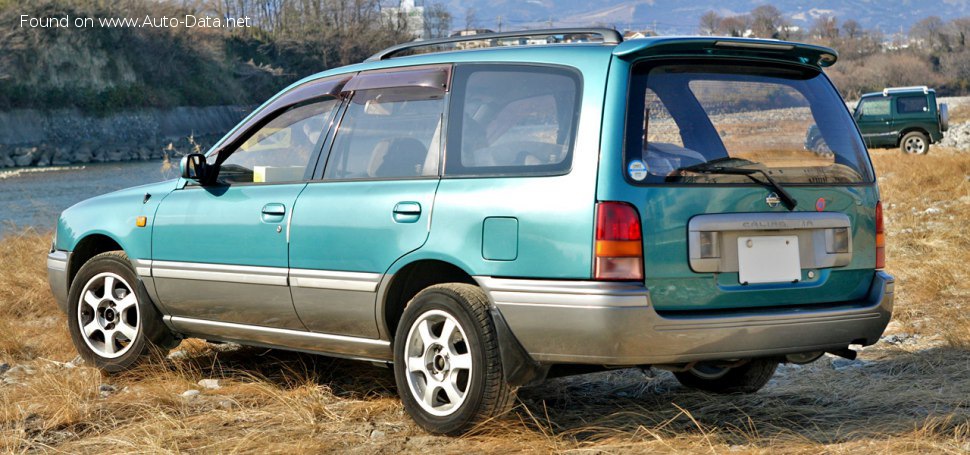
The Nissan Sunny III Wagon (Y10) 2.0 D (75 Hp): A Practical Workhorse of the 1990s
The Nissan Sunny III Wagon, known internally by its chassis code Y10, represents a pivotal era for Nissan’s compact car offerings. Produced from 1991 to 2000, this generation of the Sunny continued Nissan’s tradition of building reliable, economical, and practical vehicles for the global market. While the Sunny nameplate has a long and storied history, particularly in Asian markets, the Y10 generation, especially its wagon variant, found significant traction in Europe and other regions where practicality and fuel efficiency were paramount. The specific 2.0 D (75 Hp) model, a naturally aspirated diesel, was a testament to this focus, offering robust performance and remarkable economy for families and businesses alike. As a compact station wagon, the Nissan Sunny III Wagon (Y10) was designed to maximize interior space and versatility within a relatively small footprint, making it an ideal choice for urban environments and longer hauls.
Engine and Performance of the Nissan Sunny III Wagon (Y10) 2.0 D
Under the hood of the Nissan Sunny III Wagon (Y10) 2.0 D lay a powerplant engineered for durability and efficiency: the CD20 engine. This 2.0-liter (1974 cm3 or 120.46 cu. in.) inline-four diesel engine was naturally aspirated, meaning it relied solely on atmospheric pressure to draw air into its cylinders, a common and reliable configuration for diesel engines of its time. With a precombustion chamber injection system and an OHC (Overhead Camshaft) valvetrain with two valves per cylinder, the engine was designed for straightforward maintenance and longevity.
The CD20 engine produced a respectable 75 horsepower at 4800 rpm, delivering its power smoothly and predictably. More crucial for a diesel of this type, especially in a wagon intended for utility, was its torque output. The engine generated 132 Nm (97.36 lb.-ft.) of torque at a relatively low 2800 rpm. This low-end torque was instrumental in providing adequate pulling power for hauling cargo or navigating hilly terrain, contributing to the vehicle’s practical appeal. The power-to-weight ratio stood at 15.1 kg/Hp, or 66.1 Hp per tonne, indicating a focus on steady propulsion rather than blistering acceleration.
Paired with a 5-speed manual transmission, the 2.0 D variant was a front-wheel-drive vehicle, a configuration that offered predictable handling and efficient packaging. Performance figures, while not designed to excite, were entirely adequate for daily driving. The Sunny III Wagon 2.0 D could accelerate from 0 to 60 mph in a calculated 15.1 seconds (0-100 km/h in 15.9 seconds) and reach a maximum speed of 95.69 mph (154 km/h). However, its true strength lay in its fuel economy. With a combined fuel consumption rating of 6 liters per 100 km, or approximately 39.2 US mpg, this diesel wagon was an exceptionally economical choice, a critical factor for many European consumers in the 1990s.
Design and Features: The Practicality of the Nissan Sunny III Wagon (Y10)
The Nissan Sunny III Wagon (Y10) was designed with a clear emphasis on utility and practicality. As a 5-door station wagon (often referred to as an “estate” in European markets), it offered a versatile body style capable of accommodating five occupants and a substantial amount of cargo. Its exterior dimensions – 164.37 inches (4175 mm) in length, 65.55 inches (1665 mm) in width, and 59.84 inches (1520 mm) in height – made it a compact yet spacious vehicle. The 94.49-inch (2400 mm) wheelbase contributed to a stable ride and maximized interior volume within its footprint.
The design language of the Y10 Sunny was typical of the early to mid-1990s, characterized by clean lines and a functional aesthetic. While not overtly styled for flair, its purpose-driven design ensured excellent visibility and ease of maneuverability. Inside, the focus was on durability and ergonomic simplicity. The 5-seat configuration provided comfortable seating for a family, while the true highlight was its cargo capacity. With the rear seats in place, the trunk offered a generous 16.24 cu. ft. (460 liters) of space. Folding down the rear seats expanded this to an impressive 56.5 cu. ft. (1600 liters), making it highly capable for carrying luggage, groceries, or even larger items for DIY projects. This adaptability was a key selling point for the wagon variant.
In terms of chassis and safety, the Sunny Y10 featured a front-wheel-drive architecture with a well-proven suspension setup: wishbones at the front and spring struts at the rear, providing a comfortable and predictable ride. Braking was handled by ventilated discs at the front and drum brakes at the rear, a common and effective combination for vehicles in this class. For enhanced safety, the vehicle was equipped with ABS (Anti-lock Braking System), a significant feature for its time, improving control during emergency braking. Steering was managed by a rack and pinion system with hydraulic power steering, offering good feedback and ease of use in various driving conditions. The standard tire size was 175/70 R13, balancing ride comfort with handling characteristics.
Technical Specifications
| Nissan Sunny III Wagon (Y10) 2.0 D (75 Hp) – Full Specifications | |
|---|---|
| General Information | |
| Brand | Nissan |
| Model | Sunny |
| Generation | Sunny III Wagon (Y10) |
| Type (Engine) | 2.0 D (75 Hp) |
| Start of Production | 1991 year |
| End of Production | 2000 year |
| Powertrain Architecture | Internal Combustion engine |
| Body type | Station wagon (estate) |
| Seats | 5 |
| Doors | 5 |
| Performance Specs | |
| Fuel Consumption (combined) | 6 l/100 km (39.2 US mpg, 47.1 UK mpg, 16.7 km/l) |
| Fuel Type | Diesel |
| Acceleration 0 – 60 mph | 15.1 sec |
| Acceleration 0 – 100 km/h | 15.9 sec |
| Maximum Speed | 154 km/h (95.69 mph) |
| Weight-to-Power Ratio | 15.1 kg/Hp, 66.1 Hp/tonne |
| Weight-to-Torque Ratio | 8.6 kg/Nm, 116.4 Nm/tonne |
| Engine Specs | |
| Power | 75 Hp @ 4800 rpm |
| Power per liter | 38 Hp/l |
| Torque | 132 Nm @ 2800 rpm (97.36 lb.-ft. @ 2800 rpm) |
| Engine Layout | Front, Transverse |
| Engine Model/Code | CD20 |
| Engine Displacement | 1974 cm3 (2.0 liters, 120.46 cu. in.) |
| Number of Cylinders | 4 |
| Engine Configuration | Inline |
| Cylinder Bore | 84.5 mm (3.33 in.) |
| Piston Stroke | 88 mm (3.46 in.) |
| Compression Ratio | 22.2:1 |
| Number of Valves per Cylinder | 2 |
| Fuel Injection System | Precombustion chamber injection |
| Engine Aspiration | Naturally aspirated engine |
| Valvetrain | OHC |
| Engine Oil Capacity | 4.7 l (4.97 US qt, 4.14 UK qt) |
| Coolant Capacity | 5.7 l (6.02 US qt, 5.02 UK qt) |
| Space, Volume and Weights | |
| Kerb Weight | 1134 kg (2500.04 lbs.) |
| Max. Weight | 1620 kg (3571.49 lbs.) |
| Max Load | 486 kg (1071.45 lbs.) |
| Trunk (boot) Space – Minimum | 460 l (16.24 cu. ft.) |
| Trunk (boot) Space – Maximum | 1600 l (56.5 cu. ft.) |
| Fuel Tank Capacity | 50 l (13.21 US gal, 11 UK gal) |
| Dimensions | |
| Length | 4175 mm (164.37 in.) |
| Width | 1665 mm (65.55 in.) |
| Height | 1520 mm (59.84 in.) |
| Wheelbase | 2400 mm (94.49 in.) |
| Front Track | 1445 mm (56.89 in.) |
| Rear (Back) Track | 1445 mm (56.89 in.) |
| Drivetrain, Brakes and Suspension Specs | |
| Drivetrain Architecture | The Internal combustion engine (ICE) drives the front wheels of the vehicle. |
| Drive Wheel | Front wheel drive |
| Number of Gears and Type of Gearbox | 5 gears, manual transmission |
| Front Suspension | Wishbone |
| Rear Suspension | Spring Strut |
| Front Brakes | Ventilated discs |
| Rear Brakes | Drum |
| Assisting Systems | ABS (Anti-lock braking system) |
| Steering Type | Steering rack and pinion |
| Power Steering | Hydraulic Steering |
| Tires Size | 175/70 R13 |
Legacy and Market Impact of the Nissan Sunny III Wagon (Y10)
The Nissan Sunny III Wagon (Y10) 2.0 D carved out a significant niche for itself, particularly in European and Asian markets, where its blend of economy, reliability, and practicality resonated strongly with consumers. While the Sunny nameplate was not as prominent in the United States during this era, the Y10 generation, and especially its wagon variant, was a strong competitor in the compact family car segment across the Atlantic and beyond. Its primary rivals included other popular compact wagons such as the Volkswagen Golf Variant, Opel Astra Caravan, Ford Escort Estate, and Toyota Corolla Wagon.
The Y10 Sunny’s reputation was built on its unwavering reliability and low running costs. The naturally aspirated CD20 diesel engine, while not a powerhouse, was known for its robustness and excellent fuel efficiency, making it a favorite among those who covered high mileage or prioritized economy over performance. Its simple mechanicals meant that maintenance was straightforward and parts were generally affordable, further contributing to its appeal as a sensible, long-term vehicle. For small businesses, delivery services, or families on a budget, the Nissan Sunny III Wagon (Y10) offered a compelling package of utility and affordability.
Historically, the Y10 generation represented a continuation of Nissan’s commitment to producing globally relevant compact cars. Its design, while conservative, was highly functional, anticipating the growing demand for versatile family vehicles that could handle both daily commutes and weekend adventures. The inclusion of features like ABS, even in a practical, economical model, highlighted Nissan’s dedication to improving safety across its range. Today, the Nissan Sunny III Wagon (Y10) is remembered as a sturdy, no-frills workhorse that successfully fulfilled its mission as a dependable and economical mode of transport for countless families and individuals throughout the 1990s and into the early 2000s, solidifying Nissan’s reputation for practical engineering.