The Nissan Sunny Kasten (Y10): A Global Workhorse
The Nissan Sunny Kasten (Y10) represents a pragmatic and enduring chapter in Nissan’s extensive history, specifically within the realm of light commercial vehicles. Introduced in 1992 and remaining in production through 2000, this generation of the Sunny, particularly in its “Kasten” (German for “box” or “van”) pickup configuration, served as a ubiquitous workhorse across numerous international markets, primarily in Europe, Asia, and other regions where compact, durable, and economical utility vehicles were in high demand. While not officially marketed in the United States under this specific nameplate or body style, the Y10 shares its foundational architecture with the global Nissan Sunny (B13/N14 generation passenger cars) and the Nissan AD Van, a versatile commercial platform known for its reliability and low cost of ownership. The 1.6 i 16V variant, with its 90 horsepower engine, epitomized the balance of efficiency and capability that defined this segment.
Engineering and Performance: The 1.6 i 16V Powertrain
At the heart of the Nissan Sunny Kasten (Y10) pickup’s appeal was its straightforward yet dependable powertrain. The variant in focus, the 1.6 i 16V, was equipped with a naturally aspirated, 1.6-liter (1597 cc or similar displacement, common for this era) inline-four gasoline engine. This powerplant delivered a respectable 90 horsepower, a figure that, while modest by today’s standards, was entirely adequate for the vehicle’s intended purpose during its production run from 1992 to 2000. The 16-valve cylinder head design was a common feature for enhancing engine breathing and efficiency in the early 1990s, offering a good balance of power delivery and fuel economy for light commercial duties.
The emphasis for this engine was not on blistering acceleration or high-speed performance, but rather on consistent, reliable operation and ease of maintenance. The naturally aspirated induction system meant fewer complex components compared to turbocharged engines, contributing to its reputation for robustness and lower running costs—a critical factor for fleet operators and small businesses. Torque figures, though not explicitly provided, would have been tuned to provide ample pulling power at lower RPMs, essential for carrying payloads or navigating urban environments. This engine, often paired with a manual transmission (though automatic options might have existed in some markets), was designed for durability and longevity, capable of withstanding the rigors of daily commercial use.
Design and Features: The Utilitarian Spirit of the Nissan Sunny Kasten (Y10)
The design philosophy behind the Nissan Sunny Kasten (Y10) pickup was one of uncompromised utility. As a derivative of the Nissan AD Van, which itself was based on the Sunny passenger car platform, the Kasten pickup prioritized functionality over stylistic flair. Its body type is explicitly a “Pick-up,” meaning it featured an open cargo bed behind a two-door cabin. This configuration made it ideal for transporting goods, tools, and equipment, catering to a diverse range of users from tradespeople to agricultural workers.
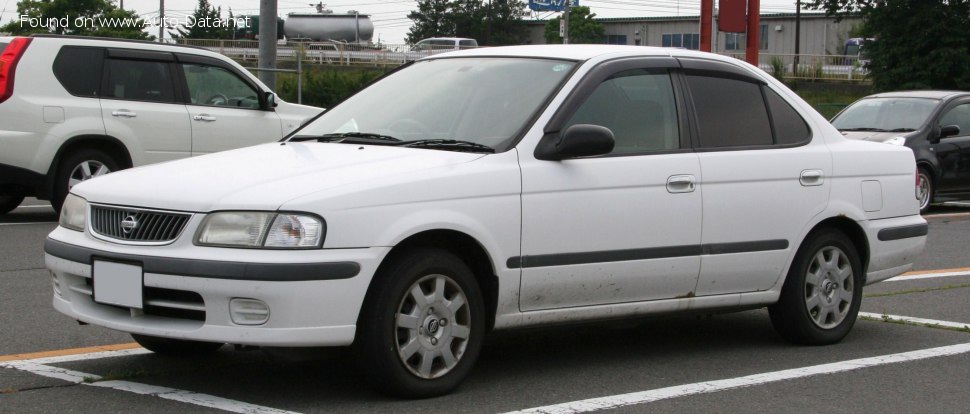
Aesthetically, the Y10 generation carried over the clean, unfussy lines characteristic of Nissan vehicles of the early to mid-1990s. The front fascia would have been consistent with the Sunny/AD Van family, featuring simple headlights and a modest grille. The cabin, while basic, was designed for durability and ease of cleaning, with hard-wearing plastics and fabrics. Creature comforts were typically sparse, focusing on essentials like heating, ventilation, and perhaps a simple radio. Safety features for vehicles of this era would have been rudimentary by contemporary standards, likely including basic seatbelts and perhaps an optional driver’s airbag in later models, reflecting the evolving safety regulations of the time.
The true design strength lay in its robust chassis and suspension, engineered to handle varied road conditions and consistent load-bearing. The cargo bed itself would have been designed for practicality, often featuring tie-down points and a durable lining to protect against wear and tear. Its compact dimensions made it maneuverable in tight city streets, yet its payload capacity was sufficient for its target market, making it an indispensable tool for countless businesses.
Technical Specifications
Below is a summary of the key technical specifications for the Nissan Sunny Kasten (Y10) 1.6 i 16V (90 Hp) model:
| Category | Specification |
|---|---|
| Brand | Nissan |
| Model | Sunny |
| Generation | Sunny Kasten (Y10) |
| Engine Type | 1.6 i 16V (90 Hp) |
| Start of Production | 1992 year |
| End of Production | 2000 year |
| Powertrain Architecture | Internal Combustion engine |
| Body Type | Pick-up |
| Fuel Type | Petrol (Gasoline) |
| Power | 90 Hp |
| Engine Aspiration | Naturally aspirated engine |
Legacy and Market Impact
The Nissan Sunny Kasten (Y10) pickup carved out a significant niche for itself, particularly in markets outside of North America. Its primary impact was as a reliable, no-frills light commercial vehicle, serving as the backbone for countless small businesses, government agencies, and individual tradespeople. In Europe, it competed with other compact utility vehicles such as the Ford Courier, Volkswagen Caddy, and various small pickups from Asian manufacturers like Toyota (e.g., Hilux variants in some markets) and Mazda. In its home market of Japan and other Asian countries, it was often known as the Nissan AD Van/Truck, facing competition from rivals like the Toyota Probox/Succeed or Honda Partner.
Its reputation was built on unwavering durability, low operational costs, and ease of maintenance. These attributes made it an incredibly attractive proposition for those needing a practical work vehicle that wouldn’t break the bank, either to purchase or to run. The 90 horsepower 1.6-liter engine, while not powerful, was celebrated for its longevity and fuel efficiency, critical for commercial operators. Its simple mechanicals meant repairs were often straightforward and parts readily available in many regions.
The Y10 generation, including its Kasten pickup variant, played a crucial role in Nissan’s global strategy during the 1990s. It demonstrated Nissan’s ability to produce robust, adaptable vehicles that could cater to diverse market needs, from passenger cars to versatile commercial platforms. While the specific “Kasten” moniker might be less familiar in the US, the underlying principles of its design—reliability, economy, and utility—are universally appreciated in the automotive world. Its legacy is one of quiet competence, having faithfully served its purpose as an indispensable tool for a generation of workers and businesses across the globe, solidifying Nissan’s reputation for dependable engineering in the commercial vehicle sector.