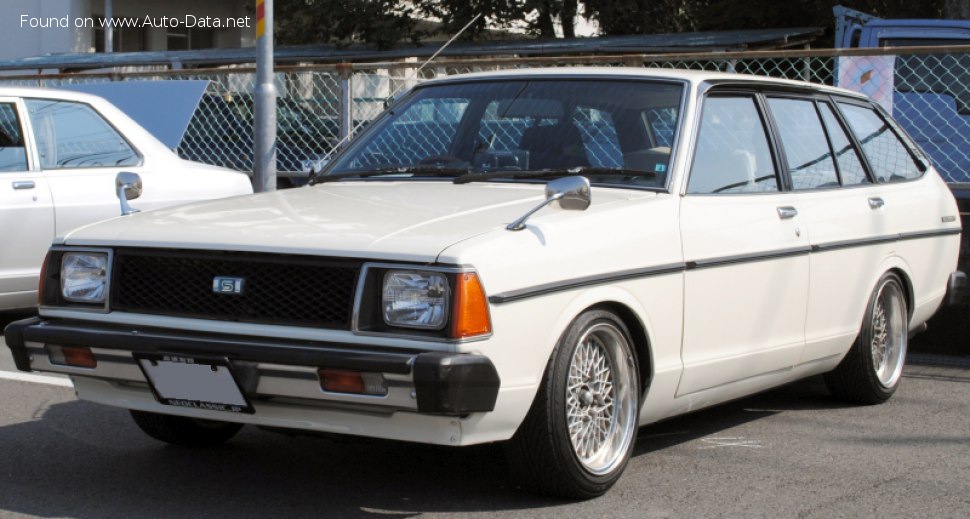
Introduction to the Nissan Sunny Traveller (140Y, 150Y)
The Nissan Sunny, a nameplate synonymous with reliability and economy for decades, saw numerous iterations throughout its long production run. Among these, the B310 generation, produced from 1978 to 1982, stands out as a quintessential example of late 1970s and early 1980s Japanese automotive engineering. Within this popular series, the Nissan Sunny Traveller (140Y, 150Y) 1.5 (HBL310) (69 Hp) represented the practical, family-oriented station wagon variant. Launched in 1979, this model was designed to cater to a global market’s demand for an affordable, fuel-efficient, and durable vehicle capable of handling both daily commutes and light hauling duties. While not a primary contender in the North American market in this specific configuration, the B310 Sunny, often marketed as the Datsun 210 in the United States, was a critical model for Nissan’s international sales, particularly in Europe, Asia, and other export regions where compact wagons were highly valued for their utility and low running costs. The Traveller variant, specifically, underscored Nissan’s commitment to providing versatile transportation solutions, blending compact dimensions with a surprisingly spacious and adaptable cargo area.
The B310 series was a significant evolution for the Sunny line, bringing a more modern, albeit still conventional, design language and refined mechanicals compared to its predecessors. The Nissan Sunny Traveller (140Y, 150Y) was built upon a robust, rear-wheel-drive platform, a common layout for compact cars of its era, which contributed to its reputation for simplicity and ease of maintenance. The 1.5-liter engine variant, identified by the HBL310 chassis code and producing 69 horsepower, was a workhorse engine, engineered for longevity and economical operation rather than outright performance. This focus on practicality made the Sunny Traveller a popular choice for families and small businesses alike, solidifying Nissan’s presence in a highly competitive global automotive landscape during a period marked by rising fuel prices and increasing consumer awareness of vehicle efficiency.
Engine and Performance: The Heart of the Nissan Sunny Traveller (140Y, 150Y)
Powering the Nissan Sunny Traveller (140Y, 150Y) 1.5 (HBL310) was a naturally aspirated internal combustion engine, a common and reliable powertrain architecture for vehicles of its time. This 1.5-liter gasoline engine was designed with an emphasis on durability, fuel economy, and straightforward maintenance, characteristics highly prized by consumers in the late 1970s and early 1980s. With an output of 69 horsepower, the engine provided adequate power for the vehicle’s modest curb weight and intended purpose. While 69 horsepower might seem conservative by today’s standards, it was perfectly respectable for a compact station wagon aimed at economical family transportation during its production years from 1979 to 1982.
The naturally aspirated design meant that the engine relied solely on atmospheric pressure to draw air into its cylinders, a simpler and less complex setup than forced induction systems like turbochargers, which were less common in mainstream compact cars of this era. This simplicity contributed significantly to the engine’s legendary reliability and lower manufacturing costs. Paired typically with a manual transmission, and in some markets, an optional automatic, the 1.5-liter engine delivered a driving experience that was predictable and manageable. Acceleration was unhurried but sufficient for city driving and cruising on secondary roads. The engine’s torque characteristics were tuned to provide usable power at lower RPMs, which was beneficial for carrying passengers and cargo without constantly needing to downshift. This made the Sunny Traveller a practical choice for daily errands, family trips, and even light commercial duties, embodying the spirit of a dependable workhorse. Its design and performance profile were a testament to Nissan’s engineering philosophy of creating robust, no-nonsense vehicles that offered excellent value and long-term service.
Design and Features: Form Follows Function
The design of the Nissan Sunny Traveller (140Y, 150Y) was a clear reflection of its utilitarian purpose. As a station wagon (known as an “estate” in many international markets), its body style was dictated by the need for maximum interior space and cargo versatility within a compact footprint. The exterior featured a straightforward, boxy silhouette, characteristic of Japanese automotive design from the late 1970s and early 1980s. This design language prioritized practicality and manufacturing efficiency over flamboyant styling, yet it possessed a clean, honest aesthetic that aged gracefully. The extended roofline and large rear hatch were defining features, providing easy access to a generous cargo bay. Large windows all around ensured good visibility, an important safety consideration of the era, and contributed to a spacious feel within the cabin.
Inside, the Sunny Traveller continued its theme of functionality. The interior was designed to be durable and easy to clean, using robust materials that could withstand the rigors of family life or commercial use. Seating was comfortable for four adults, with the ability to accommodate a fifth for shorter journeys. The rear seats typically folded down, creating a flat load floor that significantly expanded cargo capacity, making it highly adaptable for various hauling needs, from groceries to camping gear or small business supplies. Features were relatively basic by modern standards, focusing on essential amenities. These would have included a heater and ventilation system, manual window winders, a simple AM/FM radio, and perhaps a clock. Safety features, while rudimentary compared to today’s vehicles, included three-point seatbelts for front occupants and a sturdy body structure designed to offer protection in the event of a collision. The emphasis was squarely on reliability, low cost of ownership, and practical utility, making the Sunny Traveller a dependable and unpretentious mode of transportation for its target audience.
Technical Specifications
| Attribute | Detail |
|---|---|
| Brand | Nissan |
| Model | Sunny |
| Generation | Sunny Traveller (140Y, 150Y) |
| Type (Engine) | 1.5 (HBL310) |
| Power | 69 Hp |
| Start of Production | 1979 year |
| End of Production | 1982 year |
| Powertrain Architecture | Internal Combustion engine |
| Body Type | Station wagon (estate) |
| Fuel Type | Petrol (Gasoline) |
| Engine Aspiration | Naturally aspirated engine |
Legacy and Market Impact
The Nissan Sunny Traveller (140Y, 150Y), as part of the broader B310 Sunny generation, carved out a significant legacy for Nissan, particularly in markets outside of North America. Its primary impact stemmed from its reputation as an incredibly reliable, economical, and practical vehicle. In an era marked by fluctuating oil prices and a growing global demand for efficient transportation, the Sunny Traveller offered a compelling package. It wasn’t designed to be a performance leader or a luxury statement; instead, it excelled at its core mission: providing dependable, affordable mobility for families and businesses. This unwavering focus on utility and durability cemented its place as a trusted workhorse in numerous households and commercial fleets across Asia, Europe, Africa, and parts of Latin America.
In its primary markets, the Sunny Traveller competed fiercely with other compact station wagons from rival Japanese manufacturers, such as the Toyota Corolla Wagon, Mazda Familia (323) Wagon, and even some European counterparts like the Ford Escort Estate or Opel Kadett Caravan. What often set the Sunny apart was its reputation for robust engineering and low ownership costs, characteristics that were becoming hallmarks of Japanese automotive exports during this period. Nissan’s commitment to quality meant that these vehicles were built to last, often outliving many of their contemporaries.
The historical significance of the Nissan Sunny Traveller (140Y, 150Y) lies in its contribution to Nissan’s global expansion and brand image. It helped solidify Nissan’s position as a producer of dependable, value-oriented vehicles that could withstand diverse climates and road conditions. While the B310 series was eventually replaced by the B11 generation (which transitioned to front-wheel drive), the Traveller variant of the B310 represented the culmination of a long lineage of rear-wheel-drive Sunny models that prioritized simplicity, robustness, and practicality. It was a car that embodied the spirit of the times – efficient, no-frills transportation that served its owners faithfully for many years. Even today, these vehicles are sometimes found still in service in various parts of the world, a testament to their enduring build quality and mechanical fortitude, underscoring their lasting legacy as a true automotive stalwart.